🦠 Diseases and Pests of Silkworms
Pebrine, Grasserie, Flacherie, Muscardine, Uzi Fly, and Dermestid Beetle -- causes, symptoms, and identification for exams
In the previous lesson, we traced the silkworm life cycle from egg through moulting, spinning, and harvesting. Now we examine the diseases and pests that can destroy an entire crop of cocoons if left unmanaged.
A silkworm farmer in Karnataka notices that some of his 4th-instar larvae have become swollen and yellowish, with shiny skin that refuses to moult. When he gently touches one, it ruptures and releases milky fluid. His crop has been struck by Grasserie (jaundice), a devastating viral disease. Diseases and insect pests are among the most significant constraints in sericulture, causing considerable economic losses. This lesson covers the four major diseases (classified by pathogen type) and two key insect pests -- essential knowledge for competitive exams.
Disease Classification at a Glance
TIP
Memory Aid -- "PGFM": Pebrine = Protozoan, Grasserie = Virus (causes Jaundice), Flacherie = Bacteria (causes Diarrhoea), Muscardine = Fungus (causes Mummification).
Pro Content Locked
Upgrade to Pro to access this lesson and all other premium content.
₹99 charged monthly · Cancel anytime
- All Agriculture & Banking Courses
- AI Lesson Questions (100/day)
- AI Doubt Solver (50/day)
- Glows & Grows Feedback (30/day)
- AI Section Quiz (20/day)
- 22-Language Translation (100/day)
- Recall Questions (20/day)
- AI Quiz (15/day)
- AI Quiz Paper Analysis (100/day)
- AI Step-by-Step Explanations (100/day)
- Spaced Repetition Recall (FSRS)
- AI Tutor
- Immersive Text Questions
- Audio Lessons — Hindi & English
- Mock Tests & Previous Year Papers
- Summary & Mind Maps
- XP, Levels, Leaderboard & Badges
- Generate New Classrooms
- Voice AI Teacher (AgriDots Live)
- AI Revision Assistant
- Knowledge Gap Analysis
- Interactive Revision (LangGraph)
🔒 Secure via Razorpay · Cancel anytime · No hidden fees
In the previous lesson, we traced the silkworm life cycle from egg through moulting, spinning, and harvesting. Now we examine the diseases and pests that can destroy an entire crop of cocoons if left unmanaged.
A silkworm farmer in Karnataka notices that some of his 4th-instar larvae have become swollen and yellowish, with shiny skin that refuses to moult. When he gently touches one, it ruptures and releases milky fluid. His crop has been struck by Grasserie (jaundice), a devastating viral disease. Diseases and insect pests are among the most significant constraints in sericulture, causing considerable economic losses. This lesson covers the four major diseases (classified by pathogen type) and two key insect pests -- essential knowledge for competitive exams.
Disease Classification at a Glance
TIP
Memory Aid -- "PGFM": Pebrine = Protozoan, Grasserie = Virus (causes Jaundice), Flacherie = Bacteria (causes Diarrhoea), Muscardine = Fungus (causes Mummification).
| Disease | Pathogen Type | Causal Organism | Key Symptom | Diagnostic Sign |
|---|---|---|---|---|
| Pebrine | Protozoan | Nosema bombycis | Black pepper-like spots | Larvae remain rubbery after death |
| Grasserie | Viral | BmNPV (Nuclear Polyhedrosis Virus) | Yellowish, swollen body | Bamboo cane appearance; jaundice |
| Flacherie | Bacterial | Streptococci / Bacillus spp. | Vomiting, diarrhoea | Chain-type faeces; flaccid body |
| Muscardine | Fungal | Beauveria bassiana (white) / Metarrhizium anisopliae (green) | Lethargy, oil specks on skin | Hard, dry mummies (white or green) |
1. Pebrine (Protozoan Disease)
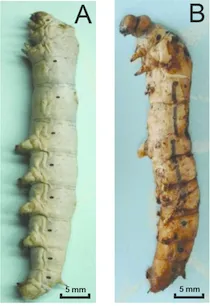
| Feature | Detail |
|---|---|
| Causal organism | Nosema bombycis (microsporidian parasite) |
| Also called | Pepper disease or Corpuscle disease |
| Particularly affects | Muga silkworms (A. assamensis) due to semi-wild rearing conditions |
| Detection method | Mother moth examination -- moth is crushed and examined microscopically for spores after egg laying |
| Transmission | Transovarial (mother to offspring through eggs) |
Symptoms
- Slow growth, undersized body, poor appetite
- Pale, flaccid body with tiny black spots on integument (resembling ground pepper)
- Dead larvae remain rubbery and do not decompose quickly (unlike bacterial/viral infections)
Grasserie — Key Exam Facts
- Grasserie is caused by NPV (Nuclear Polyhedrosis Virus) — specifically Bombyx mori Nuclear Polyhedrosis Virus (BmNPV)
- Infected larvae hang inverted from rearing trays or branches in the characteristic symptom called Caterpillar wilt
- This hanging-inverted behaviour is caused by virus-induced behavioural manipulation — the larvae climb upward before dying, aiding viral spore dispersal
2. Grasserie (Viral Disease)
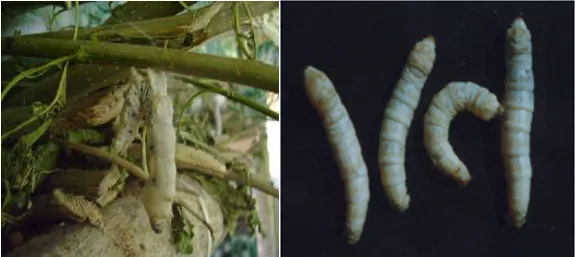
| Feature | Detail |
|---|---|
| Causal organism | Bombyx mori Nuclear Polyhedrosis Virus (BmNPV) |
| Also called | Jaundice (from yellowish skin discolouration) |
| Name origin | French gras = "fat" (referring to the swollen, bloated appearance) |
Symptoms
- Skin becomes shiny before moulting; larva fails to moult
- Restless wandering along rim of trays (virus-induced behavioural manipulation)
- Inter-segmental swelling; body colour becomes yellowish
- Bamboo cane-like appearance (turgid, swollen, stiff body)
- Internal organs liquefy; if skin ruptures, milky fluid is released
3. Flacherie (Bacterial Disease)
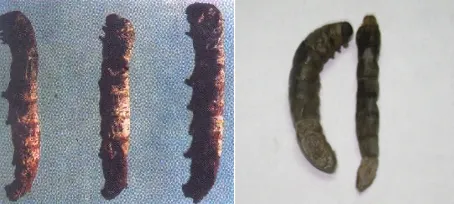
| Feature | Detail |
|---|---|
| Causal organisms | Streptococci and Bacillus bacteria (sometimes with viruses) |
| Predisposing factors | Fluctuating temperature/humidity, poor-quality mulberry, overcrowding |
| Status | Most common and economically damaging disease of silkworms worldwide |
Symptoms
- Loss of appetite; retarded growth
- Head and thorax become translucent
- Body shrinks; foregut and midgut are empty
- Larvae become soft, limp, and flaccid (major symptom)
- Vomiting of gut juice, dysentery, diarrhoea with chain-type faeces (droppings strung together in a chain pattern)
4. Muscardine (Fungal Disease)
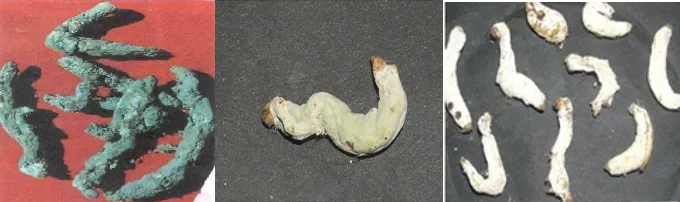
| Type | Causal Organism | Mummy Colour |
|---|---|---|
| White Muscardine | Beauveria bassiana | White |
| Green Muscardine | Metarrhizium anisopliae | Green |
| Aspergillosis | Aspergillus flavus (dark green) / A. tamari (rusty brown) | Green/brown |
Symptoms
- Lethargy prior to death; larvae become flaccid on dying
- Oil specks on larval skin (fungal hyphae dissolve the waxy cuticle layer)
- Larvae gradually become hard, dry, and mummified (covered with dense mycelium and spores)
- Aspergillosis is more common in young-age silkworms; infected larvae appear lustrous before death
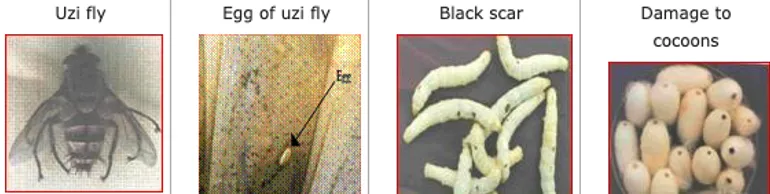
5. Uzi Fly -- Exorista sorbillans
| Feature | Detail |
|---|---|
| Family | Tachinidae (tachinid fly) |
| Status | One of the most serious insect pests of silkworms in South India |
| Targets | 4th and 5th instar larvae (larger larvae provide sufficient food for the developing maggot) |
| Damage | 10-15% crop loss in Karnataka, AP, and Tamil Nadu |
| Season | Throughout the year; severe during rainy season (high humidity favours the fly) |
Life Cycle and Symptoms
- Female fly lays 1-2 eggs on the silkworm larva
- Egg hatches in 2-3 days; maggot enters the larva
- Maggot feeds on internal contents for 5-7 days
- Maggot exits by rupturing the larva (or makes a circular hole in the cocoon if infested at last instar)
- Maggot pupates in dark corners in 18-24 hours; pupal stage lasts 10-12 days
Diagnostic Signs
- Black spot or scar on the silkworm body = entry point of maggot
- Circular hole in the cocoon = exit point of maggot
- Prevention through screening rearing houses and maintaining hygiene is most effective
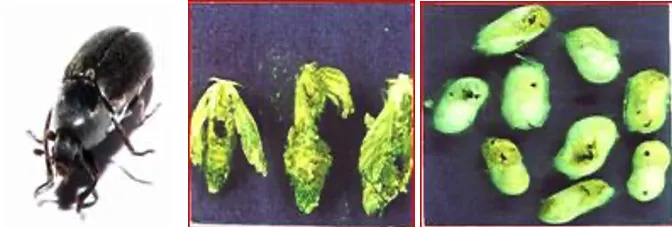
6. Dermestid Beetle -- Dermestes cadaverinus
| Feature | Detail |
|---|---|
| Nature | Scavenger feeding on dried animal materials |
| Targets | Pierced cocoons, stored cocoons, green cocoons, moths |
| Egg laying | 150-250 eggs in the floss (loose outermost silk layer) of cocoons |
| Attack area | Abdominal region of moths |
| Damage | 16.62% on cocoons and 3.57% on moths |
| Prevention | Regular cleaning of storage rooms, fumigation, timely cocoon processing |
Comparison Table: All Four Diseases
| Feature | Pebrine | Grasserie | Flacherie | Muscardine |
|---|---|---|---|---|
| Pathogen type | Protozoan | Virus | Bacteria | Fungus |
| Organism | Nosema bombycis | BmNPV | Streptococci/Bacillus | Beauveria/Metarrhizium |
| Key symptom | Black pepper spots | Yellowish, swollen | Vomiting, diarrhoea | Oil specks, mummification |
| Body after death | Rubbery | Liquefied | Soft, flaccid | Hard, dry mummy |
| Detection method | Mother moth exam | Visual (bamboo cane look) | Chain-type faeces | Mummy colour |
| Transmission | Transovarial (egg) | Oral (food) | Oral + environment | Contact + food |
| Alternative name | Pepper/Corpuscle disease | Jaundice | -- | White/Green muscardine |
Summary Table
| Key Fact | Answer |
|---|---|
| Protozoan disease | Pebrine (Nosema bombycis) |
| Viral disease | Grasserie (BmNPV) -- causes jaundice |
| Bacterial disease | Flacherie -- chain-type faeces, most common |
| Fungal diseases | White (B. bassiana) and Green (M. anisopliae) Muscardine |
| Pebrine detection | Mother moth examination (microscopy for spores) |
| Grasserie appearance | Bamboo cane-like, yellowish |
| Flacherie trigger | Fluctuating temperature, poor mulberry, overcrowding |
| Uzi Fly instars attacked | 4th and 5th |
| Uzi Fly damage sign | Black spot on body, hole in cocoon |
| Dermestid beetle damage | 16.62% on cocoons, 3.57% on moths |
TIP
Quick Exam Recall -- "PGFM": Pebrine = Protozoan (pepper spots, rubbery dead larvae, mother moth exam). Grasserie = Virus (jaundice, bamboo cane). Flacherie = Bacteria (diarrhoea, chain faeces, most common). Muscardine = Fungus (mummies -- white or green).
References
1 source
References
Summary Cheat Sheet
| Concept / Topic | Key Details |
|---|---|
| Pebrine – pathogen | Protozoan Nosema bombycis (microsporidian) |
| Pebrine – also called | Pepper disease / Corpuscle disease |
| Pebrine – key symptom | Black pepper-like spots on integument; dead larvae stay rubbery |
| Pebrine – transmission | Transovarial (mother to offspring through eggs) |
| Pebrine – detection | Mother moth examination (crushed, microscopy for spores) |
| Pebrine – affects especially | Muga silkworms (A. assamensis) |
| Grasserie – pathogen | Virus (BmNPV — Nuclear Polyhedrosis Virus) |
| Grasserie – also called | Jaundice (yellowish skin) |
| Grasserie – key symptom | Bamboo cane appearance; shiny skin; fails to moult |
| Flacherie – pathogen | Bacteria (Streptococci / Bacillus spp.) |
| Flacherie – status | Most common and damaging silkworm disease worldwide |
| Flacherie – key symptom | Vomiting, diarrhoea, chain-type faeces; soft, flaccid body |
| White Muscardine – pathogen | Fungus Beauveria bassiana — white mummies |
| Green Muscardine – pathogen | Fungus Metarrhizium anisopliae — green mummies |
| Muscardine – key symptom | Oil specks on skin; hard, dry mummies |
| Aspergillosis – pathogen | Aspergillus flavus / A. tamari; affects young-age silkworms |
| Uzi Fly | Exorista sorbillans (Tachinidae); attacks 4th and 5th instar |
| Uzi Fly – damage sign | Black spot/scar on body (entry); circular hole in cocoon (exit) |
| Uzi Fly – crop loss | 10-15% in Karnataka, AP, Tamil Nadu |
| Dermestid Beetle | Dermestes cadaverinus; scavenger on dried cocoons and moths |
| Dermestid – damage | 16.62% on cocoons, 3.57% on moths |
| PGFM mnemonic | Pebrine=Protozoan, Grasserie=Virus, Flacherie=Bacteria, Muscardine=Fungus |
TIP
Next: The sericulture sub-section is now complete. The next sub-section covers Lac Culture -- the biology and economics of lac insect rearing.