🍥 Lac Harvesting, Processing, and Economic Importance
From stick lac to shellac -- processing chain, economic uses, natural enemies, and the National Institute of Secondary Agriculture (NISA)
In the previous lesson, we covered the lac insect's life cycle, taxonomy, strains, and crop calendar. Now we follow the harvested lac through its processing chain to the final commercial product -- shellac.
In the Chhotanagpur Plateau region of Jharkhand, tribal families scrape resinous encrustations from Palash and Kusum tree branches after the lac insect crop matures. This raw material -- called stick lac -- is then washed, ground, and processed into shellac, a versatile natural product exported worldwide for use in food coatings, pharmaceuticals, polishes, and electrical insulation. Understanding the processing chain from stick lac to shellac, the economic importance of lac, and the research institutions supporting this industry is important for banking and agriculture exams.
Lac Secretion
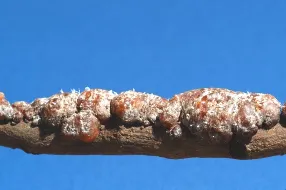
- Lac is secreted by dermal glands (lac glands) present all over the abdomen of the lac insect, except near the mouth parts, two breathing pores, and anus.
- Secretion begins immediately after larval settlement on tender shoots. It appears as a shining layer that hardens on contact with air (polymerisation), forming a protective coating.
- Adjacent insects' secretions meet and fuse, forming a continuous encrustation on the twig -- this is what is commercially harvested as raw lac.
Lac Composition
| Component | Percentage | Commercial Use |
|---|---|---|
| Resin | 75% | Most commercially valuable -- used in shellac, polishes, coatings |
| Albuminous material | 12-13% | Proteins and organic matter from insect body |
| Wax | 6% | Polishes and coatings |
| Dye | 5-6% | Lac dye (erythrolaccin) -- textile colouring, cosmetics |
Processing Chain: Stick Lac to Shellac
TIP
Pro Content Locked
Upgrade to Pro to access this lesson and all other premium content.
₹99 charged monthly · Cancel anytime
- All Agriculture & Banking Courses
- AI Lesson Questions (100/day)
- AI Doubt Solver (50/day)
- Glows & Grows Feedback (30/day)
- AI Section Quiz (20/day)
- 22-Language Translation (100/day)
- Recall Questions (20/day)
- AI Quiz (15/day)
- AI Quiz Paper Analysis (100/day)
- AI Step-by-Step Explanations (100/day)
- Spaced Repetition Recall (FSRS)
- AI Tutor
- Immersive Text Questions
- Audio Lessons — Hindi & English
- Mock Tests & Previous Year Papers
- Summary & Mind Maps
- XP, Levels, Leaderboard & Badges
- Generate New Classrooms
- Voice AI Teacher (AgriDots Live)
- AI Revision Assistant
- Knowledge Gap Analysis
- Interactive Revision (LangGraph)
🔒 Secure via Razorpay · Cancel anytime · No hidden fees
In the previous lesson, we covered the lac insect's life cycle, taxonomy, strains, and crop calendar. Now we follow the harvested lac through its processing chain to the final commercial product -- shellac.
In the Chhotanagpur Plateau region of Jharkhand, tribal families scrape resinous encrustations from Palash and Kusum tree branches after the lac insect crop matures. This raw material -- called stick lac -- is then washed, ground, and processed into shellac, a versatile natural product exported worldwide for use in food coatings, pharmaceuticals, polishes, and electrical insulation. Understanding the processing chain from stick lac to shellac, the economic importance of lac, and the research institutions supporting this industry is important for banking and agriculture exams.
Lac Secretion
- Lac is secreted by dermal glands (lac glands) present all over the abdomen of the lac insect, except near the mouth parts, two breathing pores, and anus.
- Secretion begins immediately after larval settlement on tender shoots. It appears as a shining layer that hardens on contact with air (polymerisation), forming a protective coating.
- Adjacent insects' secretions meet and fuse, forming a continuous encrustation on the twig -- this is what is commercially harvested as raw lac.
Lac Composition
| Component | Percentage | Commercial Use |
|---|---|---|
| Resin | 75% | Most commercially valuable -- used in shellac, polishes, coatings |
| Albuminous material | 12-13% | Proteins and organic matter from insect body |
| Wax | 6% | Polishes and coatings |
| Dye | 5-6% | Lac dye (erythrolaccin) -- textile colouring, cosmetics |
Processing Chain: Stick Lac to Shellac
TIP
Processing chain: Stick Lac (raw) -- Ari/Phunki Lac -- Seed Lac (washed) -- Shellac (melted final product) or Button Lac (disc form).
| Stage | Description |
|---|---|
| Stick lac | Raw lac cut from host plant twigs -- crudest form, contains resin + twig pieces + insect bodies + impurities |
| Ari lac | Stick lac processed before crawler emergence (retains insect bodies; higher dye content) |
| Phunki lac | Stick lac processed after swarming (insects have left; lighter, contains air spaces) |
| Scraping | Lac scraped from twigs using a knife; must not be exposed to sun (softening/colour loss) |
| Grinding | Scraped lac ground in stone mills; twig fragments, insect remains, and sand separated |
| Washing | Washed repeatedly with cold water to remove fine dirt and colour |
| Seed lac | Cleaned, washed, dried granular form -- intermediate product |
| Melting | Seed lac melted and strained through cotton cloth to remove remaining solids |
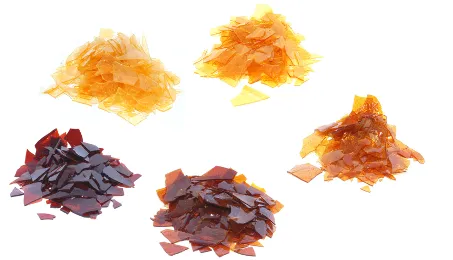
| Shellac | Final product -- purified lac in orange/yellow flakes manufactured by pouring molten lac on zinc sheet; the form that enters international trade |
| Button lac | Molten lac solidified in disc form (same material as shellac, different shape) |
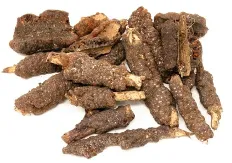
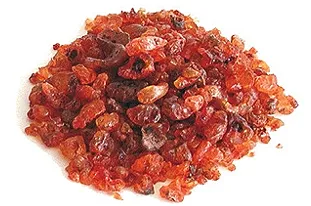
TIP
Exam Trap: Ari lac = processed before swarming. Phunki lac = processed after swarming. Remember: "Ari = Ahead of swarming" (before). "Phunki = Post-swarming" (after).
Economic Importance
Raw lac provides three valuable products: resin, dye, and wax. India is the world's largest producer and exporter of lac.
Uses of Lac
| Sector | Applications |
|---|---|
| Wood finishing | French polishing of furniture (most common use -- shellac dissolved in spirit) |
| Food industry | FDA-approved food-grade coating ("confectioner's glaze") for candies, chocolates, fruits, pills |
| Cosmetics | Lipsticks, hair lacquers, nail polishes |
| Electrical | Insulating materials |
| Textiles | Lac dye (erythrolaccin) for wool and silk (rich crimson/scarlet hues on natural fibres) |
| Printing | Lithographic inks, printing inks |
| Pharmaceuticals | Tablet coatings, liver protection, anti-obesity preparations |
| Other | Sealing wax, gramophone records, crayons, fireworks, leather treatment |
Livelihood Impact
- Lac cultivation is an important income source for tribal communities in Jharkhand, Chhattisgarh, MP, WB, Maharashtra, Odisha, and parts of UP, AP, Gujarat, and NE region.
- Highly labour-intensive -- provides employment to men and women in forest and sub-forest areas.
- A highly remunerative crop that also earns foreign exchange through exports.
Natural Enemies of Lac
Natural enemies can cause 30-50% crop losses if uncontrolled. Control measures include proper seed lac selection, killing predator eggs in harvested lac, physical removal of infested sticks, and selective use of insecticides.
Two Major Predators
| Predator | Scientific Name | Family | Common Name |
|---|---|---|---|
| White enemy | Eublemma amabilis | Noctuidae | White moth |
| Black enemy | Holcocera pulverea | Blastobasidae | Blackish-grey moth |
- White enemy (E. amabilis): Dirty white larva tunnels through lac encrustation, feeds on lac insects. Considered the most destructive pest of lac.
- Black enemy (H. pulverea): Brownish larva causes similar damage. Adult moth is blackish-grey.
- Both predators also destroy the lac resin itself, not just the insects.
TIP
Exam Quick: White enemy = Eublemma amabilis (Noctuidae). Black enemy = Holcocera pulverea (Blastobasidae). Both are moth predators of lac insects.
National Institute of Secondary Agriculture (NISA)
| Feature | Detail |
|---|---|
| Location | Ranchi, Jharkhand |
| Original name | Indian Lac Research Institute (ILRI) -- established 1924 |
| Renamed (2007) | Indian Institute of Natural Resins and Gums (IINRG) |
| Renamed (2022) | National Institute of Secondary Agriculture (NISA) (from 20 Sept 2022, approved by ICAR) |
| Under | ICAR |
| Mandate | All aspects of lac + natural resins and gums + secondary agriculture |
What is Secondary Agriculture?
- Secondary agriculture = high value addition to primary agriculture. It involves:
- Processing crop residues, animal by-products for industrial products
- Enhancing shelf life through processing
- Alternative activities: lac culture, beekeeping, mushroom cultivation, agri-tourism
- The concept creates a circular economy within farming, converting waste into value-added products.
- NISA's broadened scope reflects the importance of secondary agriculture in rural industrialisation for improving farmer income.
Evolution of the Institute
| Year | Name | Focus |
|---|---|---|
| 1924 | ILRI (Indian Lac Research Institute) | Lac research only |
| 2007 | IINRG (Indian Institute of Natural Resins and Gums) | Lac + natural resins and gums |
| 2022 | NISA (National Institute of Secondary Agriculture) | All secondary agriculture |
Summary Table
| Key Fact | Answer |
|---|---|
| Lac resin content | 75% |
| Lac dye | Erythrolaccin (5-6%) |
| Processing chain | Stick lac -- Ari/Phunki -- Seed lac -- Shellac/Button lac |
| Ari lac | Processed before swarming |
| Phunki lac | Processed after swarming |
| Marketed as | Shellac (flakes, international trade) |
| Most common use | French polishing of wooden furniture |
| Food-grade use | Confectioner's glaze (FDA-approved) |
| White enemy | Eublemma amabilis (Noctuidae) |
| Black enemy | Holcocera pulverea (Blastobasidae) |
| NISA location | Ranchi, Jharkhand |
| NISA original name (1924) | ILRI |
| NISA 2007 name | IINRG |
| NISA current name (2022) | NISA |
| Secondary agriculture | Value addition to primary agriculture products |
TIP
Quick Exam Recall: Lac = 75% resin. Ari = before swarming. Phunki = after swarming. Shellac = final product (flakes). ILRI (1924) -- IINRG (2007) -- NISA (2022), all at Ranchi. White enemy = Eublemma. Black enemy = Holcocera.
References
1 source
References
Lac Harvesting Decision Guide
When and how to harvest — critical timing decisions:
| Decision Point | Ari Lac (before swarming) | Phunki Lac (after swarming) |
|---|---|---|
| When to harvest | Just before crawlers emerge (lac still contains live insects) | After crawlers have left (empty cells remain) |
| Quality | Higher — more resin content, insects still secreting | Lower — resin secretion stopped; cells may be damaged |
| Yield | Lower quantity but premium quality | Higher quantity but lower quality |
| Use as brood lac? | YES — this is your planting material for next crop | No — crawlers already gone |
| Best for selling | Premium market (shellac, cosmetics) | Bulk market (paints, varnishes) |
Processing chain: Stick lac → Seed lac (washed, dried) → Shellac (melted, stretched into sheets/flakes). Each step adds value: stick lac ₹200-300/kg → shellac ₹400-600/kg.
Enemies to watch: Eublemma amabilis (white enemy — predator, most destructive) and Holcocera pulverea (black enemy — parasitoid). Control by timely pruning and removing infested branches.
Summary Cheat Sheet
| Concept / Topic | Key Details |
|---|---|
| Lac secretion source | Dermal glands (lac glands) on abdomen; hardens by polymerisation |
| Lac – resin content | 75% (most commercially valuable component) |
| Lac – dye | Erythrolaccin (5-6%); used for textiles, cosmetics |
| Lac – wax | 6%; used in polishes and coatings |
| Stick lac | Crudest raw form; lac cut from host twigs |
| Ari lac | Processed before crawler emergence (higher dye) |
| Phunki lac | Processed after swarming (insects have left) |
| Seed lac | Cleaned, washed, dried granular intermediate product |
| Shellac | Final purified product in orange/yellow flakes; enters international trade |
| Button lac | Molten lac solidified in disc form |
| Processing chain | Stick lac → Ari/Phunki → Seed lac → Shellac/Button lac |
| Most common use | French polishing of wooden furniture |
| Food-grade use | Confectioner's glaze (FDA-approved coating) |
| Lac dye application | Rich crimson/scarlet on wool and silk |
| White enemy | Eublemma amabilis (Noctuidae) — most destructive lac pest |
| Black enemy | Holcocera pulverea (Blastobasidae) |
| Crop losses from enemies | 30-50% if uncontrolled |
| NISA – location | Ranchi, Jharkhand |
| Institute evolution | ILRI (1924) → IINRG (2007) → NISA (2022); under ICAR |
| Secondary agriculture | High value addition to primary agriculture; lac, beekeeping, mushrooms |
| India's lac status | World's largest producer and exporter |
TIP
Next: The lac culture sub-section is now complete. The final lesson covers other beneficial insects -- parasitoids, predators, pollinators, weed killers, and their uses in research and medicine.