🌾 Barley -- The Hardy Rabi Cereal (Cultivation and Varieties)
Complete guide to barley cultivation covering classification, climate, varieties, malting quality, and exam-important variety tables for exams.
In the dry, cold winters of Rajasthan and Uttar Pradesh, where wheat demands more water and fertile soil, barley thrives with just 350-500 mm of rainfall. It is the go-to cereal for drier Rabi regions, and its uses extend from chapatti and animal feed to the brewing industry.
In the previous lesson, we covered Wheat -- the King of Cereals with its Green Revolution history and dwarf gene varieties. Barley shares many characteristics with wheat (both are Rabi, long-day, self-pollinated cereals in Poaceae) but stands apart with its lower water requirement and tolerance to salinity and alkalinity.
This chapter covers:
- Basics -- botanical classification, protein, and nutritional uses
- Species classification -- two-row vs six-row barley and their uses
- Climate and cultivation -- water needs, critical stages
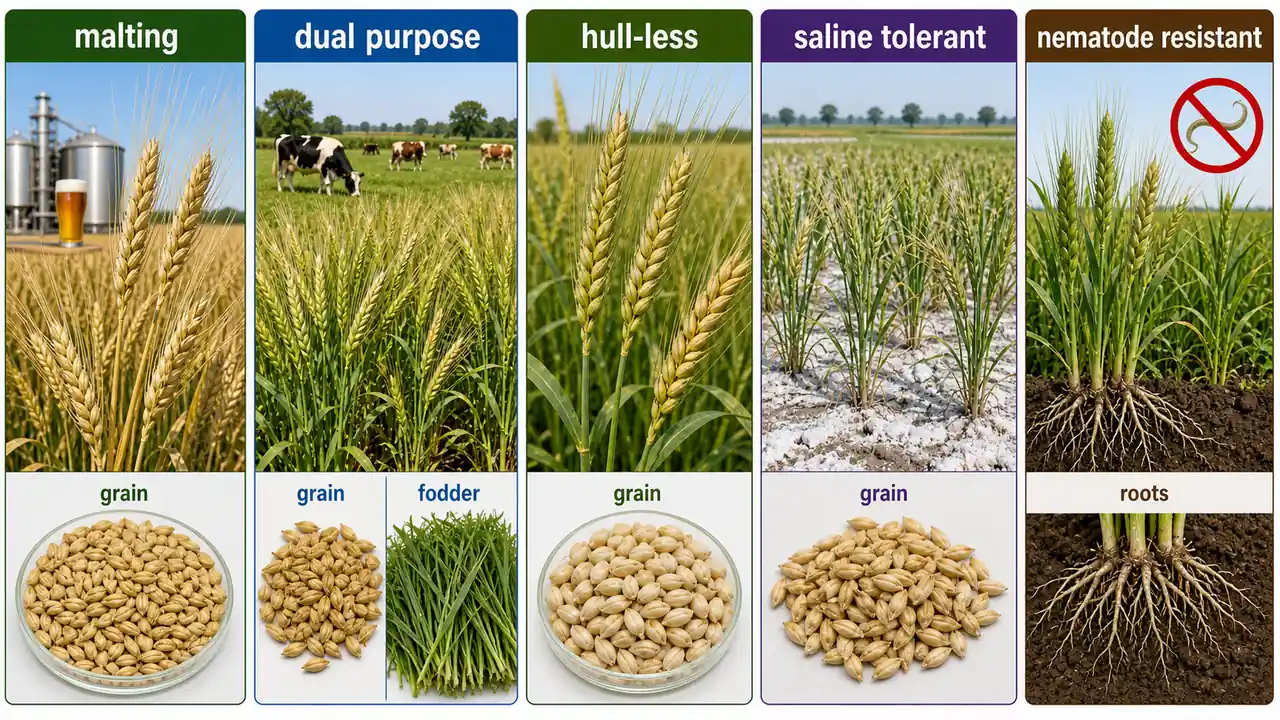
- Varieties -- malting, nematode-resistant, saline-tolerant, and dual-purpose types
For competitive exams, barley frequently appears in questions comparing it with wheat, and its variety table -- especially malting and nematode-resistant types -- is a must-know.
Pro Content Locked
Upgrade to Pro to access this lesson and all other premium content.
Charged once for one year · ₹1188 total
Save ₹100/month vs ₹2388/year launch price
- All Agriculture & Banking Courses
- AI Lesson Questions (100/day)
- AI Doubt Solver (50/day)
- Glows & Grows Feedback (30/day)
- AI Section Quiz (20/day)
- 22-Language Translation (100/day)
- Recall Questions (20/day)
- AI Quiz (15/day)
- AI Quiz Paper Analysis (100/day)
- AI Step-by-Step Explanations (100/day)
- Spaced Repetition Recall (FSRS)
- AI Tutor
- Immersive Text Questions
- Audio Lessons — Hindi & English
- Mock Tests & Previous Year Papers
- Summary & Mind Maps
- XP, Levels, Leaderboard & Badges
- Generate New Classrooms
- Voice AI Teacher (AgriDots Live)
- AI Revision Assistant
- Knowledge Gap Analysis
- Interactive Revision (LangGraph)
🔒 Secure one-time yearly payment via Razorpay · No hidden fees
In the dry, cold winters of Rajasthan and Uttar Pradesh, where wheat demands more water and fertile soil, barley thrives with just 350-500 mm of rainfall. It is the go-to cereal for drier Rabi regions, and its uses extend from chapatti and animal feed to the brewing industry.
In the previous lesson, we covered Wheat -- the King of Cereals with its Green Revolution history and dwarf gene varieties. Barley shares many characteristics with wheat (both are Rabi, long-day, self-pollinated cereals in Poaceae) but stands apart with its lower water requirement and tolerance to salinity and alkalinity.
This chapter covers:
- Basics -- botanical classification, protein, and nutritional uses
- Species classification -- two-row vs six-row barley and their uses
- Climate and cultivation -- water needs, critical stages
- Varieties -- malting, nematode-resistant, saline-tolerant, and dual-purpose types
For competitive exams, barley frequently appears in questions comparing it with wheat, and its variety table -- especially malting and nematode-resistant types -- is a must-know.
Basics
| Parameter | Detail |
|---|---|
| Botanical name | Hordeum vulgare |
| Family | Poaceae |
| Origin | South East Asia |
| Area (India) | Uttar Pradesh > Rajasthan > Madhya Pradesh |
| Production (India) | Rajasthan > Uttar Pradesh > Madhya Pradesh |
| Productivity (India) | Punjab |
- Albuminodes is the main type of protein in barley. Barley is also valued for its dietary fibre and beta-glucan content, which lowers cholesterol.
- Lugri is a traditional fermented drink made from hull-less barley grains, popular in certain hill regions.

- Pearl barley (dehulled and polished) is recommended for kidney disorders because it is easy to cook and digest.

Classification of Barley Species
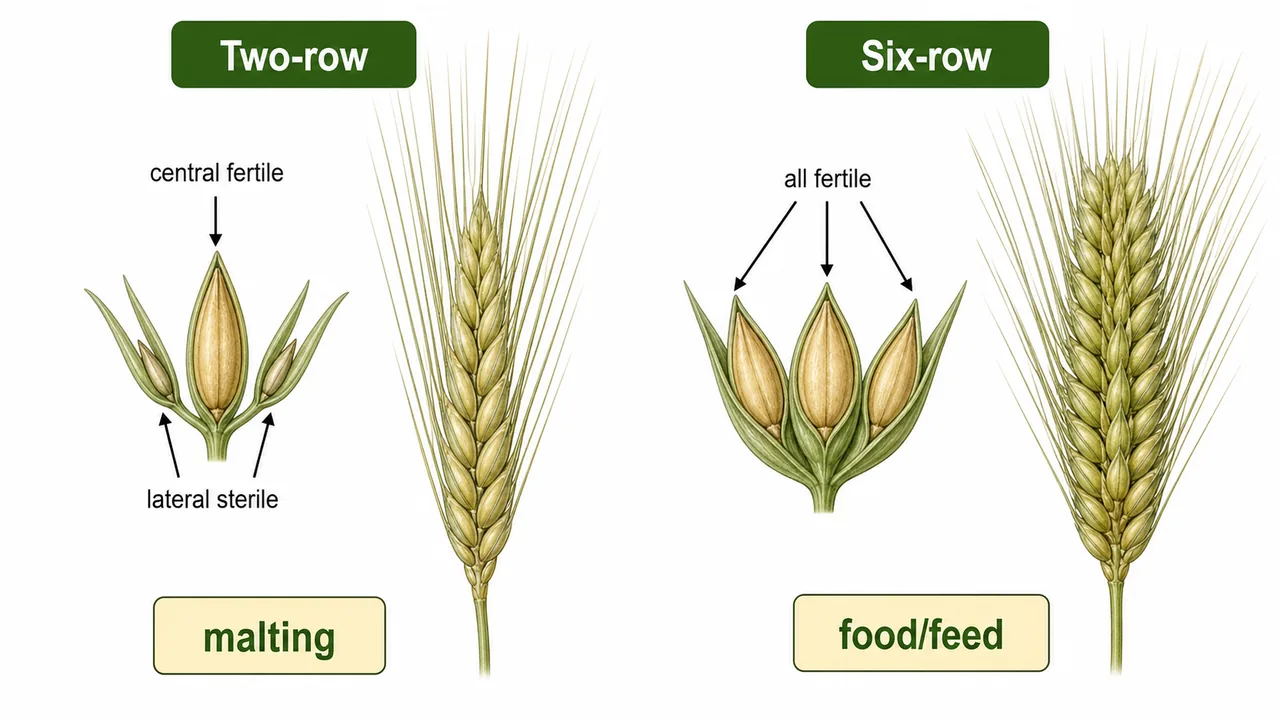
| Species | Row Type | Key Use |
|---|---|---|
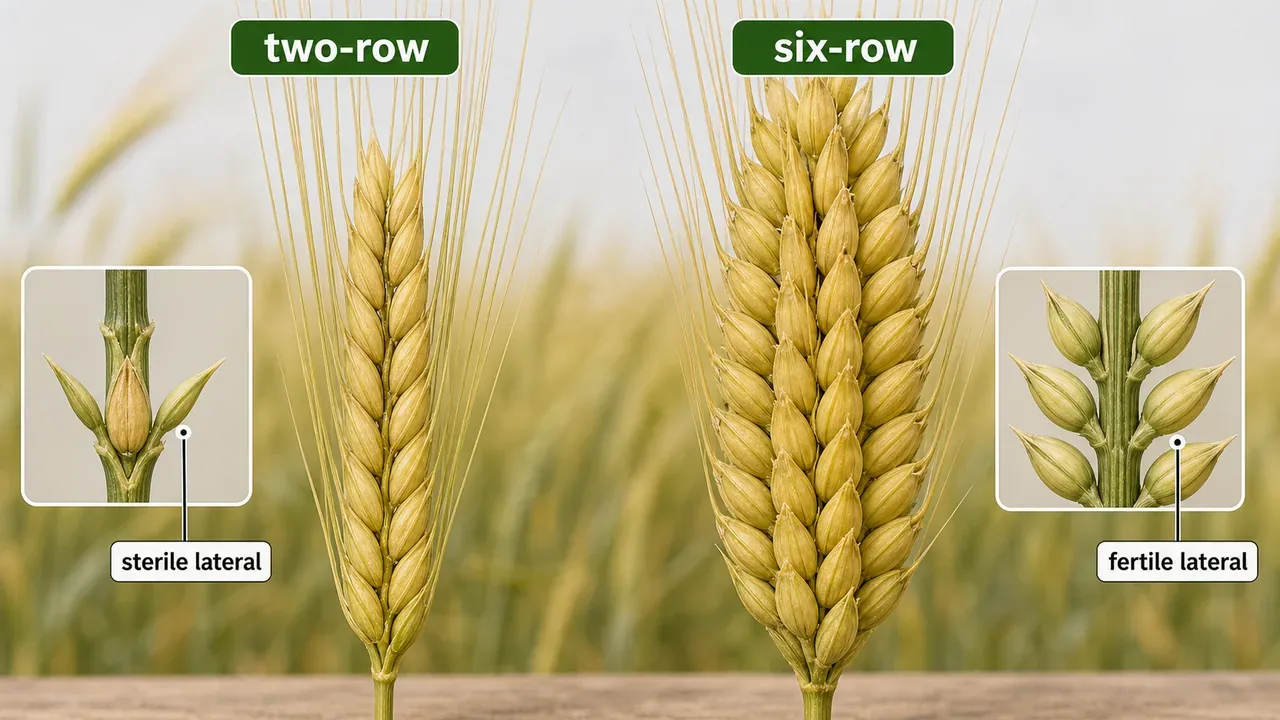
| Hordeum distichon | Two-row -- only middle spikelets fertile | Preferred for malting and brewing (uniform grain size) |
| Hordeum vulgare | Six-row -- all spikelets fertile, most widely grown | Animal feed and food (higher protein content) |
TIP
Exam mnemonic: "2 for Malt, 6 for Meal" -- Two-row barley for malting/brewing, six-row barley for food/feed. Lateral spikelets in two-row type are infertile but possess all floral organs.
Climate and Cultivation
| Parameter | Requirement |
|---|---|
| Early growth | Cold weather (good vegetative growth) |
| Maturity | Warm and dry (proper grain filling and drying) |
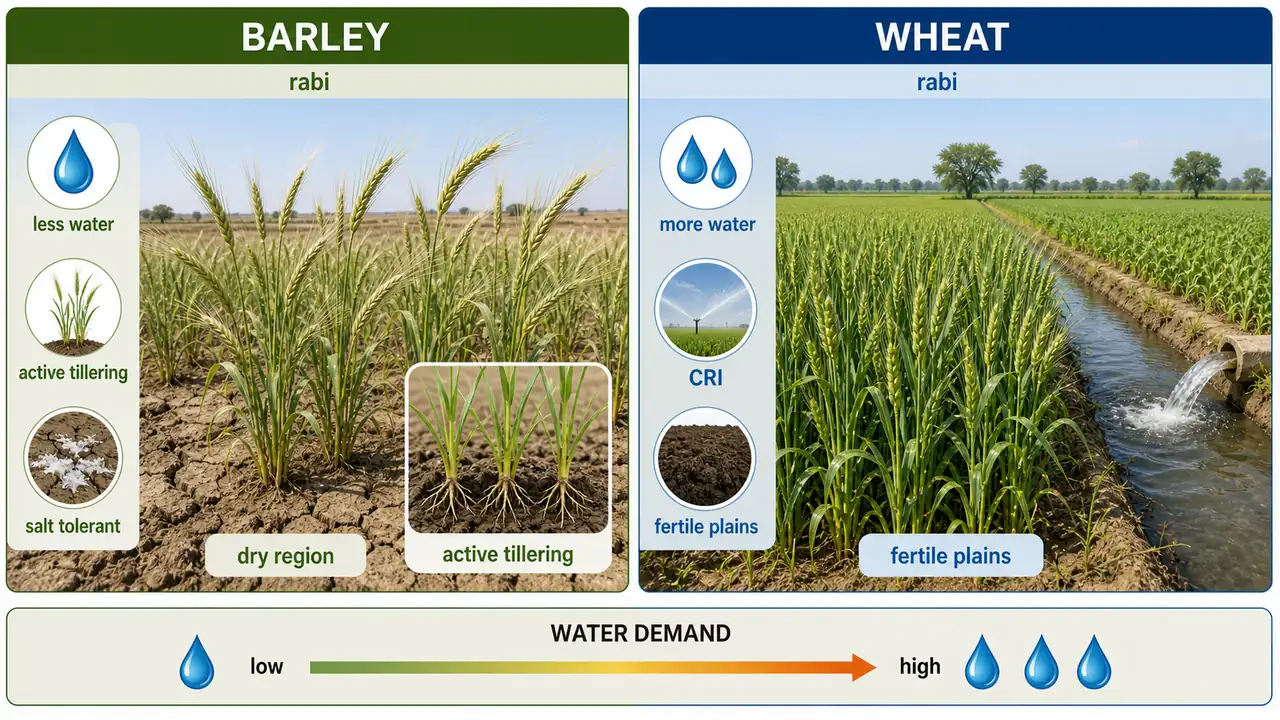
| Water requirement | 350-500 mm (less than wheat's 600-900 mm) |
| Critical stage | Active tillering (30-35 DAS) |
| Photoperiod | Long-day plant |
| Seed rate | 75-80 kg/ha |
| Yield | 30-35 q/ha |
| Safe storage moisture | 10-12% |
- Barley is relatively drought tolerant compared to wheat, making it well-suited for drier Rabi regions.
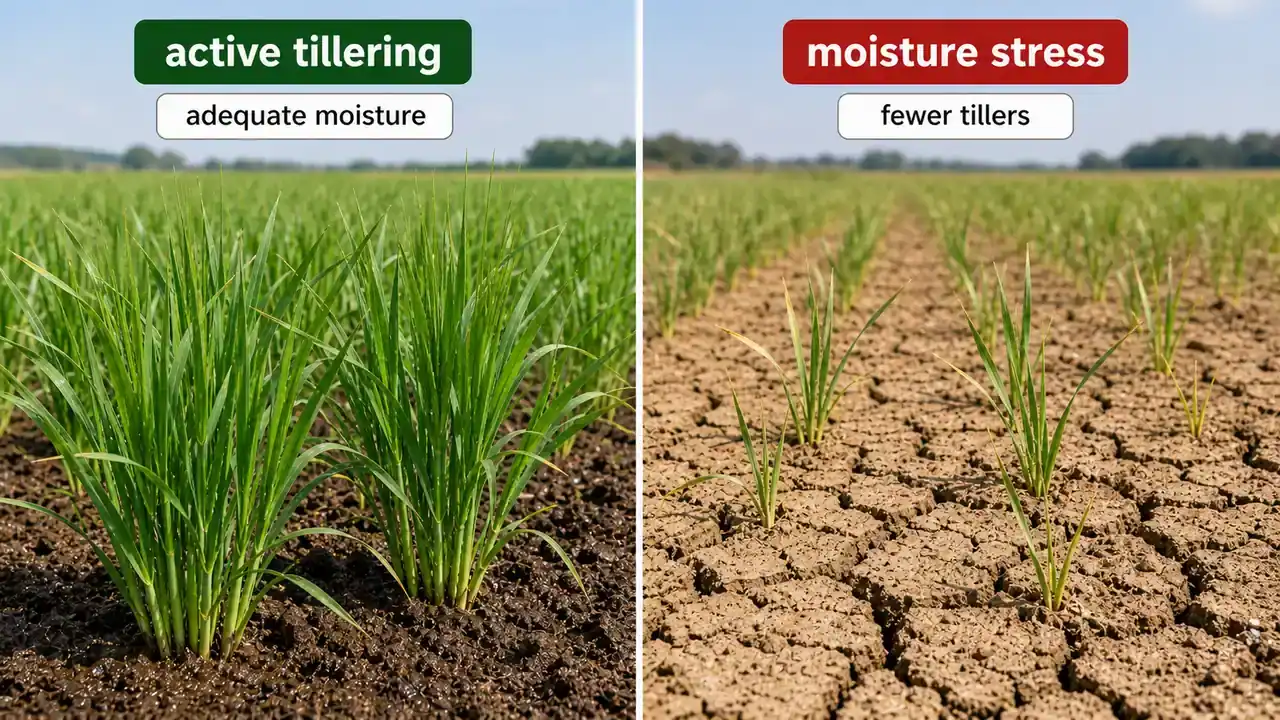
- Moisture stress or nutrient deficiency at the active tillering stage significantly reduces the number of productive tillers.
NOTE
Barley vs Wheat comparison: Barley needs less water (350-500 mm vs 600-900 mm), is more salt tolerant, and both are long-day plants. Key difference: barley's critical stage is active tillering (30-35 DAS), while wheat's critical stages include crown root initiation.
Varieties
| Feature | Variety |
|---|---|
| Molya disease resistant | RD 2052 (Molya is caused by cereal cyst nematode) |
| Malting quality | Alfa 93, RD 2503, Rekha |
| Dual purpose (fodder + grain) | Kedar |
| Malting and brewing | Vijay |
| Non-shattering, frost tolerant | BSH 46 |
| Hull-less | DL-472 (valued for direct food use, less processing needed) |
Detailed Varieties Asked in AFO/NABARD
| Variety | Special Characteristics |
|---|---|
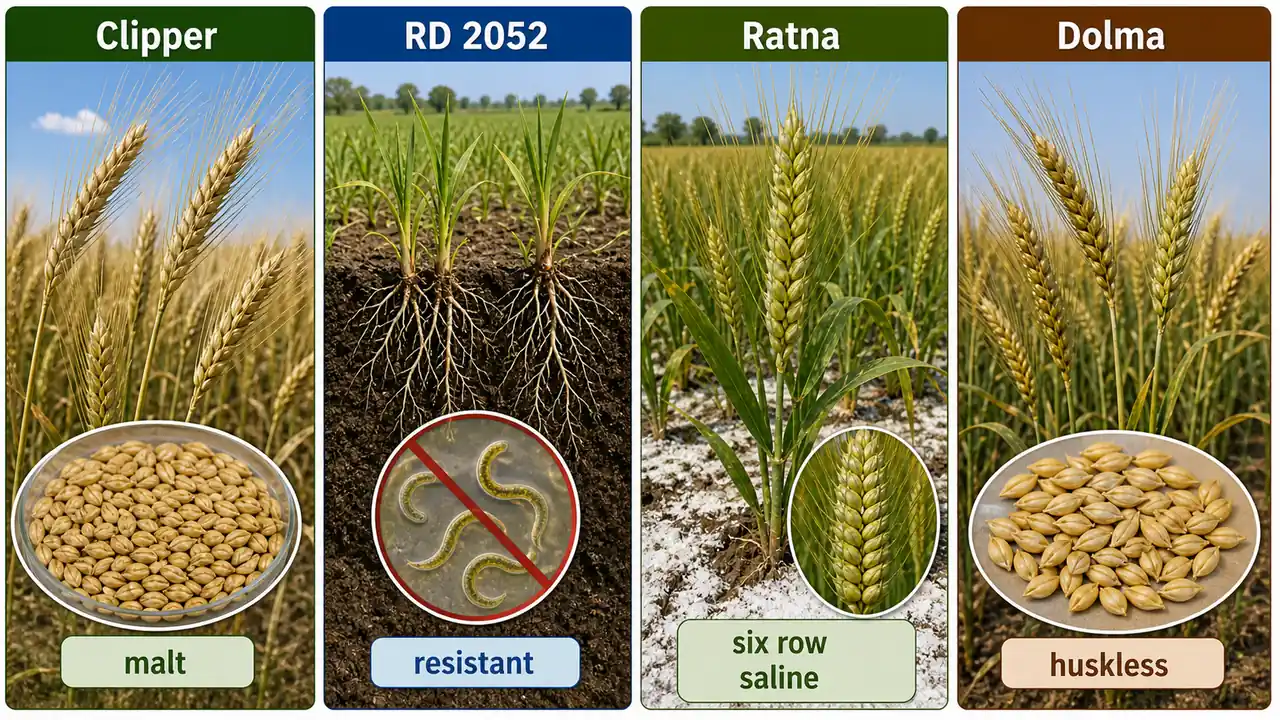
| Dolma | Huskless variety |
| Ratna (Six-rowed) | Hybrid, highly tolerant to saline & alkaline soil |
| RD-2052, RD 2035, Rajkiran (RD-387) | Molya nematode resistant |
| BL-2 | Salinity tolerant |
| Rajkiran | CCN (Cereal Cyst Nematode) resistance |
| Clipper | For malt & beer |
| AHa 93, DWR 28, RD 2668, DWRB 73, BCU 73, K1055, DWRB 137 | Irrigated, malt purpose |
| RD 2035, RD 2552, RD 2715 | Dual purpose (grain + forage) |
| RD 2552, BH 902, BH 393, PL 751, RD 2593, DWRB 92 | Irrigated |
| HBL 276, BHS 352, BHS 380, RD 2624, RD 2660, K 560, K 603, VLB 130 | Rainfed |
| Raj-3077 | Suitable for saline soil and late sowing |
| Raj-4238 | Best quality grains for chapatti making, rust resistant |
Summary Table -- Barley at a Glance
| Parameter | Value |
|---|---|
| Botanical name | Hordeum vulgare |
| Family | Poaceae |
| Origin | South-East Asia |
| Protein | Albuminodes + beta-glucan |
| Photoperiod | Long-day plant |
| Water requirement | 350-500 mm |
| Critical stage | Active tillering (30-35 DAS) |
| Seed rate | 75-80 kg/ha |
| Yield | 30-35 q/ha |
| Main malting variety | Clipper |
| Nematode resistant | RD 2052, Rajkiran |
| Saline tolerant | Ratna, BL-2, Raj-3077 |
| Hull-less | DL-472, Dolma |
| Pearl barley use | Kidney disorders |
| Traditional drink | Lugri (fermented) |
Summary Cheat Sheet
| Concept / Topic | Key Details |
|---|---|
| Botanical name | Hordeum vulgare |
| Family | Poaceae; Origin = South East Asia |
| Two-row barley | H. distichon — preferred for malting and brewing |
| Six-row barley | H. vulgare — most widely grown; for food and feed |
| Protein type | Albuminodes + beta-glucan (lowers cholesterol) |
| Pearl barley | Dehulled/polished; recommended for kidney disorders |
| Lugri | Traditional fermented drink from hull-less barley |
| Water requirement | 350-500 mm (less than wheat's 600-900 mm) |
| Photoperiod | Long-day plant |
| Critical stage | Active tillering (30-35 DAS) |
| Seed rate | 75-80 kg/ha |
| Yield | 30-35 q/ha |
| Clipper variety | For malt and beer |
| RD 2052, Rajkiran | Molya nematode resistant (cereal cyst nematode) |
| Ratna (Six-rowed) | Hybrid; tolerant to saline & alkaline soil |
| Dolma | Huskless variety |
| Raj-3077 | Suitable for saline soil and late sowing |
| Raj-4238 | Best quality grains for chapatti; rust resistant |
| Hull-less variety | DL-472 |
| Area leader | Uttar Pradesh > Rajasthan > Madhya Pradesh |
| Production leader | Rajasthan > Uttar Pradesh > Madhya Pradesh |
TIP
Next: The following lesson covers Maize -- the Queen of Cereals and a cross-pollinated C4 crop that contrasts with the self-pollinated C3 cereals (rice, wheat, barley) covered so far.