🐄 Heifer, Pregnant Cow, and Lactating Animal Management
Complete guide to heifer rearing, pregnant animal care, parturition management, milking methods, estrus detection, lactating cow feeding, body condition scoring, transition period, reproductive guidelines, and economic characters for IBPS AFO and NABARD exams.
The story of a dairy animal's productive life continues well beyond the calf stage. A heifer is the productive pipeline — how she is reared and when she first calves determines her lifetime output. Once she conceives, pregnancy management determines successful calving. Lactation management then determines how fully her genetic milk potential is expressed. This lesson covers three closely linked stages in sequence: heifer → pregnant cow → lactating cow, each stage building directly on the previous.
Care and Management of Heifers
A heifer is a young female bovine that has not yet calved. Proper management is critical because heifers are the future breeding stock of the dairy herd — underfeeding or breeding too early permanently limits their lifetime productivity.
Housing and Environmental Protection
- Reared indoors or outdoors (outdoors for 9–12 months)
- Outdoors: protect from rain, hot sun, snow, heavy winds, biting flies, and parasitic infestation
- Exotic breeds (Holstein Friesian, Jersey) perform poorly in tropical outdoor conditions — heat and humidity reduce growth rate and delay puberty
Age and Weight at First Breeding
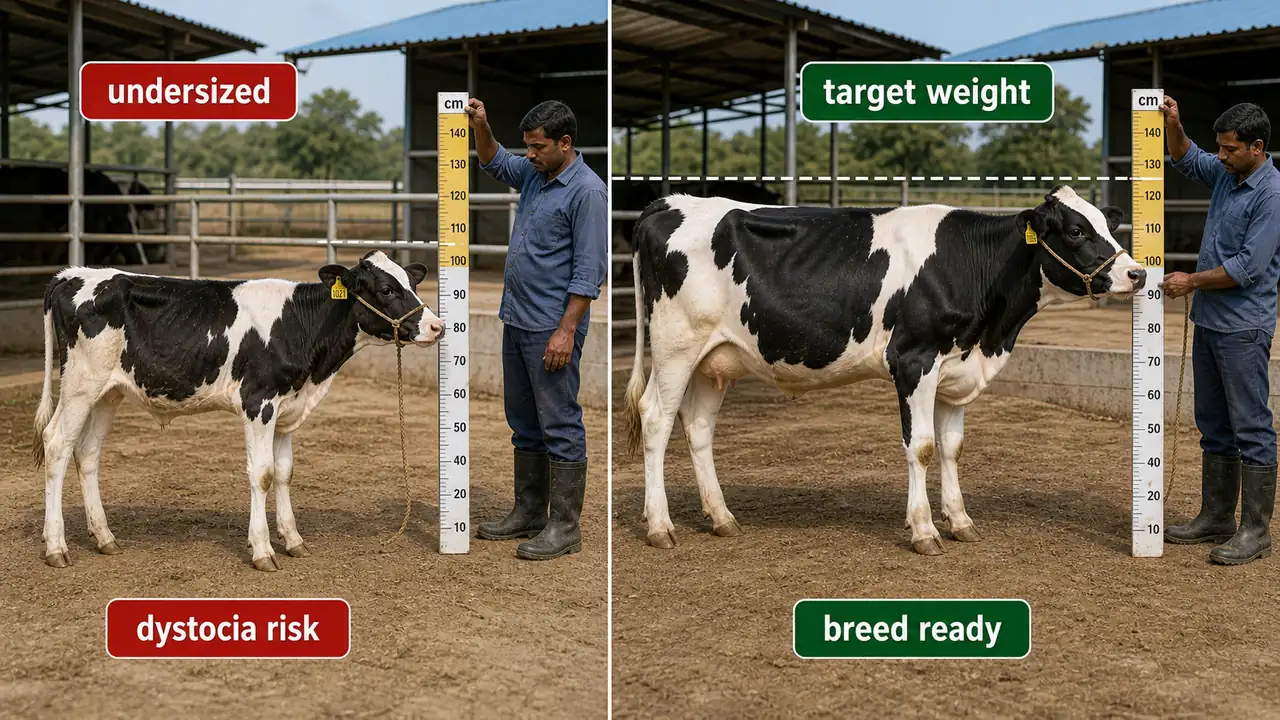
Body weight matters more than age at first breeding. An undersized heifer has an incompletely developed pelvic canal — breeding her before she reaches target weight causes dystocia (difficult calving), risking both the calf and dam. It also stunts the heifer's own growth.
Pro Content Locked
Upgrade to Pro to access this lesson and all other premium content.
₹99 charged monthly · Cancel anytime
- All Agriculture & Banking Courses
- AI Lesson Questions (100/day)
- AI Doubt Solver (50/day)
- Glows & Grows Feedback (30/day)
- AI Section Quiz (20/day)
- 22-Language Translation (100/day)
- Recall Questions (20/day)
- AI Quiz (15/day)
- AI Quiz Paper Analysis (100/day)
- AI Step-by-Step Explanations (100/day)
- Spaced Repetition Recall (FSRS)
- AI Tutor
- Immersive Text Questions
- Audio Lessons — Hindi & English
- Mock Tests & Previous Year Papers
- Summary & Mind Maps
- XP, Levels, Leaderboard & Badges
- Generate New Classrooms
- Voice AI Teacher (AgriDots Live)
- AI Revision Assistant
- Knowledge Gap Analysis
- Interactive Revision (LangGraph)
🔒 Secure via Razorpay · Cancel anytime · No hidden fees
The story of a dairy animal's productive life continues well beyond the calf stage. A heifer is the productive pipeline — how she is reared and when she first calves determines her lifetime output. Once she conceives, pregnancy management determines successful calving. Lactation management then determines how fully her genetic milk potential is expressed. This lesson covers three closely linked stages in sequence: heifer → pregnant cow → lactating cow, each stage building directly on the previous.
Care and Management of Heifers
A heifer is a young female bovine that has not yet calved. Proper management is critical because heifers are the future breeding stock of the dairy herd — underfeeding or breeding too early permanently limits their lifetime productivity.
Housing and Environmental Protection
- Reared indoors or outdoors (outdoors for 9–12 months)
- Outdoors: protect from rain, hot sun, snow, heavy winds, biting flies, and parasitic infestation
- Exotic breeds (Holstein Friesian, Jersey) perform poorly in tropical outdoor conditions — heat and humidity reduce growth rate and delay puberty
Age and Weight at First Breeding
Body weight matters more than age at first breeding. An undersized heifer has an incompletely developed pelvic canal — breeding her before she reaches target weight causes dystocia (difficult calving), risking both the calf and dam. It also stunts the heifer's own growth.
| Breed Size | Age at First Breeding | Adequate Live Weight |
|---|---|---|
| Small breeds | 15 months | 200–225 kg |
| Large breeds | 18 months | 275 kg |
- Crossbred heifers may show heat as early as 10 months — but must NOT be mated until reaching 225/275 kg OR minimum 14 months, whichever is later
Age at First Calving
| Type | Age at First Calving |
|---|---|
| Crossbred | 25–30 months |
| Exotic | 24 months |
| Local/Indigenous | 42 months |
Local breeds take the longest because they reach puberty and body maturity much later than crossbred or exotic breeds.
IMPORTANT
Breeding too early (before target body weight) causes dystocia — difficult calving due to underdeveloped pelvis. Target body weight must be reached before first breeding, regardless of age.
Heifer Feeding Schedule
| Feed Type | Age / Category | Quantity |
|---|---|---|
| Concentrate feed | 3 months to 1 year | 1 kg |
| Concentrate feed | Above 1 year | 2 kg |
| Concentrate feed | Pregnant heifers | 3–3.5 kg |
| Green Fodder (Leguminous) | — | 10 kg |
| Green Fodder (Non-leguminous) | — | 25 kg |
| Dry Fodder | — | 3 kg |
| Grains (pre-calving) | Prior to calving | 1.5 kg/day |
Vaccination Schedule for Cattle and Buffaloes
| Disease | Age at First Dose | Frequency | Remarks |
|---|---|---|---|
| FMD (Foot and Mouth Disease) | 4 months onwards | Every 6 months | Mandatory under NADCP |
| Brucellosis | Female calves 4–8 months | Once only (not adult or male) | S19/RB51 vaccine; prevents reproductive losses |
| HS (Haemorrhagic Septicaemia) | 6 months+ | Annually before monsoon | Pasteurella multocida; critical in endemic areas |
| BQ (Black Quarter) | 6 months+ | Annually | Clostridial disease; affects muscle tissues |
| Anthrax | 6 months+ | Annually in endemic areas | Sterne spore vaccine |
| LSD (Lumpy Skin Disease) | Calves from 4 months | Annual booster | Mandatory under NADCP 2022 (notifiable disease) |
IMPORTANT
NADCP (National Animal Disease Control Programme) mandates 100% FMD and Brucellosis vaccination coverage. LSD was brought under NADCP after the major 2022 outbreak across India.
Other Heifer Management Points
- Training: Halter-train heifers early to make them docile — essential for future milking, AI, and veterinary examination
- Pre-calving: House pregnant heifers with milking cows at least 1 month before calving; wash udder with warm water and gently pull teats a few days pre-calving to reduce fear at first milking
- Deworming: Every 4–6 months
- Grooming: Daily brushing removes dust, dirt, manure and controls ectoparasites (ticks, lice, mites)
- Indoor steaming up: Pregnant heifers receive 1.5 kg grain/day before calving — builds reserves for foetal growth and subsequent milk production
Care and Management of Pregnant Animals
Once the heifer conceives, the management focus shifts from growth to: (1) supporting the developing foetus, and (2) preparing the dam for calving and the subsequent lactation.
Key Facts
- Minimum dry period: 60 days — essential for mammary gland regeneration
- Pregnancy confirmed by: rectal palpation at 90 days post-AI
- Gestation period: 280 days (cattle); 305–315 days (buffaloes)
- Extra concentrate as pregnancy allowance: 1.25–1.75 kg/day
- Steaming Up in last 8 weeks of gestation: 1 kg extra concentrate/day
Handling and Protection
Provide gentle handling throughout pregnancy. Avoid:
- Slipping on stable floor (provide non-slip matting)
- Long-distance travel
- Chasing by dogs, bulls, or children
- Fighting or crowding between pregnant animals
- Contact with recently aborted animals or brucellosis carriers — brucellosis spreads via contact with aborted foetuses, placental membranes, and uterine discharges
Feeding of Pregnant Animals
| Feed | Quantity |
|---|---|
| Concentrate mixture | 3.5 kg/day |
| Green fodder | 25–35 kg/day |
| Paddy straw | 5 kg |
| Calcium (bone meal) | Include in diet to prevent milk fever (hypocalcaemia) after calving |
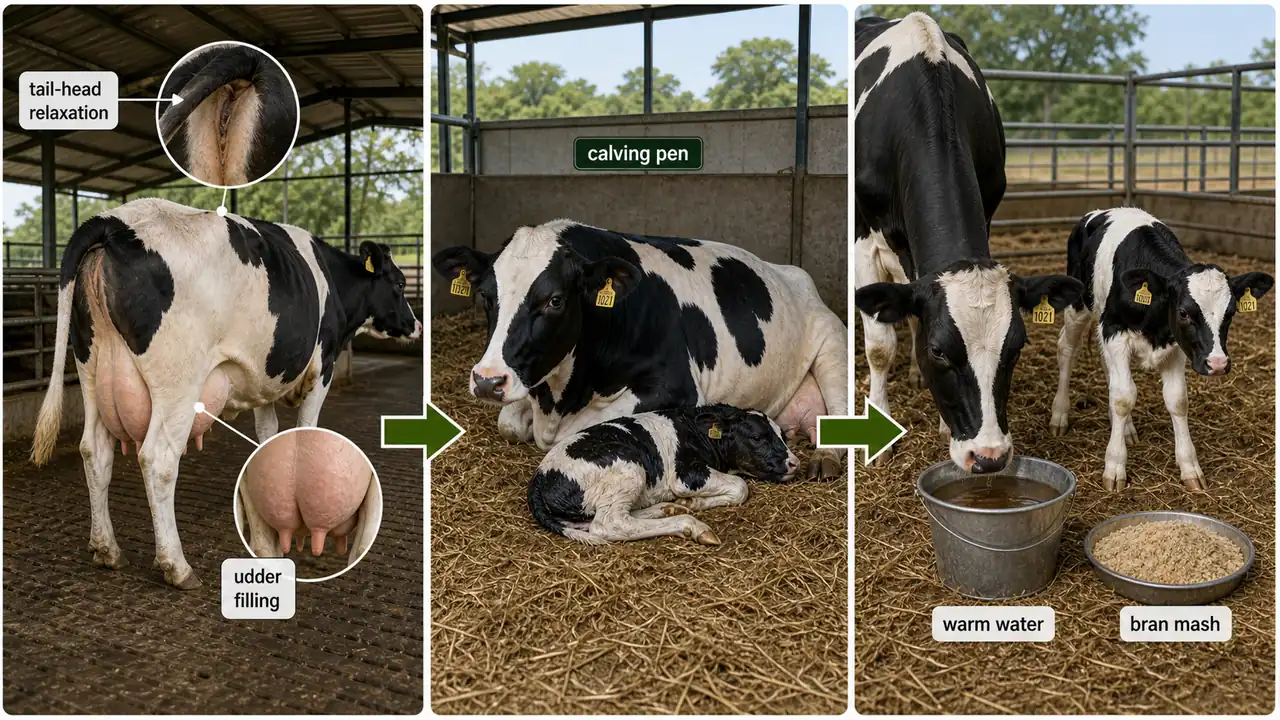
Pre-Calving Signs (1–2 Weeks Before Calving)
- Swelling of udder (udder filling with colostrum)
- Swelling and reddening of vulva
- Relaxation and dropping of ligaments around the tail head
At this stage: move the animal to a clean, dry calving pen (maternity pen).
Parturition Management
- Most healthy animals need little assistance during normal delivery
- Placenta (afterbirth) is normally expelled within 4–6 hours after calving
- If not expelled by 8–12 hours: administer Ergot mixture (contains ergometrine — causes strong uterine contractions to expel retained placenta)
- Beyond 12 hours: manual removal by a veterinarian
Important: Prevent the cow from eating the expelled placenta (causes digestive upset). Dispose by burying in the ground.
Retained placenta beyond 12 hours leads to bacterial decomposition inside the uterus → metritis (uterine infection) → delayed return to oestrus → reduced next lactation yield.
Post-Calving Care
- Wash exterior genitalia and tail with warm water containing KMnO₄ (potassium permanganate) — mild antiseptic
- Keep cow warm; give warm water or warm jaggery water (gur sarbat) — provides quick energy and restores body temperature
- First feed: bran mash moistened with molasses (laxative and easily digestible)
- After 2 days: oats + bran + linseed mash replaces bran mash
- Watch for milk fever and mastitis — high-producing cows are most at risk in the first 2–3 days after calving
From Calving to Rebreeding
Milking Methods and Practices
After calving, the cow enters lactation. How she is milked determines both milk yield and udder health. Improper milking is a primary cause of mastitis — the costliest disease in dairy farming — and of reduced milk yield.
Methods of Milking
1. Hand Milking
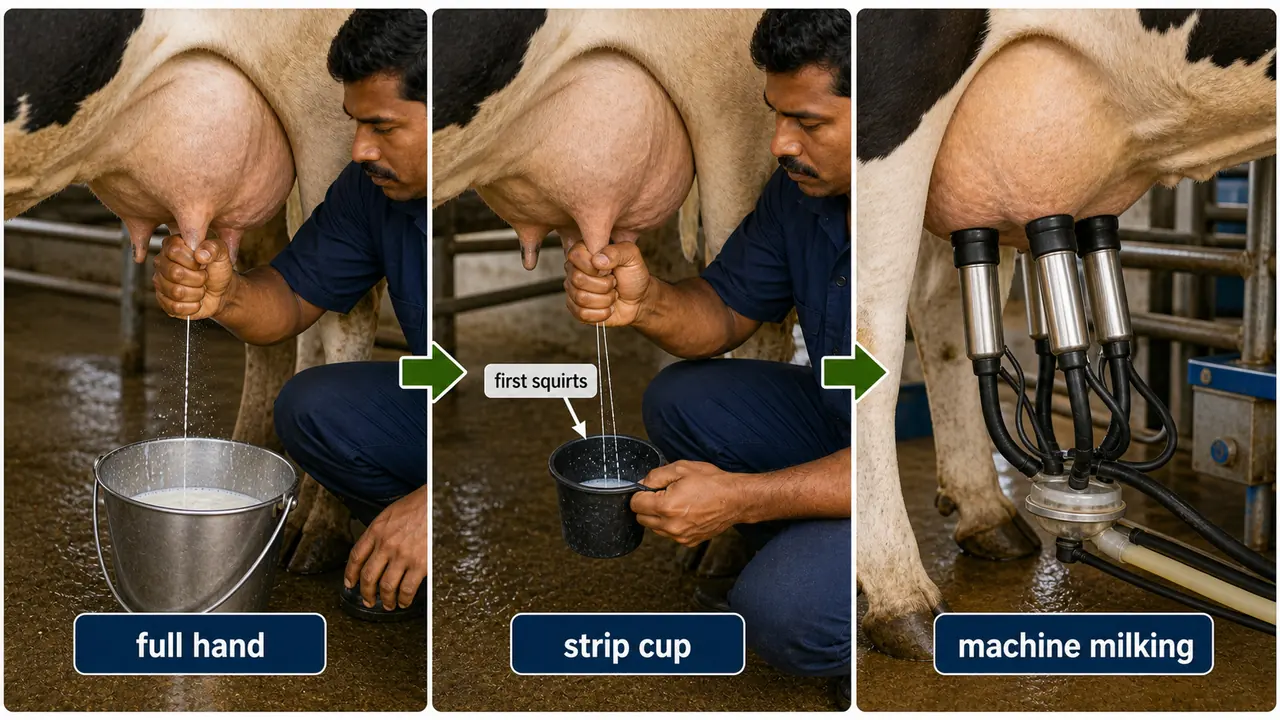
- Full hand / Fist method: All five fingers wrap around the teat and squeeze sequentially from top to bottom. This is the preferred technique — it mimics the calf's natural suckling action and does not injure the teat.
- Stripping / Thumb-and-forefinger method: Teat grasped between thumb and forefinger and pulled down. NOT recommended as the primary technique — stretches and damages the teat sphincter over time. Used only for forestripping and final stripping to empty the udder.
IMPORTANT
Forestripping = discarding the first 2–3 squirts from each teat before milking. Purpose: (1) flushes bacteria from the teat canal, (2) stimulates milk let-down (triggers oxytocin release), (3) visual check for mastitis (clots, blood, watery milk) using the strip cup (dark-coloured cup with a black filter plate that makes abnormalities visible).
2. Machine Milking
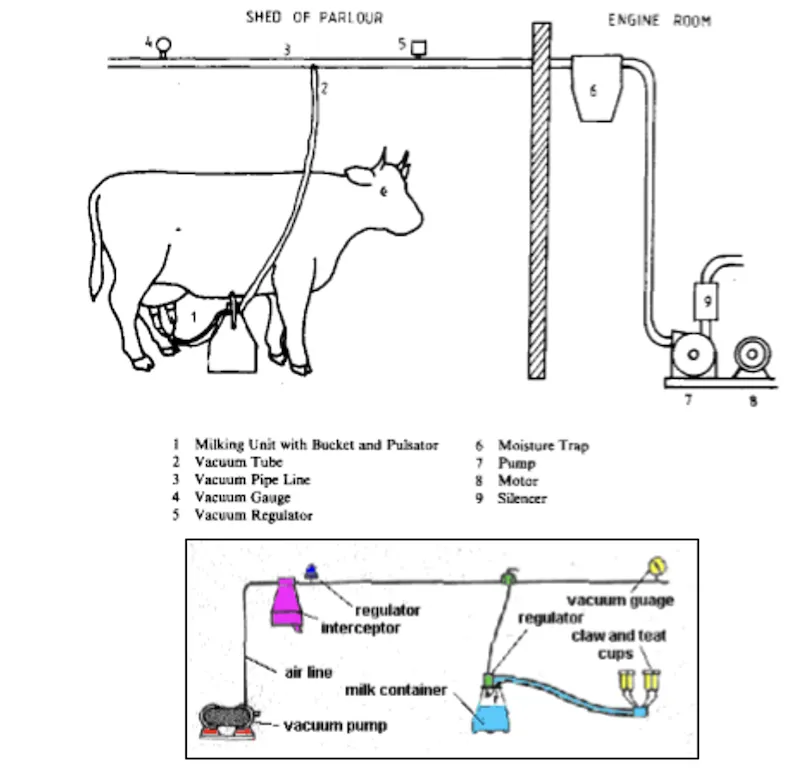
- Applies rhythmic vacuum (pulsation) simulating the calf's suckling
- Pulsation rate: 40–60 pulsations/minute
- Vacuum pressure: 38–42 kPa (11–12 inches Hg)
- Faster, more hygienic, and economical for large herds (above 20 animals)
- Teat cup liners: replace every 2,500 milkings or 6 months
Strip Cup Test
- Forestrip first 2–3 streams from each quarter into the strip cup at every milking
- The dark-coloured background makes clots, flakes, blood, and watery milk visible
- This is a routine hygiene check — not just for sick animals
TIP
CMT vs Strip Cup: Strip cup = visual check for gross abnormalities at every milking. CMT (California Mastitis Test) = chemical test (1 ml milk + 1 ml CMT reagent; gel formation = positive) for sub-clinical mastitis — detects inflammation before it is visible. CMT is more sensitive. Both are exam-relevant.
Key Milking Principles
| Principle | Details |
|---|---|
| Let-down reflex | Triggered by warm udder washing, forestripping, or calf presence; oxytocin from pituitary causes alveolar contraction; milk must be collected within 5–8 minutes of stimulation |
| Milking order | Healthy animals first; mastitic/sick animals last to prevent cross-contamination |
| Milking frequency | 3 times/day increases yield by 10–15% over twice-daily milking |
| Equal intervals | e.g., every 8 hours for thrice-daily milking — more productive than unequal intervals |
| Complete milking (stripping) | Last milk (strippings) is highest in fat — incomplete milking reduces fat content and udder health |
Estrus (Heat) Detection
For the cow to complete another productive cycle, she must be re-bred successfully after calving. Accurate heat detection is the foundation of this — missed heats directly extend the inter-calving period and cause measurable economic losses.
Estrus = the period of sexual receptivity during which the female accepts mating.
Signs of Estrus in Cattle
| Sign | Description |
|---|---|
| Primary sign (definitive) | Cow stands to be mounted by other cows or the bull — called standing heat |
| Restlessness | Reduced feed intake, increased walking, general agitation |
| Mounting behaviour | Mounts other animals even when not herself in standing heat |
| Mucus discharge | Clear, transparent, rope-like mucus from vulva |
| Swollen, reddened vulva | Vulval oedema and hyperaemia |
| Bellowing | Increased vocalisation |
| Reduced milk yield | 10–25% drop on the day of oestrus |
IMPORTANT
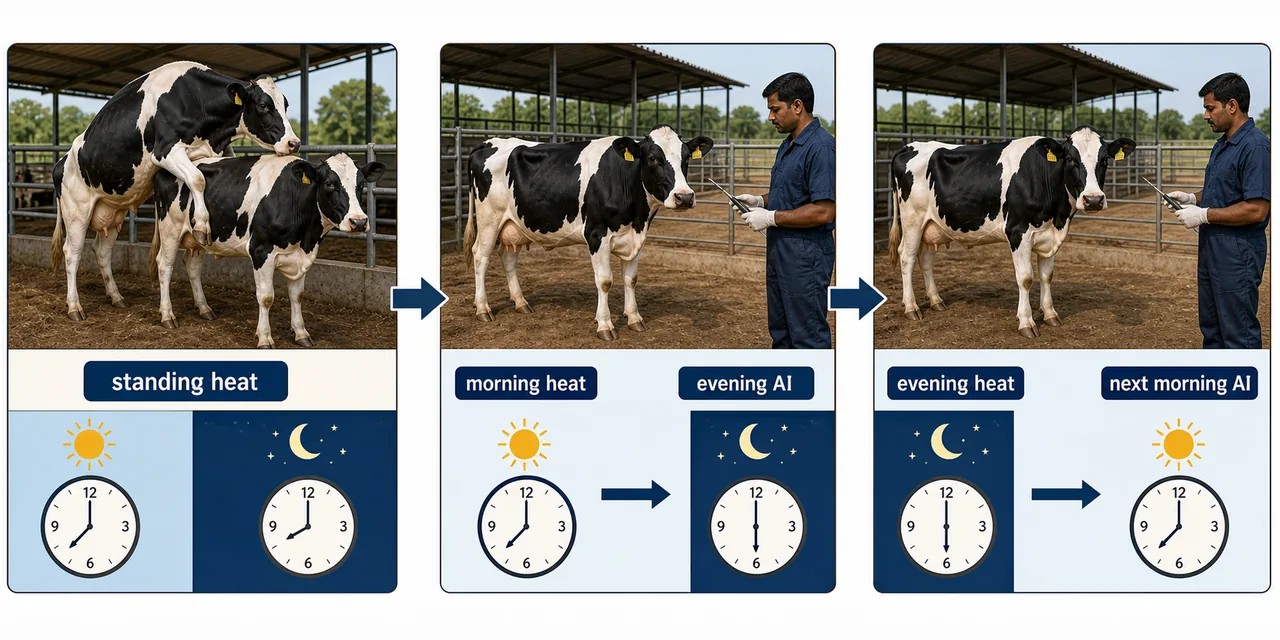
The ONLY definitive sign of oestrus = standing to be mounted (standing heat). For AI timing: inseminate 12–18 hours after onset of standing heat. AM-PM rule: Heat detected in morning → AI in evening. Heat detected in evening → AI next morning.
Duration of Estrus
| Species | Duration of Oestrus | Cycle Length |
|---|---|---|
| Cattle | 12–18 hours (range 6–30 hours) | 21 days (range 18–24 days) |
| Buffaloes | 24–48 hours (range 18–72 hours) | 21 days (range 18–24 days) |
Silent Heat in Buffaloes
Silent heat = physiological signs of oestrus occur internally (hormonal changes, ovulation) but the animal shows no overt behavioural signs (no standing to be mounted, no restlessness).
More common in:
- Hot summer months (April–June) — heat stress suppresses behavioural expression
- High-producing buffaloes in negative energy balance
- Undernourished animals
The Murrah buffalo is notorious for silent heat. Detection requires rectal palpation or progesterone assay.
TIP
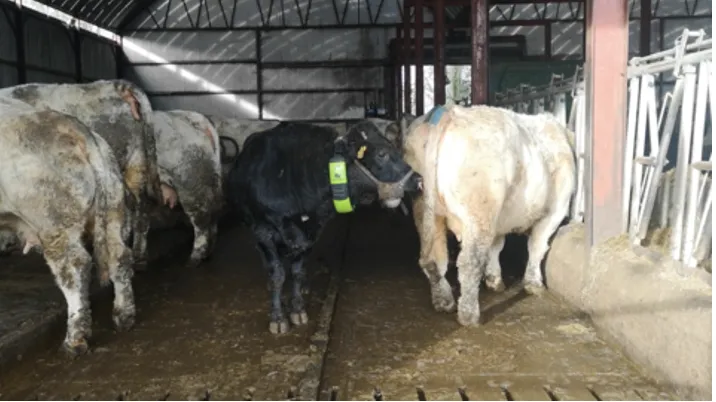
Buffalo vs Cattle heat: Buffaloes show more frequent silent heat. Buffalo heat duration (24–48 hrs) is longer than cattle (12–18 hrs) — wider AI window. Buffaloes often show heat at night (cooler periods) — missed in daytime observation.
Pregnancy Diagnosis
- Rectal palpation by veterinarian at 90 days post-AI — standard field method
- Ultrasonography: detects pregnancy as early as 25–30 days after AI
Managing the Lactation Phase
Care and Management of Lactating Animals
Housing and Environment
- Protect from cold and heat stress — both reduce feed intake and milk yield
- Floor space: 3.5 m² in covered/tied stalls; 7 m² in open loose housing
- Hygiene: regular washing and disinfection of floor; daily grooming — poor hygiene causes environmental mastitis (E. coli, Streptococcus)
Post-Parturition Milking
- First milking: clear any teat canal blockages (waxy colostrum plugs) before milking
- Milk 3 times/day until any udder inflammation subsides
Lactating Cow Feeding
| Parameter | Details |
|---|---|
| Concentrate per milk | 1 kg per 2–2.5 litres of milk |
| Thumb rule | 450–500 g concentrate per kg milk production |
| DCP of ration | 16–18% |
| TDN of ration | 70% |
| Minerals | 40–60 gm sterilised bone meal + 40 gm common salt; 1–2% mineral in ration |
| Green fodder ratio | 1:3 leguminous to non-leguminous |
| Green fodder harvest | At 50% flowering — optimal balance of yield and nutritive value |
Key Lactation Management Points
- Peak yield: Occurs at approximately 6 weeks post-calving — calcium deficiency (milk fever) risk is highest at this point
- Return to oestrus: If no heat within 60 days after calving, consult veterinarian (possible anoestrus, cystic ovaries, uterine infection)
- Milk fever (Hypocalcaemia): Highest risk at peak yield. Signs: staggering, inability to stand, cold extremities, subnormal temperature. Treatment: intravenous calcium borogluconate. Prevention: calcium supplements in ration; avoid over-supplementing calcium in dry period.
- Mastitis prevention: Regular CMT testing; dry cow therapy (antibiotic infusion into each quarter at drying off)
Body Condition Scoring (BCS)
BCS is a systematic assessment of fat and muscle reserves on a 1–5 scale, independent of frame size (1 = emaciated, 5 = obese). It predicts reproductive performance and metabolic disease risk better than weight alone.
| Production Stage | Target BCS |
|---|---|
| At drying off | 3.5 |
| At calving | 3.0–3.5 |
| At peak lactation | 2.5 (minimum acceptable) |
- BCS loss of more than 1 unit between calving and peak lactation = severe negative energy balance → poor fertility, ketosis, displaced abomasum
- Cows too fat at calving (BCS >4) → fatty liver and increased milk fever risk
IMPORTANT
Target BCS at calving = 3.0–3.5. Below 2.0 at calving = less colostrum + delayed return to oestrus + increased calf mortality.
Transition Period Management
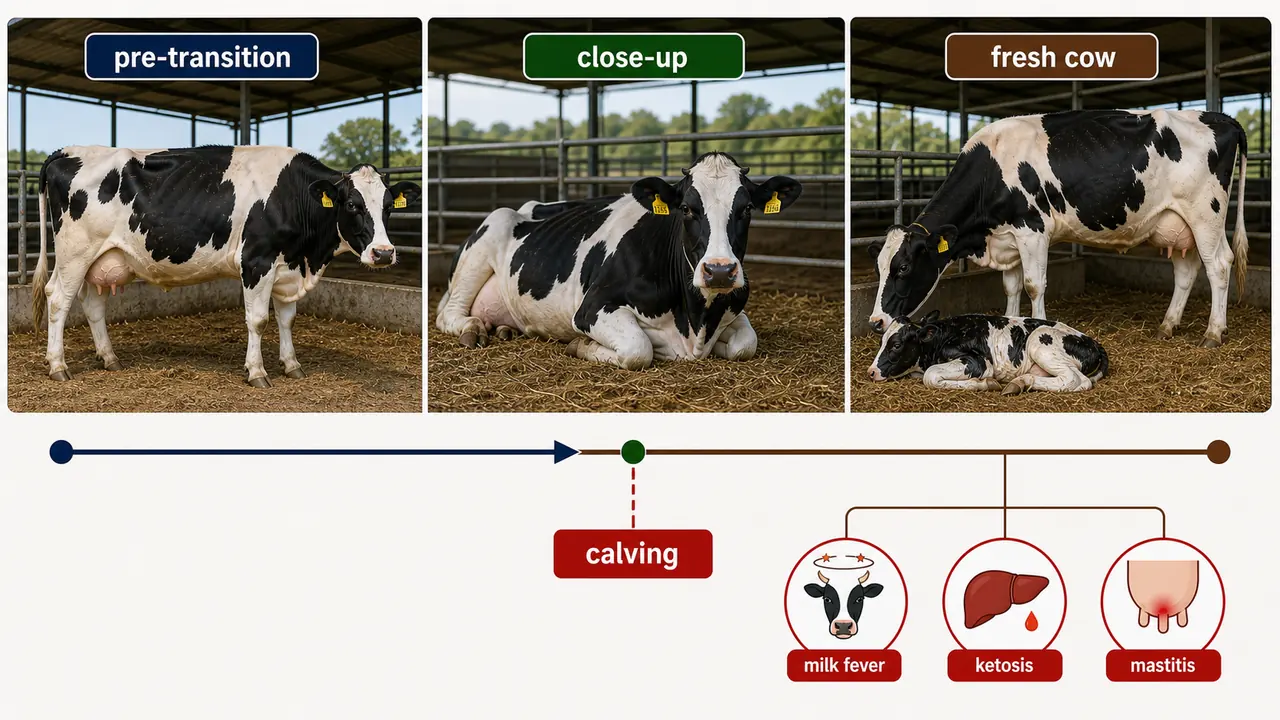
The transition period = 3 weeks before + 3 weeks after calving (6 weeks total). This is the highest-risk phase in a dairy cow's productive life — the period of maximum metabolic stress.
| Phase | Key Actions |
|---|---|
| Pre-transition (dry-off to 3 weeks pre-calving) | BCS correction; vaccination boosters; reduce energy-dense rations to prevent fat cow syndrome |
| Close-up dry period (last 3 weeks pre-calving) | Begin steaming up; monitor for pre-calving disorders; move to maternity pen |
| Fresh cow period (first 3 weeks post-calving) | Peak metabolic stress; highest risk of milk fever, ketosis, retained placenta, mastitis |
IMPORTANT
Most metabolic diseases (milk fever, ketosis, displaced abomasum) and reproductive failures occur during the transition period. Good transition management directly determines the entire subsequent lactation's success.
Performance Benchmarks and Economic Traits
Reproductive Details and Breeding Guidelines
| Particulars | Local | Exotic | Crossbreed |
|---|---|---|---|
| Birth weight | 20 kg | Jersey: 25–30 kg; Friesian: 30–35 kg | — |
| Age at maturity | 33 months | 15 months | 18–24 months |
| Age at first calving | 42 months | 24 months | 30 months |
| Lactation yield | 1,200 kg | 3,000–6,000 kg | 2,100–2,400 kg |
| Lactation period | 180–210 days | 305 days | 240–270 days |
| Dry period | 90–120 days | 60 days | 75 days |
| Inter-calving period | 18 months | 12–13 months | 13–14 months |
| Optimum weight at first mating | 250 kg | 180–275 kg | — |
IMPORTANT
Desirable age at first calving: Indian breeds = 3 years; Crossbred = 2 years; Buffaloes = 3.5 years. Optimum lactation period = 305 days. Optimum service period = 60–90 days.
Economic Characters of Dairy Cattle
These measurable traits determine a dairy animal's economic value and are used in breeding selection programs.
1. Lactation Yield
Total milk produced in one complete lactation. Yield increases from the 1st to the 3rd–4th lactation, then gradually declines.
IMPORTANT
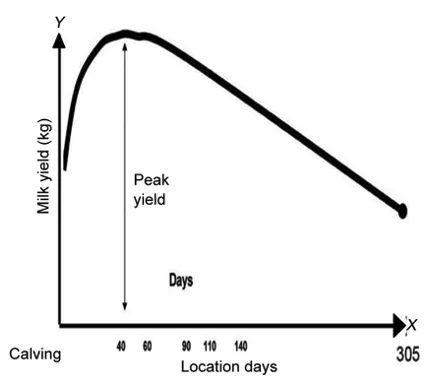
Lactation Curve: Daily milk yield rises steeply after calving, reaches peak at 4–8 weeks (commonly stated as 6 weeks in Indian textbooks), then gradually declines. Rate of decline = persistency. Yield increases from 1st to 3rd–4th lactation, then declines.
2. Lactation Period
Length of the milk-producing period. Optimum = 305 days.
3. Persistency of Yield
The rate at which milk yield declines after the peak. Expressed as the percentage of the previous month's yield retained in the current month.
- High persistency (e.g., 85%) = slow decline = desirable
- A cow with high persistency produces more total milk even if her peak is not the highest
- Persistency is different from total yield — a cow can have a high peak but low persistency, resulting in lower total production
4. Age at First Calving
Indian breeds: 3 years. Crossbred: 2 years. Buffaloes: 3.5 years.
5. Service Period
The interval from calving to successful conception. Optimum = 60–90 days.
Why not breed immediately after calving? The uterus needs 40–60 days to involute (return to its pre-pregnant size and condition) after calving. Breeding before involution is complete leads to high early embryonic death. Service period beyond 90 days extends the inter-calving period — losing productive time.
6. Dry Period
Minimum: 60 days. Date of drying off to next calving.
7. Inter-Calving Period (ICP)
The interval between two successive calvings. Also called the calving interval.
Formula: ICP = Gestation period + Service period
| Species | Ideal ICP |
|---|---|
| Cattle | 12–13 months (280 days gestation + 60–90 days service) |
| Buffaloes | ~15 months (305–315 days gestation + service period) |
A longer ICP = fewer calves per lifetime = lower total milk production = significant economic loss. ICP is the single most important measure of reproductive efficiency.
8. Reproductive Efficiency
Number of calves produced per lifetime. Measured by calving interval and conception rate. One calf per year (12–13 month ICP) = reproductively efficient.
9. Efficiency of Feed Utilisation
kg of milk produced per kg of dry matter consumed. A heritable trait used in breeding selection programs.
10. Disease Resistance
Genetic ability to resist mastitis, FMD, and tick infestations. Indigenous breeds (Gir, Sahiwal) have significantly better disease resistance than exotic breeds under Indian tropical conditions — important consideration for cross-breeding programs.
Summary Cheat Sheet
| Concept | Key Details |
|---|---|
| Heifer first calving | Crossbred: 25–30 months; Exotic: 24 months; Local: 42 months |
| First breeding weight | Small breeds: 200–225 kg; Large breeds: 275 kg |
| Vaccination FMD | From 4 months; every 6 months; NADCP mandatory |
| Vaccination Brucellosis | Female calves 4–8 months; once only |
| Vaccination LSD | From 4 months; annual; NADCP 2022 mandatory |
| Retained placenta | Ergot mixture at 8–12 hours; manual removal after 12 hours |
| Gestation (cattle) | 280 days |
| Gestation (buffalo) | 305–315 days |
| Forestripping purpose | Flush bacteria; trigger let-down; visual mastitis check |
| Machine milking vacuum | 38–42 kPa (11–12 inches Hg); 40–60 pulsations/minute |
| Milking 3x/day | 10–15% more milk than 2x/day |
| Oestrus in cattle | 12–18 hours; AI at 12–18 hrs after standing heat |
| Oestrus in buffaloes | 24–48 hours; more silent heat |
| Estrus cycle | 21 days (both cattle and buffaloes) |
| Pregnancy confirmed | Rectal palpation at 90 days post-AI |
| Concentrate per milk | 1 kg per 2–2.5 litres; thumb rule 450–500 g/kg milk |
| BCS at calving | 3.0–3.5 |
| Transition period | 3 weeks before + 3 weeks after calving |
| Service period (optimum) | 60–90 days |
| Optimum lactation period | 305 days |
| ICP (cattle ideal) | 12–13 months |
| Milk fever treatment | Intravenous calcium borogluconate |
| CMT positive | Gel formation (1 ml milk + 1 ml CMT reagent) |
| Insurance premium | 5% of animal cost |
- Banerjee, G.C. — A Textbook of Animal Husbandry (8th Ed.), Oxford & IBH Publishing Co.
- NDDB (National Dairy Development Board) — Heifer Rearing and Lactation Management
- ICAR (Indian Council of Agricultural Research) — Livestock Production and Management
- NADCP (National Animal Disease Control Programme) — Government of India, Dept. of Animal Husbandry & Dairying
- National Dairy Research Institute (NDRI), Karnal — Reproductive Management Guidelines
Lesson Doubts
Ask questions, get expert answers