🏕 Silviculture of Important Tree Species
Teak, Eucalyptus, Poplar, Neem, Prosopis, Bamboo, Dalbergia, Acacia, and other key species -- families, uses, and characteristics
The Right Tree in the Right Place
The previous lesson covered silvicultural principles -- regeneration, tending, and management systems. Now we apply those principles to specific tree species that every forestry and agriculture student must know.
A farmer in Punjab plants Poplar on field boundaries and earns timber income in just 6-7 years. A farmer in Rajasthan grows Prosopis (Khejari) for fuelwood and fodder in the desert. A sericulture farmer in Karnataka grows Mulberry to feed silkworms. Each tree species has unique properties that determine where it thrives and what it provides.
This lesson covers:
- Timber species -- Teak, Dalbergia sissoo (Shisham)
- Paper and pulp species -- Eucalyptus, Poplar, Bamboo
- Multipurpose species -- Neem, Prosopis, Acacia, Albizia
- Speciality species -- Ailanthus (matchwood), Morus alba (sericulture), Grewia optiva (hill fodder)
Quick Reference Table -- All Species
| Species | Common Name | Family | Primary Use | Special Fact |
|---|---|---|---|---|
| Tectona grandis | Teak / Sagwan | Verbenaceae | High-value timber, plywood | Queen of Timbers |
| Populus deltoides | Poplar | Salicaceae | Paper, plywood, matchwood | Fast growth in Indo-Gangetic plains |
| Eucalyptus tereticornis | Safeda / Nilgiri | Myrtaceae | Paper, fuelwood, essential oil | Bio-drainage plant |
| Tamarindus indica | Imli / Tamarind | Caesalpinae | Food (fruit pulp), medicine, avenue | Multipurpose; excellent shade |
| Ailanthus excelsa | Tree of Heaven | Simarubiaceae | Matchwood, packing cases | 50-75 tonnes matchwood from 10-yr tree |
| Azadirachta indica | Neem | Meliaceae | Natural pesticide, medicine, soap | Wonder plant; Azadirachtin compound |
| Prosopis cineraria | Khejari / Vilayati babool | Mimosae | Fuel, fodder, timber | Loyal Timber of the Poor; Wooden Anthracite |
| Albizia lebbeck | Black Siris / Woman's tongue | Mimosae | N-fixation, timber, fodder | Rattling pods give common name |
| Dalbergia sissoo | Shisham | Leguminosae | Furniture timber | N-fixing legume; prized grain |
| Acacia auriculiformis | Australian Wattle | Mimosae | Fuelwood, wasteland reclamation | Exotic from Australia |
| Acacia nilotica | Babul | Mimosae | Fuel, fodder, tanning bark | Grows in black cotton soil |
| Grewia optiva | Beul / Dhaman | Tiliaceae | Fodder, fibre, fuelwood | Backbone of hill fodder supply |
| Morus alba | Mulberry / Shahtut | Moraceae | Silkworm feed (sericulture) | Needs adequate moisture |
| Bombax ceiba | Semal / Silk Cotton | Malvaceae | Kapok fibre, matchwood, plywood | Bright red flowers |
| Dendrocalamus strictus | Solid Bamboo | Graminae | Paper, construction, handicrafts | Technically a grass, not a tree |
TIP
Pro Content Locked
Upgrade to Pro to access this lesson and all other premium content.
₹99 charged monthly · Cancel anytime
- All Agriculture & Banking Courses
- AI Lesson Questions (100/day)
- AI Doubt Solver (50/day)
- Glows & Grows Feedback (30/day)
- AI Section Quiz (20/day)
- 22-Language Translation (100/day)
- Recall Questions (20/day)
- AI Quiz (15/day)
- AI Quiz Paper Analysis (100/day)
- AI Step-by-Step Explanations (100/day)
- Spaced Repetition Recall (FSRS)
- AI Tutor
- Immersive Text Questions
- Audio Lessons — Hindi & English
- Mock Tests & Previous Year Papers
- Summary & Mind Maps
- XP, Levels, Leaderboard & Badges
- Generate New Classrooms
- Voice AI Teacher (AgriDots Live)
- AI Revision Assistant
- Knowledge Gap Analysis
- Interactive Revision (LangGraph)
🔒 Secure via Razorpay · Cancel anytime · No hidden fees
The Right Tree in the Right Place
The previous lesson covered silvicultural principles -- regeneration, tending, and management systems. Now we apply those principles to specific tree species that every forestry and agriculture student must know.
A farmer in Punjab plants Poplar on field boundaries and earns timber income in just 6-7 years. A farmer in Rajasthan grows Prosopis (Khejari) for fuelwood and fodder in the desert. A sericulture farmer in Karnataka grows Mulberry to feed silkworms. Each tree species has unique properties that determine where it thrives and what it provides.
This lesson covers:
- Timber species -- Teak, Dalbergia sissoo (Shisham)
- Paper and pulp species -- Eucalyptus, Poplar, Bamboo
- Multipurpose species -- Neem, Prosopis, Acacia, Albizia
- Speciality species -- Ailanthus (matchwood), Morus alba (sericulture), Grewia optiva (hill fodder)
Quick Reference Table -- All Species
| Species | Common Name | Family | Primary Use | Special Fact |
|---|---|---|---|---|
| Tectona grandis | Teak / Sagwan | Verbenaceae | High-value timber, plywood | Queen of Timbers |
| Populus deltoides | Poplar | Salicaceae | Paper, plywood, matchwood | Fast growth in Indo-Gangetic plains |
| Eucalyptus tereticornis | Safeda / Nilgiri | Myrtaceae | Paper, fuelwood, essential oil | Bio-drainage plant |
| Tamarindus indica | Imli / Tamarind | Caesalpinae | Food (fruit pulp), medicine, avenue | Multipurpose; excellent shade |
| Ailanthus excelsa | Tree of Heaven | Simarubiaceae | Matchwood, packing cases | 50-75 tonnes matchwood from 10-yr tree |
| Azadirachta indica | Neem | Meliaceae | Natural pesticide, medicine, soap | Wonder plant; Azadirachtin compound |
| Prosopis cineraria | Khejari / Vilayati babool | Mimosae | Fuel, fodder, timber | Loyal Timber of the Poor; Wooden Anthracite |
| Albizia lebbeck | Black Siris / Woman's tongue | Mimosae | N-fixation, timber, fodder | Rattling pods give common name |
| Dalbergia sissoo | Shisham | Leguminosae | Furniture timber | N-fixing legume; prized grain |
| Acacia auriculiformis | Australian Wattle | Mimosae | Fuelwood, wasteland reclamation | Exotic from Australia |
| Acacia nilotica | Babul | Mimosae | Fuel, fodder, tanning bark | Grows in black cotton soil |
| Grewia optiva | Beul / Dhaman | Tiliaceae | Fodder, fibre, fuelwood | Backbone of hill fodder supply |
| Morus alba | Mulberry / Shahtut | Moraceae | Silkworm feed (sericulture) | Needs adequate moisture |
| Bombax ceiba | Semal / Silk Cotton | Malvaceae | Kapok fibre, matchwood, plywood | Bright red flowers |
| Dendrocalamus strictus | Solid Bamboo | Graminae | Paper, construction, handicrafts | Technically a grass, not a tree |
TIP
Mnemonic for Teak's family: "TV" -- Teak = Verbenaceae. Teak is the "Queen of Timbers" -- remember "QTV" (Queen, Teak, Verbenaceae).
Teak (Tectona grandis)
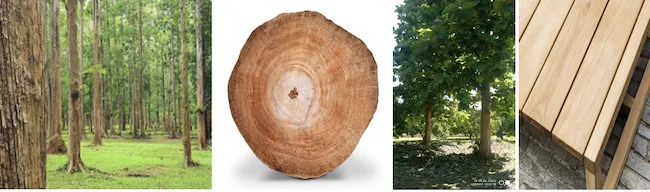
| Feature | Detail |
|---|---|
| Family | Verbenaceae |
| Hindi name | Sagwan |
| Title | Queen of Timbers |
| Key property | Strength, durability, non-corrosive with metals |
| Durability source | Polyphenols in heartwood (resist termites, fungi, weathering) |
| Famous plantation | Nilambur, Kerala -- one of the oldest teak plantations in the world |
| Industrial use | Plywood industry IBPS AFO |
| Distribution | Peninsular India, NE Java, Indian Archipelago |
Poplar (Populus deltoides)
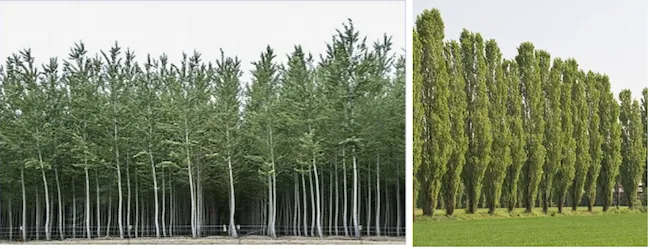
| Feature | Detail |
|---|---|
| Family | Salicaceae |
| Native to | America (USA) |
| Distribution in India | Tarai region, Indo-Gangetic plains |
| Uses | Paper, plywood, matchwood |
| Key advantage | Fast growth rate -- one of the most commercially cultivated trees in northern India |

Eucalyptus (Eucalyptus tereticornis)
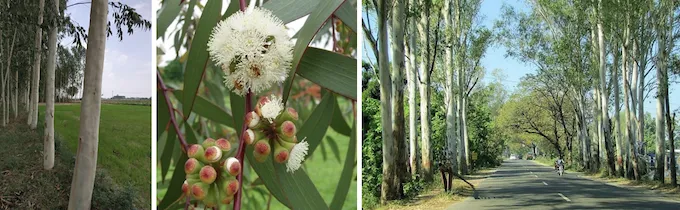
| Feature | Detail |
|---|---|
| Family | Myrtaceae |
| Common name | Safeda, Nilgiri |
| Native to | Australia |
| First introduced in India | Nandi Hills, Karnataka by Tipu Sultan (1782-1790) |
| Primary industrial use | Paper industry (mainstay) |
| Special property | Bio-drainage plant -- high transpiration rate removes excess soil water |
| Other products | Essential oil (leaves), Oxalic acid (bark), packing cases |
| Limitation | Susceptible to termites -- not suitable for furniture without treatment |
| Also known for | Allelopathy -- many crops grow poorly near Eucalyptus |
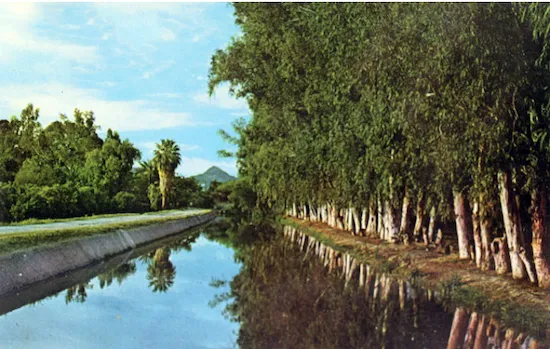
Why farmers prefer Eucalyptus: Fast growth, not browsed by cattle, immune to most pests and diseases, good coppicing ability.
NOTE
Bio-drainage = removing excess soil water through plant transpiration using bioenergy. Eucalyptus is the prime bio-drainage species, useful in waterlogged canal command areas.
Tamarind (Tamarindus indica)
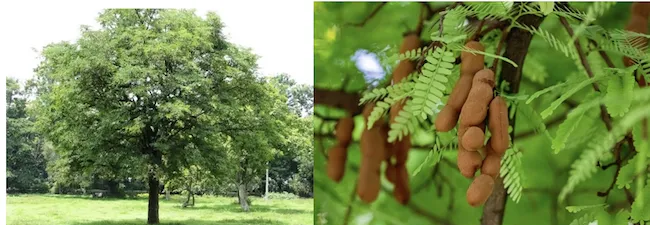
| Feature | Detail |
|---|---|
| Family | Caesalpinae |
| Hindi name | Imli |
| Uses | Fruit pulp (cooking, beverages, medicine), timber, fodder (leaves), avenue planting |
| Key trait | Dense spreading canopy -- excellent shade tree for hot regions |
Ailanthus (Ailanthus excelsa)
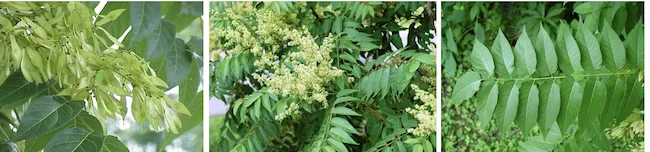
| Feature | Detail |
|---|---|
| Family | Simarubiaceae |
| English name | Tree of Heaven |
| Primary use | Matchwood -- a 10-year-old tree yields 50-75 tonnes |
| Other uses | Packing cases, plywood, fishing catamarans |
| Fodder | Leaves highly palatable for sheep and goats (extensively used in Rajasthan) |
| Wood property | Soft, white, very light but fairly strong; perishable in open but durable under water |

Neem (Azadirachta indica)
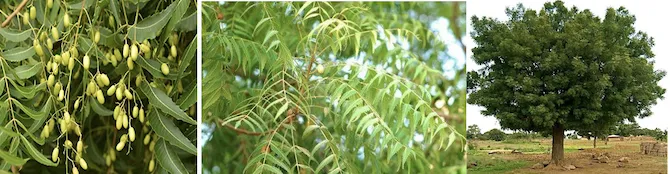
| Feature | Detail |
|---|---|
| Family | Meliaceae |
| Title | Wonder Plant |
| Active compound | Azadirachtin -- powerful natural pesticide |
| Uses | Tooth brushes (twigs), medicine, pest control, soap, lamp oil, lubricant, timber, shade |
| Agricultural importance | Widely used in organic farming as natural pesticide |
| Drought tolerance | Excellent -- reduces soil erosion in dry areas |
Prosopis (Prosopis cineraria)
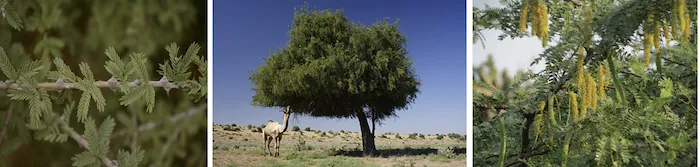
| Feature | Detail |
|---|---|
| Family | Mimosae |
| Hindi name | Khejari, Vilayati babool |
| Title | Loyal Timber of the Poor |
| Wood quality | Wooden Anthracite -- exceptional fuel quality (specific gravity 0.83-0.88) |
| Uses | Fuel, fodder, timber, charcoal |
| Significance | Primary source of fuel and fodder in arid Rajasthan |
TIP
Two titles for Prosopis: "Loyal Timber of the Poor" (serves rural communities) and "Wooden Anthracite" (burns like the highest grade of coal).
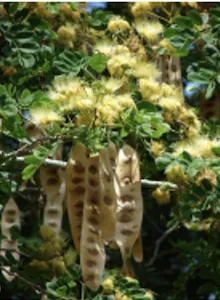
Albizia spp.
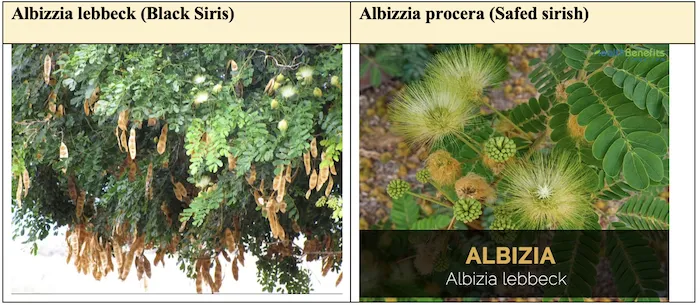
| Species | Common Name | Special Feature |
|---|---|---|
| Albizia lebbeck | Black Siris / Woman's Tongue Tree | Rattling seed pods (sound like tongue wagging) |
| Albizia procera | Safed Sirish | Timber |
- Family: Mimosae
- Key value: Nitrogen-fixing trees -- improve soil fertility
Dalbergia sissoo (Shisham)
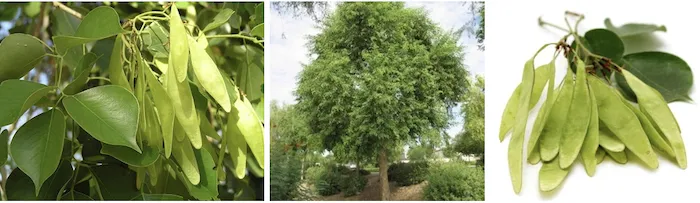
| Feature | Detail |
|---|---|
| Family | Leguminosae |
| Common name | Shisham, Sissu |
| Primary use | Furniture timber -- prized for beautiful grain, strength, durability |
| Ecological value | Nitrogen-fixing legume -- enriches soil |
Acacias
Acacia auriculiformis (Australian Wattle)
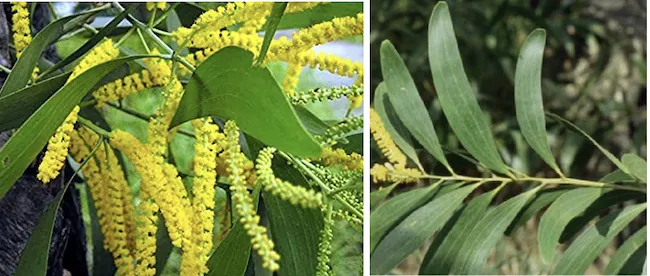
- Family: Mimosae | Origin: Australia
- Uses: Fuelwood, furniture, pulpwood, shade, wasteland reclamation
- Widely used in social forestry programmes
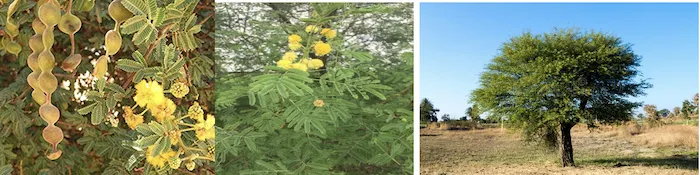
Acacia nilotica (Babul)
| Feature | Detail |
|---|---|
| Family | Mimosae |
| Hindi name | Babul |
| Soil preference | Black cotton soil |
| Uses | Fuel, fodder (leaves/pods), construction, agricultural tools |
| Bark | One of the best tanning materials of North India |
| Gum | Used in inks, paints, matches, confectionery |
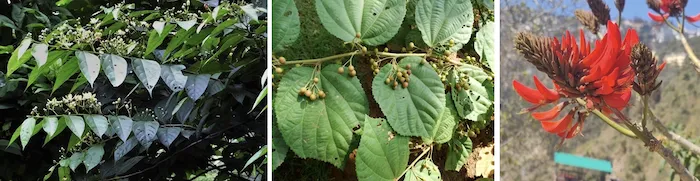
Grewia optiva (Beul)
| Feature | Detail |
|---|---|
| Family | Tiliaceae |
| Region | Sub-Himalayan tract (Himachal Pradesh, Uttarakhand, Jammu & Kashmir) |
| Primary value | Backbone of hill fodder supply -- especially in winter when other green fodder is scarce |
| Products | Fodder, fibres, fuelwood |
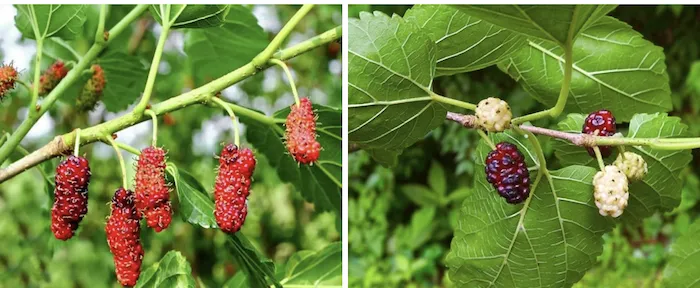
Morus alba (Mulberry)
| Feature | Detail |
|---|---|
| Family | Moraceae |
| Hindi name | Shahtut |
| Primary importance | Sericulture -- leaves are the primary food for silkworms |
| Distribution | Northern India (Jammu & Kashmir to Assam), up to 1,200 m elevation |
| Limitation | Needs adequate moisture; does not grow on dry slopes |
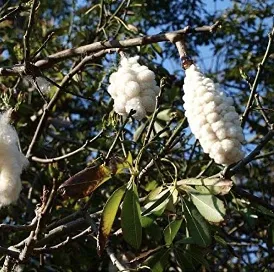
Bombax ceiba (Semal)
| Feature | Detail |
|---|---|
| Family | Malvaceae |
| Common name | Silk Cotton Tree, Semal |
| Products | Kapok fibre (pillow/mattress stuffing), matchwood, plywood |
| Distinctive feature | Bright red flowers |
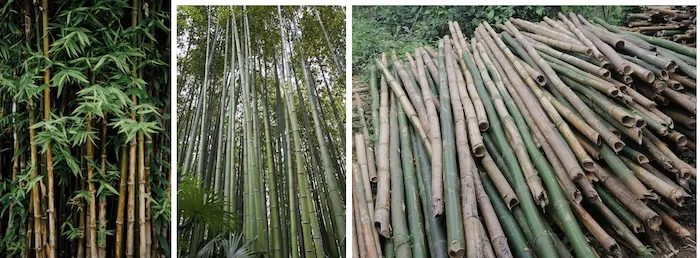
Bamboo (Dendrocalamus strictus)
| Feature | Detail |
|---|---|
| Family | Graminae (technically a grass, not a tree) |
| Common name | Solid Bamboo |
| Distribution | Throughout India except very moist areas; up to 1,100 m |
| Primary industrial use | Paper industry |
| Other uses | Construction, handicrafts, food (seeds), fodder (leaves, young culms) |
| Key fact | Fastest growing plant in the world -- excellent renewable resource |
| Also called | "Green Gold" for its economic versatility |
Species Grouped by Primary Use
| Use Category | Key Species |
|---|---|
| High-value timber | Teak, Dalbergia sissoo (Shisham) |
| Paper and pulp | Bamboo, Eucalyptus, Poplar |
| Matchwood | Ailanthus, Bombax ceiba |
| Fuelwood | Prosopis, Acacia nilotica (Babul), Eucalyptus |
| Fodder | Grewia optiva, Ailanthus, Acacia nilotica |
| Nitrogen fixation | Albizia, Dalbergia sissoo, Acacia spp. |
| Natural pesticide | Neem (Azadirachtin) |
| Sericulture | Morus alba (Mulberry) |
| Bio-drainage | Eucalyptus |
| Avenue/shade | Tamarind, Neem, Ailanthus |
Extended Exam Quick Reference
The detailed sections above explain the major species. This compact table preserves the remaining exam pairings that are often asked as direct botanical-name, common-name, or use matches.
| Botanical Name | Common Name | Main Use / Recall Fact |
|---|---|---|
| Dalbergia sissoo | Sissoo / Shisham | Fodder, timber, fuel, soil conservation |
| Tectona grandis | Sag / Teak | Timber, furniture |
| Terminalia arjuna | Arjun | Industrial timber, poles, fodder |
| Anthocephalus chinensis | Kadamb | Fodder, fuel, pulpwood, ornamental |
| Madhuca indica | Mahua | Liquor, oilseed, timber, edible flowers |
| Saraca indica | Ashok | Ornamental, medicinal |
| Shorea robusta | Sal | Timber, fuel |
| Butea monosperma | Palas | Lac host, ornamental, cottage industry |
| Cedrus deodara | Deodar | Timber, furniture |
| Grevillea robusta | Silver Oak | Ornamental, avenue tree |
| Santalum album | Sandalwood | Oil, medicinal, valuable timber |
| Acacia catechu | Khair | Katha, fodder, poles, fuel |
| Acacia nilotica | Babul | Fodder, medicine, soil conservation |
| Azadirachta indica | Neem | Medicine, twigs, planks |
| Populus deltoides | Poplar | Pulpwood, fodder, packing cases, matchwood |
| Bombax ceiba | Semal | Matchwood, packing cases, plywood |
| Quercus spp. | Indian Oak | Fodder, fuel, sericulture |
| Hardwickia binata | Anjan | Fodder, fuel, implements |
| Leucaena leucocephala | Subabul | Fodder, poles, timber, fuel |
| Dalbergia latifolia | Rosewood | Timber, fodder, fuel |
| Pinus roxburghii | Chir Pine | Resin, gum, tannin, oil, poles |
| Terminalia tomentosa | Asan / Ain | Industrial timber, tannin, gum |
| Aegle marmelos | Bael | Fruits, medicine, twigs |
| Ficus religiosa | Pipal | Avenue tree, fuel, fodder |
| Ficus benghalensis | Banyan / Wad | Avenue, fodder, fuel, fruits |
| Prosopis chinensis | Kabuli Kikar | Fodder, fuel, soil conservation |
| Casuarina equisetifolia | Casuarina / Suru | Fuel, coastal planting, charcoal |
| Eucalyptus spp. | Eucalyptus | Oil, gum, paper, pulp |
| Salix spp. | Willow | Timber, basket making |
| Dendrocalamus strictus | Solid Bamboo | Paper, poles, industrial use |
| Bambusa arundinacea | Hollow Bamboo | Paper, poles, industrial use |
| Prosopis juliflora | Vilayati Babul | Medicinal, fencing, fuel |
| Prosopis cineraria | Khejari | Fodder, fuel, fencing, timber |
| Terminalia bellirica | Behda | Medicinal, fuel, timber |
| Diospyros melanoxylon | Tendu | Bidi leaves |
| Diospyros tomentosa | Temburni | Ornamental, medicinal, fruits |
| Ailanthus excelsa | Maharukh / Tree of Heaven | Matchwood, fodder |
| Adina cordifolia | Haldu | Timber, fuel |
| Callistemon lanceolatus | Bottle Brush | Ornamental avenue tree |
Exam Tips
TIP
High-frequency exam facts:
- Queen of Timbers -- Teak (family Verbenaceae)
- Bio-drainage plant -- Eucalyptus
- Eucalyptus introduced by -- Tipu Sultan at Nandi Hills (1782-1790)
- Wonder Plant -- Neem
- Loyal Timber of the Poor -- Prosopis cineraria
- Wooden Anthracite -- Prosopis wood
- Woman's Tongue Tree -- Albizia lebbeck
- Matchwood species -- Ailanthus excelsa
- Paper industry species -- Bamboo, Eucalyptus
- Bamboo family -- Graminae (a grass!)
- Babul grows in -- Black cotton soil
- Silkworm feeds on -- Morus alba (Mulberry)
- Khair -- Acacia catechu; yields katha/cutch
- Tendu leaves -- Diospyros melanoxylon
- Maharukh -- Ailanthus excelsa
Summary Table
| Species | Title/Special Name | Family | Key Use |
|---|---|---|---|
| Teak | Queen of Timbers | Verbenaceae | Timber, plywood |
| Eucalyptus | Bio-drainage plant | Myrtaceae | Paper, fuelwood |
| Neem | Wonder Plant | Meliaceae | Natural pesticide |
| Prosopis | Loyal Timber of Poor / Wooden Anthracite | Mimosae | Fuel, fodder |
| Ailanthus | Tree of Heaven | Simarubiaceae | Matchwood |
| Albizia lebbeck | Woman's Tongue Tree | Mimosae | N-fixation, timber |
| Dalbergia sissoo | Shisham | Leguminosae | Furniture timber |
| Acacia nilotica | Babul | Mimosae | Fuel, tanning bark |
| Bamboo | Green Gold | Graminae | Paper, construction |
| Morus alba | Shahtut | Moraceae | Sericulture |
Summary Cheat Sheet
| Concept / Topic | Key Details |
|---|---|
| Teak (Tectona grandis) | Family: Verbenaceae; most valuable timber; deciduous; coppices well |
| Sal (Shorea robusta) | Family: Dipterocarpaceae; gregarious; strong timber; dominant in central India |
| Shisham (Dalbergia sissoo) | Family: Fabaceae; N-fixing; premier furniture wood |
| Eucalyptus | Family: Myrtaceae; Australian origin; fast growing; used for pulpwood |
| Poplar (Populus deltoides) | Family: Salicaceae; deciduous; very fast growing; used in agroforestry (Punjab, Haryana) |
| Neem (Azadirachta indica) | Family: Meliaceae; medicinal; insecticidal (azadirachtin); evergreen |
| Bamboo | Family: Gramineae (grass); AKA Green Gold; paper & construction |
| Acacia nilotica (Babul) | Family: Mimosae; fuel, tanning bark; drought-tolerant |
| Casuarina (C. equisetifolia) | Family: Casuarinaceae; coastal shelterbelt; N-fixing; fuelwood |
| Morus alba (Shahtut) | Family: Moraceae; host for sericulture (silkworm rearing) |
| Sandalwood (Santalum album) | Family: Santalaceae; hemiparasite; most valuable heartwood |
| Khair (Acacia catechu) | Produces katha and cutch (tanning/dyes) |
| Subabul (Leucaena leucocephala) | N-fixing; high protein fodder (20–25% CP); contains mimosine |
| Fast-growing species | Eucalyptus, Poplar, Casuarina, Subabul |
| N-fixing species | Shisham, Subabul, Casuarina, Acacia spp. |
TIP
Next lesson: With species knowledge in hand, the next lesson explores Social Forestry -- how trees are grown with people's participation outside conventional forests, covering farm forestry, extension forestry, and community woodlots.