💬 Communication
Learn basics of Communication.
Communication
- The word communication is derived from Latin word "communis" means common. At its core, communication is about establishing commonness -- creating a shared understanding between people.
- "Process by which two or more people sharing of ideas, facts, feelings or impressions in ways of common understanding of the meaning, intent and use of messages" according to Leagans. This definition highlights that effective communication requires not just sending information, but ensuring the receiver understands the meaning, purpose, and application of the message exactly as intended.
Types of Communication
1. Verbal
- On an average, a person spends 70 % of his time in communicating verbally. This underscores how central verbal communication is to everyday human interaction.
- While communicating verbally, 30 % message distorted. This significant level of distortion means that almost one-third of the intended message may be lost or misunderstood, highlighting the need for clear, simple, and repetitive communication.
2. Non-verbal
- Generally 40 % of communication takes place through body language. This means nearly half of what we communicate is unspoken -- conveyed through how we carry ourselves, our facial expressions, and physical gestures.
- Gestures, postures, facial expression etc. are component of non-verbal communication. Extension workers must be aware of their own body language and also learn to read the non-verbal cues of their audience to gauge understanding and receptiveness.
Models of communication
- A large number of communication models exist because of contextual variation. Each model captures a different aspect or perspective of the communication process, and understanding multiple models gives a more complete picture.
1. Aristotle's model (384-322 BC)
- It was the first basic persuasive communication model. Aristotle identified three key elements of persuasion: the speaker, the speech, and the audience. This was a landmark contribution because it recognised communication as a deliberate, purposeful act aimed at influencing others.

2. Lasswell's Communication Sequence (1948)
- This model helped Lasswell's probes into political communication, propaganda & political symbolism, which were some of the earliest communication researches in social science. Lasswell's work was pioneering in applying systematic analysis to how messages are constructed and transmitted in society.
- The model containing words "Who says, what, which channel, to whom & what effect". This concise formula identifies the five essential components of any communication act: the communicator, the message, the medium, the audience, and the impact.

3. Stimulation-Response Model (SR Model)
A ----------------------------> B = X
- Proposed by Stevens. This is one of the simplest communication models, depicting communication as a direct, linear process.
- A/Q to Stevens, Communication is the discriminatory response of an organisation to the stimulus. This means the receiver (organism) selectively responds to specific stimuli, implying that not all messages produce the same response in all receivers.
- It is sometimes also called interpersonal communication.
4. Schramm's model (1961) SESDD
- A/Q to him accumulated field of experience of both the source-encoder & the decoder-receiver must be common for achieving maximum output. (Tuned together) This is a critical insight -- effective communication requires that the sender and receiver share a common frame of reference, overlapping experiences, language, and cultural understanding.
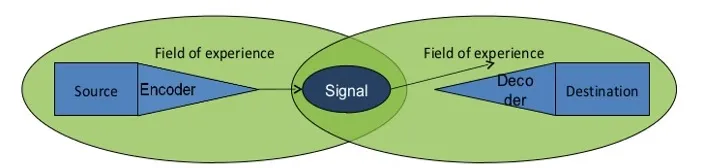
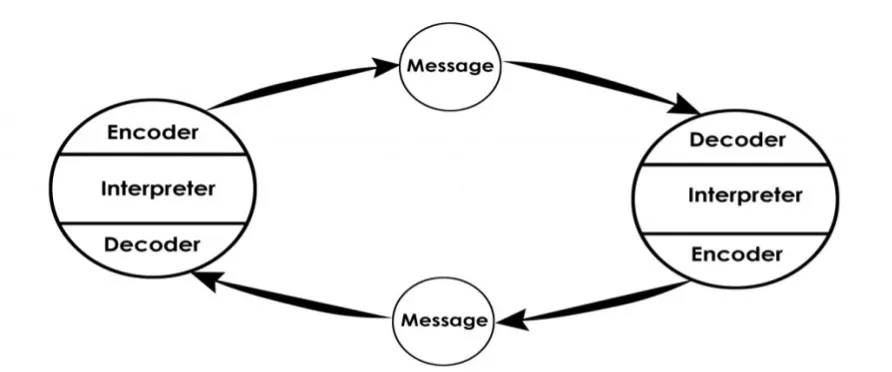
- According to Schramm, "Each person in the communication process is both an encoder & decoder". He receives & transmits. This was a revolutionary idea because it introduced the concept of communication as a two-way process where both parties are simultaneously sending and receiving.
- And it is misleading to think of the communication process as starting somewhere and ending somewhere. Rather, it is continuous. Communication is a never-ending cycle of encoding, decoding, and feedback.
5. Shannon-Weaver's Mathematical Theory (1949)
- This model is best suited for broadcast of farm information. Its systematic framework makes it particularly applicable to mass media channels used in agricultural extension.
- Mathematical theory of communication.
- Information Theory
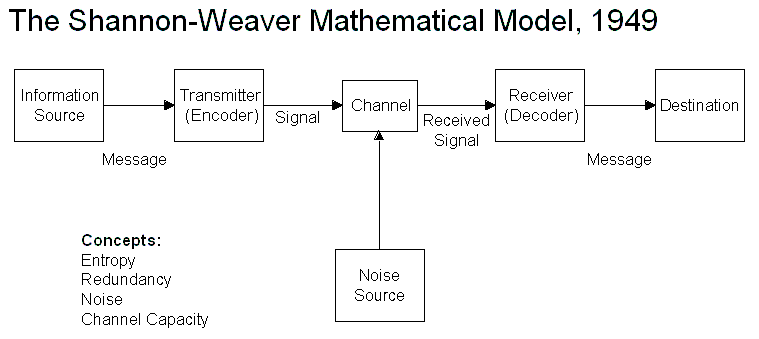
He saw three levels of problems in the communication of information:
Pro Content Locked
Upgrade to Pro to access this lesson and all other premium content.
₹2,388 billed annually · Cancel anytime
You save ₹4,800/year vs original price
🔒 Secure via Razorpay · No hidden fees
Everything in one plan
- All Agriculture & Banking Courses
- Unlimited AI-Powered Lesson Tests
- Audio Lessons — Hindi & English
- Interactive Infographics & Mind Maps
- Spaced Repetition Recall (FSRS)
- Glows & Grows AI Study Feedback
- 22 Indian Language Translation
- Pomodoro Focus Timer & Planner
- XP Points, Levels & Leaderboard
- Achievement Badges & Milestones
- Daily Streaks & Smart Reminders
- Memory Health Dashboard
- Instant Search Across All Content
- Live Telegram Feed Mirror
- Mock Tests & Previous Year Papers
- IBPS · NABARD · ICAR · ASRB · SBI · RRB
Cancel anytime · Secure payment via Razorpay · See our methodology
Communication
- The word communication is derived from Latin word "communis" means common. At its core, communication is about establishing commonness -- creating a shared understanding between people.
- "Process by which two or more people sharing of ideas, facts, feelings or impressions in ways of common understanding of the meaning, intent and use of messages" according to Leagans. This definition highlights that effective communication requires not just sending information, but ensuring the receiver understands the meaning, purpose, and application of the message exactly as intended.
Types of Communication
1. Verbal
- On an average, a person spends 70 % of his time in communicating verbally. This underscores how central verbal communication is to everyday human interaction.
- While communicating verbally, 30 % message distorted. This significant level of distortion means that almost one-third of the intended message may be lost or misunderstood, highlighting the need for clear, simple, and repetitive communication.
2. Non-verbal
- Generally 40 % of communication takes place through body language. This means nearly half of what we communicate is unspoken -- conveyed through how we carry ourselves, our facial expressions, and physical gestures.
- Gestures, postures, facial expression etc. are component of non-verbal communication. Extension workers must be aware of their own body language and also learn to read the non-verbal cues of their audience to gauge understanding and receptiveness.
Models of communication
- A large number of communication models exist because of contextual variation. Each model captures a different aspect or perspective of the communication process, and understanding multiple models gives a more complete picture.
1. Aristotle's model (384-322 BC)
- It was the first basic persuasive communication model. Aristotle identified three key elements of persuasion: the speaker, the speech, and the audience. This was a landmark contribution because it recognised communication as a deliberate, purposeful act aimed at influencing others.
2. Lasswell's Communication Sequence (1948)
- This model helped Lasswell's probes into political communication, propaganda & political symbolism, which were some of the earliest communication researches in social science. Lasswell's work was pioneering in applying systematic analysis to how messages are constructed and transmitted in society.
- The model containing words "Who says, what, which channel, to whom & what effect". This concise formula identifies the five essential components of any communication act: the communicator, the message, the medium, the audience, and the impact.
3. Stimulation-Response Model (SR Model)
A ----------------------------> B = X
- Proposed by Stevens. This is one of the simplest communication models, depicting communication as a direct, linear process.
- A/Q to Stevens, Communication is the discriminatory response of an organisation to the stimulus. This means the receiver (organism) selectively responds to specific stimuli, implying that not all messages produce the same response in all receivers.
- It is sometimes also called interpersonal communication.
4. Schramm's model (1961) SESDD
- A/Q to him accumulated field of experience of both the source-encoder & the decoder-receiver must be common for achieving maximum output. (Tuned together) This is a critical insight -- effective communication requires that the sender and receiver share a common frame of reference, overlapping experiences, language, and cultural understanding.
- According to Schramm, "Each person in the communication process is both an encoder & decoder". He receives & transmits. This was a revolutionary idea because it introduced the concept of communication as a two-way process where both parties are simultaneously sending and receiving.
- And it is misleading to think of the communication process as starting somewhere and ending somewhere. Rather, it is continuous. Communication is a never-ending cycle of encoding, decoding, and feedback.
5. Shannon-Weaver's Mathematical Theory (1949)
- This model is best suited for broadcast of farm information. Its systematic framework makes it particularly applicable to mass media channels used in agricultural extension.
- Mathematical theory of communication.
- Information Theory
He saw three levels of problems in the communication of information:
- Technical problems: It includes the problem of accuracy of information transferred from sender to the receiver. This deals with the fidelity of signal transmission -- how accurately the physical signal carries the intended message.
- Semantic problems: Semantic is the study of meaning of words and language. Here people attach different meaning to things. This is a crucial problem in extension -- the same word may mean different things to the expert and the farmer.
- Influence problems: These are concerned with the success with which the meaning conveyed to the receiver leads to the desired behaviour on his part. Even if the message is received accurately and understood correctly, it may still fail to produce the intended action.
Some important concepts introduced by him:
- Entropy: The degree of randomness or choices or ones degree of freedom to select a message. Higher entropy means more choices and therefore more information content in a message.
- Redundancy: This refers to the amount of information that could be omitted or added in a noiseless channel, so that the massage would still retain information or meaning. The English language has been proven to be approximately 50% redundant. Redundancy is actually helpful in noisy channels because it ensures the message gets through even if some parts are lost.
- Noise: This refers to any sound, distortion etc. that may be added into the channel which is not intended by the communicator. All communication signals are subjected to noise which is actually beyond the control of the transmitter or receiver. In extension, noise can be physical (background sounds), psychological (prejudices, anxiety), or semantic (misunderstood terms).
- Channel Capacity: The amount of information that can be transmitted per unit time. Every channel has a limit to how much information it can carry effectively.
6. Berlo's model of communication (1960) [SMCR]
- Berlo is also known as Father of Communication. His model is one of the most widely studied and applied frameworks in communication theory.
- This includes four basic elements: SMCR.
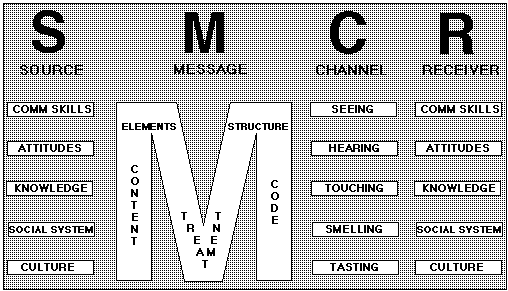
A/Q to him, ingredients in a communication process include: (There are 6 elements in Berlo Model)
- Source
- Encoder
- Message
- Channel
- Decoder
- Receiver
Berlo emphasised that the effectiveness of communication depends on the communication skills, attitudes, knowledge, social system, and culture of both the source and the receiver.
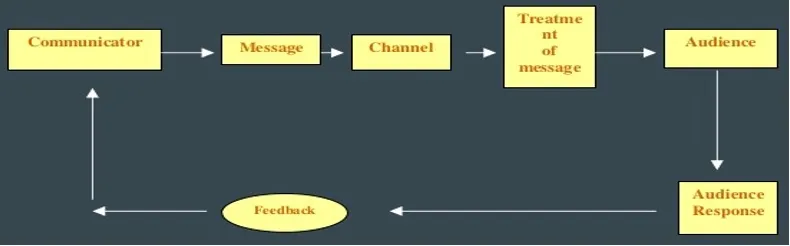
7. Leagans' model (1963) [CMCTAR]
- He defined communication as a process by which two or more people exchange ideas, facts, feelings, impressions, in a ways that each gains a clear understanding of the meaning, intent & use of the message.

- Leagans' emphasis on treatment of message & audience response comes from his background in extension education. So, this model is best described to have applicable for field extension work. This makes it the most practical and relevant model for extension professionals, as it was specifically designed with agricultural communication in mind.
8. Rogers and Shoemaker's model (1971) [SMCRE]
TIP
Quick Model Summary: Aristotle (first persuasive) | Lasswell (Who-What-Which-Whom-Effect) | Shannon-Weaver (best for broadcast, mathematical) | Berlo/SMCR (Father of Communication) | Leagans/CMCTAR (best for field extension) | Rogers-Shoemaker/SMCRE.
Elements of communication
- Remember basic elements of communication are Source, Message, Channel & Receiver. These four elements form the minimum framework for any communication act to occur.
- A/Q to Leagens, there are 6 elements of communication:
I. Communicator
- It is person who initiates the process of communication. He is the source, originator or sender of messages. The communicator's credibility, expertise, and trustworthiness greatly influence how the message is received.
- Attitude of communication source is important from the point of view of: Self, audience & content. A communicator must have a positive attitude towards themselves, their audience, and the content they are sharing for effective communication.
- Communication behaviour: Defined as his expression of results from information seeking, information processing & information disseminating behaviour.
- Berlo pointed out there are 5 verbal communication skills. Two of these are encoding skills, writing and speaking while two of them are decoding skills, reading and listening. The fifth is crucial to both encoding & decoding, i.e. thought and reasoning. Thought and reasoning is the master skill that governs all other communication abilities.
II. Message
- The actual physical product of source-encounter is message. The message is the tangible expression -- the words, images, or gestures -- that carries the intended meaning from sender to receiver.
- Dimensions of Message given by Berlo:
- Message Code
- Message Content
- Message Treatment
- The basic speech sounds are called phonemes.
- The smallest meaningful unit of speech is called morphemes.
- The rule for word order in sentences is known as syntax.
Message Flow Model
-
The hypodermic needle model (also known as the hypodermic-syringe model) this model hypothesises that the information flows direct the masses waiting to receive it, with nothing intervening. This early model assumed that mass media had direct, immediate, and powerful effects on a passive audience -- an assumption later proved to be overly simplistic. A/Q to it, mass media had direct, immediate & powerful effects on a mass audience.
-
Two-step flow model: A/Q to this model ideas flow from radio & print to some active members of a social system called key communicators & from them to less active members of the audience. This model was a major advancement because it recognised the role of opinion leaders as intermediaries who filter and interpret mass media messages for their community.
Types of message distortion: (Explained by Kirk) Understanding message distortion is crucial for extension workers who must ensure their messages reach farmers accurately.
a) Systematic: In this no information is lost, rather it is changed or recorded in an orderly or systematic way. Thus in this case the information is purposely changed in a systematic way to serve some specific objectives. This type of distortion may be useful for extension workers for effective treatment of the message. Systematic distortion can be intentional and beneficial -- for example, simplifying a complex scientific concept for a rural audience.
b) Fog distortion: Information is lost, masked or fogged over, because of the inability of the communicator to encode and/or the inability of the receiver to decode the message with the complete fidelity. This is the most common type of distortion in extension work, often caused by language barriers, technical jargon, or poor presentation.
c) Mirage: We see something that 'is not there'. Far from withholding information from us, mirage distortion gives us extra, unwanted information. Here loss of message is maximum. This is the most dangerous form of distortion because the receiver creates meaning that was never intended, leading to misunderstanding and incorrect action.
III. Channel
- A/Q to Leagans, channel is a physical bridge between the sender & the receiver of message. The channel is the medium or pathway through which the message travels from communicator to audience.
- It is the link which connects source to the receiver.
- The controlling of the flow of information through a communication channel is called gate keeping. Gate keepers are individuals or organisations that decide what information passes through the channel, making them powerful influencers in the communication process.
Rogers & Shoemaker, based on a large number of research studies, drew the following generalisations:
- Interpersonal channels are most suited in persuading an individual to accept new idea and mass media channels are relatively more important at the knowledge function. This is a key principle -- use mass media to create awareness and personal contact to persuade.
- Mass media channels are relatively more important than interpersonal channels for early adopters than for late adopters.
- Cosmopolite channels are relatively more important at the knowledge function, and localite channels are relatively more important at the persuasion function. Cosmopolite channels (external sources like radio, newspapers) bring in new information, while localite channels (local leaders, neighbours) provide trusted validation.
- Cosmopolite channels are relatively more important than localite channels for early adopters than for later adopters.
IV. Treatment
- Treatment is the way in which message is handled before placing in the channel. It refers to how the message is packaged, organised, and presented -- the same content can be treated differently (simplified, dramatised, illustrated) to suit different audiences and channels.
V. Audience
- Receiver is the most important element in the communication process. Everything in communication ultimately revolves around the audience -- their needs, their capacity to understand, and their willingness to act.
- Active audience is suited for communication process. An engaged, attentive, and participatory audience leads to more effective communication outcomes.
VI. Audience Response
- Terminating element in communication process is audience response. The response is the final measure of whether the communication was successful -- did the audience understand and act as intended?
- Ultimate objective of any communication function is audience response.
- Communication strategy that consists of identifying certain sub-audiences within a total audience & the conveying a special message to each of these sub-audience is audience segmentation. This is a sophisticated strategy that recognises that different groups within an audience have different needs and respond to different types of messages.
- Carrying some significant response back to the communicator is feedback. Feedback closes the communication loop and makes the process two-way.
Feedback
- Concept of feedback was given by Berlo. Feedback is one of the most important concepts in communication theory.
- It is action-reaction inter-dependence in communication.
- It stabilise the communication process. Feedback allows the communicator to adjust, correct, and improve the message in real-time.
- Acceptance & rejection are the one of kind of feedback.
- Feedback is source oriented. It travels back to the source, informing the communicator about how the message was received.
Barriers in Teaching Methods
- Providing too much information (communication overload) is a communication barrier related to communicator. When the audience is overwhelmed with information, they may retain very little or nothing at all.
- The problem if accuracy of information transferred from sender to receiver is technical problem.
- The communication barrier wherein people attach different meaning to things is semantic barrier. Semantic barriers arise from differences in language, jargon, or cultural interpretation between communicator and audience.
Noise
- It is an obstruction in communication. Noise is anything that interferes with or distorts the message as it travels from sender to receiver.
Disadvantage
- Wastage of time & energy: Main disadvantage. Noise forces the communicator to repeat messages and use additional resources to overcome the distortion.
- Pollution in environment
- Divert the attention
- Distort the message