Translate
🙇♂️ Teaching
Learn teaching and learning process, elements of learning situation, principles of learning.
Which one of the following is not a Principles of learning?
Teaching & Learning in Process
- Extension is an educational process to bring about desirable changes. The entire purpose of extension is to help people improve their knowledge, attitudes, and skills so they can lead better lives and adopt improved practices.
- Essential role of an extension worker is to create effective learning situations. Rather than merely delivering information, the extension worker must design environments and experiences that actively engage the learner and promote meaningful behavioural change.
Elements of Learning Situation
- Essential elements of effective learning are five in number. Each element plays a crucial role, and the effectiveness of learning depends on how well these elements work together.
- Teacher or instructor
- Teaching materials and Plan
- Subject matter
- Learner
- Physical facilities and environment
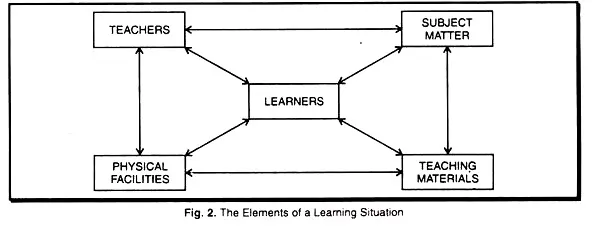
- Out of these 5 elements learner is the most important element. The entire learning process revolves around the learner's needs, readiness, and capacity to absorb and apply new knowledge.
- The central element in an effective learning situation is learner.
- Out these maximum interaction with the learner is done by instructor. The instructor serves as the primary facilitator who guides, motivates, and supports the learner throughout the process.
Teaching
- The process of arranging situation in which the things to be learned are called to the attention of the learners, there interest developed, desire aroused and action promoted is called teaching. Effective teaching is a carefully orchestrated process that moves the learner from awareness through interest, desire, and finally to action.
- In extension teaching the teacher should first know attitude of the learner. Understanding where the learner stands -- their beliefs, feelings, and predispositions -- is the essential first step before any teaching effort begins.
- Effective teaching is not merely to inform people but to transforming people. The goal is not just to transfer information but to bring about a genuine transformation in how people think, feel, and behave.
Learning
- The relatively enduring change in overt and covert responses as a result of perceived stimulus is called Learning. This formal definition tells us that learning must produce lasting changes in both observable behaviour and internal mental processes.
- Learning is the process of acquiring or imparting the ability to perform a behavioural pattern through experience and practice.
- The process by which an individual, through one's own efforts & abilities change the behaviour is known as learning.
- Learning is an internal process mainly controlled by learner. No one can force another person to learn -- the learner must be willing and engaged for true learning to occur.
- Learning is motivated by self. Self-motivation is the most powerful driver of learning.
- Learning is most rapid by maximizing concentration on one sense at a time. Focusing on a single sensory channel at a time helps prevent information overload and improves retention.
- Bond theory or Stimulus - Bond or SR theory of learning is advocated by E.L. Thorndike. This foundational learning theory proposes that learning occurs through the formation of connections (bonds) between stimuli and responses.
- The progressive behaviour adaptation of an individual to a stimulus is called learning.
- Father of learning: Thorndike. His pioneering work on trial and error learning, the law of effect, and connectionism laid the groundwork for modern educational psychology.
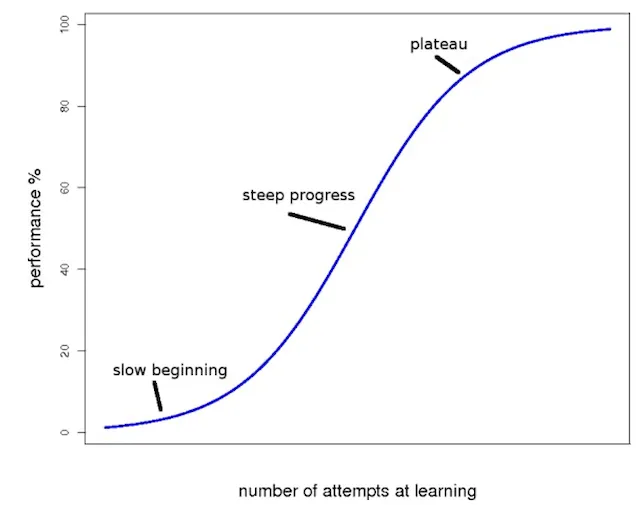
- The learning curve in teaching follows a S shaped curve. This means learning typically starts slow, then accelerates rapidly during the middle phase, and finally levels off as mastery is approached.
- The experimental technique of learning emphasis on use of stimulation games. Simulation games create realistic scenarios that allow learners to practice skills in a safe, controlled environment.
- Experimental learning is learner centred. The learner takes an active role in the process rather than being a passive recipient.
- Learning that suddenly appears when a reward or incentive for performance is given is known as Latent learning. This concept demonstrates that learning can occur without visible changes in behaviour and only becomes apparent when the right motivation is introduced.
- Learning occurs through various senses shown by Haas & Packer (1964). Understanding the relative contribution of each sense helps extension workers design more effective teaching methods:
- Sight: 87% -- The visual sense is by far the most dominant channel for learning.
- Hear: 7%
- Smell: 3.5%
- Touch: 1.5%
- Taste: 1%
IMPORTANT
🔐
Pro Content Locked
Upgrade to Pro to access this lesson and all other premium content.
Most Popular
67% OFF
₹599/mo original price
₹ 199 /month
₹2,388 billed annually · Cancel anytime
You save ₹4,800/year vs original price
🔒 Secure via Razorpay · No hidden fees
Everything in one plan
- All Agriculture & Banking Courses
- Unlimited AI-Powered Lesson Tests
- Audio Lessons — Hindi & English
- Interactive Infographics & Mind Maps
- Spaced Repetition Recall (FSRS)
- Glows & Grows AI Study Feedback
- 22 Indian Language Translation
- Pomodoro Focus Timer & Planner
- XP Points, Levels & Leaderboard
- Achievement Badges & Milestones
- Daily Streaks & Smart Reminders
- Memory Health Dashboard
- Instant Search Across All Content
- Live Telegram Feed Mirror
- Mock Tests & Previous Year Papers
- IBPS · NABARD · ICAR · ASRB · SBI · RRB
Cancel anytime · Secure payment via Razorpay · See our methodology
Which one of the following is not a Principles of learning?
Teaching & Learning in Process
- Extension is an educational process to bring about desirable changes. The entire purpose of extension is to help people improve their knowledge, attitudes, and skills so they can lead better lives and adopt improved practices.
- Essential role of an extension worker is to create effective learning situations. Rather than merely delivering information, the extension worker must design environments and experiences that actively engage the learner and promote meaningful behavioural change.
Elements of Learning Situation
- Essential elements of effective learning are five in number. Each element plays a crucial role, and the effectiveness of learning depends on how well these elements work together.
- Teacher or instructor
- Teaching materials and Plan
- Subject matter
- Learner
- Physical facilities and environment
- Out of these 5 elements learner is the most important element. The entire learning process revolves around the learner's needs, readiness, and capacity to absorb and apply new knowledge.
- The central element in an effective learning situation is learner.
- Out these maximum interaction with the learner is done by instructor. The instructor serves as the primary facilitator who guides, motivates, and supports the learner throughout the process.
Teaching
- The process of arranging situation in which the things to be learned are called to the attention of the learners, there interest developed, desire aroused and action promoted is called teaching. Effective teaching is a carefully orchestrated process that moves the learner from awareness through interest, desire, and finally to action.
- In extension teaching the teacher should first know attitude of the learner. Understanding where the learner stands -- their beliefs, feelings, and predispositions -- is the essential first step before any teaching effort begins.
- Effective teaching is not merely to inform people but to transforming people. The goal is not just to transfer information but to bring about a genuine transformation in how people think, feel, and behave.
Learning
- The relatively enduring change in overt and covert responses as a result of perceived stimulus is called Learning. This formal definition tells us that learning must produce lasting changes in both observable behaviour and internal mental processes.
- Learning is the process of acquiring or imparting the ability to perform a behavioural pattern through experience and practice.
- The process by which an individual, through one's own efforts & abilities change the behaviour is known as learning.
- Learning is an internal process mainly controlled by learner. No one can force another person to learn -- the learner must be willing and engaged for true learning to occur.
- Learning is motivated by self. Self-motivation is the most powerful driver of learning.
- Learning is most rapid by maximizing concentration on one sense at a time. Focusing on a single sensory channel at a time helps prevent information overload and improves retention.
- Bond theory or Stimulus - Bond or SR theory of learning is advocated by E.L. Thorndike. This foundational learning theory proposes that learning occurs through the formation of connections (bonds) between stimuli and responses.
- The progressive behaviour adaptation of an individual to a stimulus is called learning.
- Father of learning: Thorndike. His pioneering work on trial and error learning, the law of effect, and connectionism laid the groundwork for modern educational psychology.
- The learning curve in teaching follows a S shaped curve. This means learning typically starts slow, then accelerates rapidly during the middle phase, and finally levels off as mastery is approached.
- The experimental technique of learning emphasis on use of stimulation games. Simulation games create realistic scenarios that allow learners to practice skills in a safe, controlled environment.
- Experimental learning is learner centred. The learner takes an active role in the process rather than being a passive recipient.
- Learning that suddenly appears when a reward or incentive for performance is given is known as Latent learning. This concept demonstrates that learning can occur without visible changes in behaviour and only becomes apparent when the right motivation is introduced.
- Learning occurs through various senses shown by Haas & Packer (1964). Understanding the relative contribution of each sense helps extension workers design more effective teaching methods:
- Sight: 87% -- The visual sense is by far the most dominant channel for learning.
- Hear: 7%
- Smell: 3.5%
- Touch: 1.5%
- Taste: 1%
IMPORTANT
The sensory learning percentages (Sight 87%, Hear 7%) are frequently asked in exams. Also remember: Thorndike = Father of Learning, S-shaped curve, and Latent learning = learning that appears only when a reward is introduced.
Principles of learning
1. Principle of association
- Learning is growth like and continuous
- New learning may be associated with the previous successful & satisfying responses. People learn best when new information is linked to something they already know and have found rewarding. Building on existing knowledge makes new concepts more relatable and easier to retain.
- Example: If the farmers have obtained profitable return by the application of nitrogenous fertilizer, they may be motivated to use balanced fertilizer containing phosphate & potash, for still higher return.
2. Principle of disassociation
- Learning is affected by emotions.
- For effective learning, undesirable responses are to be eliminated. The most effective way of eliminating an undesirable response is to set up a desirable substitute, which must be made more satisfying than the original (undesirable) reaction. This means extension workers should replace bad practices with better alternatives rather than simply telling people to stop what they are doing.
- Ex. Discouraging the application of chemical fertilisers and advocating organic farming.
- Ex. Planting a crop in lines gives better yield, the farmers may be advised not to practice broadcasting.
3. Principle of Clarity of objectives
- The objective of learning should be clear. The ease of learning seems to vary directly with the meaningfulness of the material presented. Meaningful learning is interesting & easier than senseless learning. When learners understand why they are learning something and how it benefits them, they learn faster and retain more.
- Learning must makes sense to the learner. Learning is purposeful.
- Ex. When farmers use their crop loan only for growing crops, they are clear about the objective of getting loan. This clear understanding enable farmer to learn about proper utilization & repayment of loans & take further loans if necessary, for economic development.
4. Principle of self-activity
- The door to learning is "locked on the inside" and unless the learner opens the door himself, learning cannot take place. This powerful metaphor emphasises that true learning requires active participation from the learner -- no amount of teaching can substitute for the learner's own willingness and effort.
- Conducting demonstration by the farmers in their own field provides opportunity of self-activity i.e. learning by doing. This makes learning effective & permanent.
5. Principle of Readiness
- Learning must be challenging and satisfying
- Learning takes place more effectively when one is ready to learn. Readiness includes mental preparedness, physical resources, and emotional willingness -- all three must align for optimal learning to occur.
- Example: When farmers are ready to cooperate, with good guidance, they may be able to form a cooperative society.
6. Principle of Satisfyingness (Reward)
- A satisfying after-effect reinforces learning. When the outcome of an action is pleasant and rewarding, the learner is more likely to repeat that behaviour and seek further improvement. This is closely related to Thorndike's Law of Effect.
- Example: Crops grown during the rabi-summer season give higher economic return & higher level of satisfaction to the farmers. Farmers learn to invest more & take more care for crops during the season.
7. Principle of transfer
- Application of perceived relationship to another situation in which it is applicable. Transfer of learning occurs when skills or knowledge gained in one context are successfully applied to a different but related context. This is one of the most valuable outcomes of effective teaching.
- Example: If a farmer has learned the technique of water management in a particular crop, they should be able to use this method in other crop as well. This shall spread the effect of learning.
8. Principle of Motivation
- Motivation or drive means stimulation towards action. Without motivation an organism does not behave & hence does not learn. The practice recommended must be motivating for learning to takes place. Motivation is the starting point of all learning -- without it, even the best-designed programme will fail to produce results.
- Example: The favourable experience of planting trees motivates tribal farmers to collect samplings from the forest nursery.
9. Principle of set or attitude
- An unfavourable attitude or set retards learning & a favourable attitude accelerates it. Unless attitude becomes favourable, adoption will not take place. Attitude acts as a gatekeeper -- it determines whether a person is open to or closed off from new learning. Extension workers must therefore work on changing negative attitudes before expecting adoption of new practices.
- Example: When a farmer develops a favourable attitude towards scientific treatment of cattle, they shall learn the importance of this type of treatment for animals.
10. Principle of practice (law of exercise)
- Perfection is seldom achieved without practice. The practice must be correct, otherwise there will be wrong learning. The attainment of perfection demands that undesirable and useless movements are replaced by desired and useful movements. Repetition and correct practice are essential for building competence and confidence.
- Learning must result in functional understanding.
- Example: Learning to use a sprayer correctly requires repeated trying of the instrument.
11. Principle of timing
- Other things being equal, learning takes place more readily when there is introduction of a topic or skill at a time when it can be used in some serviceable manner. Timely delivery of knowledge -- when it is immediately relevant and applicable -- dramatically increases learning effectiveness.
- Example: Issue of advertisement regarding public health and sanitation at the onset of an epidemic outbreak.
- Example: When insects have appeared or are likely to appear in crops, farmers shall learn about plant protection.
- When inspection appeared or is likely to appear in crop, farmers should be ready to learn about plant protection.
12. Principle of Environment
- Learning is affected by physical and social environment. Both the physical setting (comfort, lighting, seating) and the social atmosphere (peer support, community norms) have a significant impact on how well people learn.
- Teacher should recognise and utilise the social environment.
- Physical factors where learning is to be done (like seating arrangement).
Steps in Extension Teaching
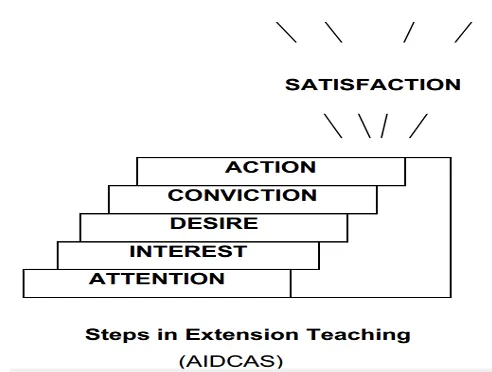
- Given by Wilson & Gallup (1955). These steps outline the sequential stages through which a learner progresses from initial awareness to final adoption.
- Steps shortly called AIDCAS (Attention, Interest, Desire, Conviction, Action, Satisfaction).
Attention
- The first step in extension teaching which aims to make people aware of new ideas & practices. Without capturing the learner's attention first, no further progress is possible.
Desire
- Unfreezing the existing behaviour & motivating the people for change. At this stage, the learner develops a strong wish to learn more and begins to see the potential benefits of adopting the new practice.
Conviction
- The stage of strong persuasion so as to convince the people about the applicability of the new idea or practice in their own situation. The learner becomes convinced that the innovation is suitable and beneficial for their specific conditions.
Action
- It is the stage of putting the ideas or practice into operation. The learner actually implements the new practice, moving from thought to deed.
Quick Recap: 12 Principles of Learning
1. **Association** -- Link new learning to existing knowledge 2. **Disassociation** -- Replace undesirable responses with better ones 3. **Clarity of Objectives** -- Learning must make sense to the learner 4. **Self-activity** -- "Door locked on the inside" 5. **Readiness** -- Learn when prepared 6. **Satisfyingness** -- Reward reinforces learning 7. **Transfer** -- Apply to new situations 8. **Motivation** -- Drive towards action 9. **Set/Attitude** -- Favourable attitude accelerates learning 10. **Practice** -- Correct repetition builds skill 11. **Timing** -- Teach when relevant 12. **Environment** -- Physical and social settings matterLesson Doubts
Ask questions, get expert answers