🩺Poultry Housing Management - Deep Litter, Cage System, Brooding and Feeding
Complete guide to poultry management covering housing systems (deep litter, cage, free range), house orientation, brooding, debeaking, feeding schedules, lighting programmes, and management of layers and broilers for IBPS AFO and NABARD exams.
Proper housing management is the foundation of a productive poultry enterprise. The design, orientation, and type of housing directly impact bird health, growth rate, egg production, and overall profitability.
- Open-sided poultry houses are very popular in our country. Open-sided houses are preferred in India’s tropical climate because they allow natural ventilation and reduce the cost of environmental control systems.

- In hotter parts of the country, the long axis of the house should run from East to West and the sides should face north-south to prevent direct sunshine falling in to the house. This orientation ensures that the broad side walls face north and south, minimising direct sunlight penetration and keeping the interior cooler.
- In colder parts of the country houses facing south or south-east to get maximum sunlight. In cold regions, maximising solar heat gain is important for maintaining comfortable temperatures inside the poultry house.
- Feeder (Feed Hopper:) It is a specially designed trough or utensil where feed for chicken is kept. Feeders must be designed to minimise feed wastage while allowing easy access for all birds.
Types
Understanding the different types of poultry houses helps in selecting the right housing for each stage of the bird’s life:
- Chick/Brooder House: Used to brood and egg type chick from day-old-chick to 5–6 weeks age. The brooder house provides supplemental heat and protection for young, vulnerable chicks.
- Grower House: Grow birds which age between 9 to 18 weeks. During this phase, birds are transitioning from chicks to mature birds and need adequate space for proper skeletal and muscular development.
- Brooder cum Grower House: Birds are reared from 0 to 18 weeks. This combined housing eliminates the stress of shifting birds between separate houses.
- Layer House: A house in which layer chickens of 18 to 72 weeks age birds reared. Layer houses are equipped with nesting boxes, feeders, and waterers designed for egg-laying hens.
- Laying Nest - A box or cage where the chickens lay eggs. Providing clean, comfortable laying nests encourages hens to lay eggs in designated spots, reducing dirty and broken eggs.
- Broiler House: Broilers are reared up to 6 weeks of age. Broiler houses are designed for rapid turnover and are cleaned and disinfected between batches.
- Breeder House: Both male and female birds reared with appropriate ratio of breeding purpose. The typical male-to-female ratio in a breeder house is 1:8 to 1:10 to ensure adequate fertilisation.
- Environmentally controlled (EC) house:
- In which, entire environment is manipulated in such a way that is optimum for the birds growth. EC houses use fans, cooling pads, heaters, and automated controls to maintain ideal conditions year-round.
- The optium temperature for broiler is 24°C and layer is 13-20°C. The optium relative humidity for both broiler and layer is 60%. Note that broilers require a higher optimum temperature (24°C) than layers (13-20°C), not lower. This is because broilers are fast-growing and generate significant metabolic heat.
IMPORTANT
Broiler optimum temp = 24°C (higher), Layer optimum temp = 13-20°C (lower). Humidity = 60% for both. Exam questions often reverse these values.
Poultry Housing System
I. Extensive system

- Also called Free Range System. In this system, birds have the freedom to roam outdoors, which allows them to exhibit natural behaviours such as foraging, dust bathing, and perching.
- Birds are allowed free range, such that it can wander at will, over the allotted paddock or field and are not controlled by fences.
- Stocking density rage 250 birds per ha.
- They received their bulk quantity of feed from the land in the form of herbage, seeds, insects etc. besides in small quantity by hand feeding.
- It is preferred for organic production. Organic poultry certification often requires free-range access, making this system essential for farmers targeting the organic market.
- A small housing is provided for night shelter.
II. Semi-intensive system

- The birds are provided with a night shelter surrounded by open but fence runs for the day. This system is usually adopted for duck rearing. The semi-intensive system offers a balance between the freedom of the extensive system and the control of the intensive system.
- Birds are provided with a pen and run. Pen is an enclosed house and run is an enclosed grass area with fence.
- The stocking density rate on an average for adult birds is 500-750 per hectare.
- 3 to 4 sq.ft / bird in the pen.
NOTE
Semi-intensive system summary: Night shelter (pen) + fenced outdoor run (paddock) during daytime. Stocking: 500–750 birds/ha. Floor space inside pen: 3–4 sq.ft./bird. Commonly used for ducks and backyard dual-purpose breeds. ICAR’s Vanaraja breed (developed at Project Directorate on Poultry, Hyderabad) is well suited to both semi-intensive and free-range/backyard systems — it is hardy, disease-resistant, and produces both eggs and meat.
III. Intensive system
- Birds are rearing in cages/slats.
- Therefore birds are totally confined with arrangements for feeding, watering, nesting etc. inside the house itself. The intensive system allows maximum control over the bird’s environment, nutrition, and health.
- This system is most widely practiced in India and around the world.
- Intensive system is sub-divided in four types:
Deep litter system
- In this system birds are kept inside the house all time.
- Litter material is of organic in nature capable of absorbing moisture and releasing moisture to the atmosphere and also to serve as a bedding material for the birds. The litter provides insulation, absorbs droppings, and allows birds to perform natural scratching behaviour.
- Coirpith
- Paddy husk
- Ground Nut
- Saw dust
- Wood shavings
- Straw chopping
- Paper straw chopping
- Sugarcane baggase
- Birds are kept suitable later materials of about 5 to 12 inch depth.
- The major disadvantage of this system is if the management is bad, liberation and accumulation of ammonia, wet litter problem dirty eggs, disease problems may result. Ammonia build-up from decomposing droppings can cause respiratory problems, eye irritation, and reduced productivity. Maintaining proper litter moisture (20-25%) is critical.
- As per TNAU/NABARD Norms, the floor space required for a bird in deep litter system: 2 sq.ft. per bird.
TIP
Deep Litter Exam Facts: Most common litter material in India = rice husk (paddy husk) — low cost, good absorbency. Standard litter depth = 4–6 inches (though may be maintained up to 12 inches as litter builds up). Floor space = 2 sq.ft./bird for layers. Ideal litter moisture = 20–25%. Advantages: low cost, birds can exhibit natural behaviour, litter generates heat in winter. Key risk: coccidiosis — birds contact droppings on litter floor, so regular turning and moisture control are essential.

Slatted floor system
- In this system, iron rods or wood reaper are used as floor which are placed 2-3 feet above the ground level to facilitate fall of droppings through slats. The raised slatted floor keeps the birds separated from their droppings, improving hygiene and reducing the incidence of diseases like coccidiosis that are spread through faecal matter.
NOTE
Why wire/slatted floors prevent coccidiosis: Eimeria (the coccidiosis parasite) spreads when birds ingest oocysts shed in the droppings of infected birds. On a raised slatted or wire floor, droppings fall through to the pit below, breaking the fecal–oral transmission cycle. This is the primary disease-prevention advantage of the cage and slatted systems over deep litter.

Slat cum litter system
- 60% floor space cover with rods rest with litter. This hybrid system combines the benefits of both slatted floors (cleanliness) and deep litter (bird comfort and natural behaviour).
- In this system less floor space per bird is needed when compared to solid floor system.
- Higher initial cost than conventional solid floors is the major disadvantage of this system.

Cage system
- AKA Battery Cage System or Californian Cage System. The cage system is the most space-efficient housing method and allows precise management of individual birds.
- Present in world 75 % commercial layers reared in cage system. The dominance of the cage system in commercial egg production is due to its advantages in hygiene, feed efficiency, and egg cleanliness.
- In cage system — cage layers fatigue may occur (it is system in which lameness occur in birds, it may be due to Ca and P deficiency but exact reason in not known). Cage layer fatigue is a condition where hens develop weak, fragile bones due to the combination of restricted movement and the high calcium demands of continuous egg production.
- In broilers case, incidence of breast blisters more especially when broilers weight above 1.5 kg.
- Birds are kept under total confinement with minimum space feed and water provided from outside.
- Eggs laid will get rolled out by the inclined floor bottom. The inclined cage floor ensures that eggs gently roll to a collection tray in front, keeping them clean and reducing breakage.
- Very limited movement is allowed by the birds to sit and stand properly.
- Minimum area is required/bird:
- Single: 1 per sq.ft
- Multiple: 0.75 sq.ft
- Colony: 0.5 sq.ft
- Generally the cage floor space is 14x16 inches and height of 17 inches is allowed in battery system.
TIP
Battery Cage Key Facts: Cages are stacked in tiers (rows one above another) — typically 3–4 tiers high — which is why they are called “battery” cages. Floor space per bird as per BIS/European standard = 400–450 cm²/bird. Wire floor allows droppings to fall through, eliminating contact with faeces (prevents coccidiosis). Feeders and waterers run along the front of each cage. Eggs roll forward on the sloped wire floor to the collection trough. Advantages: low labour, hygienic eggs, easy identification of non-layers, no floor eggs. Disadvantages: cage layer fatigue, welfare concerns, higher capital cost.

Incubation of Eggs
Incubation is the process by which an egg of oviparous (egg-laying) animals develops an embryo within the egg. It provides the controlled environment of temperature, humidity, and ventilation needed for the embryo to develop fully.
- Incubation period for chicken eggs is 21 days. This is a critical value to remember: 21 days from the start of incubation to hatching.
- A machine which provides all these is called an incubator. Modern commercial incubators can hold thousands of eggs and precisely control temperature, humidity, and turning to maximise hatch rates.
- Hatching: Process of breaking out of an eggshell after completion of incubation. The chick uses a specialised structure called the egg tooth (a small, hard projection on the tip of the upper beak) to pip through the shell.
Principles of Incubation
Five major functions are involved in incubation and hatching of poultry eggs:
1. Temperature
- Embryo starts developing when the temperature exceeds the Physiological Zero.
- Physiological zero is the temperature below which embryonic growth is arrested and above which it is reinitiated. For chicken eggs, physiological zero is about 75°F (24°C).
- The optimum temperature for chicken egg in the setter (first 18 days) ranges from 99.50 to 99.75°F (37.5 - 37.8°C).
- In the hatcher (last 3 days) the temperature is 98.5°F (36.9°C).
IMPORTANT
Setter temperature = 99.5-99.75°F (37.5-37.8°C) for first 18 days. Hatcher temperature = 98.5°F for last 3 days. Even small deviations can cause embryo mortality or hatching defects.
2. Humidity
- Humidity for the first 18 days (in setter): 55-60%.
- For the last 3 days (in hatcher): 65-70%.
- Higher humidity during hatching period is given to avoid dehydration of chicks and to soften the shell membranes for easier pipping.
3. Ventilation
- The oxygen content of the air in the setter remains at about 21%.
- For every 1% drop in oxygen there is a 5% reduction in hatchability.
- The tolerance level of CO2 for the first 4 days in the setter is 0.3%.
- CO2 levels above 0.5% reduce hatchability and are completely lethal at 5.0%.
4. Position of Eggs
- Artificially incubating eggs should be held with their large ends up.
- Under normal circumstances, eggs are set with large end up for the first 18 days (in setter) and in horizontal position for the last 3 days (in hatcher).
5. Turning of Eggs
- Eggs should be turned at least 8 times a day (manual turning).
- In large commercial incubators, eggs are turned automatically each hour i.e. 24 times a day.
- Most eggs are turned to a position of 45° from vertical, and then reversed in the opposite direction to 45° from vertical.
- Rotation less than 45° is not adequate to achieve high hatchability.
- Turning is not required in the Hatcher (last 3 days).
TIP
Candling is the process of examining eggs with a light source to check embryo development. It is usually done on 7th, 14th, and 18th day of incubation to remove infertile eggs and dead embryos.
Incubation Conditions Summary
| Factor | Setter (Days 1-18) | Hatcher (Days 19-21) |
|---|---|---|
| Temperature | 99.50 - 99.75°F (37.5-37.8°C) | 98.5°F (36.9°C) |
| Relative Humidity | 55-60% | 65-70% |
| Position | Large end up | Horizontal |
| Turning | Manual: 8 times/day; Auto: 24 times/day | No turning |
Natural vs Artificial Incubation
| Feature | Natural Incubation | Artificial Incubation |
|---|---|---|
| Method | Broody hen sits on eggs | Machine (incubator) provides controlled conditions |
| Capacity | 10-15 eggs per hen | Thousands of eggs at a time |
| Temperature control | Hen’s body heat | Thermostat-controlled heaters |
| Humidity | Natural | Humidity trays and sensors |
| Turning | Hen turns eggs naturally | Manual (8x/day) or automatic (24x/day) |
| Use | Small/backyard farms | Commercial hatcheries |
Brooding of Chick
Brooding is one of the most critical phases in poultry management. Proper brooding ensures high chick survival, uniform growth, and strong immune development.
- Day-old chick: Hatched out chick is called as day-old-chick up to 24 hours.
- Brooding: This is a process of rearing the young chickens from day-old chicks to 5–6 weeks of age during which, heat is to be provided to keep them warm. A newly hatched chick does not develop the thermoregulatory mechanism fully and takes about two weeks to develop this mechanism and homeostasis. Therefore, chicks cannot maintain their own body temperature during the first few weeks, so external heat is essential for their survival.
- Brood: A group of chicks of same age raised in one batch is called as a brood.
- Brooder: Basically, this is a device for providing artificial heat. Also, brooder house.

- Hover: An apparatus used for keeping chicken warm. It is a heat source and placed inside brooder. The hover typically consists of a heating element (infrared lamp, gas heater, or electric heater) with a canopy that traps warm air around the chicks. These reflectors are called Hovers.
- Maintain temperature of 90 to 95 °F for the first week and then reduce 5°F every week. This gradual reduction in temperature (called step-down brooding) allows the chicks to acclimatise and develop their own thermoregulatory ability.
- 24 hours lighting should be adopted during 0 - 5–6 weeks of age (brooding period). Continuous lighting during the brooding period encourages chicks to eat and drink frequently, promoting early growth.
IMPORTANT
Brooding Temperature Schedule (exam favourite):
- Week 1: 35°C (95°F)
- Week 2: 32°C (90°F)
- Week 3: 29°C (85°F)
- Week 4: 27°C (80°F)
- Week 5–6: 24°C (75°F) — discontinue heat
Reduce by 3°C (5°F) per week until ambient temperature is reached. Brooding period = 4–6 weeks.
Chick behaviour as temperature guide:
- Chicks huddled under heater, chirping loudly → temperature too cold (chilling)
- Chicks spread away from heater, panting, wings drooping → temperature too hot
- Chicks evenly distributed, quiet → temperature just right
Chilling causes high mortality in the first week; overheating causes dehydration and heat stress.
Natural Brooding
- It is done with the help of broody hens after hatching, up to 3 to 4 weeks of age.
- A broody hen can take care of 10-15 chicks depending on the season.
- Suitable only for small-scale and backyard poultry farming.
Artificial Brooding
In artificial brooding, large numbers of baby chicks are reared in the absence of a broody hen. Equipment used for brooding are called brooders. A brooder comprises three elements:
- Heating source
- Reflectors (Hovers)
- Brooder guard / Chick guard
Types of Brooders:
| Type | Details |
|---|---|
| Charcoal/Kerosene stove | Traditional, low cost; needs manual monitoring |
| Gas brooder | Uses natural gas, LPG, or methane; uniform heat distribution |
| Electrical brooder | One unit sufficient for 300-400 chicks; thermostat-controlled |
| Infra-red bulbs | Self-reflecting bulb; one 250W IR bulb provides brooding for 150-250 chicks |
Brooder Guard (Chick Guard):
- Brooder Diameter: 5 feet
- Brooder Height: 1.5 feet
- Materials: cardboard sheet, GI sheet, wire mesh, or mat (depending on season)
- During summer season, brooding guard is used for 5-6 days. In winter season it is used for 2-3 weeks.
NOTE
Chick Behaviour Indicators: If chicks huddle under the hover, the temperature is too low. If chicks move away from the hover, the temperature is too high. If chicks are evenly distributed, the temperature is ideal.
Layer Management
The laying period starts from the point of lay (around 18 weeks) and continues to about 72 weeks of age (one year of production).
Phases of Layer Management
| Phase | Age | Key Focus |
|---|---|---|
| Brooding | 0-8 weeks | Heat, feed, vaccination |
| Growing | 9-18 weeks | Skeletal development, body weight |
| Pre-lay | 16-20 weeks | Transition feed, lighting programme |
| Laying | 18-72 weeks | Nutrition, lighting, egg collection |
Space Requirements for Layers
| Parameter | Deep Litter System | Cage System |
|---|---|---|
| Floor space | 2 sq. ft. per bird | 4 birds/box of 18” x 15” (0.46 sq. ft/bird) |
| Feeding space | 5” per bird | - |
| Feeder space | 4 sq. ft. | - |
| Water space | 2 sq. ft. | - |
Nest Types
| Nest Type | Capacity |
|---|---|
| Individual nest | 1 nest box for 4-5 birds |
| Community nest | Accommodates 50-60 birds |
| Trap nest | 1 bird at a time (used for breeding/academic studies) |
- Provide nest box for every 5 layers about a week before the first egg is laid.
Lighting Programme for Layers
- Provide 16 hours of light during laying period. Light stimulates the pituitary gland to release hormones that trigger ovulation.
- Never decrease light duration during the laying period — this can cause a sudden drop in egg production.
- Increasing day length stimulates early maturity and egg production.
IMPORTANT
Layers need 16 hours of light during laying. Never decrease light duration once laying has started. This is one of the most important management practices for maintaining peak egg production.
TIP
Photoperiodism in layers — why light matters: Poultry egg production is controlled by photoperiodism — the response to day length (hours of light). Increasing day length stimulates the hypothalamus → pituitary → ovary axis, triggering ovulation. Minimum light for peak production = 14–16 hours/day.
Recommended light programme for pullets:
- Rearing phase (0–18 weeks): keep at 8–10 hours or natural day length (avoid increasing during rearing to prevent premature lay)
- Approach to lay (18–20 weeks): increase to 14 hours, then step up to 16 hours by peak lay
- During production: maintain at 16 hours — NEVER reduce
Why never reduce? Reducing light duration signals the bird that days are shortening (like autumn), triggering a moult and cessation of laying. This can take weeks to recover from.
Feeding During Laying
- The average feed consumption during laying period ranges from 100-110 grams per day.
- Layer feed should contain adequate calcium (3.5-4%) for strong eggshell formation.
- Collect eggs at least 5 times a day in deep-litter system and twice a day in cage system.
IMPORTANT
Poultry Feed Phases — Crude Protein (CP) and Calcium requirements:
| Phase | Age | CP% (Broiler) | CP% (Layer) | Calcium% |
|---|---|---|---|---|
| Starter | 0–6 weeks | 22–24% | 20–22% | 1% |
| Grower | 6–18 weeks | — | 16–18% | 1% |
| Layer/Finisher | 18 weeks+ | — | 15–17% | 3.5–4% |
Why does layer feed need high calcium (3.5–4%)? Each eggshell requires approximately 2 grams of calcium. A hen laying 300 eggs/year must mobilise enormous calcium — much of it from her own bones if feed calcium is inadequate. High dietary calcium in layer feed prevents osteoporosis and thin/soft-shelled eggs.
Grit for poultry (two types):
- Insoluble grit (flint/granite): Retained in the gizzard; acts as “teeth” to grind hard grains — essential for birds on whole grain diets.
- Soluble grit (oyster shell/limestone): Dissolves in the digestive tract; provides calcium for eggshell formation and bone health. Especially important for layers.
Feed additives:
- Coccidiostats (e.g., amprolium, salinomycin): Added to starter feed to prevent coccidiosis in broilers reared on litter.
- Vitamin–mineral premixes: Compensate for deficiencies in raw ingredients.
- Antibiotics as growth promoters: Historically used but now banned or restricted in many countries including India (FSSAI guidelines) due to antimicrobial resistance concerns.
Deworming for Layers
- Deworming should be done regularly at an interval of 6-8 weeks depending on the worm load, especially when reared under deep-litter system.
Broiler Management
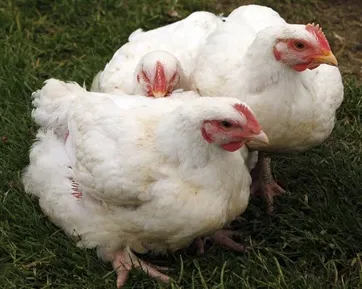
Broiler is defined as the tender meated chicken of either sex which grows from 35 to 40 gms of initial weight to 2 kg or more in 6 weeks of age by consuming around 4 kg of feed.
Broiler Space and Feeding Requirements
| Age | Floor Space/Bird | Feeder Space/Bird | Waterer Space/Bird |
|---|---|---|---|
| Up to 18 days | 450 cm2 (0.5 sq.ft.) | 3 cm | 1.5 cm |
| 19 to 42 days | 1000 cm2 (1.1 sq.ft.) | 6-7 cm | 3 cm |
Feed Conversion Ratio (FCR)
- Feed conversion ratio in broiler chicken: 1.5 to 1.9. This means a broiler needs only 1.5 to 1.9 kg of feed to gain 1 kg of body weight, making it one of the most feed-efficient livestock species.
- Poultry has the LOWEST FCR (best feed efficiency) among livestock; broiler FCR = 1.5–1.8. Lower FCR = better feed efficiency. Poultry converts feed to meat more efficiently than cattle, sheep, or pigs.
TIP
FCR = Total feed consumed / Total weight gain. Lower FCR = better feed efficiency. A broiler FCR of 1.5 means only 1.5 kg feed is needed per kg of body weight gained.
Rearing of Broilers
- All in all out system: Farm will have only one batch of broilers. The All-in-All-out system means all birds are placed and removed at the same time, allowing thorough cleaning and disinfection between batches. This is the best system for disease prevention.
- Multiple batch system
- Consist more than 1 batch of broilers with batch interval 1 to 4 weeks.
- The ideal system in India at present is having 5 to 6 batch of broilers at any time and birds will market daily from 40 - 54 of age. This system provides a continuous supply of birds to the market and steady income for the farmer.
Grower Management
| Parameter | Requirement |
|---|---|
| Floor space | 1-1.5 sq. ft. |
| Feeder space | 3” |
| Water space | 1.5-2” |
Nutrition
- Poultry being simple stomached species, cannot synthesise most of the nutrients required for them and so the nutrients become dietary essentials chicken has to be fed adequate quantities of balanced diet for its growth, livability and to exhibit its genetic potential to the full extent. Since poultry are monogastric (single-stomached) animals, they depend entirely on their feed for essential amino acids, vitamins, and minerals.
- Excess energy is stored as body fat. In layers, excessive body fat can reduce egg production and cause health problems; in broilers, some fat deposition is desirable for meat quality.
- Poultry feed is composed of
- 60-65% Energy giving materials. Cereal grains like maize, wheat, and sorghum are the primary energy sources.
- 30-35% of Protein source (Both animal and vegetable protein). Soybean meal, fish meal, groundnut cake, and sunflower meal are commonly used protein sources.
- 2-8% Minerals source (Calcium supplements). Shell grit, limestone, and dicalcium phosphate are common calcium and phosphorus supplements essential for bone development and eggshell formation.
- Cannibalism is seen in poultry due to NaCl deficiency. Cannibalism (feather pecking and flesh eating) can be triggered by a deficiency of salt (NaCl) in the diet, along with other management factors like overcrowding and poor lighting.
Care
Culling
- Removal of unwanted bird from the flock is known as culling. Culling is a routine management practice that improves the overall productivity and health of the flock by removing non-productive or diseased birds.
- E.g. old non-laying birds, sick birds and masculine hens are removed.
Criteria for culling layers:
| Good Layer (Keep) | Poor Layer (Cull) |
|---|---|
| Bright red, large, waxy comb | Pale, shrunken, dry comb |
| Wide pelvic bones (3+ fingers apart) | Narrow pelvic bones (1-2 fingers) |
| Soft, pliable abdomen | Hard, contracted abdomen |
| Bleached beak, shanks, vent | Yellow beak, shanks, vent |
| Alert, active behaviour | Dull, lethargic behaviour |
TIP
Why do good layers have bleached (pale) shanks, beak, and vent? Yellow pigment (xanthophyll/carotenoids) in the feed is normally deposited in fat, skin, and egg yolk. A high-producing hen diverts so much pigment into egg yolks continuously that her shanks, beak, and vent become bleached/pale. A poor layer retains the pigment in her shanks and beak, keeping them yellow. This is one of the simplest field methods to identify good vs poor layers without records.
Moulting and culling: After a natural moult (shedding of feathers), egg production temporarily stops. Commercial farms may use induced/forced moulting (feed withdrawal for 5–10 days or changing light schedule) to synchronise the flock and extend its productive life by another 6–12 months. Birds that moult early and heavily are usually poor layers and candidates for culling.
NOTE
Key Production Records for Exam:
- FCR (Feed Conversion Ratio) = Total feed consumed ÷ Total body weight gained. Lower FCR = more efficient.
- Hen-day egg production (%) = (Eggs produced ÷ (Hens present × Days)) × 100. Tracks daily performance of surviving birds.
- Hen-housed egg production (%) = (Total eggs ÷ (Initial hens × Days)) × 100. Accounts for mortality — always lower than hen-day %.
- Mortality rate (%) = (No. of birds died ÷ Initial birds) × 100.
- Good commercial layers should achieve hen-day production of 90%+ at peak and hen-housed production of 75–80% over the full laying cycle.
Debeaking
- It is recommended to debeak the layer birds to control feather pecking and cannibalism, bullying. It is carried out by means of electrocautery. Debeaking (also called beak trimming) uses a heated blade or infrared device to remove a portion of the beak, preventing birds from causing injury to flock mates.
- It is important to remove only one third of the upper beak taking care to avoiding tongue. Removing too much of the beak can cause chronic pain and difficulty eating.
- It is usually practiced at the age of 7–10 days (or as early as day 1 in hatcheries) (1st debeaking) and repeated at the age of 8–12 weeks (2nd debeaking).
- Debeaking should never be done with a penknife — always use proper electrocautery equipment.
TIP
Debeaking (Beak Trimming) — Exam Facts:
- Tool: Electric debeaker with a heated blade at 815°C (1500°F) — the heat cauterises blood vessels instantly, preventing bleeding.
- Amount removed: one-third to one-half of the upper beak only; lower beak is left intact or trimmed less.
- 1st trim: 8–10 days of age (or day-old in hatcheries using infrared beak treatment).
- 2nd trim: 8–12 weeks (if required, before housing for lay).
- Purposes: (1) Prevent cannibalism and feather pecking; (2) Reduce feed wastage (birds cannot bill-out feed from troughs); (3) Reduce bullying in the flock.
- Post-debeaking: provide soft mash feed and extra depth of water for a few days to ease discomfort.

WARNING
Debeaking is the most effective and cheapest method to prevent cannibalism. It can be done from day-old chicks to any age. Always use electrocautery, never a penknife.
Deworming
- It is the process of removing worms from digestive tract of the birds. Internal parasites (helminths) can cause weight loss, reduced egg production, and increased susceptibility to other diseases.
- It is practiced at intervals of 45 days in layer birds and also before RDVK vaccination.
- Chemical used piprazine compound. Piperazine is an effective and widely used anthelmintic (deworming agent) that paralyses the roundworms, allowing them to be expelled from the digestive tract.
- Deworming is done against tapeworms only on absolute necessity.
Delicing
- Removal of external parasites like ticks, mites and fleas which suck the blood from the bird. External parasites cause irritation, blood loss, anaemia, and reduced productivity. Regular delicing using approved insecticidal dusts or sprays is an important aspect of flock health management.
Moulting
- The process of shading old feathers and growth of new feather in their place moulting normally occurs once in a year. Moulting is a natural process during which the hen stops laying eggs and redirects her energy towards replacing old, worn-out feathers with new ones. Forced moulting (induced by feed withdrawal or lighting changes) is sometimes practiced in commercial operations to rejuvenate the reproductive system and extend the productive life of the flock.
Important Vices (Bad Habits) of Poultry
1. Cannibalism
- Cannibalism is a condition in which birds of a flock attack their pen mate and eat its flesh, which may impose deep wounds and heavy mortality.
- Vent pecking is common in laying birds. Once birds adopt this vice, it spreads rapidly through the flock.
Reasons:
- Overcrowding in the poultry house
- Haemorrhages in external genitalia due to laying of large eggs by new hens
- Protein deficiency or excess of corn in the diet
- Deficiency of arginine and methionine
- Loss of feathers or haemorrhage from parasitic infestation
- NaCl (salt) deficiency in the diet
Prevention: Debeaking from day-old chicks; isolate birds involved in cannibalism; ensure adequate protein, salt, and amino acids in diet.
2. Egg Eating
- Birds develop the tendency to eat their own eggs.
- Prevention: Isolate the affected birds, increase lime stone and protein in diet, use roll-away cages, debeaking, provide darkness in laying area, reduce egg collection interval.
3. Egg Hiding
- A maternal instinct of jungle fowl; sometimes develops in domestic fowl with freedom of movement.
4. Pica
- Birds start eating materials not fit for consumption (feathers, litter material, threads).
- Caused by phosphorus deficiency, parasitic infestation, or new litter material.
Biosecurity
Biosecurity refers to all measures taken to prevent the introduction and spread of disease agents (pathogens) on a poultry farm. It is a critical exam topic and the most cost-effective disease prevention strategy.
Key Biosecurity Practices
- Footbaths with disinfectant at every farm entry point — must be regularly replenished.
- All-in-All-out (AIAO) production system — all birds enter and leave the house at the same time; prevents pathogen carry-over between batches.
- Downtime between batches: minimum 2–3 weeks for cleaning, disinfection, and drying before introducing a new flock.
- Visitor control and restricted access — only essential personnel allowed; maintain a visitor log.
- Dead bird disposal: composting or incineration — never leave dead birds in or near the house.
- Rodent and wild bird control — rodents carry Salmonella; wild birds carry HPAI (H5N1); seal gaps in walls and roofs.
- Quarantine of new birds for 2–3 weeks before introducing them to an existing flock.
IMPORTANT
Biosecurity failures are the primary route of entry for Newcastle Disease (ND), Highly Pathogenic Avian Influenza (HPAI/Bird Flu), and Infectious Bursal Disease (IBD/Gumboro). AIAO system + downtime + footbaths = exam-favourite trio.
Litter Management
Proper litter management is essential in the deep litter system to prevent ammonia build-up, wet litter disease, and coccidiosis.
- Ideal litter moisture: 20–25%. Below 20% = too dry (dusty, respiratory issues); above 25% = too wet (ammonia, coccidiosis, footpad dermatitis).
- Turn and stir litter regularly; remove caked and wet areas immediately.
- Replace litter completely between flocks (part of the AIAO downtime protocol).
- Common litter materials in India:
- Rice husk (paddy husk) — most common in India; good absorbency, readily available.
- Wood shavings — excellent absorbency.
- Chopped straw — economical but lower absorbency.
- Sawdust, sugarcane bagasse, coirpith.
NOTE
Rice husk is the most widely used litter material in India due to low cost and availability. Wet litter is the single biggest management failure in deep litter poultry houses — monitor moisture daily.
Broiler Lighting Program
Broilers require a distinct lighting program from layers. The goal is to stimulate feed intake while preventing leg problems caused by rapid growth in continuous bright light.
| Phase | Duration | Light : Dark |
|---|---|---|
| Week 1 (day-old to 7 days) | Continuous high light | 23L : 1D |
| Week 2 onwards (step-down) | Reduce gradually | 18L : 6D or dimmed continuous |
- Purpose of 23L:1D in week 1: Encourages newly placed chicks to find feed and water quickly, reducing early mortality.
- Step-down to 18L:6D: Provides a dark period to allow rest, reduces incidence of sudden death syndrome and skeletal leg problems associated with excessively fast growth under 24-hour bright light.
- Some integrators use dimmed continuous light (low lux, ~5 lux) as an alternative — birds rest without a fully dark period.
IMPORTANT
Broiler lighting: 23L:1D (week 1) → step-down to 18L:6D. This is different from layers which need 16 hours light throughout lay. Do not confuse the two in exams.
Vaccination Schedule for Layers
| S.No. | Age | Disease | Vaccine | Route |
|---|---|---|---|---|
| 1 | 0-2 days | Marek’s disease | HVT Strain | Subcutaneous (S/c) at hatchery |
| 2 | 5th day | Ranikhet disease | F1 or Lasota strain | Nasal/Ocular or drinking water |
| 3 | 12-15 days | IBD (Gumboro) | Gumboro (Live) vaccine | Oral drop or drinking water |
| 4 | 3rd-4th week | Ranikhet disease | F1 or Lasota (Repeat) | Nasal/Ocular or drinking water |
| 5 | 4th-5th week | Infectious Bronchitis | IB vaccine | Eye drop or drinking water |
| 6 | 4th-5th week | Fowl pox | Fowl pox vaccine (BM strain) | Intramuscular (I/M) |
| 7 | 5th-7th week | Ranikhet disease | R2B Strain | Intramuscular (I/M) |
| 8 | 7th-8th week | IBD (Gumboro) | Gumboro (Live) vaccine | Oral drop or drinking water |
| 9 | 13th-15th week | Infectious Bronchitis | IB Vaccine | Oral drop or drinking water |
| 10 | 14th-15th week | Fowl pox | Fowl pox vaccine (BM strain) | Intramuscular (I/M) |
| 11 | 15th-18th week | Egg drop syndrome | EDS vaccine | I/M |
| 12 | 16th-18th week | Ranikhet disease | R2B Strain | I/M |
Management Schedule for Layers
| S.No. | Age | Practice | Agent / Method | Route |
|---|---|---|---|---|
| 1 | 7–10 days (or day 1 at hatchery) | Debeaking (1st trim) | Electrocautery / Infrared | - |
| 2 | 47th day | Deworming (1st) | Piperazine compound | Water |
| 3 | 8–12 weeks | Debeaking (2nd trim) | Electrocautery | - |
| 4 | 110th day | Deworming (2nd) | Piperazine compound | Water |
NOTE
This vaccination schedule is a guide. Always consult a local veterinarian for region-specific disease prevalence and vaccine availability. Vaccine timing may vary based on maternal antibody levels.
Explore More 🔭
🟢 https://www.youtube.com/watch?v=CHMY4G9gTPA
References & Sources
Summary Cheat Sheet
| Concept / Topic | Key Details |
|---|---|
| House orientation (hot) | Long axis East–West; sides face north-south |
| House orientation (cold) | Facing south/south-east for maximum sunlight |
| Brooder house | Day-old chick to 5–6 weeks |
| Grower house | 9–18 weeks |
| Layer house | 18–72 weeks |
| Broiler house | Up to 6 weeks |
| Optimum temp — Broiler | 24°C (higher than layer) |
| Optimum temp — Layer | 13–20°C |
| Optimum humidity (both) | 60% |
| Free range stocking | 250 birds/ha |
| Semi-intensive stocking | 500–750 birds/ha; 3–4 sq.ft/bird in pen |
| Deep litter system | Litter depth 5–12 inches; organic material (paddy husk, sawdust, wood shavings) |
| Deep litter floor space | 2 sq.ft. per bird (TNAU/NABARD norms) |
| Cage system | Highest egg production; easy disease management; individual records possible |
| Brooding temperature | Day 1: 95°F (35°C); reduce 5°F/week until 70°F |
| Debeaking | 1st trim: 7–10 days (or day 1 at hatchery); 2nd trim: 8–12 weeks; prevents cannibalism |
| Layer egg-laying onset | After 18–20 weeks of age |
| Broiler batches/year | 5–6 batches considered ideal in India |
| Lighting for layers | 16 hours light/day for maximum egg production |
| Breeder male:female ratio | 1:8 to 1:10 |
| Feed for layers | Starter (0–8 wk), Grower (9–18 wk), Layer mash (18+ wk) |
| Feed for broilers | Starter (0–3 wk), Finisher (4–6 wk) |
| FCR | Poultry has LOWEST FCR among livestock; broiler FCR = 1.5–1.8 (best feed efficiency) |
| Biosecurity | AIAO system; 2–3 weeks downtime between batches; footbaths; quarantine new birds 2–3 weeks |
| Litter moisture | Ideal 20–25%; rice husk most common litter in India |
| Broiler lighting | Week 1: 23L:1D → step-down to 18L:6D; layer lighting: 16 hours throughout lay |
| Vaccination schedule | Marek’s (day 0–2), Ranikhet/Newcastle (day 5), IBD/Gumboro (day 12–15) |
Pro Content Locked
Upgrade to Pro to access this lesson and all other premium content.
₹2388 billed yearly
- All Agriculture & Banking Courses
- AI Lesson Questions (100/day)
- AI Doubt Solver (50/day)
- Glows & Grows Feedback (30/day)
- AI Section Quiz (20/day)
- 22-Language Translation (30/day)
- Recall Questions (20/day)
- AI Quiz (15/day)
- AI Quiz Paper Analysis
- AI Step-by-Step Explanations
- Spaced Repetition Recall (FSRS)
- AI Tutor
- Immersive Text Questions
- Audio Lessons — Hindi & English
- Mock Tests & Previous Year Papers
- Summary & Mind Maps
- XP, Levels, Leaderboard & Badges
- Generate New Classrooms
- Voice AI Teacher (AgriDots Live)
- AI Revision Assistant
- Knowledge Gap Analysis
- Interactive Revision (LangGraph)
🔒 Secure via Razorpay · Cancel anytime · No hidden fees
Proper housing management is the foundation of a productive poultry enterprise. The design, orientation, and type of housing directly impact bird health, growth rate, egg production, and overall profitability.
- Open-sided poultry houses are very popular in our country. Open-sided houses are preferred in India’s tropical climate because they allow natural ventilation and reduce the cost of environmental control systems.
- In hotter parts of the country, the long axis of the house should run from East to West and the sides should face north-south to prevent direct sunshine falling in to the house. This orientation ensures that the broad side walls face north and south, minimising direct sunlight penetration and keeping the interior cooler.
- In colder parts of the country houses facing south or south-east to get maximum sunlight. In cold regions, maximising solar heat gain is important for maintaining comfortable temperatures inside the poultry house.
- Feeder (Feed Hopper:) It is a specially designed trough or utensil where feed for chicken is kept. Feeders must be designed to minimise feed wastage while allowing easy access for all birds.
Types
Understanding the different types of poultry houses helps in selecting the right housing for each stage of the bird’s life:
- Chick/Brooder House: Used to brood and egg type chick from day-old-chick to 5–6 weeks age. The brooder house provides supplemental heat and protection for young, vulnerable chicks.
- Grower House: Grow birds which age between 9 to 18 weeks. During this phase, birds are transitioning from chicks to mature birds and need adequate space for proper skeletal and muscular development.
- Brooder cum Grower House: Birds are reared from 0 to 18 weeks. This combined housing eliminates the stress of shifting birds between separate houses.
- Layer House: A house in which layer chickens of 18 to 72 weeks age birds reared. Layer houses are equipped with nesting boxes, feeders, and waterers designed for egg-laying hens.
- Laying Nest - A box or cage where the chickens lay eggs. Providing clean, comfortable laying nests encourages hens to lay eggs in designated spots, reducing dirty and broken eggs.
- Broiler House: Broilers are reared up to 6 weeks of age. Broiler houses are designed for rapid turnover and are cleaned and disinfected between batches.
- Breeder House: Both male and female birds reared with appropriate ratio of breeding purpose. The typical male-to-female ratio in a breeder house is 1:8 to 1:10 to ensure adequate fertilisation.
- Environmentally controlled (EC) house:
- In which, entire environment is manipulated in such a way that is optimum for the birds growth. EC houses use fans, cooling pads, heaters, and automated controls to maintain ideal conditions year-round.
- The optium temperature for broiler is 24°C and layer is 13-20°C. The optium relative humidity for both broiler and layer is 60%. Note that broilers require a higher optimum temperature (24°C) than layers (13-20°C), not lower. This is because broilers are fast-growing and generate significant metabolic heat.
IMPORTANT
Broiler optimum temp = 24°C (higher), Layer optimum temp = 13-20°C (lower). Humidity = 60% for both. Exam questions often reverse these values.
Poultry Housing System
I. Extensive system
- Also called Free Range System. In this system, birds have the freedom to roam outdoors, which allows them to exhibit natural behaviours such as foraging, dust bathing, and perching.
- Birds are allowed free range, such that it can wander at will, over the allotted paddock or field and are not controlled by fences.
- Stocking density rage 250 birds per ha.
- They received their bulk quantity of feed from the land in the form of herbage, seeds, insects etc. besides in small quantity by hand feeding.
- It is preferred for organic production. Organic poultry certification often requires free-range access, making this system essential for farmers targeting the organic market.
- A small housing is provided for night shelter.
II. Semi-intensive system
- The birds are provided with a night shelter surrounded by open but fence runs for the day. This system is usually adopted for duck rearing. The semi-intensive system offers a balance between the freedom of the extensive system and the control of the intensive system.
- Birds are provided with a pen and run. Pen is an enclosed house and run is an enclosed grass area with fence.
- The stocking density rate on an average for adult birds is 500-750 per hectare.
- 3 to 4 sq.ft / bird in the pen.
NOTE
Semi-intensive system summary: Night shelter (pen) + fenced outdoor run (paddock) during daytime. Stocking: 500–750 birds/ha. Floor space inside pen: 3–4 sq.ft./bird. Commonly used for ducks and backyard dual-purpose breeds. ICAR’s Vanaraja breed (developed at Project Directorate on Poultry, Hyderabad) is well suited to both semi-intensive and free-range/backyard systems — it is hardy, disease-resistant, and produces both eggs and meat.
III. Intensive system
- Birds are rearing in cages/slats.
- Therefore birds are totally confined with arrangements for feeding, watering, nesting etc. inside the house itself. The intensive system allows maximum control over the bird’s environment, nutrition, and health.
- This system is most widely practiced in India and around the world.
- Intensive system is sub-divided in four types:
Deep litter system
- In this system birds are kept inside the house all time.
- Litter material is of organic in nature capable of absorbing moisture and releasing moisture to the atmosphere and also to serve as a bedding material for the birds. The litter provides insulation, absorbs droppings, and allows birds to perform natural scratching behaviour.
- Coirpith
- Paddy husk
- Ground Nut
- Saw dust
- Wood shavings
- Straw chopping
- Paper straw chopping
- Sugarcane baggase
- Birds are kept suitable later materials of about 5 to 12 inch depth.
- The major disadvantage of this system is if the management is bad, liberation and accumulation of ammonia, wet litter problem dirty eggs, disease problems may result. Ammonia build-up from decomposing droppings can cause respiratory problems, eye irritation, and reduced productivity. Maintaining proper litter moisture (20-25%) is critical.
- As per TNAU/NABARD Norms, the floor space required for a bird in deep litter system: 2 sq.ft. per bird.
TIP
Deep Litter Exam Facts: Most common litter material in India = rice husk (paddy husk) — low cost, good absorbency. Standard litter depth = 4–6 inches (though may be maintained up to 12 inches as litter builds up). Floor space = 2 sq.ft./bird for layers. Ideal litter moisture = 20–25%. Advantages: low cost, birds can exhibit natural behaviour, litter generates heat in winter. Key risk: coccidiosis — birds contact droppings on litter floor, so regular turning and moisture control are essential.
Slatted floor system
- In this system, iron rods or wood reaper are used as floor which are placed 2-3 feet above the ground level to facilitate fall of droppings through slats. The raised slatted floor keeps the birds separated from their droppings, improving hygiene and reducing the incidence of diseases like coccidiosis that are spread through faecal matter.
NOTE
Why wire/slatted floors prevent coccidiosis: Eimeria (the coccidiosis parasite) spreads when birds ingest oocysts shed in the droppings of infected birds. On a raised slatted or wire floor, droppings fall through to the pit below, breaking the fecal–oral transmission cycle. This is the primary disease-prevention advantage of the cage and slatted systems over deep litter.
Slat cum litter system
- 60% floor space cover with rods rest with litter. This hybrid system combines the benefits of both slatted floors (cleanliness) and deep litter (bird comfort and natural behaviour).
- In this system less floor space per bird is needed when compared to solid floor system.
- Higher initial cost than conventional solid floors is the major disadvantage of this system.
Cage system
- AKA Battery Cage System or Californian Cage System. The cage system is the most space-efficient housing method and allows precise management of individual birds.
- Present in world 75 % commercial layers reared in cage system. The dominance of the cage system in commercial egg production is due to its advantages in hygiene, feed efficiency, and egg cleanliness.
- In cage system — cage layers fatigue may occur (it is system in which lameness occur in birds, it may be due to Ca and P deficiency but exact reason in not known). Cage layer fatigue is a condition where hens develop weak, fragile bones due to the combination of restricted movement and the high calcium demands of continuous egg production.
- In broilers case, incidence of breast blisters more especially when broilers weight above 1.5 kg.
- Birds are kept under total confinement with minimum space feed and water provided from outside.
- Eggs laid will get rolled out by the inclined floor bottom. The inclined cage floor ensures that eggs gently roll to a collection tray in front, keeping them clean and reducing breakage.
- Very limited movement is allowed by the birds to sit and stand properly.
- Minimum area is required/bird:
- Single: 1 per sq.ft
- Multiple: 0.75 sq.ft
- Colony: 0.5 sq.ft
- Generally the cage floor space is 14x16 inches and height of 17 inches is allowed in battery system.
TIP
Battery Cage Key Facts: Cages are stacked in tiers (rows one above another) — typically 3–4 tiers high — which is why they are called “battery” cages. Floor space per bird as per BIS/European standard = 400–450 cm²/bird. Wire floor allows droppings to fall through, eliminating contact with faeces (prevents coccidiosis). Feeders and waterers run along the front of each cage. Eggs roll forward on the sloped wire floor to the collection trough. Advantages: low labour, hygienic eggs, easy identification of non-layers, no floor eggs. Disadvantages: cage layer fatigue, welfare concerns, higher capital cost.
Incubation of Eggs
Incubation is the process by which an egg of oviparous (egg-laying) animals develops an embryo within the egg. It provides the controlled environment of temperature, humidity, and ventilation needed for the embryo to develop fully.
- Incubation period for chicken eggs is 21 days. This is a critical value to remember: 21 days from the start of incubation to hatching.
- A machine which provides all these is called an incubator. Modern commercial incubators can hold thousands of eggs and precisely control temperature, humidity, and turning to maximise hatch rates.
- Hatching: Process of breaking out of an eggshell after completion of incubation. The chick uses a specialised structure called the egg tooth (a small, hard projection on the tip of the upper beak) to pip through the shell.
Principles of Incubation
Five major functions are involved in incubation and hatching of poultry eggs:
1. Temperature
- Embryo starts developing when the temperature exceeds the Physiological Zero.
- Physiological zero is the temperature below which embryonic growth is arrested and above which it is reinitiated. For chicken eggs, physiological zero is about 75°F (24°C).
- The optimum temperature for chicken egg in the setter (first 18 days) ranges from 99.50 to 99.75°F (37.5 - 37.8°C).
- In the hatcher (last 3 days) the temperature is 98.5°F (36.9°C).
IMPORTANT
Setter temperature = 99.5-99.75°F (37.5-37.8°C) for first 18 days. Hatcher temperature = 98.5°F for last 3 days. Even small deviations can cause embryo mortality or hatching defects.
2. Humidity
- Humidity for the first 18 days (in setter): 55-60%.
- For the last 3 days (in hatcher): 65-70%.
- Higher humidity during hatching period is given to avoid dehydration of chicks and to soften the shell membranes for easier pipping.
3. Ventilation
- The oxygen content of the air in the setter remains at about 21%.
- For every 1% drop in oxygen there is a 5% reduction in hatchability.
- The tolerance level of CO2 for the first 4 days in the setter is 0.3%.
- CO2 levels above 0.5% reduce hatchability and are completely lethal at 5.0%.
4. Position of Eggs
- Artificially incubating eggs should be held with their large ends up.
- Under normal circumstances, eggs are set with large end up for the first 18 days (in setter) and in horizontal position for the last 3 days (in hatcher).
5. Turning of Eggs
- Eggs should be turned at least 8 times a day (manual turning).
- In large commercial incubators, eggs are turned automatically each hour i.e. 24 times a day.
- Most eggs are turned to a position of 45° from vertical, and then reversed in the opposite direction to 45° from vertical.
- Rotation less than 45° is not adequate to achieve high hatchability.
- Turning is not required in the Hatcher (last 3 days).
TIP
Candling is the process of examining eggs with a light source to check embryo development. It is usually done on 7th, 14th, and 18th day of incubation to remove infertile eggs and dead embryos.
Incubation Conditions Summary
| Factor | Setter (Days 1-18) | Hatcher (Days 19-21) |
|---|---|---|
| Temperature | 99.50 - 99.75°F (37.5-37.8°C) | 98.5°F (36.9°C) |
| Relative Humidity | 55-60% | 65-70% |
| Position | Large end up | Horizontal |
| Turning | Manual: 8 times/day; Auto: 24 times/day | No turning |
Natural vs Artificial Incubation
| Feature | Natural Incubation | Artificial Incubation |
|---|---|---|
| Method | Broody hen sits on eggs | Machine (incubator) provides controlled conditions |
| Capacity | 10-15 eggs per hen | Thousands of eggs at a time |
| Temperature control | Hen’s body heat | Thermostat-controlled heaters |
| Humidity | Natural | Humidity trays and sensors |
| Turning | Hen turns eggs naturally | Manual (8x/day) or automatic (24x/day) |
| Use | Small/backyard farms | Commercial hatcheries |
Brooding of Chick
Brooding is one of the most critical phases in poultry management. Proper brooding ensures high chick survival, uniform growth, and strong immune development.
- Day-old chick: Hatched out chick is called as day-old-chick up to 24 hours.
- Brooding: This is a process of rearing the young chickens from day-old chicks to 5–6 weeks of age during which, heat is to be provided to keep them warm. A newly hatched chick does not develop the thermoregulatory mechanism fully and takes about two weeks to develop this mechanism and homeostasis. Therefore, chicks cannot maintain their own body temperature during the first few weeks, so external heat is essential for their survival.
- Brood: A group of chicks of same age raised in one batch is called as a brood.
- Brooder: Basically, this is a device for providing artificial heat. Also, brooder house.
- Hover: An apparatus used for keeping chicken warm. It is a heat source and placed inside brooder. The hover typically consists of a heating element (infrared lamp, gas heater, or electric heater) with a canopy that traps warm air around the chicks. These reflectors are called Hovers.
- Maintain temperature of 90 to 95 °F for the first week and then reduce 5°F every week. This gradual reduction in temperature (called step-down brooding) allows the chicks to acclimatise and develop their own thermoregulatory ability.
- 24 hours lighting should be adopted during 0 - 5–6 weeks of age (brooding period). Continuous lighting during the brooding period encourages chicks to eat and drink frequently, promoting early growth.
IMPORTANT
Brooding Temperature Schedule (exam favourite):
- Week 1: 35°C (95°F)
- Week 2: 32°C (90°F)
- Week 3: 29°C (85°F)
- Week 4: 27°C (80°F)
- Week 5–6: 24°C (75°F) — discontinue heat
Reduce by 3°C (5°F) per week until ambient temperature is reached. Brooding period = 4–6 weeks.
Chick behaviour as temperature guide:
- Chicks huddled under heater, chirping loudly → temperature too cold (chilling)
- Chicks spread away from heater, panting, wings drooping → temperature too hot
- Chicks evenly distributed, quiet → temperature just right
Chilling causes high mortality in the first week; overheating causes dehydration and heat stress.
Natural Brooding
- It is done with the help of broody hens after hatching, up to 3 to 4 weeks of age.
- A broody hen can take care of 10-15 chicks depending on the season.
- Suitable only for small-scale and backyard poultry farming.
Artificial Brooding
In artificial brooding, large numbers of baby chicks are reared in the absence of a broody hen. Equipment used for brooding are called brooders. A brooder comprises three elements:
- Heating source
- Reflectors (Hovers)
- Brooder guard / Chick guard
Types of Brooders:
| Type | Details |
|---|---|
| Charcoal/Kerosene stove | Traditional, low cost; needs manual monitoring |
| Gas brooder | Uses natural gas, LPG, or methane; uniform heat distribution |
| Electrical brooder | One unit sufficient for 300-400 chicks; thermostat-controlled |
| Infra-red bulbs | Self-reflecting bulb; one 250W IR bulb provides brooding for 150-250 chicks |
Brooder Guard (Chick Guard):
- Brooder Diameter: 5 feet
- Brooder Height: 1.5 feet
- Materials: cardboard sheet, GI sheet, wire mesh, or mat (depending on season)
- During summer season, brooding guard is used for 5-6 days. In winter season it is used for 2-3 weeks.
NOTE
Chick Behaviour Indicators: If chicks huddle under the hover, the temperature is too low. If chicks move away from the hover, the temperature is too high. If chicks are evenly distributed, the temperature is ideal.
Layer Management
The laying period starts from the point of lay (around 18 weeks) and continues to about 72 weeks of age (one year of production).
Phases of Layer Management
| Phase | Age | Key Focus |
|---|---|---|
| Brooding | 0-8 weeks | Heat, feed, vaccination |
| Growing | 9-18 weeks | Skeletal development, body weight |
| Pre-lay | 16-20 weeks | Transition feed, lighting programme |
| Laying | 18-72 weeks | Nutrition, lighting, egg collection |
Space Requirements for Layers
| Parameter | Deep Litter System | Cage System |
|---|---|---|
| Floor space | 2 sq. ft. per bird | 4 birds/box of 18” x 15” (0.46 sq. ft/bird) |
| Feeding space | 5” per bird | - |
| Feeder space | 4 sq. ft. | - |
| Water space | 2 sq. ft. | - |
Nest Types
| Nest Type | Capacity |
|---|---|
| Individual nest | 1 nest box for 4-5 birds |
| Community nest | Accommodates 50-60 birds |
| Trap nest | 1 bird at a time (used for breeding/academic studies) |
- Provide nest box for every 5 layers about a week before the first egg is laid.
Lighting Programme for Layers
- Provide 16 hours of light during laying period. Light stimulates the pituitary gland to release hormones that trigger ovulation.
- Never decrease light duration during the laying period — this can cause a sudden drop in egg production.
- Increasing day length stimulates early maturity and egg production.
IMPORTANT
Layers need 16 hours of light during laying. Never decrease light duration once laying has started. This is one of the most important management practices for maintaining peak egg production.
TIP
Photoperiodism in layers — why light matters: Poultry egg production is controlled by photoperiodism — the response to day length (hours of light). Increasing day length stimulates the hypothalamus → pituitary → ovary axis, triggering ovulation. Minimum light for peak production = 14–16 hours/day.
Recommended light programme for pullets:
- Rearing phase (0–18 weeks): keep at 8–10 hours or natural day length (avoid increasing during rearing to prevent premature lay)
- Approach to lay (18–20 weeks): increase to 14 hours, then step up to 16 hours by peak lay
- During production: maintain at 16 hours — NEVER reduce
Why never reduce? Reducing light duration signals the bird that days are shortening (like autumn), triggering a moult and cessation of laying. This can take weeks to recover from.
Feeding During Laying
- The average feed consumption during laying period ranges from 100-110 grams per day.
- Layer feed should contain adequate calcium (3.5-4%) for strong eggshell formation.
- Collect eggs at least 5 times a day in deep-litter system and twice a day in cage system.
IMPORTANT
Poultry Feed Phases — Crude Protein (CP) and Calcium requirements:
| Phase | Age | CP% (Broiler) | CP% (Layer) | Calcium% |
|---|---|---|---|---|
| Starter | 0–6 weeks | 22–24% | 20–22% | 1% |
| Grower | 6–18 weeks | — | 16–18% | 1% |
| Layer/Finisher | 18 weeks+ | — | 15–17% | 3.5–4% |
Why does layer feed need high calcium (3.5–4%)? Each eggshell requires approximately 2 grams of calcium. A hen laying 300 eggs/year must mobilise enormous calcium — much of it from her own bones if feed calcium is inadequate. High dietary calcium in layer feed prevents osteoporosis and thin/soft-shelled eggs.
Grit for poultry (two types):
- Insoluble grit (flint/granite): Retained in the gizzard; acts as “teeth” to grind hard grains — essential for birds on whole grain diets.
- Soluble grit (oyster shell/limestone): Dissolves in the digestive tract; provides calcium for eggshell formation and bone health. Especially important for layers.
Feed additives:
- Coccidiostats (e.g., amprolium, salinomycin): Added to starter feed to prevent coccidiosis in broilers reared on litter.
- Vitamin–mineral premixes: Compensate for deficiencies in raw ingredients.
- Antibiotics as growth promoters: Historically used but now banned or restricted in many countries including India (FSSAI guidelines) due to antimicrobial resistance concerns.
Deworming for Layers
- Deworming should be done regularly at an interval of 6-8 weeks depending on the worm load, especially when reared under deep-litter system.
Broiler Management
Broiler is defined as the tender meated chicken of either sex which grows from 35 to 40 gms of initial weight to 2 kg or more in 6 weeks of age by consuming around 4 kg of feed.
Broiler Space and Feeding Requirements
| Age | Floor Space/Bird | Feeder Space/Bird | Waterer Space/Bird |
|---|---|---|---|
| Up to 18 days | 450 cm2 (0.5 sq.ft.) | 3 cm | 1.5 cm |
| 19 to 42 days | 1000 cm2 (1.1 sq.ft.) | 6-7 cm | 3 cm |
Feed Conversion Ratio (FCR)
- Feed conversion ratio in broiler chicken: 1.5 to 1.9. This means a broiler needs only 1.5 to 1.9 kg of feed to gain 1 kg of body weight, making it one of the most feed-efficient livestock species.
- Poultry has the LOWEST FCR (best feed efficiency) among livestock; broiler FCR = 1.5–1.8. Lower FCR = better feed efficiency. Poultry converts feed to meat more efficiently than cattle, sheep, or pigs.
TIP
FCR = Total feed consumed / Total weight gain. Lower FCR = better feed efficiency. A broiler FCR of 1.5 means only 1.5 kg feed is needed per kg of body weight gained.
Rearing of Broilers
- All in all out system: Farm will have only one batch of broilers. The All-in-All-out system means all birds are placed and removed at the same time, allowing thorough cleaning and disinfection between batches. This is the best system for disease prevention.
- Multiple batch system
- Consist more than 1 batch of broilers with batch interval 1 to 4 weeks.
- The ideal system in India at present is having 5 to 6 batch of broilers at any time and birds will market daily from 40 - 54 of age. This system provides a continuous supply of birds to the market and steady income for the farmer.
Grower Management
| Parameter | Requirement |
|---|---|
| Floor space | 1-1.5 sq. ft. |
| Feeder space | 3” |
| Water space | 1.5-2” |
Nutrition
- Poultry being simple stomached species, cannot synthesise most of the nutrients required for them and so the nutrients become dietary essentials chicken has to be fed adequate quantities of balanced diet for its growth, livability and to exhibit its genetic potential to the full extent. Since poultry are monogastric (single-stomached) animals, they depend entirely on their feed for essential amino acids, vitamins, and minerals.
- Excess energy is stored as body fat. In layers, excessive body fat can reduce egg production and cause health problems; in broilers, some fat deposition is desirable for meat quality.
- Poultry feed is composed of
- 60-65% Energy giving materials. Cereal grains like maize, wheat, and sorghum are the primary energy sources.
- 30-35% of Protein source (Both animal and vegetable protein). Soybean meal, fish meal, groundnut cake, and sunflower meal are commonly used protein sources.
- 2-8% Minerals source (Calcium supplements). Shell grit, limestone, and dicalcium phosphate are common calcium and phosphorus supplements essential for bone development and eggshell formation.
- Cannibalism is seen in poultry due to NaCl deficiency. Cannibalism (feather pecking and flesh eating) can be triggered by a deficiency of salt (NaCl) in the diet, along with other management factors like overcrowding and poor lighting.
Care
Culling
- Removal of unwanted bird from the flock is known as culling. Culling is a routine management practice that improves the overall productivity and health of the flock by removing non-productive or diseased birds.
- E.g. old non-laying birds, sick birds and masculine hens are removed.
Criteria for culling layers:
| Good Layer (Keep) | Poor Layer (Cull) |
|---|---|
| Bright red, large, waxy comb | Pale, shrunken, dry comb |
| Wide pelvic bones (3+ fingers apart) | Narrow pelvic bones (1-2 fingers) |
| Soft, pliable abdomen | Hard, contracted abdomen |
| Bleached beak, shanks, vent | Yellow beak, shanks, vent |
| Alert, active behaviour | Dull, lethargic behaviour |
TIP
Why do good layers have bleached (pale) shanks, beak, and vent? Yellow pigment (xanthophyll/carotenoids) in the feed is normally deposited in fat, skin, and egg yolk. A high-producing hen diverts so much pigment into egg yolks continuously that her shanks, beak, and vent become bleached/pale. A poor layer retains the pigment in her shanks and beak, keeping them yellow. This is one of the simplest field methods to identify good vs poor layers without records.
Moulting and culling: After a natural moult (shedding of feathers), egg production temporarily stops. Commercial farms may use induced/forced moulting (feed withdrawal for 5–10 days or changing light schedule) to synchronise the flock and extend its productive life by another 6–12 months. Birds that moult early and heavily are usually poor layers and candidates for culling.
NOTE
Key Production Records for Exam:
- FCR (Feed Conversion Ratio) = Total feed consumed ÷ Total body weight gained. Lower FCR = more efficient.
- Hen-day egg production (%) = (Eggs produced ÷ (Hens present × Days)) × 100. Tracks daily performance of surviving birds.
- Hen-housed egg production (%) = (Total eggs ÷ (Initial hens × Days)) × 100. Accounts for mortality — always lower than hen-day %.
- Mortality rate (%) = (No. of birds died ÷ Initial birds) × 100.
- Good commercial layers should achieve hen-day production of 90%+ at peak and hen-housed production of 75–80% over the full laying cycle.
Debeaking
- It is recommended to debeak the layer birds to control feather pecking and cannibalism, bullying. It is carried out by means of electrocautery. Debeaking (also called beak trimming) uses a heated blade or infrared device to remove a portion of the beak, preventing birds from causing injury to flock mates.
- It is important to remove only one third of the upper beak taking care to avoiding tongue. Removing too much of the beak can cause chronic pain and difficulty eating.
- It is usually practiced at the age of 7–10 days (or as early as day 1 in hatcheries) (1st debeaking) and repeated at the age of 8–12 weeks (2nd debeaking).
- Debeaking should never be done with a penknife — always use proper electrocautery equipment.
TIP
Debeaking (Beak Trimming) — Exam Facts:
- Tool: Electric debeaker with a heated blade at 815°C (1500°F) — the heat cauterises blood vessels instantly, preventing bleeding.
- Amount removed: one-third to one-half of the upper beak only; lower beak is left intact or trimmed less.
- 1st trim: 8–10 days of age (or day-old in hatcheries using infrared beak treatment).
- 2nd trim: 8–12 weeks (if required, before housing for lay).
- Purposes: (1) Prevent cannibalism and feather pecking; (2) Reduce feed wastage (birds cannot bill-out feed from troughs); (3) Reduce bullying in the flock.
- Post-debeaking: provide soft mash feed and extra depth of water for a few days to ease discomfort.
WARNING
Debeaking is the most effective and cheapest method to prevent cannibalism. It can be done from day-old chicks to any age. Always use electrocautery, never a penknife.
Deworming
- It is the process of removing worms from digestive tract of the birds. Internal parasites (helminths) can cause weight loss, reduced egg production, and increased susceptibility to other diseases.
- It is practiced at intervals of 45 days in layer birds and also before RDVK vaccination.
- Chemical used piprazine compound. Piperazine is an effective and widely used anthelmintic (deworming agent) that paralyses the roundworms, allowing them to be expelled from the digestive tract.
- Deworming is done against tapeworms only on absolute necessity.
Delicing
- Removal of external parasites like ticks, mites and fleas which suck the blood from the bird. External parasites cause irritation, blood loss, anaemia, and reduced productivity. Regular delicing using approved insecticidal dusts or sprays is an important aspect of flock health management.
Moulting
- The process of shading old feathers and growth of new feather in their place moulting normally occurs once in a year. Moulting is a natural process during which the hen stops laying eggs and redirects her energy towards replacing old, worn-out feathers with new ones. Forced moulting (induced by feed withdrawal or lighting changes) is sometimes practiced in commercial operations to rejuvenate the reproductive system and extend the productive life of the flock.
Important Vices (Bad Habits) of Poultry
1. Cannibalism
- Cannibalism is a condition in which birds of a flock attack their pen mate and eat its flesh, which may impose deep wounds and heavy mortality.
- Vent pecking is common in laying birds. Once birds adopt this vice, it spreads rapidly through the flock.
Reasons:
- Overcrowding in the poultry house
- Haemorrhages in external genitalia due to laying of large eggs by new hens
- Protein deficiency or excess of corn in the diet
- Deficiency of arginine and methionine
- Loss of feathers or haemorrhage from parasitic infestation
- NaCl (salt) deficiency in the diet
Prevention: Debeaking from day-old chicks; isolate birds involved in cannibalism; ensure adequate protein, salt, and amino acids in diet.
2. Egg Eating
- Birds develop the tendency to eat their own eggs.
- Prevention: Isolate the affected birds, increase lime stone and protein in diet, use roll-away cages, debeaking, provide darkness in laying area, reduce egg collection interval.
3. Egg Hiding
- A maternal instinct of jungle fowl; sometimes develops in domestic fowl with freedom of movement.
4. Pica
- Birds start eating materials not fit for consumption (feathers, litter material, threads).
- Caused by phosphorus deficiency, parasitic infestation, or new litter material.
Biosecurity
Biosecurity refers to all measures taken to prevent the introduction and spread of disease agents (pathogens) on a poultry farm. It is a critical exam topic and the most cost-effective disease prevention strategy.
Key Biosecurity Practices
- Footbaths with disinfectant at every farm entry point — must be regularly replenished.
- All-in-All-out (AIAO) production system — all birds enter and leave the house at the same time; prevents pathogen carry-over between batches.
- Downtime between batches: minimum 2–3 weeks for cleaning, disinfection, and drying before introducing a new flock.
- Visitor control and restricted access — only essential personnel allowed; maintain a visitor log.
- Dead bird disposal: composting or incineration — never leave dead birds in or near the house.
- Rodent and wild bird control — rodents carry Salmonella; wild birds carry HPAI (H5N1); seal gaps in walls and roofs.
- Quarantine of new birds for 2–3 weeks before introducing them to an existing flock.
IMPORTANT
Biosecurity failures are the primary route of entry for Newcastle Disease (ND), Highly Pathogenic Avian Influenza (HPAI/Bird Flu), and Infectious Bursal Disease (IBD/Gumboro). AIAO system + downtime + footbaths = exam-favourite trio.
Litter Management
Proper litter management is essential in the deep litter system to prevent ammonia build-up, wet litter disease, and coccidiosis.
- Ideal litter moisture: 20–25%. Below 20% = too dry (dusty, respiratory issues); above 25% = too wet (ammonia, coccidiosis, footpad dermatitis).
- Turn and stir litter regularly; remove caked and wet areas immediately.
- Replace litter completely between flocks (part of the AIAO downtime protocol).
- Common litter materials in India:
- Rice husk (paddy husk) — most common in India; good absorbency, readily available.
- Wood shavings — excellent absorbency.
- Chopped straw — economical but lower absorbency.
- Sawdust, sugarcane bagasse, coirpith.
NOTE
Rice husk is the most widely used litter material in India due to low cost and availability. Wet litter is the single biggest management failure in deep litter poultry houses — monitor moisture daily.
Broiler Lighting Program
Broilers require a distinct lighting program from layers. The goal is to stimulate feed intake while preventing leg problems caused by rapid growth in continuous bright light.
| Phase | Duration | Light : Dark |
|---|---|---|
| Week 1 (day-old to 7 days) | Continuous high light | 23L : 1D |
| Week 2 onwards (step-down) | Reduce gradually | 18L : 6D or dimmed continuous |
- Purpose of 23L:1D in week 1: Encourages newly placed chicks to find feed and water quickly, reducing early mortality.
- Step-down to 18L:6D: Provides a dark period to allow rest, reduces incidence of sudden death syndrome and skeletal leg problems associated with excessively fast growth under 24-hour bright light.
- Some integrators use dimmed continuous light (low lux, ~5 lux) as an alternative — birds rest without a fully dark period.
IMPORTANT
Broiler lighting: 23L:1D (week 1) → step-down to 18L:6D. This is different from layers which need 16 hours light throughout lay. Do not confuse the two in exams.
Vaccination Schedule for Layers
| S.No. | Age | Disease | Vaccine | Route |
|---|---|---|---|---|
| 1 | 0-2 days | Marek’s disease | HVT Strain | Subcutaneous (S/c) at hatchery |
| 2 | 5th day | Ranikhet disease | F1 or Lasota strain | Nasal/Ocular or drinking water |
| 3 | 12-15 days | IBD (Gumboro) | Gumboro (Live) vaccine | Oral drop or drinking water |
| 4 | 3rd-4th week | Ranikhet disease | F1 or Lasota (Repeat) | Nasal/Ocular or drinking water |
| 5 | 4th-5th week | Infectious Bronchitis | IB vaccine | Eye drop or drinking water |
| 6 | 4th-5th week | Fowl pox | Fowl pox vaccine (BM strain) | Intramuscular (I/M) |
| 7 | 5th-7th week | Ranikhet disease | R2B Strain | Intramuscular (I/M) |
| 8 | 7th-8th week | IBD (Gumboro) | Gumboro (Live) vaccine | Oral drop or drinking water |
| 9 | 13th-15th week | Infectious Bronchitis | IB Vaccine | Oral drop or drinking water |
| 10 | 14th-15th week | Fowl pox | Fowl pox vaccine (BM strain) | Intramuscular (I/M) |
| 11 | 15th-18th week | Egg drop syndrome | EDS vaccine | I/M |
| 12 | 16th-18th week | Ranikhet disease | R2B Strain | I/M |
Management Schedule for Layers
| S.No. | Age | Practice | Agent / Method | Route |
|---|---|---|---|---|
| 1 | 7–10 days (or day 1 at hatchery) | Debeaking (1st trim) | Electrocautery / Infrared | - |
| 2 | 47th day | Deworming (1st) | Piperazine compound | Water |
| 3 | 8–12 weeks | Debeaking (2nd trim) | Electrocautery | - |
| 4 | 110th day | Deworming (2nd) | Piperazine compound | Water |
NOTE
This vaccination schedule is a guide. Always consult a local veterinarian for region-specific disease prevalence and vaccine availability. Vaccine timing may vary based on maternal antibody levels.
Explore More 🔭
🟢 https://www.youtube.com/watch?v=CHMY4G9gTPA
References & Sources
Summary Cheat Sheet
| Concept / Topic | Key Details |
|---|---|
| House orientation (hot) | Long axis East–West; sides face north-south |
| House orientation (cold) | Facing south/south-east for maximum sunlight |
| Brooder house | Day-old chick to 5–6 weeks |
| Grower house | 9–18 weeks |
| Layer house | 18–72 weeks |
| Broiler house | Up to 6 weeks |
| Optimum temp — Broiler | 24°C (higher than layer) |
| Optimum temp — Layer | 13–20°C |
| Optimum humidity (both) | 60% |
| Free range stocking | 250 birds/ha |
| Semi-intensive stocking | 500–750 birds/ha; 3–4 sq.ft/bird in pen |
| Deep litter system | Litter depth 5–12 inches; organic material (paddy husk, sawdust, wood shavings) |
| Deep litter floor space | 2 sq.ft. per bird (TNAU/NABARD norms) |
| Cage system | Highest egg production; easy disease management; individual records possible |
| Brooding temperature | Day 1: 95°F (35°C); reduce 5°F/week until 70°F |
| Debeaking | 1st trim: 7–10 days (or day 1 at hatchery); 2nd trim: 8–12 weeks; prevents cannibalism |
| Layer egg-laying onset | After 18–20 weeks of age |
| Broiler batches/year | 5–6 batches considered ideal in India |
| Lighting for layers | 16 hours light/day for maximum egg production |
| Breeder male:female ratio | 1:8 to 1:10 |
| Feed for layers | Starter (0–8 wk), Grower (9–18 wk), Layer mash (18+ wk) |
| Feed for broilers | Starter (0–3 wk), Finisher (4–6 wk) |
| FCR | Poultry has LOWEST FCR among livestock; broiler FCR = 1.5–1.8 (best feed efficiency) |
| Biosecurity | AIAO system; 2–3 weeks downtime between batches; footbaths; quarantine new birds 2–3 weeks |
| Litter moisture | Ideal 20–25%; rice husk most common litter in India |
| Broiler lighting | Week 1: 23L:1D → step-down to 18L:6D; layer lighting: 16 hours throughout lay |
| Vaccination schedule | Marek’s (day 0–2), Ranikhet/Newcastle (day 5), IBD/Gumboro (day 12–15) |
Knowledge Check
Take a dynamically generated quiz based on the material you just read to test your understanding and get personalized feedback.
Lesson Doubts
Ask questions, get expert answers