⏳ History of Nematology
Chronological milestones in nematology -- from the first nematode discovery in 1743 to modern research in India, including the 5 landmarks
In the previous lesson, we established what nematodes are, where they live, and why they matter economically. Now we trace how humans discovered and studied them -- from the first observation in 1743 to the establishment of coordinated research programmes in India.
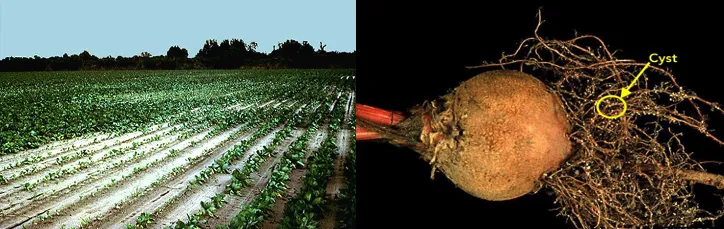
In 1859, sugar beet fields across Germany began to fail mysteriously -- yields dropped, factories ran short of raw material, and an entire industry was shaken. The hidden culprit turned out to be a tiny worm living inside the roots: the sugar beet cyst nematode. This crisis became the first landmark in the history of nematology.
This lesson covers:
- Early discoveries -- the first nematode observations (1743--1870)
- Five landmarks of nematology -- the milestones every exam tests
- N.A. Cobb -- Father of Modern Nematology
- History of nematology in India -- from Barber (1901) to AICRP (1977)
World History of Nematology
The study of nematodes developed gradually over three centuries, driven by agricultural crises and scientific curiosity. Key breakthroughs often followed economic losses that forced researchers to investigate soil-borne problems.
Early Discoveries (1743--1870)
| Year | Scientist | Contribution |
|---|---|---|
| 1743 | Needham | Discovered the first plant parasitic nematode inside seed galls of wheat; named it Vibrio tritici (later renamed Anguina tritici) |
| 1855 | Berkeley | Found a nematode producing root galls on greenhouse cucumber in England (later described as Meloidogyne incognita by Cornu, 1879) |
| 1857 | Julius Kuhn | Discovered stem and bulb nematode (Ditylenchus dipsaci) on teasel in Germany |
| 1865 | H.C. Bastian | Father of Nematology -- wrote the monograph on Anguilluidae, the first systematic study of nematode taxonomy |
The Five Landmarks of Nematology
These five milestones shaped the science of nematology. They are high-priority exam points.
Landmark 1 -- Sugar Beet Cyst Nematode (1859)
Schacht reported that the decline of sugar beet in Germany was caused by a cyst nematode. European sugar beet fields suffered "Beet Tired Soil" or "Beet Weariness" -- the first documented case of soil sickness caused by nematodes. The nematode was later named Heterodera schachtii by Schmidt (1871).
NOTE
Kuhn (1871) first used carbon bisulphide (CS2) to control the sugar beet cyst nematode -- the first ever chemical control of a plant parasitic nematode.
Landmark 2 -- Disease Complex Discovery (1892)
Atkinson reported that root-knot nematode worsens Fusarium oxysporum f. vasinfectum causing Vascular Wilt of Cotton. This was the first documented nematode-fungus disease complex, showing that nematodes can aggravate diseases caused by other pathogens.
Landmark 3 -- Nematicide Fumigants (1943--1945)
| Year | Scientist | Nematicide |
|---|---|---|
| 1943 | W. Carter | DD mixture (1,3-dichloropropene + 1,2-dichloropropane) -- first practical field nematicide |
| 1945 | J.R. Christie | EDB (Ethylene dibromide) |
These discoveries ushered in the era of soil fumigation, giving farmers the first effective chemical tools against nematodes.
Landmark 4 -- Tissue Culture Technique (1955)
Mountain and Patrick used tissue culture to obtain Xenic culture of Pratylenchus minyus on excised maize roots in nutrient agar media -- the first time scientists could grow nematodes in the laboratory under controlled conditions.
Landmark 5 -- Virus Transmission by Nematodes (1958)
Hewitt, Raski, and Goheen (1958) discovered that Xiphinema index transmits Grapevine Fan Leaf Virus in the USA. This landmark discovery established nematodes as virus vectors, adding a new dimension to our understanding of nematode damage.
N.A. Cobb -- Father of Modern Nematology (1907--1932)
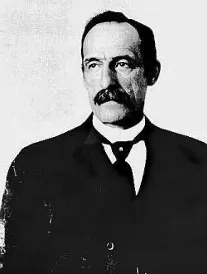
N.A. Cobb is considered both the Father of Modern Nematology and the Father of American Nematology. His contributions include:
- Coined the words nematology and nema
- Developed the sieving and decanting technique (1918) for extracting nematodes from soil
- Pioneered methods for preservation, mounting, section cutting, and use of camera lucida
- Detected key morphological structures: amphid, phasmid, and deirid
Other World Milestones
| Year | Event |
|---|---|
| 1933 | T. Goodey published textbooks on plant parasitic nematodes (1913) and soil nematodes (1951) |
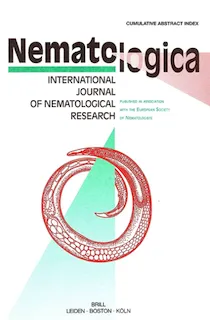
| 1956 | First international nematology journal "Nematologica" published by European Society of Nematologists |
| 1961 | Society of Nematologists founded in USA |
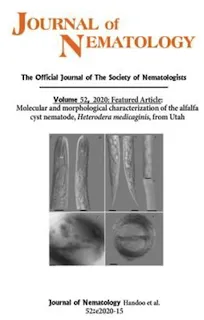
| 1969 | First "Journal of Nematology" published by Society of Nematologists, USA |
| 1975--1984 | International Meloidogyne Project (IMP) funded by USAID, led by J.N. Sasser at North Carolina University |
History of Nematology in India
While global nematology matured through the 19th and early 20th centuries, India's nematological research began with field observations in tea and rice crops. Nematology was formally recognised as a separate branch of agricultural science in India in 1966 with the establishment of the Division of Nematology at IARI.
Early Reports (1901--1936)
| Year | Scientist | Discovery |
|---|---|---|
| 1901 | Barber | Reported root-knot nematode on tea at Devala Estate, Tamil Nadu -- first plant parasitic nematode reported from India |
| 1906 | Butler | Reported root-knot nematode on black pepper in Kerala |
| 1913--19 | Butler | Reported Ufra disease of rice caused by Ditylenchus angustus in Bengal |
| 1919 | Milne | Recorded seed gall nematode (Anguina tritici) on wheat in Punjab |
| 1936 | Dastur | Reported white tip disease of rice caused by Aphelenchoides besseyi in Central Provinces |
Institutional Growth (1958--1977)
| Year | Event |
|---|---|
| 1958 | Vasudeva reported Molya disease of wheat (Heterodera avenae) from Rajasthan |
| 1961 | F.G.W. Jones reported potato cyst nematode (Globodera rostochiensis) from Nilgiri Hills, Tamil Nadu |
| 1961 | Nematology unit established at Central Potato Research Institute, Shimla |
| 1966 | Burrowing nematode reported on banana from Kerala (Nair, Dass, and Menon) |
| 1966 | Division of Nematology established at IARI, New Delhi -- formal recognition of nematology as a major discipline |
| 1969 | Nematological Society of India founded; first All India Nematology Symposium held at IARI |
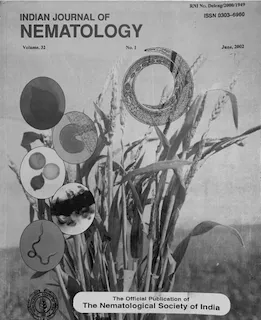
| 1971 | Indian Journal of Nematology published |
| 1977 | AICRP on nematode pests started with 14 centres across India, coordinated from IARI |
Summary Table
| Milestone | Year | Key Figure | Significance |
|---|---|---|---|
| First plant parasitic nematode | 1743 | Needham | Anguina tritici in wheat galls |
| Father of Nematology | 1865 | H.C. Bastian | First systematic nematode study |
| Landmark 1 -- Cyst nematode | 1859 | Schacht | Sugar beet decline in Germany |
| First chemical control | 1871 | Kuhn | CS2 against sugar beet nematode |
| Landmark 2 -- Disease complex | 1892 | Atkinson | Nematode + Fusarium on cotton |
| Father of Modern Nematology | 1907--32 | N.A. Cobb | Coined "nematology"; extraction techniques |
| Landmark 3 -- Fumigants | 1943 | W. Carter | DD mixture -- first practical nematicide |
| Landmark 4 -- Tissue culture | 1955 | Mountain & Patrick | Lab culture of Pratylenchus |
| Landmark 5 -- Virus vector | 1958 | Hewitt, Raski & Goheen | Xiphinema transmits GFLV |
| First PPN in India | 1901 | Barber | Root-knot on tea, Tamil Nadu |
| Division of Nematology, IARI | 1966 | -- | Nematology recognised as discipline |
| AICRP started | 1977 | -- | 14 centres for coordinated research |
TIP
Exam mnemonic for the 5 landmarks -- "Sugar Disease Fumigate Tissue Virus" (SDFTV):
- Sugar beet cyst nematode (1859)
- Disease complex (1892)
- Fumigant nematicides (1943)
- Tissue culture (1955)
- Virus transmission (1958)
References
- Dasgupta, M. K. (1998). Phytonematology. Nayaprakash, Calcutta.
- Walia, R. K and Bajaj, H. K (2014). Textbook of Introductory Plant Nematology. Directorate of Knowledge Management in Agriculture, ICAR, New Delhi.
- Ravichandra, N. G. (2019). Plant Nematology. I. K. International Publishing House Pvt. Ltd., New Delhi.
- Dropkin, V. H. (1996). Introduction to Plant Nematology, Academic Press, New York.
Summary Cheat Sheet
| Concept / Topic | Key Details |
|---|---|
| First plant parasitic nematode | 1743; Needham — Anguina tritici in wheat galls |
| Father of Nematology | 1865; H.C. Bastian — First systematic nematode study |
| Landmark 1 -- Cyst nematode | 1859; Schacht — Sugar beet decline in Germany |
| First chemical control | 1871; Kuhn — CS2 against sugar beet nematode |
| Landmark 2 -- Disease complex | 1892; Atkinson — Nematode + Fusarium on cotton |
| Father of Modern Nematology | 1907--32; N.A. Cobb — Coined "nematology"; extraction techniques |
| Landmark 3 -- Fumigants | 1943; W. Carter — DD mixture -- first practical nematicide |
| Landmark 4 -- Tissue culture | 1955; Mountain & Patrick — Lab culture of Pratylenchus |
| Landmark 5 -- Virus vector | 1958; Hewitt, Raski & Goheen — Xiphinema transmits GFLV |
| First PPN in India | 1901; Barber — Root-knot on tea, Tamil Nadu |
| Division of Nematology, IARI | 1966; -- — Nematology recognised as discipline |
| AICRP started | 1977; -- — 14 centres for coordinated research |
TIP
Next: Lesson 03 covers body organisation of nematodes -- the tube-within-a-tube design, body shape, size, posture, and symmetry.