Lesson
13 of 100
Translate

Natural Hazards of UP

Natural disasters in Uttar Pradesh — seismic zones, flood-prone areas, Bundelkhand droughts, heat waves, cold waves, fog, and disaster management for UPSSSC AGTA.

Introduction

Uttar Pradesh is vulnerable to multiple natural hazards due to its large geographical area, diverse terrain, and proximity to the seismically active Himalayan zone. From devastating floods in the east to chronic droughts in Bundelkhand, and from earthquakes to extreme weather events, disaster preparedness is a critical concern for the state.


Seismic Zones of UP

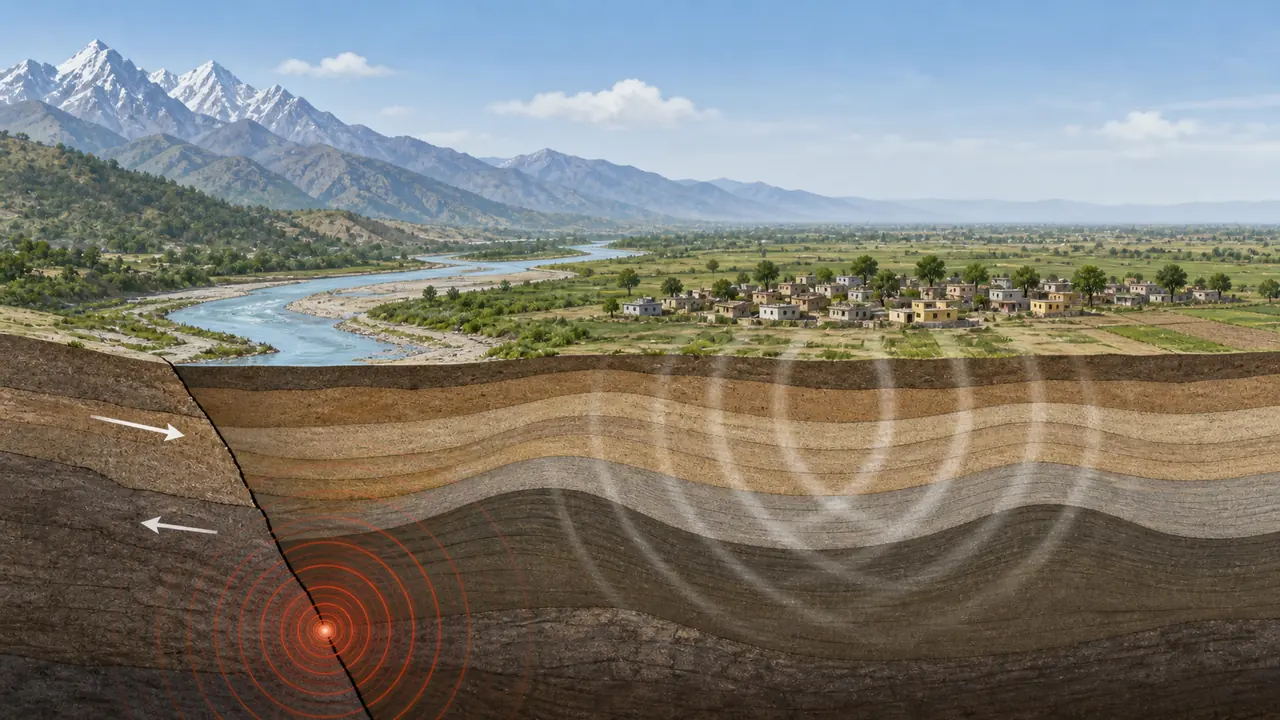
India is divided into 4 seismic zones (II to V), with Zone V being the most seismically active. UP falls primarily in Zones II, III, and IV.

Zone-wise Distribution

Seismic ZoneRisk LevelAreas in UP
Zone IVHigh Damage RiskNorthern UP — parts of Indo-Gangetic plain near Nepal border (Gorakhpur, Bahraich, Lakhimpur Kheri, Maharajganj)
Zone IIIModerate Damage RiskMost of UP — Lucknow, Kanpur, Varanasi, Prayagraj, Meerut, Agra
Zone IILow Damage RiskSouthern UP — Bundelkhand, parts of Vindhyan region

Key Earthquake Facts

FactDetail
Most vulnerable zoneZone IV — northern districts along Nepal border
Reason for riskProximity to Main Boundary Thrust (MBT) of Himalayas
Historical earthquake1934 Bihar-Nepal Earthquake (8.1 M) — felt severely across eastern UP
2015 Nepal Earthquake7.8 M — significant damage in northern UP districts
Building codesBIS (Bureau of Indian Standards) seismic design codes apply

Northern UP districts in Zone IV are at risk because they sit on deep alluvial deposits that amplify seismic waves — a phenomenon called site amplification.


Floods — Eastern UP’s Annual Challenge

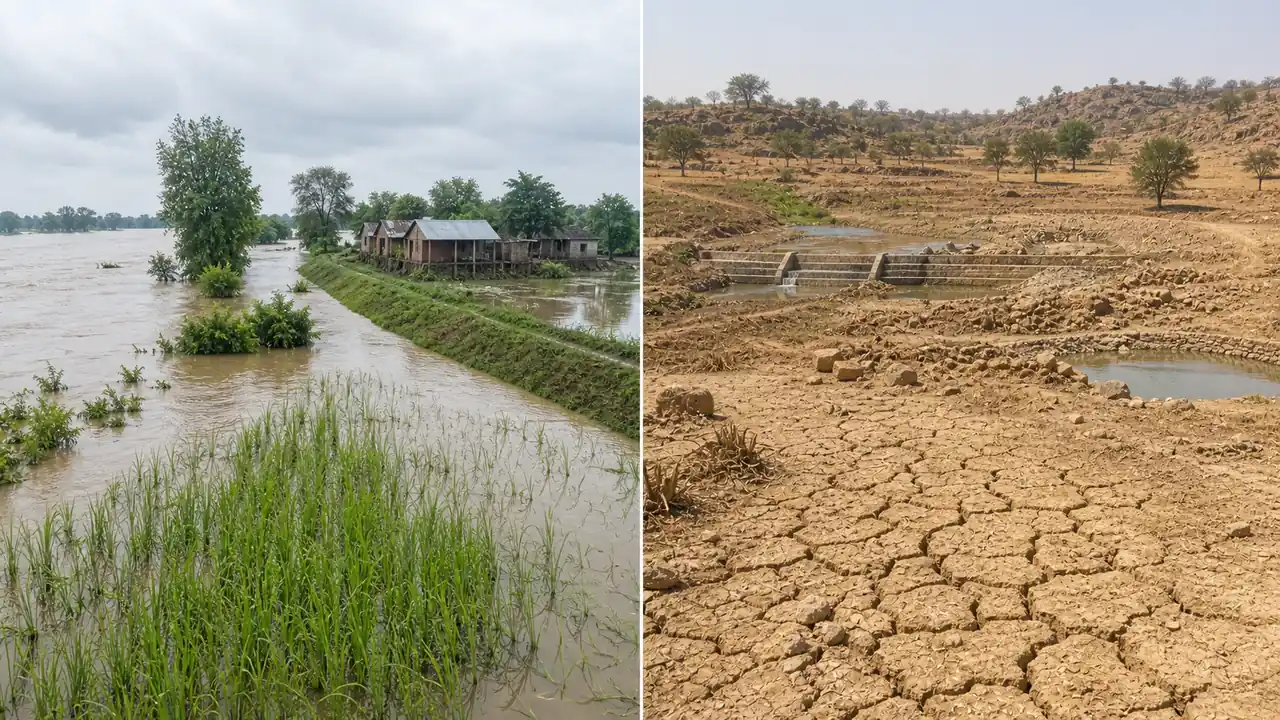
Flooding is the most frequent and destructive natural hazard in Uttar Pradesh, primarily affecting the eastern and central regions.

Flood-Prone River Basins

RiverOriginFlood-Prone Districts
Ghaghra (Sarayu)Tibet/NepalBahraich, Barabanki, Ayodhya, Azamgarh
RaptiNepalGorakhpur, Deoria, Maharajganj
GandakNepalKushinagar, Deoria
Sharda (Mahakali)NepalLakhimpur Kheri, Pilibhit
GangaUttarakhandVaranasi, Prayagraj, Ballia
GomtiPilibhit (UP)Lucknow, Jaunpur
YamunaUttarakhandAgra, Mathura (occasional)

Why Eastern UP Floods Annually

  • Rivers originate in Nepal Himalayas — carry enormous volume during monsoon
  • Flat terrain with gentle gradient — water cannot drain quickly
  • Silting raises riverbeds — rivers overflow banks easily
  • Deforestation in Nepal catchments increases runoff
  • ~73,000 sq km of UP is flood-prone (about 30% of state area)

Flood Impact

ImpactDetail
Annual affected population~2–3 crore people
Crop damageKharif crops (rice, maize) destroyed annually
InfrastructureRoads, bridges, embankments damaged
DisplacementLakhs displaced every monsoon season
Waterborne diseasesCholera, typhoid, diarrhea spike during/after floods

Droughts — Bundelkhand’s Chronic Crisis

While eastern UP battles floods, Bundelkhand faces the opposite extreme — recurring droughts.

Drought-Prone Districts

DistrictDivisionKey Issue
JhansiJhansiRocky terrain; poor groundwater
LalitpurJhansiVery low irrigation coverage
JalaunJhansiRavine erosion; thin soil
HamirpurChitrakootWater scarcity; migration
MahobaChitrakootHistorical tanks silted
BandaChitrakootMost drought-affected; extreme heat
ChitrakootChitrakootForested but water-scarce

Causes of Drought

  • Rainfall: 75–100 cm (below state average of ~110 cm)
  • Rocky/impervious soil — poor groundwater recharge
  • Deforestation and degradation of catchment areas
  • Traditional Chandela-era tanks have silted up
  • Over-extraction of limited groundwater

Government Response

InitiativePurpose
Bundelkhand Package (2009, 2012)Drought relief, water conservation
Ken-Betwa River LinkLong-term water transfer solution
MGNREGAEmployment during drought years
PM Krishi Sinchai YojanaMicro-irrigation expansion
Watershed DevelopmentRainwater harvesting, check dams

Heat Waves (लू / गर्म लहर)

Heat waves are a life-threatening hazard in UP, particularly in western UP and Bundelkhand.

Heat Wave Criteria (IMD Definition)

CategoryPlain AreasHilly Areas
Heat WaveMax temp ≥ 40°C and departure ≥ 4.5°C from normalMax temp ≥ 30°C with same departure
Severe Heat WaveMax temp ≥ 40°C and departure ≥ 6.5°C from normal

Most Affected Areas

DistrictPeak TemperaturePeriod
Banda47–48°CMay–June
Jhansi46–47°CMay–June
Agra45–46°CMay–June
Prayagraj45–47°CMay–June

Impact

  • Hundreds of heat-related deaths reported annually
  • Crop wilting — especially late Rabi crops
  • Water demand spikes; borewells dry up
  • Power grid strain from air conditioning demand

Cold Waves (शीत लहर)

FeatureDetail
PeriodDecember – February (peak in January)
CriteriaMin temp ≤ 10°C and departure ≥ 4.5°C below normal
Most affectedWestern UP — Meerut, Agra, Muzaffarnagar
Lowest temperatures1–3°C recorded in western UP
ImpactHypothermia deaths among homeless; Rabi crop frost damage

Dense Fog (कोहरा)

FeatureDetail
PeriodDecember – January
Worst affectedGangetic Plain — Lucknow, Varanasi, Kanpur, Agra
VisibilityDrops to below 50 meters in severe events
DurationCan persist for 12–18 hours continuously
Transport impactHundreds of trains delayed; flights cancelled; road accidents
Agriculture impactDelays wheat flowering; promotes fungal diseases

Disaster Management Framework

National Level

BodyRole
NDMA (National Disaster Management Authority)Policy, plans, guidelines
NDRF (National Disaster Response Force)Specialized rescue and relief
IMD (India Meteorological Department)Weather warnings, forecasts
CWC (Central Water Commission)Flood forecasting

State Level

BodyRole
UPSADMA (UP State Disaster Management Authority)State-level disaster planning
SDRF (State Disaster Response Force)State rescue operations
Relief CommissionerCoordinates flood/drought relief
District MagistrateDistrict-level disaster management head

NDRF Battalions in UP

LocationBattalionCovers
Varanasi9th Battalion NDRFEastern UP
Ghaziabad8th Battalion NDRFWestern UP

Hazard Summary Matrix

HazardMost Affected RegionPeak PeriodPrimary Cause
EarthquakeNorthern UP (Zone IV)Any timeHimalayan tectonic activity
FloodsEastern UPJuly–SeptemberNepal-origin river flooding
DroughtBundelkhand (7 districts)June–September (failure)Low/erratic rainfall + rocky terrain
Heat WaveWestern UP, BundelkhandMay–JuneLoo winds from Thar Desert
Cold WaveWestern UPDecember–JanuaryCentral Asian cold air incursion
FogGangetic PlainDecember–JanuaryHigh moisture + low temperature + calm winds

Key Takeaways

  • UP has areas in Seismic Zones II, III, and IV — northern districts near Nepal are in Zone IV (high risk)
  • Floods are the most frequent disaster; ~73,000 sq km is flood-prone (eastern UP worst hit)
  • Bundelkhand’s 7 districts face chronic drought due to rocky terrain and erratic rainfall
  • Banda/Jhansi record temperatures up to 47–48°C; heat waves kill hundreds
  • Dense fog in Dec–Jan reduces visibility below 50 m across the Gangetic Plain
  • NDRF has 2 battalions in UP — 8th (Ghaziabad) and 9th (Varanasi)

Summary Cheat Sheet

TermQuick Recall
Seismic Zone IV in UPNorthern districts (Gorakhpur, Bahraich, Kheri)
Most of UPSeismic Zone III
Flood-prone area~73,000 sq km (~30% of UP)
Key flood riversGhaghra, Rapti, Gandak (Nepal origin)
Drought regionBundelkhand (7 districts)
Hottest districtBanda (~48°C)
Heat wave threshold≥40°C + 4.5°C above normal
Cold wave threshold≤10°C + 4.5°C below normal
Fog monthsDecember–January
NDRF in UP8th Bn (Ghaziabad), 9th Bn (Varanasi)
State disaster bodyUPSADMA

Knowledge Check

Take a dynamically generated quiz based on the material you just read to test your understanding and get personalized feedback.

Lesson Doubts

Ask questions, get expert answers

Lesson Doubts is a Pro feature.Upgrade