Lesson
66 of 100
Translate

Tribal Communities of UP

Tharu, Kol, Buksa, Agariya, Chero, Gond, and other Scheduled Tribes of Uttar Pradesh — location, customs, welfare schemes for UPSSSC AGTA exam.

Tribal Population in UP — An Overview

Uttar Pradesh has one of the lowest Scheduled Tribe (ST) populations among major Indian states, yet its tribal communities carry rich and ancient cultural traditions.

StatisticFigure
ST population~0.6% of UP’s total population
Approximate number~11–12 lakh (Census 2011)
Recognized STs15+ tribes notified under the Constitution
Concentration areasSonbhadra, Mirzapur (Vindhyan belt) and Terai (northern border)

The tribes were formally recognized in UP through the Constitution (Scheduled Tribes) Order (Amendment) Act, 2003, which added several communities to the ST list for UP.


Geographical Distribution

UP’s tribal communities cluster in two distinct zones:

ZoneRegionKey TribesTerrain
Southern/VindhyanSonbhadra, Mirzapur, Lalitpur, ChitrakootKol, Gond, Agariya, Chero, Korwa, Baiga, ParahiyaHilly, forested Vindhyan plateau
Northern/TeraiLakhimpur Kheri, Pilibhit, Bahraich, ShravastiTharu, Buksa/BhoksaSub-Himalayan marshy Terai belt

Major Tribes of UP

Tharu — The Largest Tribe

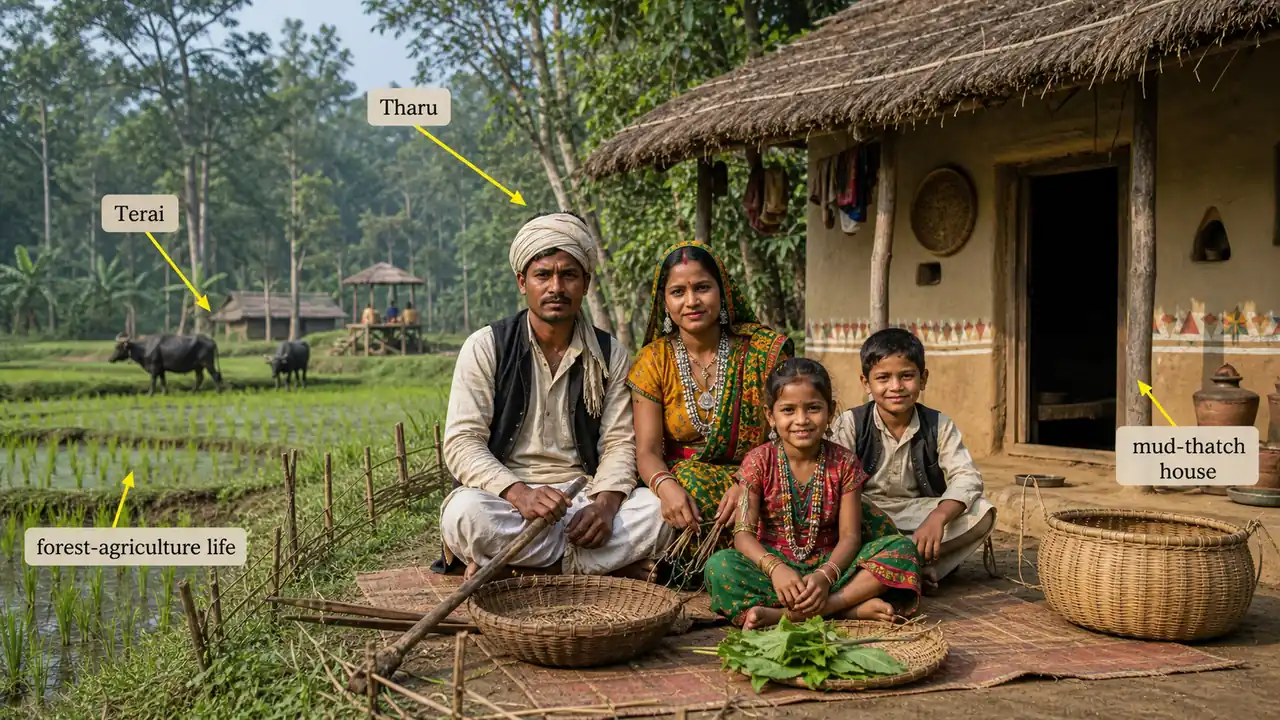
Tharu is the largest tribal group in northern UP, inhabiting the Terai region along the Indo-Nepal border.

AspectDetail
RegionTerai — Lakhimpur Kheri, Pilibhit, Bahraich, Shravasti
Population rankLargest tribe in UP’s Terai region
LanguageTharu language (Indo-Aryan family, multiple dialects)
OccupationAgriculture (rice, wheat), fishing, forest collection
Special featureNatural immunity/resistance to malaria — a genetic adaptation to marshy Terai
ReligionHindu with strong animistic traditions, worship of local deities
FestivalsMaghi (Magh month new year), Holi, Diwali
DanceJhumar, Sakhiyan
HousingMud-and-thatch houses with distinctive architecture
ConnectionDudhwa National Park falls in Tharu homeland

The Tharu claim descent from the Rajputs of Rajasthan — according to oral tradition, Tharu women fled to the Terai forests to escape Mughal invasions. Their genetic resistance to malaria allowed them to thrive in the mosquito-infested Terai marshlands where others could not settle.

Exam Tip: Tharu = Terai + Malaria resistance + Largest tribe of northern UP.


Kol — The Vindhyan People

Kol is the largest tribal group in the Vindhyan region of UP, concentrated in Sonbhadra and Mirzapur.

AspectDetail
RegionSonbhadra, Mirzapur, Prayagraj (southern fringe)
Population rankLargest tribe in southern UP
LanguageKol dialect (close to Baghelkhandi Hindi)
OccupationAgriculture, stone quarrying, forest produce collection
HistoryKol Revolt of 1831 — one of earliest tribal uprisings in India (though primarily in Chhota Nagpur, Kol identity connects)
ReligionHindu with animistic practices
Social structureClan-based, strong community bonds

Gond

Gond is one of India’s largest tribal communities, with a presence in the Sonbhadra-Mirzapur belt of UP.

AspectDetail
RegionSonbhadra, Mirzapur
LanguageGondi (Dravidian family) and local Hindi
HistoryOnce ruled Gondwana kingdoms in central India
OccupationAgriculture, forest produce, labor
ArtGond painting — intricate dot-and-line art (gaining global recognition)
FestivalKarma, Navakhani (new grain celebration)

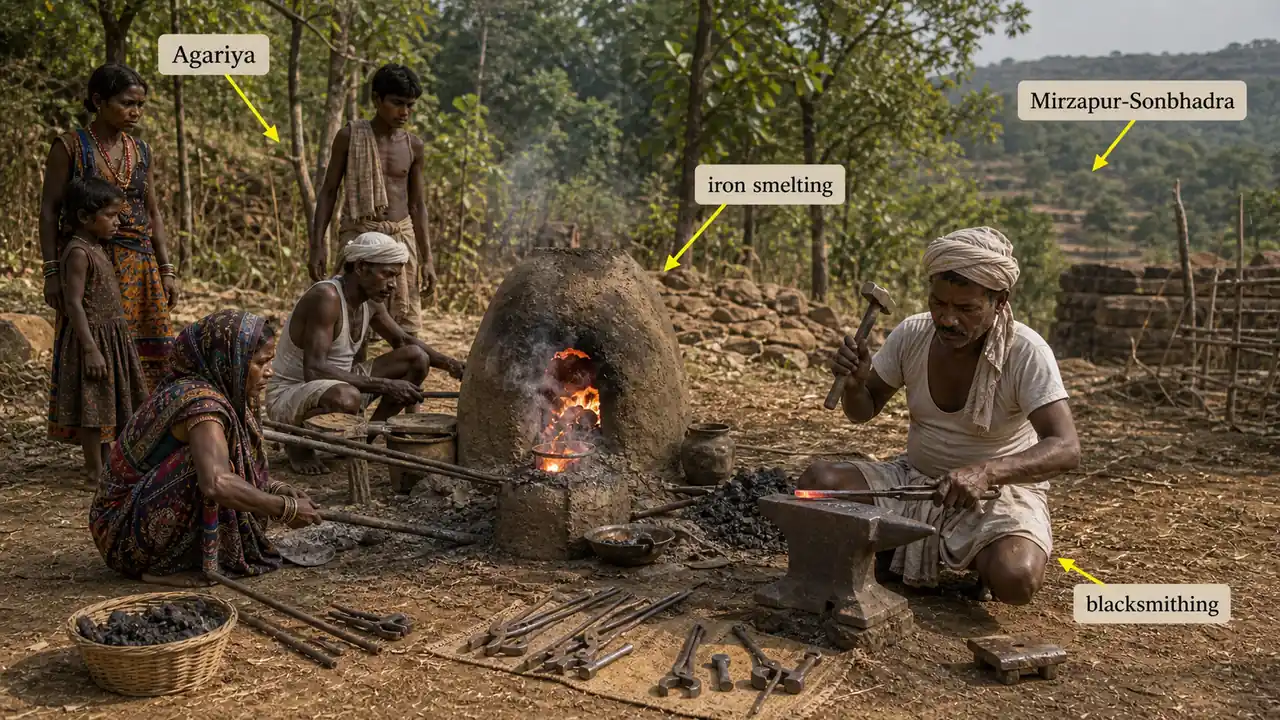
Agariya — The Iron Smelters

Agariya is a small but culturally significant tribe known for their traditional iron-smelting skills.

AspectDetail
RegionMirzapur, Sonbhadra
Traditional occupationIron smelting and blacksmithing
MythologyBelieve they are descendants of Agyasur, a fire spirit
Current statusTraditional smelting nearly extinct due to modern industry
Livelihood shiftMoved to agriculture and daily wage labor
Documented byEthnographer Verrier Elwin studied Agariya in detail
Exam Tip: Agariya = Iron smelting + Mirzapur + Verrier Elwin documentation.


Chero

AspectDetail
RegionSonbhadra
Historical significanceRuled parts of Rohtas and Palamu in medieval period
OccupationAgriculture, animal husbandry
StatusOnce warrior rulers, now marginalized

Korwa

AspectDetail
RegionSonbhadra
ClassificationParticularly Vulnerable Tribal Group (PVTG)
OccupationFood gathering, shifting cultivation (jhum)
PopulationVery small, highly vulnerable

Buksa / Bhoksa

AspectDetail
RegionBijnor district (Terai-Bhabar belt, near Uttarakhand border)
OccupationAgriculture, animal husbandry
LanguageBuksa dialect
Special featureOne of the few tribes in western UP

Sahariya

AspectDetail
RegionLalitpur district (Bundelkhand)
ClassificationPVTG (Particularly Vulnerable Tribal Group)
OccupationForest produce, agriculture
Name meaning”Sahar” = forest — “people of the forest”

Baiga

AspectDetail
RegionSonbhadra
OccupationShifting cultivation, forest produce
Special roleTraditional medicine men and ritual healers
TattooBaiga women are famous for extensive body tattooing

Other Recognized Tribes

TribeRegionKey Feature
ParahiyaSonbhadraHill-dwelling, food gathering
PatariSonbhadra-MirzapurSmall population, agricultural
KanjarVarious districtsHistorically nomadic
BhotiaUP-Uttarakhand borderTrans-Himalayan traders
JaunsarNorthern borderHill community

Master Reference Table

TribeRegionPrimary OccupationSpecial Feature
TharuTerai (Lakhimpur Kheri)Agriculture, fishingMalaria resistance
KolSonbhadra, MirzapurAgriculture, quarryingLargest in Vindhyan belt
GondSonbhadra, MirzapurAgriculture, artGond painting tradition
AgariyaMirzapurIron smeltingTraditional metallurgists
CheroSonbhadraAgricultureFormer ruling tribe
KorwaSonbhadraFood gatheringPVTG status
BuksaBijnorAgricultureWestern UP tribe
SahariyaLalitpurForest producePVTG status
BaigaSonbhadraShifting cultivationTraditional healers

Tribal Welfare Initiatives

Constitutional Provisions

  • Article 342 — President notifies Scheduled Tribes for each state
  • Article 275(1) — Grants for tribal welfare from Consolidated Fund of India
  • Fifth Schedule — Administration of Scheduled Areas (parts of Sonbhadra)
  • Forest Rights Act, 2006 (FRA) — Recognizes tribal rights over forest land and resources

Government Schemes

SchemeBenefit
Van Bandhu Kalyan YojanaHolistic tribal development
Eklavya Model Residential SchoolsQuality education for tribal children
ST scholarship schemesEducational scholarships at all levels
TRIFEDMarketing support for tribal products
PM-JANMANDevelopment of PVTGs

Exam Tip: Korwa and Sahariya are PVTGs (Particularly Vulnerable Tribal Groups) in UP — the most at-risk category.


Key Takeaways

  • UP has approximately 0.6% ST population — one of the lowest among major states
  • Two concentration zones: Vindhyan belt (Sonbhadra-Mirzapur) and Terai (northern border)
  • Tharu (Terai, malaria-resistant) is the largest northern UP tribe
  • Kol is the largest Vindhyan region tribe
  • Agariya are traditional iron smelters of Mirzapur
  • Korwa and Sahariya have PVTG (Particularly Vulnerable Tribal Group) status
  • Forest Rights Act 2006 is the key legislation for tribal land rights

Summary Cheat Sheet

FactAnswer
UP ST population~0.6%
Largest tribe (Terai)Tharu
Tharu special traitMalaria resistance
Largest tribe (Vindhyan)Kol
Iron smelting tribeAgariya
PVTG tribes in UPKorwa, Sahariya
Gond famous artGond painting
Buksa regionBijnor district
Baiga special roleTraditional healers
Key tribal legislationForest Rights Act, 2006

Knowledge Check

Take a dynamically generated quiz based on the material you just read to test your understanding and get personalized feedback.

Lesson Doubts

Ask questions, get expert answers

Lesson Doubts is a Pro feature.Upgrade