🛠️ Brass & Metalware — Moradabad's Legacy
Learn about Moradabad's brass industry, Aligarh's lock manufacturing, and other metalware traditions of Uttar Pradesh — history, techniques, exports, and GI recognition.
Introduction
Uttar Pradesh is home to some of India's most important metalworking clusters. From Moradabad's brassware to Aligarh's lock industry, these traditions combine long artisan histories with modern manufacturing and export networks. Metalware remains one of the major craft-based industrial sectors of the state.
Moradabad — Peetal Nagari (Brass City)
History
Moradabad is known as "Peetal Nagari" (Brass City) and is one of India's best-known brass and metalware centres. The industry here is generally linked with the Mughal period. Local tradition attributes part of its growth to the arrival of skilled metalworkers from outside the region.
The city's proximity to copper and zinc sources, combined with artisan skill passed down through generations, cemented its dominance. By the 19th century, Moradabad brassware was being exported to Europe.
Products & Techniques
Moradabad produces an enormous range of brass products:
| Category | Examples |
|---|---|
| Decorative | Vases, candle stands, figurines, wall hangings |
| Utility | Utensils, lamps, door handles, trays |
| Architectural | Railings, grilles, fittings |
| Giftware | Photo frames, jewellery boxes, table accessories |
Key manufacturing techniques include:
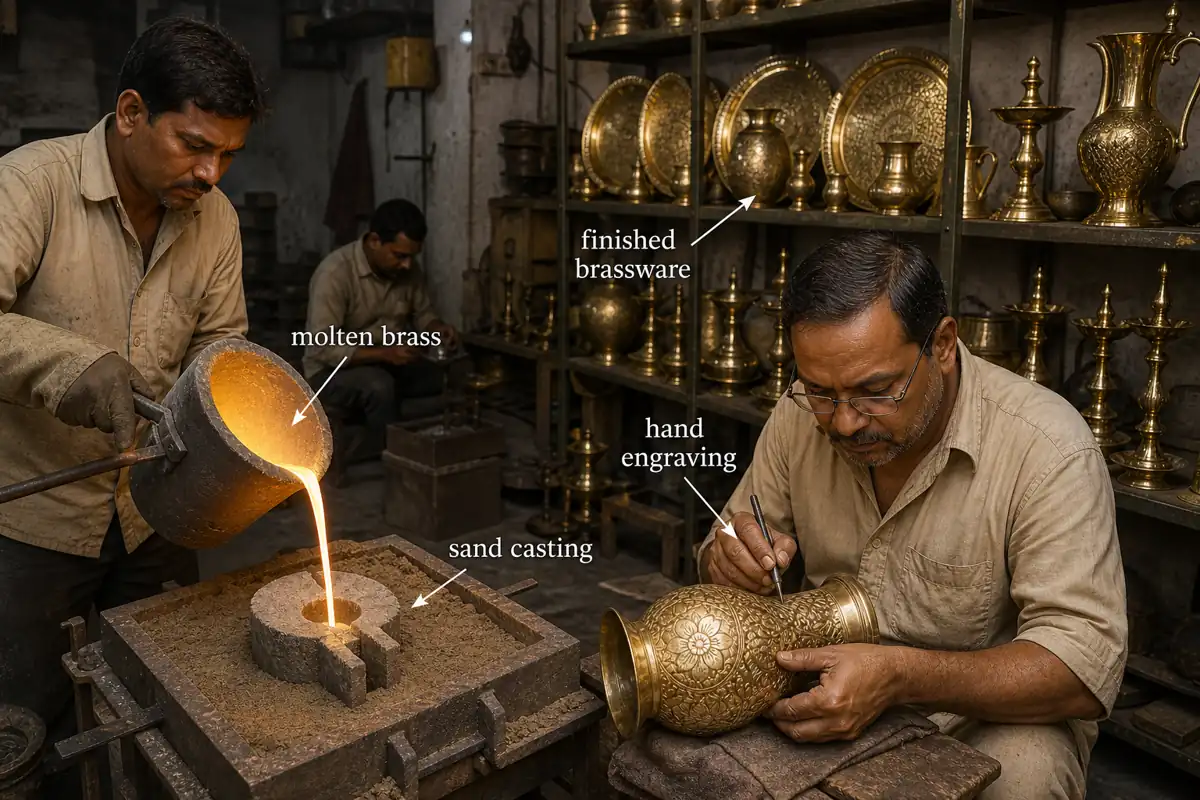
- Sand casting — molten brass poured into sand moulds
- Die casting — precision moulds for uniform products
- Hand engraving — intricate patterns etched using chisels
- Etching — acid-based design creation
- Enamelling — coloured glass powder fused onto brass (Meenakari)
- Lacquering & electroplating — protective and decorative finishing
Export Significance
- Moradabad exports brassware and metalware to many countries
- Major markets: USA, UK, Germany, Middle East, Australia
- The cluster includes a large number of workshops, export houses, and supporting units
- It provides employment to a very large artisan and labour force directly and indirectly
- Export promotion and handicraft trade are supported through broader industry bodies and fairs
Aligarh — Tala Nagari (Lock City)
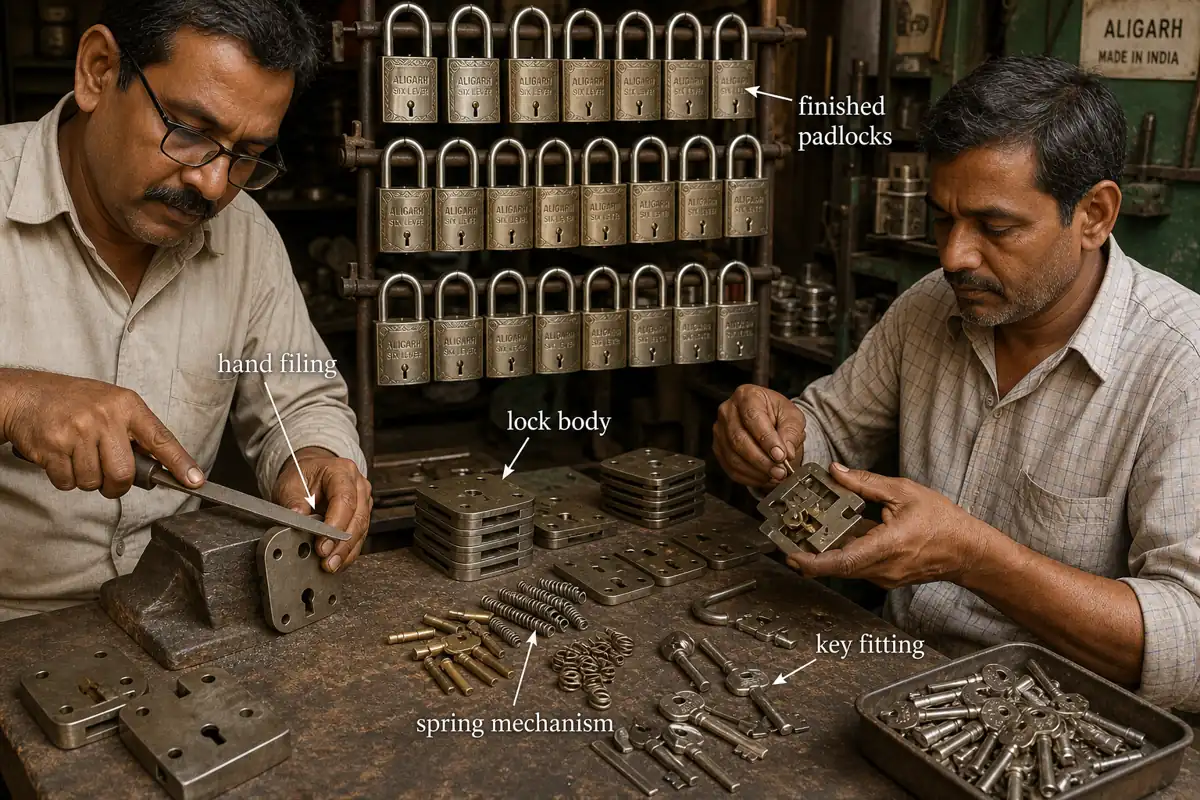
Aligarh has long been known as India's lock manufacturing capital since the 19th century and produces a very large share of the country's traditional lock output. Standard UP GK material strongly associates the organised rise of the industry with Master Hadi Hussain.
Key Facts
| Parameter | Detail |
|---|---|
| Title | "Tala Nagari" (Lock City) |
| Founded | 1860s |
| India's share | Very large share of traditional lock production |
| Units | 6,000+ small and medium enterprises |
| Annual output | Large MSME-based manufacturing cluster |
| Product range | Padlocks, door locks, automobile locks, digital locks |
| Export markets | Africa, Middle East, South Asia |
Aligarh has transitioned from purely manual production to incorporating CNC machining, die-casting, and electronic lock technology, maintaining its competitive edge.
Other Metalware Centres in UP
Varanasi — Copper & Bronze Work
- Traditional lota, thali, and puja vessels in copper and bronze
- Gulabi Meenakari (pink enamel work on metal) is a GI-tagged Varanasi specialty
- Artisans also produce brass temple bells, ghungroo, and ritual items
Lucknow — Silver Work
- Silver chased work (repousse) for decorative trays, boxes, and jewellery
- Nawabi-era tradition of refined silver decorative ware and serving articles
- Silversmithing concentrated in Chowk and Aminabad areas
Sambhal — Horn & Bone Craft
- Horn and bone items including combs, buttons, and decorative pieces
- Craft uses buffalo horn, traditionally linked to local livestock economy
GI Recognition & Government Support
| Product | GI Status |
|---|---|
| Moradabad Metal Craft | GI Tagged |
| Banaras Gulabi Meenakari | GI Tagged |
| Aligarh Lock | Strongly associated with the city; GI-style identity often discussed in craft promotion |
Government support for metalware artisans includes:
- One District One Product (ODOP) — Moradabad brassware, Aligarh locks identified as district products
- Cluster development schemes under MSME Ministry
- Common Facility Centres (CFC) for testing, electroplating, and finishing
- Hunar Haat and IHGF (Indian Handicrafts & Gifts Fair) for market access
- Skill training through Moradabad Institute of Handicraft Technology
Challenges Facing the Industry
- Chinese competition — mass-produced cheap metalware flooding global markets
- Raw material costs — fluctuating copper and zinc prices squeeze margins
- Environmental concerns — brass casting and electroplating generate toxic waste
- Health hazards — workers exposed to metal fumes, acid, and extreme heat
- Technology gap — many small units still rely on outdated manual processes
- Design stagnation — need for contemporary designs to appeal to younger global consumers
Summary Cheat Sheet
| Fact | Detail |
|---|---|
| Moradabad nickname | Peetal Nagari (Brass City) |
| Moradabad industry base | Mughal-era brass and metalware tradition |
| Aligarh nickname | Tala Nagari (Lock City) |
| Aligarh lock share | Very large share of traditional lock production |
| Aligarh lock industry base | 19th-century growth; associated with Master Hadi Hussain |
| Varanasi GI metal craft | Gulabi Meenakari |
| Key scheme | ODOP (One District One Product) |
| Main challenges | Cheap competition, raw material cost, pollution, worker health |
Lesson Doubts
Ask questions, get expert answers