💃 Kathak & Raslila — Classical Roots
Kathak dance origins, Lucknow and Banaras gharanas, Raslila devotional dance-drama of Braj region — key facts for Uttar Pradesh GK preparation.
Kathak — The Storyteller's Dance
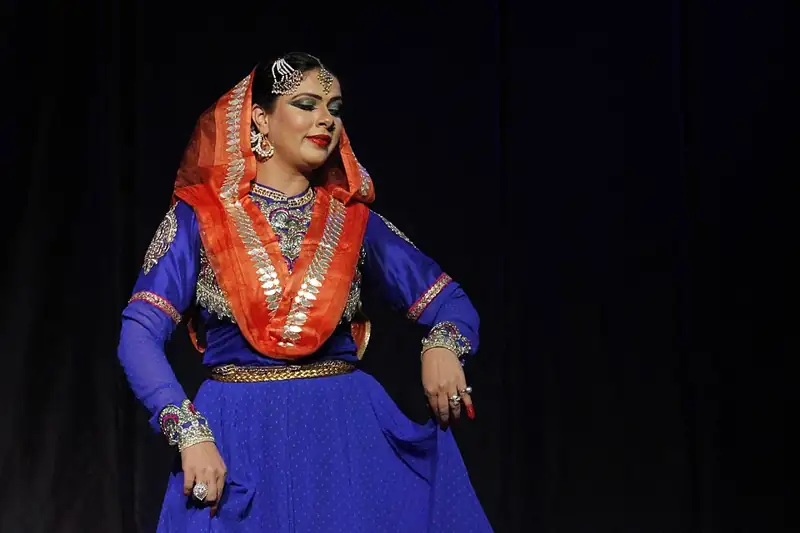
Kathak is one of the eight classical dance forms recognized by the Sangeet Natak Akademi. The word "Kathak" derives from the Sanskrit "Katha" (story) — Kathak dancers were originally temple storytellers who narrated mythological tales through gesture, expression, and rhythmic footwork.
Kathak is especially known for its strong blend of temple storytelling and Mughal-court refinement, having evolved from devotional settings to court performances. This layered heritage gives Kathak its distinctive fusion of expressive storytelling and courtly elegance.
Evolution Through Ages
| Period | Setting | Character |
|---|---|---|
| Ancient | Temple courtyards | Devotional storytelling of Puranic tales |
| Medieval | Mughal courts | Added Persian aesthetics, technical virtuosity |
| Colonial | Declining patronage | Survived through gharana tradition |
| Modern | Global stage | Revival by masters like Birju Maharaj |
The Two Gharanas of UP
Uttar Pradesh is home to two of the three major Kathak gharanas (the third is the Jaipur gharana of Rajasthan). Each has a distinct style and lineage.
Lucknow Gharana
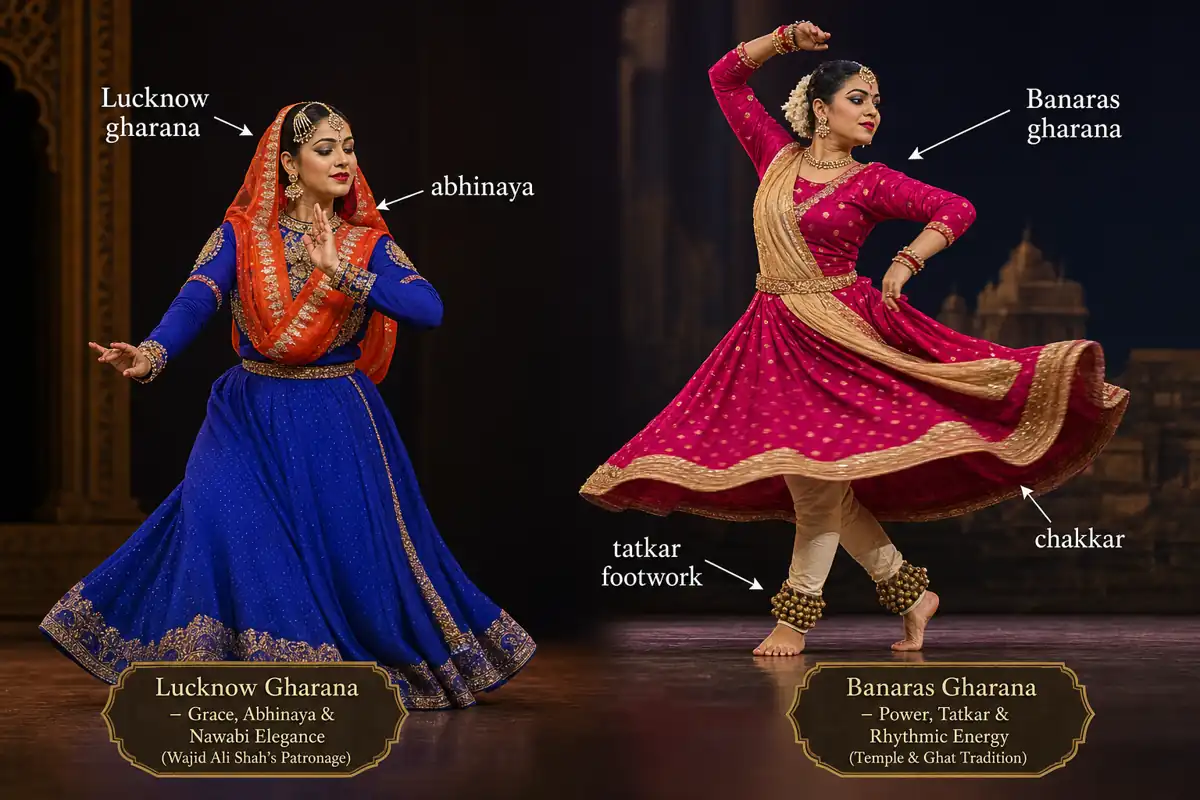
The Lucknow gharana was patronized by Nawab Wajid Ali Shah, the last Nawab of Awadh, who was himself a trained Kathak dancer and composer. The Nawab performed under the pen name "Akhtar Piya."
| Feature | Detail |
|---|---|
| Emphasis | Abhinaya (expressiveness) — facial expressions, hand gestures |
| Style | Graceful, lyrical, emotionally nuanced |
| Founder lineage | Thakur Prasad of the Kalka-Bindadin lineage |
| Greatest exponent | Pandit Birju Maharaj (1938–2022) — Padma Vibhushan awardee |
| Key elements | Thumri dance, Bhava expression, soft movements |
Exam Tip: Lucknow gharana = Abhinaya (expression). Remember "L for Lyrical."
Banaras (Varanasi) Gharana
The Banaras gharana is one of the major traditional Kathak gharanas, strongly rooted in the temple and performance culture of Varanasi.
| Feature | Detail |
|---|---|
| Emphasis | Tatkar (rhythmic footwork) and Nritta (pure dance) |
| Style | Vigorous, powerful, speed-oriented |
| Founder | Janakiprasad |
| Key exponent | Sitara Devi (born in Kolkata, trained in Banaras style) |
| Key elements | Complex taal patterns, floor work, dramatic spins |
Exam Tip: Banaras gharana = Tatkar (footwork). Remember "B for Beat."
Kathak — Technical Elements
Every Kathak performance weaves together specific components:
- Tatkar — rhythmic footwork with ghungroo (ankle bells)
- Tukda/Toda — short rhythmic compositions ending with a dramatic pause (sam)
- Chakkar — fast pirouettes (spins), a hallmark of Kathak
- Abhinaya — expressive storytelling through face and hands
- Jugalbandi — competitive dialogue between dancer and tabla player
The accompaniment typically includes tabla, pakhawaj, sarangi, harmonium, and sitar.
Raslila — The Divine Dance-Drama of Braj
Raslila is a devotional dance-drama tradition rooted in the Braj region (Mathura-Vrindavan). It dramatizes episodes from Lord Krishna's life — especially his divine play (leela) with the gopis and his love for Radha.
Key Features of Raslila
| Aspect | Detail |
|---|---|
| Origin region | Braj (Mathura-Vrindavan) |
| Language | Braj Bhasha |
| Main theme | Krishna's childhood, Radha-Krishna love, gopi leelas |
| Performers | Young boys (called Swaroops) play Krishna and Radha |
| Season | Janmashtami, Holi, Sharad Purnima |
| Duration | Can last several hours, sometimes all night |
| Music | Devotional songs in Braj Bhasha, accompanied by dholak and harmonium |
The Raslila of Vrindavan is widely recognized as a major devotional performance tradition of Braj. The tradition was strongly shaped in the bhakti era, especially from the 16th century onward through Vaishnava devotional currents linked with Braj.
Structure of a Raslila Performance
- Raas — the circular divine dance (Krishna dances with each gopi simultaneously)
- Leela — dramatic episodes (Makhanchor, Kaliya Daman, etc.)
- Kirtan/Bhajan — devotional singing interspersed between acts
- Jhula Leela — swing ceremony, performed during Sawan
Kathak vs Raslila — Key Differences
| Parameter | Kathak | Raslila |
|---|---|---|
| Type | Classical dance | Folk dance-drama |
| Training | Formal gharana system | Community/temple tradition |
| Solo/Group | Primarily solo | Always group performance |
| Language | Hindi/Urdu compositions | Braj Bhasha |
| Costume | Anarkali/Churidar | Krishna-Radha attire with mukut (crown) |
| Venue | Stage/auditorium | Temple courtyard, open grounds |
| Themes | Varied (devotional + secular) | Exclusively Krishna leelas |
Summary Cheat Sheet
| Fact | Answer |
|---|---|
| Kathak meaning | Katha = Story |
| Classical dances in India | 8 (Sangeet Natak Akademi) |
| Lucknow gharana patron | Nawab Wajid Ali Shah |
| Lucknow gharana focus | Abhinaya (expression) |
| Banaras gharana focus | Tatkar (footwork) |
| Birju Maharaj award | Padma Vibhushan |
| Raslila region | Braj (Mathura-Vrindavan) |
| Raslila language | Braj Bhasha |
| Raslila historical shaping | Bhakti-era Braj Vaishnava tradition (especially from 16th century onward) |
| Main contrast | Kathak = classical dance; Raslila = devotional dance-drama tradition |
Lesson Doubts
Ask questions, get expert answers