🥁 Regional Folk Dances of UP
Comprehensive guide to Diwari, Karma, Rai, Ahirahi, Jhula, Natwari, Chhapeli and other regional folk dances of Uttar Pradesh for Uttar Pradesh GK.
The Folk Dance Landscape of UP
Uttar Pradesh has a wide range of folk dance and performance traditions. Each region — Braj, Awadh, Bundelkhand, Purvanchal, and the Terai — has its own forms tied to seasons, festivals, and community identity. While Kathak, Raslila, Nautanki, and Charkula are the most famous, many lesser-known regional traditions are also important for UP GK.
Bundelkhand Region Dances
Bundelkhand, the southern belt of UP bordering Madhya Pradesh, has some of the most vigorous and colorful folk dances in the state.
Diwari / Pai Danda
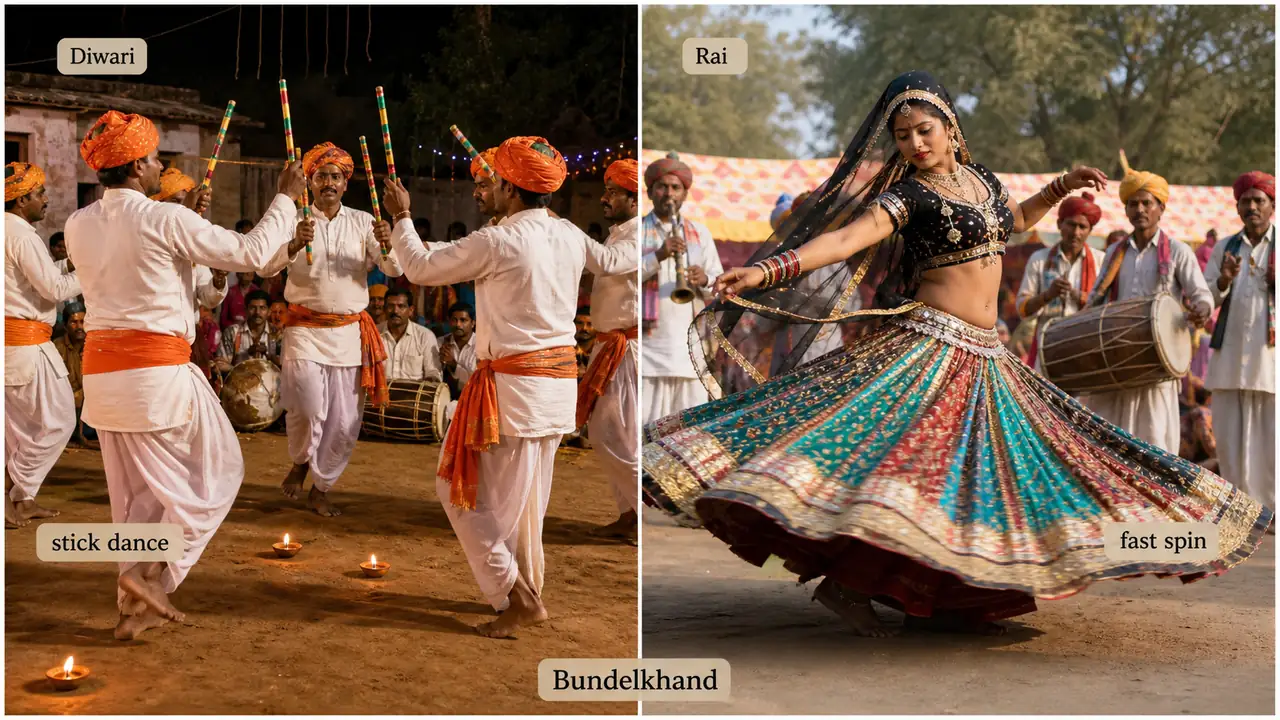
Diwari (also called Pai Danda) is a stick dance performed during Diwali in the Bundelkhand region. Male dancers form circles and strike decorated wooden sticks against each other in rhythmic patterns, accompanied by drums and folk songs.
| Aspect | Detail |
|---|---|
| Region | Bundelkhand (Jhansi, Banda, Hamirpur) |
| Occasion | Diwali |
| Performers | Men |
| Props | Decorated wooden sticks (pai danda) |
| Music | Dholak, nagara, folk songs in Bundeli |
Rai Dance
Rai is a fast-paced, energetic dance performed by women of the Bedni community in Bundelkhand. The dancer performs rapid spins and acrobatic movements while balancing objects.
| Aspect | Detail |
|---|---|
| Region | Bundelkhand |
| Occasion | Weddings, fairs, festivals |
| Performers | Women (Bedni community) |
| Style | Fast whirling, acrobatic, solo performance |
| Music | Rai songs in Bundeli dialect |
Exam Tip: Rai dance = Bundelkhand + Bedni women + fast spinning. A very frequent exam question.
Tribal Dances of Southern UP
The Sonbhadra-Mirzapur belt, home to UP's tribal communities, preserves some of the most ancient dance traditions.
Karma Dance
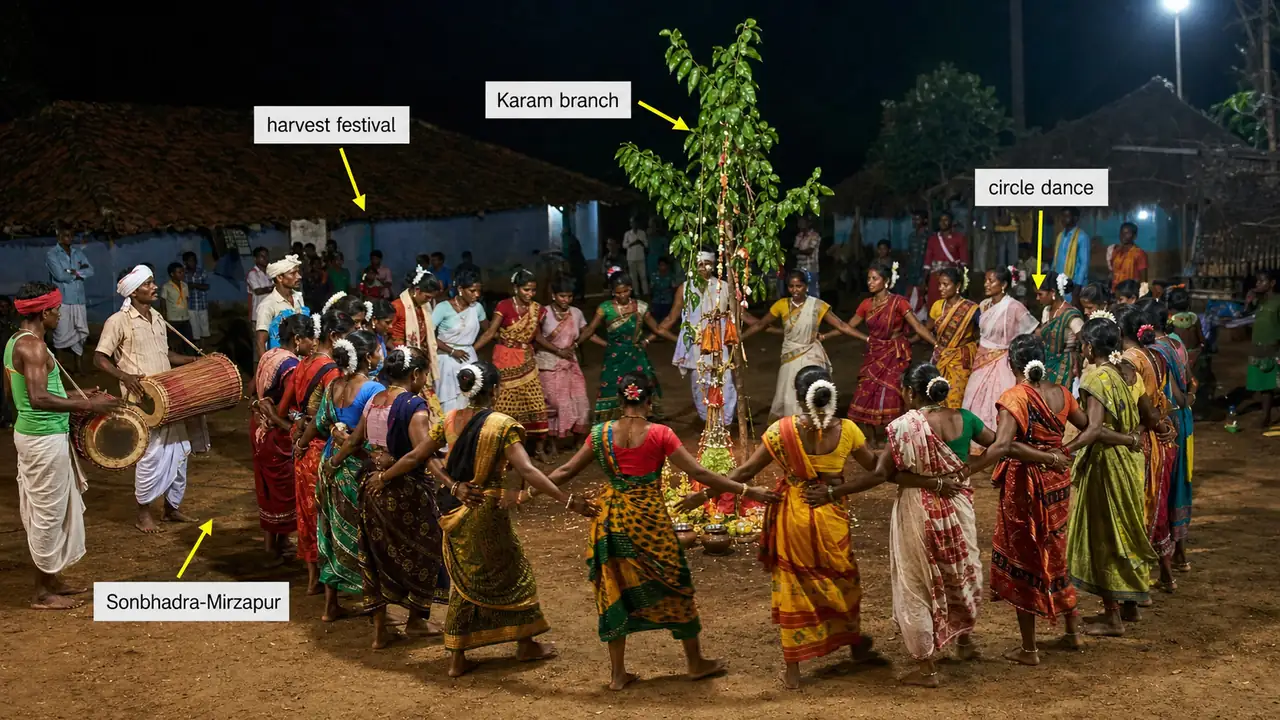
Karma dance is one of the best-known tribal dance traditions connected with southern UP, performed primarily by tribal communities of the Sonbhadra-Mirzapur region.
| Aspect | Detail |
|---|---|
| Region | Sonbhadra, Mirzapur (Vindhyan tribal belt) |
| Occasion | Karma festival (harvest celebration) |
| Performers | Men and women together |
| Ritual | Dance around the Karma tree (Karam/Sal branch planted ceremonially) |
| Season | Bhadra month (August-September) |
| Music | Mandar drum, tribal songs |
The Karma festival celebrates the harvest deity. A branch of the Karam (Sal) tree is planted in the center, and dancers form circles around it, dancing through the night.
Other Tribal Dances
| Dance | Tribe/Community | Region | Occasion |
|---|---|---|---|
| Jhumar | Tharu tribe | Terai (Lakhimpur Kheri, Pilibhit) | Harvest, weddings |
| Salhes / related folk performance forms | Tharu-linked/local communities | Terai | Seasonal celebration contexts |
| Sahila | Multiple tribal groups | Sonbhadra | Spring festival |
Pastoral and Community Dances
Ahirahi
Ahirahi is a folk dance performed by the Ahir (Yadav) community, historically cattle herders. It celebrates pastoral life and is linked to Krishna worship.
| Aspect | Detail |
|---|---|
| Region | Braj and Awadh regions |
| Community | Ahir (Yadav) |
| Occasion | Krishna Janmashtami, community gatherings |
| Theme | Pastoral life, Krishna devotion |
| Style | Group dance with synchronized movements |
Dhadhiya / Dhobia Nritya
Dhadhiya (also called Dhobia Nritya) is performed by the Dhobi (washermen) community during weddings and festivals. Dancers use props and act out humorous scenes from daily life.
| Aspect | Detail |
|---|---|
| Community | Dhobi (washermen) |
| Region | Eastern UP, Awadh |
| Occasion | Weddings, community celebrations |
| Style | Comic, theatrical, props-based |
Seasonal and Devotional Dances
Jhula
Jhula (Swing Dance) is performed during the Sawan (monsoon) and Teej festivals. Women swing on decorated jhoolas (swings) while singing seasonal songs celebrating rains and marital bliss.
| Aspect | Detail |
|---|---|
| Region | Across UP, especially Awadh and Braj |
| Occasion | Sawan (July-August), Teej, Hariyali Teej |
| Performers | Women |
| Theme | Monsoon joy, Radha-Krishna, marital devotion |
| Props | Decorated swings (jhoola) |
Natwari Nritya
Natwari Nritya is remembered as a folk dance-drama style involving dramatic storytelling through dance, combining expressive movement with narrative elements.
| Aspect | Detail |
|---|---|
| Style | Narrative dance-drama |
| Performers | Trained folk artists |
| Theme | Mythological stories, seasonal celebrations |
| Relation | Shares features with other narrative folk performance forms |
Chhapeli (Border-Hill Reference)
Chhapeli is a light, playful couple dance more strongly associated with the Kumaon hill tradition, but it is sometimes mentioned in broader northern regional-folk lists near the UP-Uttarakhand cultural belt.
| Aspect | Detail |
|---|---|
| Region | Hill / sub-Himalayan cultural belt |
| Performers | Couples (man + woman) |
| Style | Playful, flirtatious, light movements |
| Music | Hudka (small drum) played by male dancer |
Master Reference Table — Folk Dances of UP
| Dance | Region | Community/Performers | Occasion/Season |
|---|---|---|---|
| Diwari/Pai Danda | Bundelkhand | Men | Diwali |
| Rai | Bundelkhand | Bedni women | Weddings, fairs |
| Karma | Sonbhadra-Mirzapur | Kol, Gond, Baiga tribes | Harvest (Bhadra) |
| Ahirahi | Braj, Awadh | Ahir community | Janmashtami |
| Dhadhiya | Eastern UP | Dhobi community | Weddings |
| Jhula | Pan-UP | Women | Sawan, Teej |
| Natwari Nritya | Various | Folk artists | Festivals |
| Chhapeli | Border-hill cultural belt | Couples | Social gatherings |
| Jhumar | Terai | Tharu tribe | Harvest |
| Charkula | Braj | Women | Ashtami after Holi |
Summary Cheat Sheet
| Fact | Answer |
|---|---|
| Diwari/Pai Danda region | Bundelkhand |
| Diwari occasion | Diwali |
| Rai dance community | Bedni women |
| Karma dance tribes | Kol, Gond, Baiga, Korwa |
| Karma dance region | Sonbhadra-Mirzapur |
| Karma tree | Karam/Sal tree |
| Ahirahi community | Ahir (Yadav) |
| Jhula season | Sawan (monsoon), Teej |
| Chhapeli note | Playful couple dance, more strongly linked with adjoining hill tradition |
| Tharu tribe region | Terai (Lakhimpur Kheri, Pilibhit) |
Lesson Doubts
Ask questions, get expert answers