🎬 Ramlila & Folk Theatre Traditions
Ramlila of Ramnagar (UNESCO Heritage), Bhagat, Naqal, Bidesia, and other folk theatre traditions of Uttar Pradesh for Uttar Pradesh GK preparation.
Ramlila — Enacting the Ramayana
Ramlila is the dramatic folk enactment of the epic Ramayana, performed across North India during the Navratri-Dussehra period (September-October). Uttar Pradesh is one of the strongest heartlands of Ramlila tradition.
The word Ramlila literally means "Ram's Play (Leela)". Performances typically span 10 to 31 days, covering episodes from Ram's birth to his coronation, culminating in the burning of Ravana effigies on Dussehra (Vijayadashami).
UNESCO Recognition
Ramlila was inscribed on UNESCO's Representative List of the Intangible Cultural Heritage of Humanity in 2008. The UNESCO recognition applies to the broader Ramlila tradition across northern India, not to only one single town performance.
Major Ramlila Traditions Relevant to UP GK
While Ramlila is performed in thousands of towns and villages, a few traditions are especially well known in exam discussions:
| Ramlila | Location | Special Feature |
|---|---|---|
| Ramnagar | Varanasi | Most celebrated traditional open-air style in UP GK |
| Ayodhya | Ayodhya | Ram's birthplace, deeply devotional atmosphere |
| Other North Indian traditions | Outside UP too | Show the wider cultural spread of Ramlila |
Ramlila of Ramnagar — The Crown Jewel
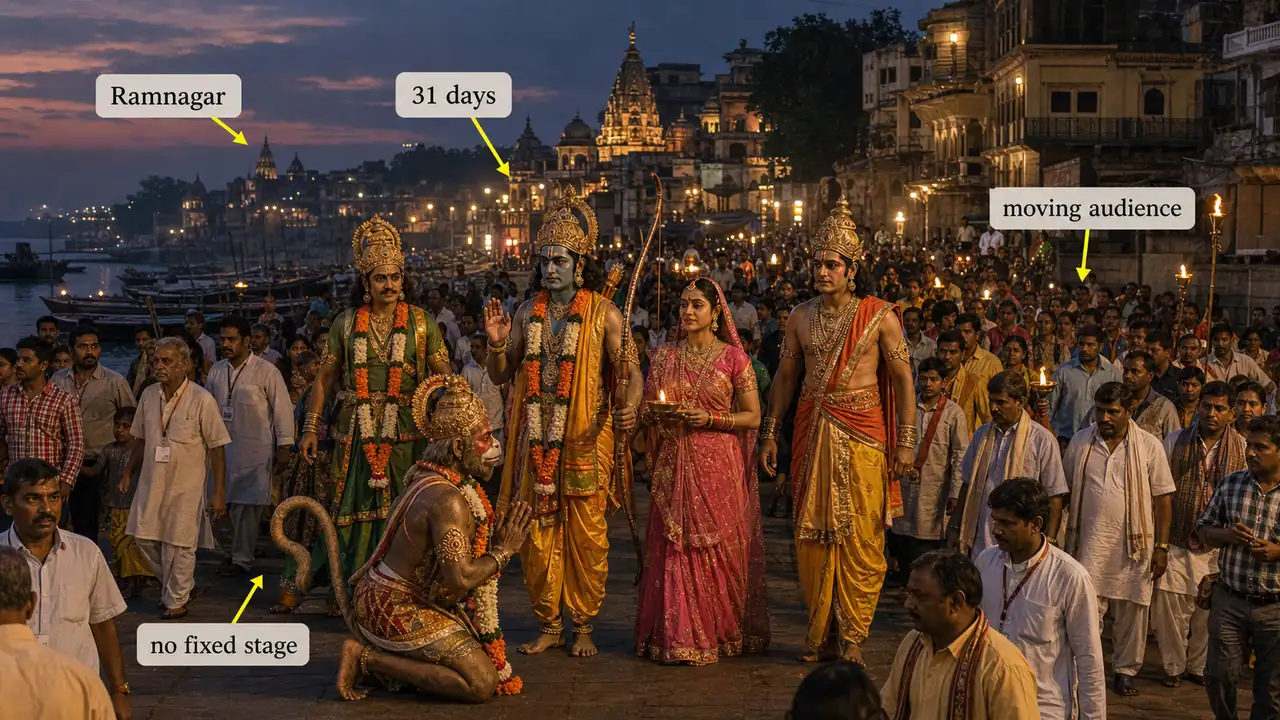
The Ramlila of Ramnagar (Varanasi) is the most celebrated traditional Ramlila in UP GK. It has been performed for over 200 years under the patronage of the Maharaja of Banaras (Kashi Naresh).
Key Features
| Aspect | Detail |
|---|---|
| Duration | 31 days (full month, from Anant Chaturdashi to Dashami) |
| Patron | Maharaja of Banaras (Kashi Naresh), currently a symbolic role |
| Started by | Maharaja Udit Narayan Singh (early 19th century) |
| Script | Based on Tulsidas's Ramcharitmanas |
| Stage | No fixed stage — performances move to different locations across Ramnagar town |
| Area covered | Spread over several square kilometers |
| Audience movement | Spectators walk with the performers from location to location |
| Performers | Local residents of Ramnagar, roles passed through generations |
| Lighting | Traditionally associated with oil lamps and torches rather than modern stage lighting |
| Amplification | Known for preserving a largely non-modern performance atmosphere |
Exam Tip: Ramnagar Ramlila = 31 days + No fixed stage + No electricity + Maharaja of Banaras + Ramcharitmanas text.
What Makes Ramnagar Unique
Unlike stage-bound productions, the entire town of Ramnagar becomes the performance space:
- Lanka is built and burned at one location
- Ashok Vatika is enacted in a garden
- Ayodhya scenes happen near a temple
- The Maharaja rides on an elephant, following the performance as chief patron
The authenticity is maintained through strong adherence to tradition, local participation, and a performance style rooted in Ramcharitmanas-based narration rather than a modern proscenium format.
Ramlila of Ayodhya
Ayodhya's Ramlila holds special significance as it is performed in Ram's own birthplace. The performance takes on a deeply devotional character, with the entire city participating in the celebrations.
| Aspect | Detail |
|---|---|
| Duration | 10–14 days |
| Special feature | Closely tied to Ayodhya's sacred geography and devotional setting |
| Culmination | Grand Dussehra procession along Saryu river ghats |
| Government support | UP government promotes it as a major cultural event |
Other Folk Theatre Forms of UP
Bhagat
Bhagat is a devotional folk performance tradition where groups of performers enact stories from Hindu mythology, especially tales of Bhakti saints and Puranic characters.
| Aspect | Detail |
|---|---|
| Region | Western UP and Awadh |
| Theme | Devotional — tales of saints, mythological stories |
| Performers | Called Bhagatiyas |
| Style | Simple staging, emphasis on singing and narration |
| Significance | Often described as an important precursor to later popular folk theatre forms |
Bhagat is important because it preserves the devotional-performance base from which several later popular theatre traditions developed. In exam terms, students should remember it as an early devotional stage form of western and central UP.
Naqal
Naqal is the art of mimicry and satirical impersonation, historically associated with Lucknow's Nawabi culture.
| Aspect | Detail |
|---|---|
| Region | Lucknow, Awadh |
| Style | Solo mimicry, character impersonation, humor |
| Content | Imitation of social types — the miser, the boastful, the corrupt official |
| Origin | Nawabi court entertainment |
| Modern equivalent | Stand-up comedy, character comedy |
Naqal artists (Naqqal) were prized entertainers in the Awadh court. The tradition influenced modern Urdu humor and dramatic arts. Lucknow's reputation for tehzeeb (etiquette) and wit is partly rooted in the Naqal tradition.
Bidesia
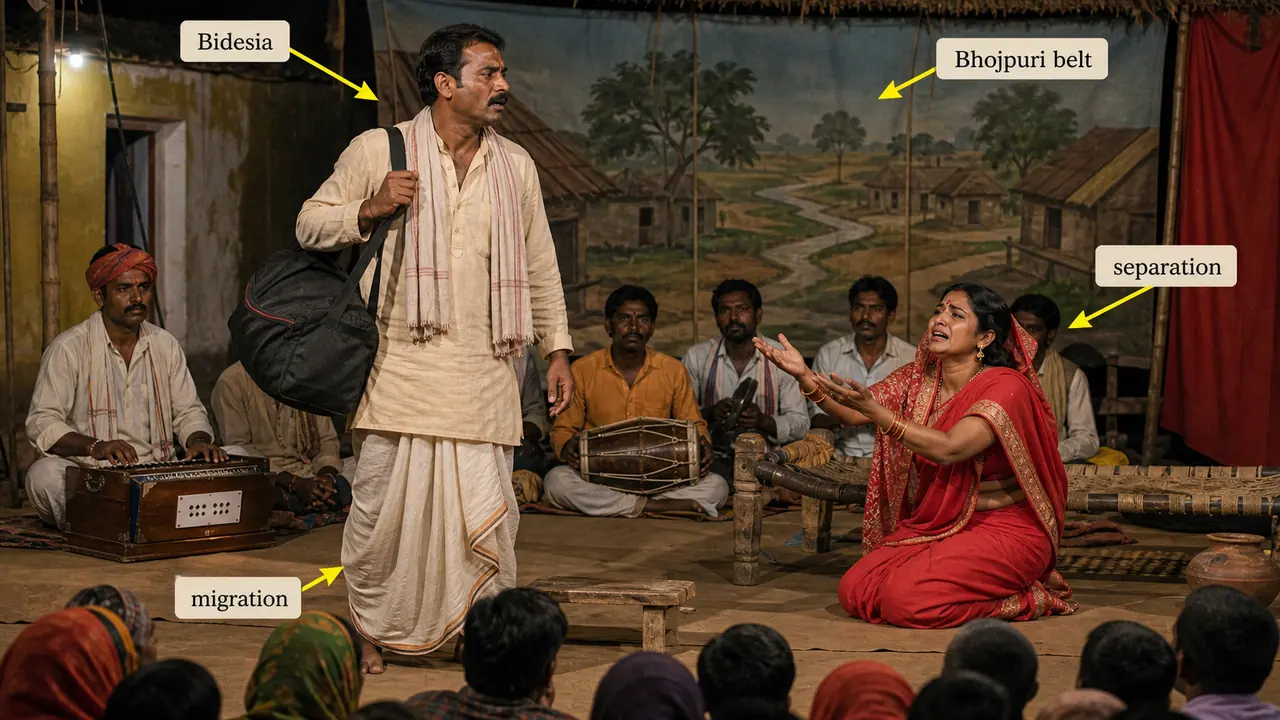
Bidesia is a folk drama form most strongly associated with the Bhojpuri cultural region, especially Bihar and the eastern UP border belt, and is linked with the legendary folk artist Bhikhari Thakur.
| Aspect | Detail |
|---|---|
| Region | Bhojpuri belt, including the Bihar-eastern UP cultural zone |
| Creator | Bhikhari Thakur (1887–1971) |
| Theme | Migration, separation, social exploitation |
| Language | Bhojpuri |
| Style | Musical drama with sharp social commentary |
| Title of Bhikhari Thakur | Called "Shakespeare of Bhojpuri" |
"Bidesia" literally refers to one who has gone away from home. It tells the story of men who migrate for work, leaving behind wives and families. The themes of migration, separation, gendered suffering, and rural exploitation remain highly relevant.
Exam Tip: Bidesia = Bhikhari Thakur + Bhojpuri + Migration theme. Bhikhari Thakur = "Shakespeare of Bhojpuri."
Evolution of UP's Folk Theater
The folk theater of UP has evolved through distinct phases:
| Period | Development |
|---|---|
| Ancient | Temple performances, devotional storytelling |
| Medieval | Ramlila, Raslila formalized under royal patronage |
| 18th–19th century | Bhagat evolves into Nautanki and Swang |
| Nawabi era | Naqal, Thumri-dance performances in courts |
| Colonial | Changing patronage patterns; folk theater remained a medium of public performance and memory |
| Post-independence | Decline due to cinema; government documentation begins |
| Modern | Revival efforts by Sangeet Natak Akademi, universities, festivals |
Current Challenges
- Competition from electronic media — cinema, TV, and smartphones
- Loss of patronage — no zamindars or nawabs to fund troupes
- Migration of artists — young people prefer urban employment
- Documentation gap — many traditions survive only in oral memory
Revival Initiatives
- Sangeet Natak Akademi — national awards for folk artists, documentation projects
- UP Cultural Department — organizes Lucknow Mahotsav, Taj Mahotsav
- University programs — BHU, Lucknow University research on folk traditions
- UNESCO recognition — Ramlila (2008) brings global attention
Summary Cheat Sheet
| Fact | Answer |
|---|---|
| Ramlila UNESCO year | 2008 |
| Ramnagar Ramlila duration | 31 days |
| Ramnagar Ramlila patron | Maharaja of Banaras |
| Ramnagar Ramlila text | Ramcharitmanas (Tulsidas) |
| Ramnagar Ramlila started by | Maharaja Udit Narayan Singh |
| Ramnagar unique features | No fixed stage, processional style, traditional atmosphere |
| Bhagat significance | Early devotional precursor to later folk theatre |
| Naqal region | Lucknow (Nawabi culture) |
| Bidesia creator | Bhikhari Thakur |
| Bhikhari Thakur title | Shakespeare of Bhojpuri |
Lesson Doubts
Ask questions, get expert answers