Metro rail systems in Lucknow, Kanpur, Agra, and Delhi-Meerut RRTS (Namo Bharat) for Uttar Pradesh GK preparation.
Mind Map: Metro Rail and RRTS in UP
Urban Rail Transit in UP
Uttar Pradesh is witnessing a metro and rapid-transit expansion. Multiple cities now have operational or partially operational urban rail systems, and the Delhi-Meerut RRTS (India's first regional rapid transit system) is reshaping intercity travel in western UP. These projects aim to reduce congestion, pollution, and improve urban mobility.
Lucknow Metro
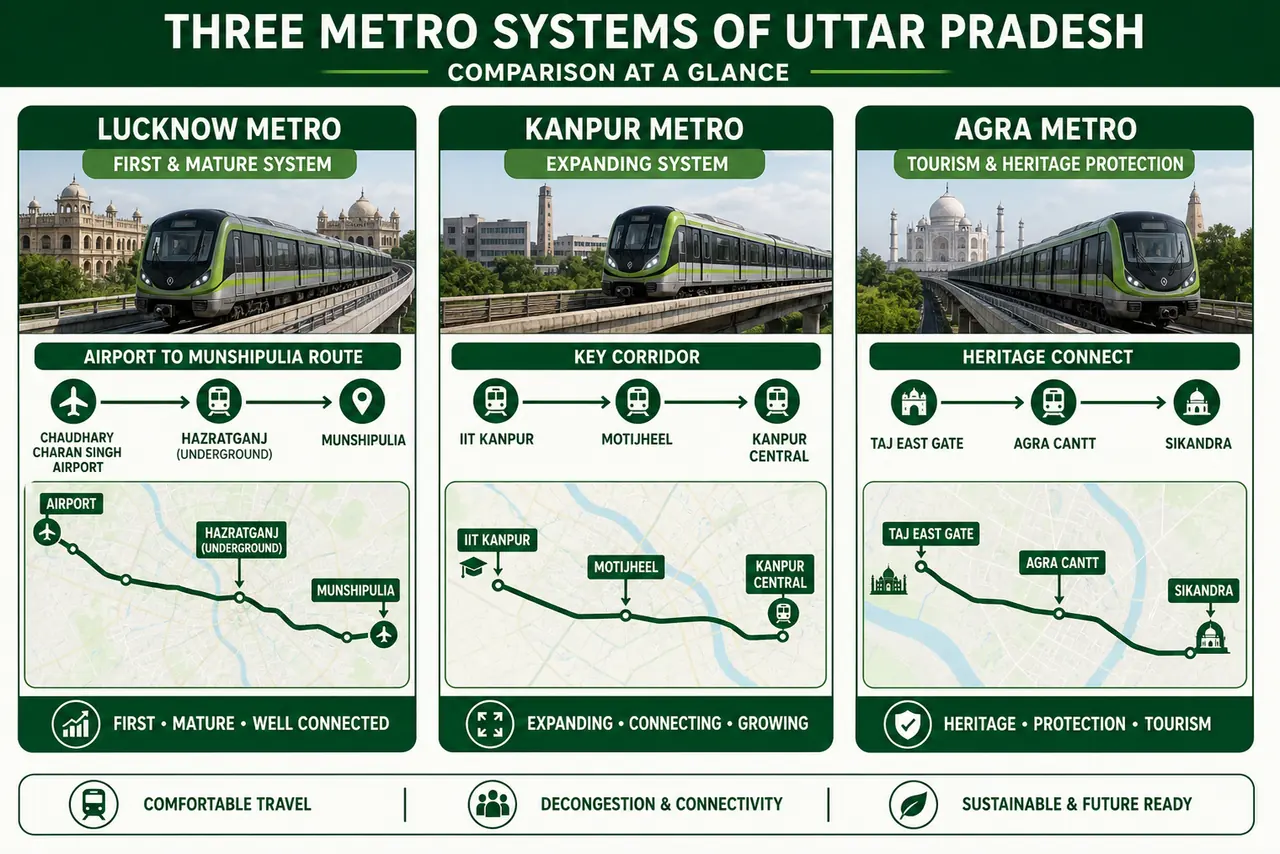
Remember the three UP metro systems by role: Lucknow as the first mature network, Kanpur as the expanding industrial-city system, and Agra as the tourism-and-heritage connector.
Feature
Detail
Distinction
First metro in UP
Operational Since
September 2017
Corridor
North-South (Red Line)
Length
23 km
Stations
21 stations
Route
CCS Airport — Munshipulia
Operator
UP Metro Rail Corporation (UPMRC)
Runs both elevated and underground sections
Underground stretch passes through Hazratganj (commercial heart of Lucknow)
East-West corridor planned as Phase 2
Key Lucknow Metro Stations
Station
Significance
CCS Airport
Connects to Amausi airport
Hazratganj
Underground, commercial hub
Charbagh
Railway station connectivity
Sachivalaya
State secretariat area
Munshipulia
Southern terminus
Kanpur Metro
Feature
Detail
Status as of June 3, 2026
Partially operational; further expansion underway
Priority Corridor
~9 km (IIT Kanpur — Motijheel)
Total Planned
2 corridors, ~32 km
Operator
UPMRC
Corridor 1: IIT Kanpur to Naubasta (~23 km)
Corridor 2: CSA University to Barra (~9 km)
Will connect IIT Kanpur, the industrial areas, and the old city
The initially opened priority section has since been extended further toward Kanpur Central
The important update is that Kanpur Metro is no longer just a pilot stretch topic. It has moved into a broader operational phase and should be remembered as an expanding metro system, not merely a proposed one.
Agra Metro
Feature
Detail
Status as of June 3, 2026
Partially operational; further construction continuing
Corridors
2 corridors planned
Corridor 1
Sikandra — Taj East Gate (~14 km)
Corridor 2
Agra Cantt — Kalindi Vihar (~15.5 km)
Purpose
Ease tourist traffic near Taj Mahal
Will significantly reduce vehicular pollution around the Taj Mahal
Connects railway station (Agra Cantt) to major tourist sites
Electric vehicles and metro will create a pollution-free zone near heritage sites
Revenue operations have already begun on the priority corridor from Taj East Gate to Mankameshwar
Delhi-Meerut RRTS — Namo Bharat
India's First Regional Rapid Transit System
Feature
Detail
Full Name
Delhi-Ghaziabad-Meerut RRTS
Brand
Namo Bharat
Total Length
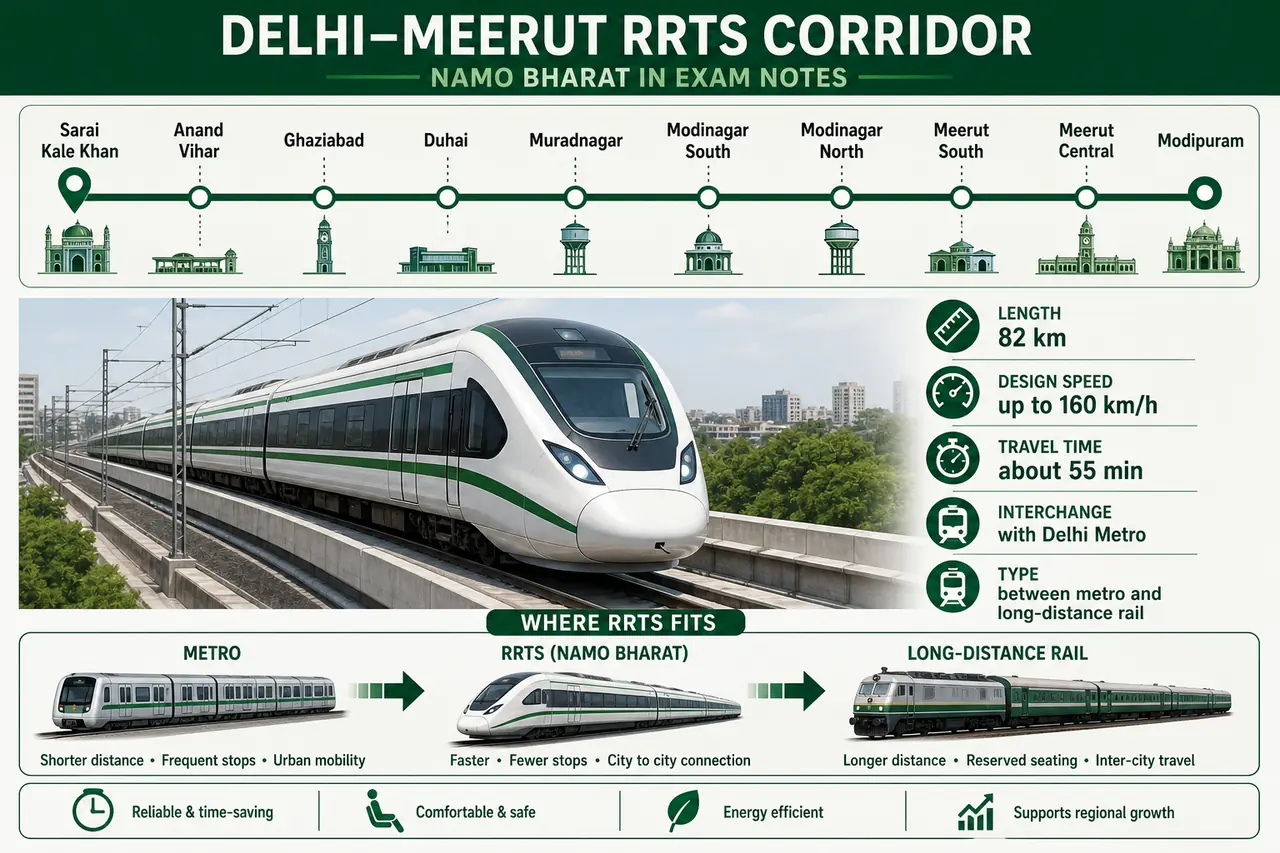
82 km
Route
Sarai Kale Khan (Delhi) — Modipuram (Meerut)
Speed
Semi-high speed, up to 160 km/h
Travel Time
Delhi to Meerut in ~55 minutes (vs 3-4 hours by road)
Operator
NCRTC (National Capital Region Transport Corporation)
Namo Bharat Key Features
India's first RRTS corridor — a new category of transit between metro and high-speed rail
Trains manufactured by Alstom (now operational)
Priority section (Sahibabad — Duhai, 17 km) inaugurated in October 2023
Additional sections have opened after the first priority stretch, while construction and commissioning continue on the remaining balance portions
Stations designed as transit-oriented development (TOD) hubs
Interchange with Delhi Metro at Anand Vihar and Sarai Kale Khan
As of June 3, 2026, the safest way to describe the RRTS is:
it is India's first operational RRTS corridor,
it is already carrying passengers on opened sections,
and the full Delhi-Meerut corridor has progressed substantially but remains a staged rollout project.
The Delhi-Meerut RRTS should be revised as a fast regional corridor between metro and long-distance rail, not as just another city metro line.
RRTS Stations in UP
Station
City/Area
Ghaziabad
Ghaziabad city
Duhai
Ghaziabad
Muradnagar
Ghaziabad district
Modi Nagar South
Modi Nagar
Modi Nagar North
Modi Nagar
Meerut South
Meerut
Meerut Central
Meerut (Begumpul)
Modipuram
Meerut (terminal)
Other Planned RRTS Corridors
Corridor
Length
Status
Delhi-Panipat
~103 km
DPR stage
Delhi-Alwar
~164 km
DPR stage
Delhi-SNB (Shahjahanpur-Neemrana-Behror)
Proposed
Concept stage
While Delhi-Panipat and Delhi-Alwar primarily serve Haryana/Rajasthan, the RRTS model may be replicated for Lucknow-Kanpur and other UP corridors
Varanasi Metro (Proposed)
2 corridors proposed: ~29 km total
DPR (Detailed Project Report) prepared
Will connect BHU, Varanasi Cantt, Sarnath, Kashi Vishwanath corridor
Aimed at easing congestion in narrow old city lanes
Status: Awaiting final approval and funding
Impact on Urban Development
Metro and RRTS projects bring transformative urban changes:
Property Values — 20-40% increase near metro stations
Transit-Oriented Development — Commercial hubs around stations
Pollution Reduction — Electric transit replacing diesel vehicles
Smart City Integration — Metro corridors aligned with Smart City plans
Employment — Construction and operational jobs for thousands
Summary Cheat Sheet
Project
Length
Status
Key Fact
Lucknow Metro
23 km
Operational (2017)
First metro in UP, 21 stations
Kanpur Metro
~32 km
Partially operational + expanding
Priority section began with IIT Kanpur-Motijheel; later extended toward Kanpur Central
Agra Metro
~29.5 km
Partially operational + under expansion
Priority corridor from Taj East Gate to Mankameshwar