⚠️ Zoonotic Diseases in Livestock
Classification, transmission, and importance of zoonotic diseases shared between animals and humans.
This lesson covers core livestock production and management concepts for practical farm application and exam-oriented preparation.
Zoonotic diseases
and Rabies)
ZOONOSES : Are diseases of animals including Homo sapiens. Its infective agents have
become adapted to a particular animal species during course of evolution and can exist in these
animals by uninterrupted infection chains. In narrow (epidemiological) sense, transfer of
causative agent of an animal disease to human beings is zoonoses.
They are diseases and infections the agents of which are naturallyn tranmitted among
other vertebrate animals and man. Also included are a number of infections, which are shared
but not naturally transmitted.
Classification
a. Direct Z. – example rabies
b. Cyclo Z. – eg. -teaniasis
c. Sapro Z. – eg. – histoplasmosis
d. Meta Z. – eg. – Japanese encephalitas
e. Anthrapo Z. – Eg. Brucellosis
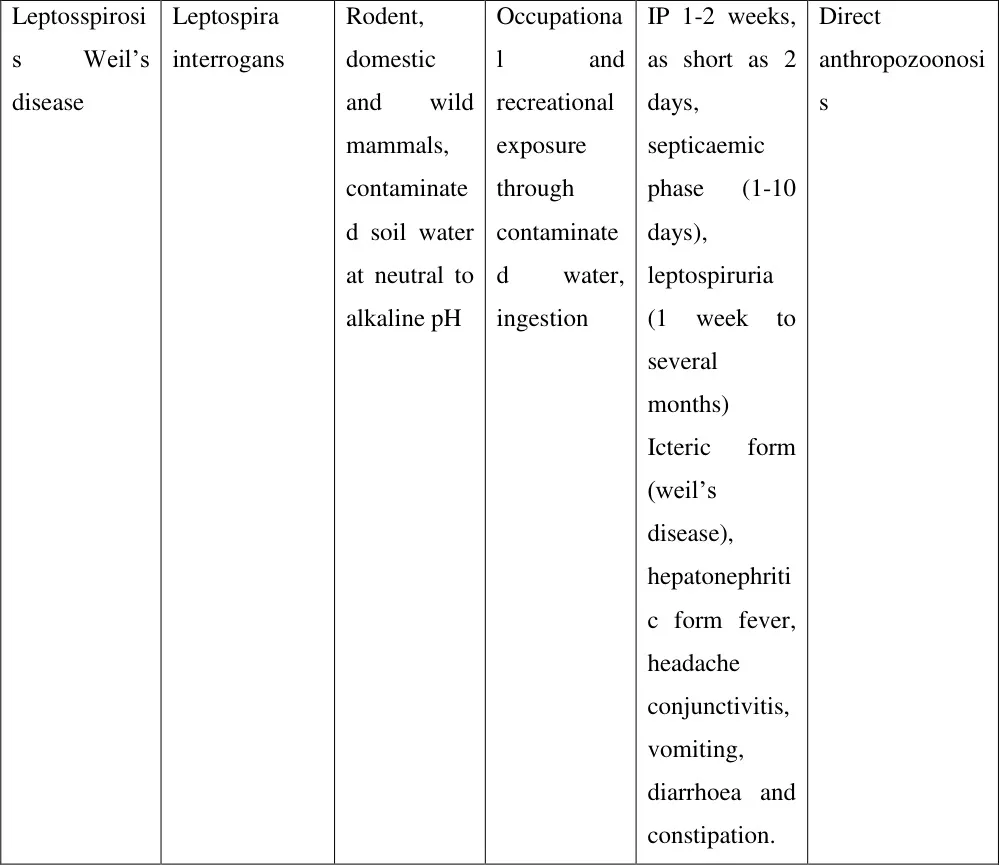
| Disease | Cause | Non human principal hosts |
Modes of inection |
Symptoms | Class of zoonoses |
|---|---|---|---|---|---|
| Brucellosis | Brucella abortus Br.melitensis Br.Suis Br.canis |
Cattle, goat, sheep, swine, caribou, dog. |
Occupationa l exposure through air, contact, Ingestion of infected milk /food |
IP 1-3 weeks, or month; septicaemic; continued, intermittent or irregular fever, chills, profuse sweating, weakness, fatigue, |
Direct anthropozoonosi s |
| Col1 | Col2 | Col3 | Col4 | patients get up as normal in the morning to fall in bed with high temperature in the afternoon, insomnia, headache, arthralgia, spleenomegal y, disease lasts for weeks, months or even years. |
Col6 |
|---|---|---|---|---|---|
| Anthrax | Bacillus anthracis |
Cattle, sheep, goat, horse, wild herbivores |
Occupationa l exposure through contact, air- borne, vehicle (meat) |
1 P.2-5 days Cutaneous form : Vesicle develop into black depressed eschar, generally uncared, not treated in time resulting into septicaemia and death. Pulmonary (wool sorters disease) |
Direct anthropozoonosi s |
| Col1 | Col2 | Col3 | Col4 | resemble common infection of upper respiratory tract : 1, P 3-5 days, acute, fever, shock and death. gastrointestina l form IP 4 days, gastroenteritis blood in stools, death. |
Col6 |
|---|---|---|---|---|---|
| Tuberculosis | Mycobacteriu m bovis |
Cattle | Occupationa l exposure through contact; ingestion of raw milk, inhalation |
Extra pulmonary form most common. Cervical adenitis, genitourniary, bone, joint infections; meningitis, pulmonary form in occupational groups, transmit back to cattle. |
Direct anthropozoonosi s |
Summary Cheat Sheet
| Topic | Key Point |
|---|---|
| Zoonosis meaning | Disease naturally transmitted between animals and humans |
| Main concern | Public health risk from livestock and poultry systems |
| Transmission routes | Direct contact, food, water, vectors, or contaminated animal products |
| Farm prevention | Hygiene, vaccination, quarantine, and safe disposal of waste/carcasses |
| Worker safety | Handwashing, protective handling, and avoiding contaminated products are important |
| Public health link | Milk, meat, and close animal contact can be transmission pathways |
| Control strategy | Combine animal health management with human hygiene precautions |
| Diagnostic importance | Early recognition prevents spread to people and other animals |
| Economic effect | Zoonoses affect productivity plus public-health costs |
| Exam trap | Not every livestock disease is zoonotic; zoonoses specifically cross species to humans |
Lesson Doubts
Ask questions, get expert answers