🌿 Introduction to Crop Physiology
Learn what crop physiology studies and why understanding plant function is essential for crop productivity and stress management.
Crop physiology explains how plants function, grow, respond to the environment, and finally produce yield. In agriculture, this subject matters because every management practice, from irrigation to fertilization to growth regulation, works by influencing plant physiology.
What Crop Physiology Studies
Plant physiology is the science of normal life processes in plants. Crop physiology applies the same principles specifically to cultivated plants under agricultural conditions.
It studies:
- water relations
- nutrient uptake
- photosynthesis
- respiration
- growth and development
- source-sink relations
- stress responses
In simple words, crop physiology is the study of how crop plants function.
Why It Is Important in Agriculture
Plants are the primary producers in agriculture. They convert solar energy into chemical energy and use water, minerals, and carbon dioxide to build biomass.
Understanding crop physiology helps explain:
- why some crops tolerate drought better
- why nutrient deficiency reduces growth
- why flowering depends on photoperiod in some species
- why source-sink imbalance affects yield
- why stress at one stage may damage final productivity
Example:
- two fields may receive the same fertilizer, but the crop response can differ if water uptake, root activity, or photosynthesis is limited.
Plant Cell as the Functional Unit
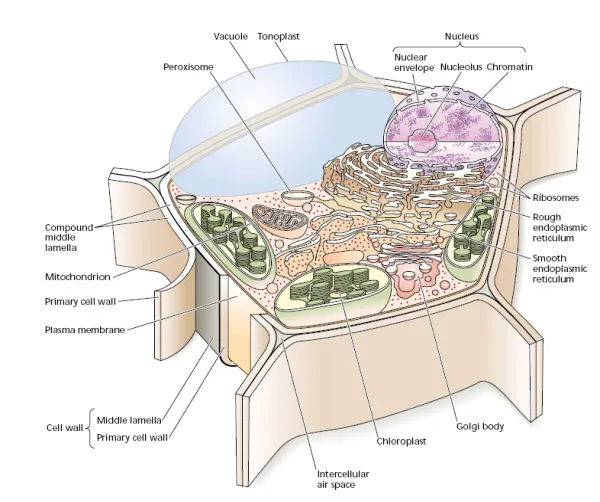
All crop functions begin at the cellular level. Plant cells are eukaryotic and contain:
- nucleus
- cytoplasm
- membrane-bound organelles
- cell wall
Plant cells are joined together by the middle lamella, which prevents cell migration and makes plant development depend mainly on cell division and cell enlargement.
Primary cell walls are typical of young growing cells, whereas secondary cell walls are thicker and often lignified. These walls provide strength, support, and protection.
Tissue Systems and Plant Organs
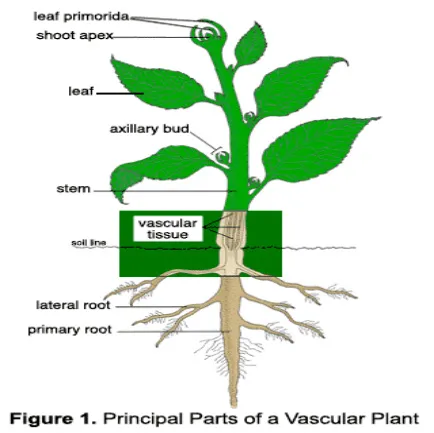
The vegetative body of a plant is organized into:
- root
- stem
- leaf
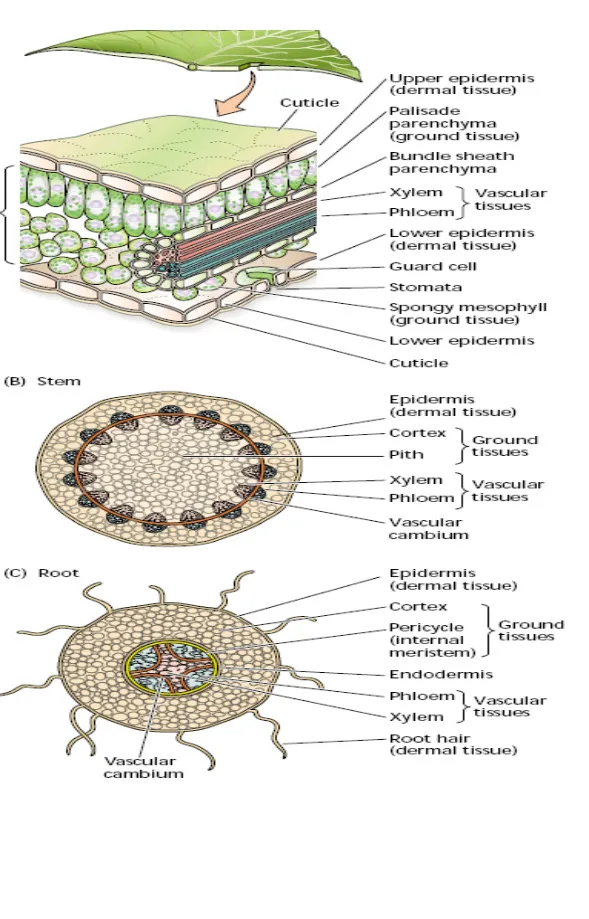
And each organ contains three major tissue systems:
- dermal tissue
- ground tissue
- vascular tissue
Functionally:
- roots absorb water and minerals
- stems support and conduct
- leaves perform photosynthesis
This organization is important because later physiological processes such as absorption, translocation, and transpiration depend on these structures.

Meristems and Plant Growth
Growth in plants is concentrated in meristematic regions. Apical meristems at root and shoot tips are mainly responsible for primary growth, while lateral meristems support secondary growth.
Important growth ideas:
- primary growth increases length and basic plant form
- secondary growth increases girth and produces wood and bark-related tissues
This distinction is essential in crop physiology because plant growth analysis depends on where and how new tissue is formed.
Summary Cheat Sheet
| Topic | Key Point |
|---|---|
| Crop physiology | Study of functions and processes in crop plants |
| Importance | Explains productivity, growth, and stress response |
| Functional unit | Plant cell |
| Main organs | Root, stem, leaf |
| Growth zones | Meristems control primary and secondary growth |
References
1 source • [1]
References
Plant Physiology course notes (PPHY261)
BookLesson Doubts
Ask questions, get expert answers