🐝 Apiculture: The Science of Beekeeping
History, importance, and present status of beekeeping in India -- from Langstroth's movable frame to India's Sweet Revolution
In villages across India, farmers have observed that fields near wild bee colonies produce noticeably higher yields of mustard, sunflower, and fruit crops. This is no coincidence -- honey bees are nature's most efficient pollinators. The practice of managing these remarkable insects for honey and pollination is called apiculture, and it has transformed from a primitive honey-hunting tradition into a full-fledged agricultural enterprise.
This lesson covers:
- Definition and origin of apiculture
- Historical milestones -- from Langstroth's movable frame to India's Italian bee imports
- Why beekeeping matters -- pollination, income, and rural employment
- Present status -- India's production, exports, and leading states
These facts form the foundation for the entire apiculture sub-section and are frequently tested in IBPS AFO and NABARD exams.
What is Apiculture?
- The practice of rearing honey bees for the procurement of honey and other products is known as beekeeping or apiculture. The word is derived from the Latin "apis" (bee) + "cultura" (cultivation).
- Honey bees and their usefulness are known to humans from prehistoric times. References to bees appear in the Vedas, Ramayana, and Quran, showing that the human-bee relationship spans thousands of years across civilizations.
Historical Milestones
Modern beekeeping became possible through a series of key discoveries and introductions:
| Year | Event | Key Person |
|---|---|---|
| 1851 | Discovery of movable frame hive | Rev. L.L. Langstroth |
| 1882 | Beekeeping introduced in India (Bengal) | -- |
| 1911 | Beekeeping introduced to South India | Newton |
| 1962-64 | Italian bee (A. mellifera) imported to India | -- |
- Rev. L.L. Langstroth is called the Father of American (Modern) Beekeeping. His movable-frame hive allowed beekeepers to inspect, manage, and harvest honey without destroying the comb -- the foundation of scientific beekeeping. The Langstroth Hive remains the most widely used hive design in the world.
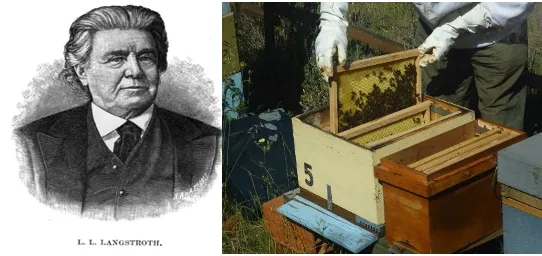
- The Father of Modern Beekeeping in India is A.S. Atwal. His research and extension work laid the groundwork for India's beekeeping industry.
TIP
Exam Mnemonic -- "LANg-1851": LANgstroth discovered the movable frame in 1851. For India: 1882 = Bengal, 1911 = South India (Newton).
Why Beekeeping Matters
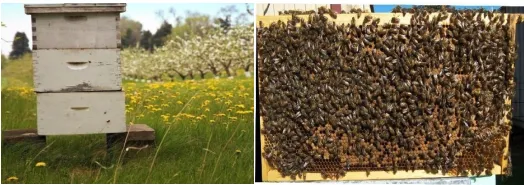
Beekeeping is a multi-dimensional agricultural activity with benefits spanning income, environment, and food security:
| Benefit | How It Helps |
|---|---|
| Pollination support | Enhances yield and quality of fruits, vegetables, pulses, and oilseeds |
| Sustainable agriculture | Promotes natural pollination, reduces artificial interventions |
| Biodiversity | Supports reproduction of wild plants and ecosystem balance |
| Low-cost technology | Even small and marginal farmers can adopt it with minimal investment |
| Multiple products | Honey, beeswax, propolis, pollen, royal jelly, bee venom -- all commercially valuable |
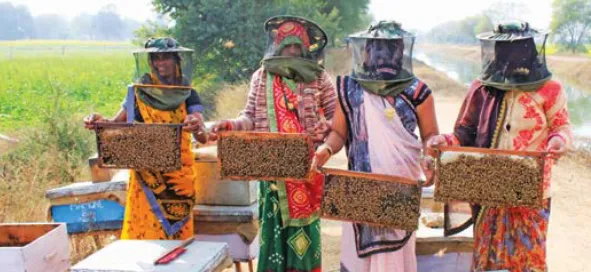
| Employment & women empowerment | Ideal for Self-Help Groups (SHGs) and rural households |
- A beekeeper maintaining 50 bee boxes of A. mellifera can earn up to 2-2.5 lakh per annum.
- Beekeeping complements existing farming -- it does not compete with other enterprises for land or resources.
IMPORTANT
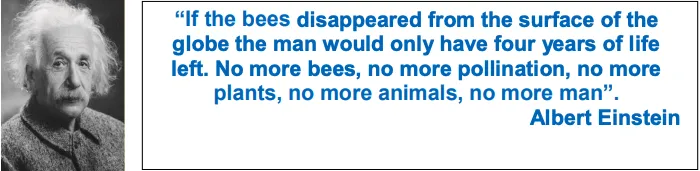
No more bees -- no more pollination -- no more plants -- no more animals -- no more food -- no more life. This statement underscores the critical role of bees in sustaining life on Earth.
Present Status of Beekeeping
| Parameter | Data |
|---|---|
| India's honey production (2021-22) | 1.33 lakh MT |
| India's honey export (2021-22) | 74,413.05 MT |
| World's largest honey producer | China |
| India's global ranking | Top 5 honey producers |
| Largest honey-producing state in India | Uttar Pradesh (over 30% of total) |
| Total bee colonies in India | 15.6 lakh (of which 4.24 lakh in UP) |
- India has become a major honey-exporting country, reflecting improved production volumes and quality standards.
- The concentration of beekeeping in northern India highlights the enormous scope for expansion in other states.
Summary Table
| Topic | Key Fact |
|---|---|
| Definition | Rearing of honey bees for honey and other products |
| Word origin | Latin apis (bee) + cultura (cultivation) |
| Modern beekeeping started | 1851 -- movable frame by Langstroth |
| Father of Modern Beekeeping (World) | Rev. L.L. Langstroth |
| Father of Modern Beekeeping (India) | A.S. Atwal |
| India introduction | 1882 (Bengal); 1911 (South India -- Newton) |
| Largest honey producer (World) | China |
| Largest honey producer (India) | Uttar Pradesh |
| India's production (2021-22) | 1.33 lakh MT |
| Total colonies in India | 15.6 lakh |
| Income potential | Rs. 2-2.5 lakh/year from 50 boxes |
TIP
Quick Exam Recall: India = Top 5 globally, UP = #1 state, China = #1 globally. Langstroth = 1851. A.S. Atwal = Father of Indian beekeeping.
References
1 source
References
Beekeeping Seasonal Calendar (North India)
Month-by-month guide for an AFO advising farmers on beekeeping:
| Month | Activity | Crops in Bloom | Notes |
|---|---|---|---|
| Oct-Nov | Colony build-up begins; move hives near mustard/toria fields | Mustard, Toria | Major honey flow season starts |
| Dec-Jan | Peak honey flow from mustard; add supers | Mustard, Rapeseed, Sunflower | Harvest surplus honey; don't overharvest |
| Feb-Mar | Continue harvest; watch for swarming signs | Litchi, Citrus, Coriander | Manage swarming — split strong colonies |
| Apr-May | Honey flow declines; dearth period begins | Few flowers | Feed sugar syrup (1:1) if stores low |
| Jun-Jul | Monsoon — high humidity, disease risk | Sesame, Cucurbits | Watch for European foulbrood; ventilate hives |
| Aug-Sep | Colony recovery; autumn build-up | Bajra, Cotton, Sunflower | Unite weak colonies; replace old queens |
Economics: A farmer with 50 bee boxes of Apis mellifera can earn ₹2-2.5 lakh/year from honey alone. Additional income from wax, pollen, royal jelly, and pollination services can double this. Initial investment: ~₹2,000-3,000 per box.
Summary Cheat Sheet
| Concept / Topic | Key Details |
|---|---|
| Apiculture definition | Rearing honey bees for honey and products; Latin apis + cultura |
| Movable frame hive | Discovered 1851 by Rev. L.L. Langstroth |
| Father of Modern Beekeeping (World) | Rev. L.L. Langstroth |
| Father of Modern Beekeeping (India) | A.S. Atwal |
| Beekeeping in India – Bengal | Introduced 1882 |
| Beekeeping in South India | Introduced 1911 by Newton |
| Italian bee import to India | 1962-64 (A. mellifera) |
| Langstroth Hive | Most widely used hive design globally; movable frames |
| Key benefit – pollination | Enhances yield of fruits, vegetables, pulses, oilseeds |
| Key benefit – low cost | Minimal investment; ideal for SHGs and marginal farmers |
| Bee products (6) | Honey, beeswax, propolis, pollen, royal jelly, bee venom |
| Income potential | Rs. 2-2.5 lakh/year from 50 boxes of A. mellifera |
| India honey production (2021-22) | 1.33 lakh MT |
| World's largest honey producer | China |
| India's global ranking | Top 5 honey producers |
| Largest producing state (India) | Uttar Pradesh (over 30% of total) |
| Total bee colonies in India | 15.6 lakh (UP alone has 4.24 lakh) |
| Beekeeping complements farming | Does not compete for land or resources |
Additional Exam Facts
| Topic | Key Detail |
|---|---|
| Royal jelly secretion | Secreted by bees aged 6-12 days (nurse bees, from hypopharyngeal glands) |
| Most important natural enemy of honey bee | Galleria mellonella (Greater Wax Moth) |
| Safest insecticide for honey bee | Endosulfan (textbook answer — see warning below) |
| Bee venom protein | Melitin (Melittin) — the main protein component of bee venom |
| Pollination by beetles | Cantharophily |
WARNING
Endosulfan is given as the "safest insecticide for honey bee" in exam textbooks — use this answer in exams. However, Endosulfan was banned in India in 2011 (Stockholm Convention on POPs) and is no longer in use. Know both facts.
TIP
Next: Lesson 02 covers the five important bee species -- their size, honey yield, nesting habits, and suitability for commercial beekeeping.
In villages across India, farmers have observed that fields near wild bee colonies produce noticeably higher yields of mustard, sunflower, and fruit crops. This is no coincidence -- honey bees are nature's most efficient pollinators. The practice of managing these remarkable insects for honey and pollination is called apiculture, and it has transformed from a primitive honey-hunting tradition into a full-fledged agricultural enterprise.
This lesson covers:
- Definition and origin of apiculture
- Historical milestones -- from Langstroth's movable frame to India's Italian bee imports
- Why beekeeping matters -- pollination, income, and rural employment
- Present status -- India's production, exports, and leading states
These facts form the foundation for the entire apiculture sub-section and are frequently tested in IBPS AFO and NABARD exams.
What is Apiculture?
- The practice of rearing honey bees for the procurement of honey and other products is known as beekeeping or apiculture. The word is derived from the Latin "apis" (bee) + "cultura" (cultivation).
- Honey bees and their usefulness are known to humans from prehistoric times. References to bees appear in the Vedas, Ramayana, and Quran, showing that the human-bee relationship spans thousands of years across civilizations.
Historical Milestones
Modern beekeeping became possible through a series of key discoveries and introductions:
| Year | Event | Key Person |
|---|---|---|
| 1851 | Discovery of movable frame hive | Rev. L.L. Langstroth |
| 1882 | Beekeeping introduced in India (Bengal) | -- |
| 1911 | Beekeeping introduced to South India | Newton |
| 1962-64 | Italian bee (A. mellifera) imported to India | -- |
- Rev. L.L. Langstroth is called the Father of American (Modern) Beekeeping. His movable-frame hive allowed beekeepers to inspect, manage, and harvest honey without destroying the comb -- the foundation of scientific beekeeping. The Langstroth Hive remains the most widely used hive design in the world.
- The Father of Modern Beekeeping in India is A.S. Atwal. His research and extension work laid the groundwork for India's beekeeping industry.
TIP
Exam Mnemonic -- "LANg-1851": LANgstroth discovered the movable frame in 1851. For India: 1882 = Bengal, 1911 = South India (Newton).
Why Beekeeping Matters
Beekeeping is a multi-dimensional agricultural activity with benefits spanning income, environment, and food security:
| Benefit | How It Helps |
|---|---|
| Pollination support | Enhances yield and quality of fruits, vegetables, pulses, and oilseeds |
| Sustainable agriculture | Promotes natural pollination, reduces artificial interventions |
| Biodiversity | Supports reproduction of wild plants and ecosystem balance |
| Low-cost technology | Even small and marginal farmers can adopt it with minimal investment |
| Multiple products | Honey, beeswax, propolis, pollen, royal jelly, bee venom -- all commercially valuable |
| Employment & women empowerment | Ideal for Self-Help Groups (SHGs) and rural households |
- A beekeeper maintaining 50 bee boxes of A. mellifera can earn up to 2-2.5 lakh per annum.
- Beekeeping complements existing farming -- it does not compete with other enterprises for land or resources.
IMPORTANT
No more bees -- no more pollination -- no more plants -- no more animals -- no more food -- no more life. This statement underscores the critical role of bees in sustaining life on Earth.
Present Status of Beekeeping
| Parameter | Data |
|---|---|
| India's honey production (2021-22) | 1.33 lakh MT |
| India's honey export (2021-22) | 74,413.05 MT |
| World's largest honey producer | China |
| India's global ranking | Top 5 honey producers |
| Largest honey-producing state in India | Uttar Pradesh (over 30% of total) |
| Total bee colonies in India | 15.6 lakh (of which 4.24 lakh in UP) |
- India has become a major honey-exporting country, reflecting improved production volumes and quality standards.
- The concentration of beekeeping in northern India highlights the enormous scope for expansion in other states.
Summary Table
| Topic | Key Fact |
|---|---|
| Definition | Rearing of honey bees for honey and other products |
| Word origin | Latin apis (bee) + cultura (cultivation) |
| Modern beekeeping started | 1851 -- movable frame by Langstroth |
| Father of Modern Beekeeping (World) | Rev. L.L. Langstroth |
| Father of Modern Beekeeping (India) | A.S. Atwal |
| India introduction | 1882 (Bengal); 1911 (South India -- Newton) |
| Largest honey producer (World) | China |
| Largest honey producer (India) | Uttar Pradesh |
| India's production (2021-22) | 1.33 lakh MT |
| Total colonies in India | 15.6 lakh |
| Income potential | Rs. 2-2.5 lakh/year from 50 boxes |
TIP
Quick Exam Recall: India = Top 5 globally, UP = #1 state, China = #1 globally. Langstroth = 1851. A.S. Atwal = Father of Indian beekeeping.
References
1 source
References
Beekeeping Seasonal Calendar (North India)
Month-by-month guide for an AFO advising farmers on beekeeping:
| Month | Activity | Crops in Bloom | Notes |
|---|---|---|---|
| Oct-Nov | Colony build-up begins; move hives near mustard/toria fields | Mustard, Toria | Major honey flow season starts |
| Dec-Jan | Peak honey flow from mustard; add supers | Mustard, Rapeseed, Sunflower | Harvest surplus honey; don't overharvest |
| Feb-Mar | Continue harvest; watch for swarming signs | Litchi, Citrus, Coriander | Manage swarming — split strong colonies |
| Apr-May | Honey flow declines; dearth period begins | Few flowers | Feed sugar syrup (1:1) if stores low |
| Jun-Jul | Monsoon — high humidity, disease risk | Sesame, Cucurbits | Watch for European foulbrood; ventilate hives |
| Aug-Sep | Colony recovery; autumn build-up | Bajra, Cotton, Sunflower | Unite weak colonies; replace old queens |
Economics: A farmer with 50 bee boxes of Apis mellifera can earn ₹2-2.5 lakh/year from honey alone. Additional income from wax, pollen, royal jelly, and pollination services can double this. Initial investment: ~₹2,000-3,000 per box.
Summary Cheat Sheet
| Concept / Topic | Key Details |
|---|---|
| Apiculture definition | Rearing honey bees for honey and products; Latin apis + cultura |
| Movable frame hive | Discovered 1851 by Rev. L.L. Langstroth |
| Father of Modern Beekeeping (World) | Rev. L.L. Langstroth |
| Father of Modern Beekeeping (India) | A.S. Atwal |
| Beekeeping in India – Bengal | Introduced 1882 |
| Beekeeping in South India | Introduced 1911 by Newton |
| Italian bee import to India | 1962-64 (A. mellifera) |
| Langstroth Hive | Most widely used hive design globally; movable frames |
| Key benefit – pollination | Enhances yield of fruits, vegetables, pulses, oilseeds |
| Key benefit – low cost | Minimal investment; ideal for SHGs and marginal farmers |
| Bee products (6) | Honey, beeswax, propolis, pollen, royal jelly, bee venom |
| Income potential | Rs. 2-2.5 lakh/year from 50 boxes of A. mellifera |
| India honey production (2021-22) | 1.33 lakh MT |
| World's largest honey producer | China |
| India's global ranking | Top 5 honey producers |
| Largest producing state (India) | Uttar Pradesh (over 30% of total) |
| Total bee colonies in India | 15.6 lakh (UP alone has 4.24 lakh) |
| Beekeeping complements farming | Does not compete for land or resources |
Additional Exam Facts
| Topic | Key Detail |
|---|---|
| Royal jelly secretion | Secreted by bees aged 6-12 days (nurse bees, from hypopharyngeal glands) |
| Most important natural enemy of honey bee | Galleria mellonella (Greater Wax Moth) |
| Safest insecticide for honey bee | Endosulfan (textbook answer — see warning below) |
| Bee venom protein | Melitin (Melittin) — the main protein component of bee venom |
| Pollination by beetles | Cantharophily |
WARNING
Endosulfan is given as the "safest insecticide for honey bee" in exam textbooks — use this answer in exams. However, Endosulfan was banned in India in 2011 (Stockholm Convention on POPs) and is no longer in use. Know both facts.
TIP
Next: Lesson 02 covers the five important bee species -- their size, honey yield, nesting habits, and suitability for commercial beekeeping.
Pro Content Locked
Upgrade to Pro to access this lesson and all other premium content.
₹99 charged monthly · Cancel anytime
- All Agriculture & Banking Courses
- AI Lesson Questions (100/day)
- AI Doubt Solver (50/day)
- Glows & Grows Feedback (30/day)
- AI Section Quiz (20/day)
- 22-Language Translation (100/day)
- Recall Questions (20/day)
- AI Quiz (15/day)
- AI Quiz Paper Analysis (100/day)
- AI Step-by-Step Explanations (100/day)
- Spaced Repetition Recall (FSRS)
- AI Tutor
- Immersive Text Questions
- Audio Lessons — Hindi & English
- Mock Tests & Previous Year Papers
- Summary & Mind Maps
- XP, Levels, Leaderboard & Badges
- Generate New Classrooms
- Voice AI Teacher (AgriDots Live)
- AI Revision Assistant
- Knowledge Gap Analysis
- Interactive Revision (LangGraph)
🔒 Secure via Razorpay · Cancel anytime · No hidden fees