👯 Honey Bee Species in India
Five important bee species -- Rock Bee, Little Bee, Indian Bee, Italian Bee, and Stingless Bee -- with comparative analysis for exams
In the previous lesson, we established what apiculture is and why beekeeping matters for Indian agriculture. Now we examine the five important bee species found in India -- their biology, nesting habits, honey yields, and suitability for commercial management.
Walk through any mustard field in rural Rajasthan and you will notice giant single combs hanging from tree branches nearby -- these belong to the wild Rock Bee (Apis dorsata), the largest honey producer per hive in India. In an apiary a few villages away, a progressive farmer manages neat rows of wooden boxes housing Italian Bees (Apis mellifera), earning over Rs. 2 lakh annually. Understanding the differences between India's five key bee species is essential for both practical beekeeping and competitive exams.
This lesson covers:
- Taxonomic position of honey bees
- Five important species -- Rock Bee, Little Bee, Indian Bee, Italian Bee, Stingless Bee
- Master comparison of all species by yield, size, behaviour, and commercial value
- Exam mnemonics for quick recall
Taxonomic Position
All honey bees belong to Order: Hymenoptera. This order also includes wasps and ants, characterised by two pairs of membranous wings and a narrow waist.
Pro Content Locked
Upgrade to Pro to access this lesson and all other premium content.
₹99 charged monthly · Cancel anytime
- All Agriculture & Banking Courses
- AI Lesson Questions (100/day)
- AI Doubt Solver (50/day)
- Glows & Grows Feedback (30/day)
- AI Section Quiz (20/day)
- 22-Language Translation (100/day)
- Recall Questions (20/day)
- AI Quiz (15/day)
- AI Quiz Paper Analysis (100/day)
- AI Step-by-Step Explanations (100/day)
- Spaced Repetition Recall (FSRS)
- AI Tutor
- Immersive Text Questions
- Audio Lessons — Hindi & English
- Mock Tests & Previous Year Papers
- Summary & Mind Maps
- XP, Levels, Leaderboard & Badges
- Generate New Classrooms
- Voice AI Teacher (AgriDots Live)
- AI Revision Assistant
- Knowledge Gap Analysis
- Interactive Revision (LangGraph)
🔒 Secure via Razorpay · Cancel anytime · No hidden fees
In the previous lesson, we established what apiculture is and why beekeeping matters for Indian agriculture. Now we examine the five important bee species found in India -- their biology, nesting habits, honey yields, and suitability for commercial management.
Walk through any mustard field in rural Rajasthan and you will notice giant single combs hanging from tree branches nearby -- these belong to the wild Rock Bee (Apis dorsata), the largest honey producer per hive in India. In an apiary a few villages away, a progressive farmer manages neat rows of wooden boxes housing Italian Bees (Apis mellifera), earning over Rs. 2 lakh annually. Understanding the differences between India's five key bee species is essential for both practical beekeeping and competitive exams.
This lesson covers:
- Taxonomic position of honey bees
- Five important species -- Rock Bee, Little Bee, Indian Bee, Italian Bee, Stingless Bee
- Master comparison of all species by yield, size, behaviour, and commercial value
- Exam mnemonics for quick recall
Taxonomic Position
All honey bees belong to Order: Hymenoptera. This order also includes wasps and ants, characterised by two pairs of membranous wings and a narrow waist.
- Honey-producing families: Apidae, Meliponidae, and Bombidae
- Among these, Apidae is the most commercially important family
The Five Important Species
1. Rock Bee -- Apis dorsata
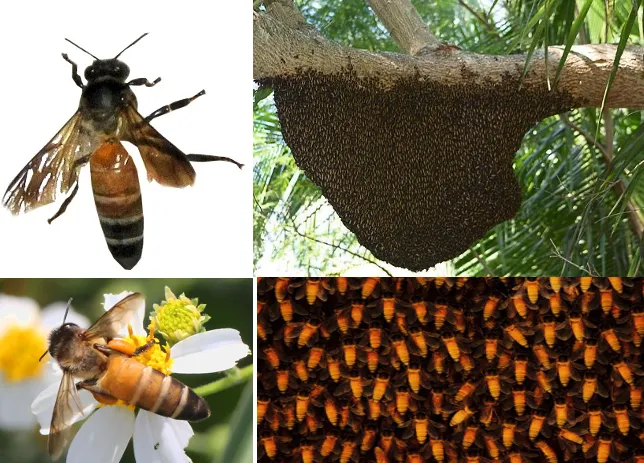
| Feature | Detail |
|---|---|
| Family | Apidae |
| Nature | Wild -- cannot be domesticated |
| Nesting | Single comb in open (about 6 ft x 3 ft), on tree branches, cliffs, buildings |
| Size | Largest among all Indian bee species |
| Temperament | Ferocious and difficult to rear |
| Honey yield | 36 kg/year/hive -- highest individual yield |
| Behaviour | Frequently shifts colony location (migratory) |
2. Little Bee -- Apis florea
| Feature | Detail |
|---|---|
| Family | Apidae |
| Nature | Wild -- not rearable |
| Nesting | Single comb in open, palm-sized, in bushes, hedges, buildings |
| Size | Smallest among all Apis species |
| Honey yield | 0.5 kg/year/hive -- commercially insignificant |
| Altitude limit | Only in plains, not above 450 m |
| Behaviour | Frequently absconds at slightest disturbance |
3. Indian Bee -- Apis cerana indica
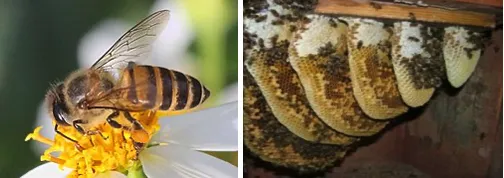
| Feature | Detail |
|---|---|
| Family | Apidae |
| Also known as | Asian Bee |
| Nature | Domesticable -- reared in wooden hives |
| Nesting | Multiple parallel combs in darkness (cavities, tree hollows) |
| Size | Larger than Little Bee, smaller than Italian Bee |
| Honey yield | 6-8 kg/year/hive |
| Temperament | More prone to swarming and absconding |
| Origin | Native to India/Asia -- well adapted to local conditions |
4. Italian Bee -- Apis mellifera
| Feature | Detail |
|---|---|
| Family | Apidae |
| Also known as | European Bee |
| Nature | Domesticated -- reared commercially |
| Nesting | Multiple parallel combs in darkness (like Indian Bee) |
| Size | Larger than Indian Bee, smaller than Rock Bee |
| Honey yield | 35 kg/year/hive -- about 5x the Indian Bee |
| Temperament | Less prone to swarming and absconding |
| Imported to India | 1962-1964 from Italy |
- Considered the best bee for commercial beekeeping under Indian conditions due to superior yield, gentle temperament, and ease of management.
- After 2005, India's honey production grew exponentially due to large-scale A. mellifera rearing.
5. Stingless Bee -- Melipona irridipennis
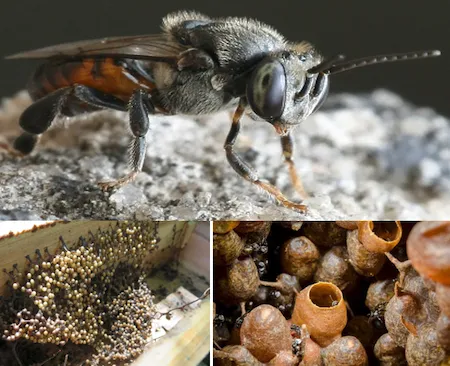
| Feature | Detail |
|---|---|
| Family | Meliponidae (not Apidae) |
| Also known as | Dammer Bee |
| Sting | Vestigial (non-functional) |
| Rearing practice | Called Meliporiculture |
| Comb material | Cerumen (beeswax + plant resin) |
| Comb orientation | Horizontal combs (except Trigona staudingeri which has vertical combs) |
| Special value | Honey prized for unique medicinal properties and higher market price |
Master Comparison Table
IMPORTANT
This table is frequently tested in IBPS, NABARD, and ICAR exams. Memorise the honey yield order: Rock Bee (36 kg) > Italian Bee (35 kg) > Indian Bee (6-8 kg) > Little Bee (0.5 kg).
| Feature | Rock Bee | Little Bee | Indian Bee | Italian Bee | Stingless Bee |
|---|---|---|---|---|---|
| Scientific name | A. dorsata | A. florea | A. cerana indica | A. mellifera | M. irridipennis |
| Family | Apidae | Apidae | Apidae | Apidae | Meliponidae |
| Size | Largest | Smallest | Medium | Large | Very small |
| Comb type | Single, open | Single, open | Multiple, parallel | Multiple, parallel | Horizontal (cerumen) |
| Domesticable? | No | No | Yes | Yes | Yes |
| Honey yield/year | 36 kg | 0.5 kg | 6-8 kg | 35 kg | Very low |
| Swarming tendency | Migratory | Frequent absconding | High | Low | Low |
| Commercial use | Wild harvest | Negligible | Traditional beekeeping | Best for commercial | Medicinal honey |
Exam Tips and Mnemonics
TIP
Size order (smallest to largest): "Florea Cerana Mellifera Dorsata" -- Four Cats Make Din.
TIP
Which bees build single combs in open? Rock Bee (dorsata) and Little Bee (florea). Which build parallel combs in cavities? Indian Bee (cerana) and Italian Bee (mellifera). Remember: "Open = wild, Cavity = manageable."
TIP
Italian Bee imported to India: 1962-64. Remember: "62-64 = Mellifera". Best bee for commercial beekeeping = A. mellifera.
Summary Table
| Key Fact | Answer |
|---|---|
| Order of all honey bees | Hymenoptera |
| Highest honey yield per hive | Rock Bee (36 kg) -- but wild, not manageable |
| Best for commercial beekeeping | Italian Bee (A. mellifera) -- 35 kg/year |
| Native Indian bee | Apis cerana indica |
| Stingless bee rearing | Meliporiculture |
| Italian bee import year | 1962-1964 |
| Little bee altitude limit | Not above 450 m |
| Only Meliponidae species | Stingless Bee (Dammer Bee) |
References
1 source
References
Summary Cheat Sheet
| Concept / Topic | Key Details |
|---|---|
| Order of all honey bees | Hymenoptera |
| Honey-producing families | Apidae, Meliponidae, Bombidae |
| Rock Bee (Apis dorsata) | Largest species; wild; single comb in open; 36 kg/year |
| Little Bee (Apis florea) | Smallest Apis; wild; 0.5 kg/year; altitude limit 450 m |
| Indian Bee (A. cerana indica) | Domesticable; parallel combs in darkness; 6-8 kg/year; prone to swarming |
| Italian Bee (A. mellifera) | Best for commercial beekeeping; 35 kg/year; less swarming; imported 1962-64 |
| Stingless Bee (M. irridipennis) | Family Meliponidae; Dammer Bee; vestigial sting; Meliporiculture |
| Stingless Bee – comb material | Cerumen (beeswax + plant resin); horizontal combs |
| Single comb in open (wild) | A. dorsata (Rock Bee) and A. florea (Little Bee) |
| Parallel combs in cavities | A. cerana indica and A. mellifera — suited for movable-frame hives |
| Honey yield order | Rock Bee (36) > Italian (35) > Indian (6-8) > Little (0.5) kg/year |
| Size order (small → large) | florea → cerana → mellifera → dorsata |
| Italian Bee import year | 1962-1964 from Italy |
| After 2005 | India's honey production grew exponentially due to A. mellifera rearing |
| Rock Bee behaviour | Ferocious; frequently migrates colony location |
| Little Bee behaviour | Frequently absconds at slightest disturbance |
TIP
Next: Lesson 03 covers the three castes of a bee colony -- Queen, Worker, and Drone -- their duties, haplodiploidy, and the life cycle.