🥻 Sericulture: Silk Farming in India
Introduction to sericulture, silk as a protein fibre, India's production status, key institutes, and the importance of silk industry for rural economy
Having completed the apiculture sub-section, we now move to the second major beneficial insect industry -- sericulture, the science of silk production.
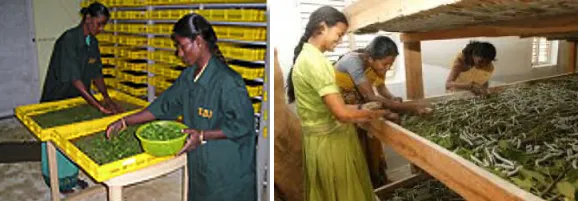
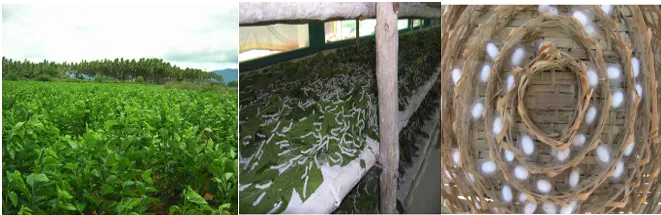
In Ramanagara district of Karnataka, thousands of farming families rear silkworms on fresh mulberry leaves harvested from their own fields, then sell the cocoons at the local silk market. This integrated farm activity -- growing mulberry trees, rearing silkworms, and harvesting cocoons -- is sericulture, one of the most labour-intensive and rewarding agro-industries in India. Understanding sericulture is essential for banking, NABARD, and agriculture exams because of its significance for rural employment, exports, and tribal livelihoods.
This lesson covers:
- Definition and components of sericulture
- Silk as a fibre -- composition and discovery
- India's production status -- types, states, and global ranking
- Key institutes -- CSB, CSRTI
- Why sericulture matters for rural livelihoods
What is Sericulture?
- Sericulture (from Greek sericos = silk + English culture = rearing) is the cultivation of silkworms for commercial production of raw silk.
- It is an agro-based industry -- silkworm rearing is agricultural in nature, while silk reeling, twisting, and weaving are industrial in nature.
- The entire chain involves:
- Moriculture -- cultivation of mulberry plants for silkworm feed
- Silkworm rearing -- managing larvae from egg to cocoon
- Reeling and weaving -- extracting and processing the silk filament
What is Silk?
| Property | Detail |
|---|---|
| Nature | Protein filament (animal fibre) -- not a carbohydrate |
| Secreted by | Labial glands (modified salivary glands) of silkworm larvae |
| Filament length | Up to 1,600 metres from a single cocoon |
| Only natural | Filament fibre -- continuous thread, unlike cotton/wool which must be spun from short staple fibres |
| Thermoregulation | Does not conduct heat; keeps body warm in cold and cool in hot weather |
| Title | Queen of Textiles -- unparalleled lustre, drape, dye affinity, and durability |
Discovery of Silk
- According to Chinese legend, Empress Xi Ling Shi (wife of Yellow Emperor Huang Di) discovered silk around 2700 BC when a cocoon fell into her tea cup and the thread began to unravel.
- China maintained a monopoly for centuries; smuggling silkworm eggs was a capital offence.
- The secret eventually spread along the Silk Road to India, Japan, and the rest of the world.
India's Unique Position
IMPORTANT
Pro Content Locked
Upgrade to Pro to access this lesson and all other premium content.
₹99 charged monthly · Cancel anytime
- All Agriculture & Banking Courses
- AI Lesson Questions (100/day)
- AI Doubt Solver (50/day)
- Glows & Grows Feedback (30/day)
- AI Section Quiz (20/day)
- 22-Language Translation (100/day)
- Recall Questions (20/day)
- AI Quiz (15/day)
- AI Quiz Paper Analysis (100/day)
- AI Step-by-Step Explanations (100/day)
- Spaced Repetition Recall (FSRS)
- AI Tutor
- Immersive Text Questions
- Audio Lessons — Hindi & English
- Mock Tests & Previous Year Papers
- Summary & Mind Maps
- XP, Levels, Leaderboard & Badges
- Generate New Classrooms
- Voice AI Teacher (AgriDots Live)
- AI Revision Assistant
- Knowledge Gap Analysis
- Interactive Revision (LangGraph)
🔒 Secure via Razorpay · Cancel anytime · No hidden fees
Having completed the apiculture sub-section, we now move to the second major beneficial insect industry -- sericulture, the science of silk production.
In Ramanagara district of Karnataka, thousands of farming families rear silkworms on fresh mulberry leaves harvested from their own fields, then sell the cocoons at the local silk market. This integrated farm activity -- growing mulberry trees, rearing silkworms, and harvesting cocoons -- is sericulture, one of the most labour-intensive and rewarding agro-industries in India. Understanding sericulture is essential for banking, NABARD, and agriculture exams because of its significance for rural employment, exports, and tribal livelihoods.
This lesson covers:
- Definition and components of sericulture
- Silk as a fibre -- composition and discovery
- India's production status -- types, states, and global ranking
- Key institutes -- CSB, CSRTI
- Why sericulture matters for rural livelihoods
What is Sericulture?
- Sericulture (from Greek sericos = silk + English culture = rearing) is the cultivation of silkworms for commercial production of raw silk.
- It is an agro-based industry -- silkworm rearing is agricultural in nature, while silk reeling, twisting, and weaving are industrial in nature.
- The entire chain involves:
- Moriculture -- cultivation of mulberry plants for silkworm feed
- Silkworm rearing -- managing larvae from egg to cocoon
- Reeling and weaving -- extracting and processing the silk filament
What is Silk?
| Property | Detail |
|---|---|
| Nature | Protein filament (animal fibre) -- not a carbohydrate |
| Secreted by | Labial glands (modified salivary glands) of silkworm larvae |
| Filament length | Up to 1,600 metres from a single cocoon |
| Only natural | Filament fibre -- continuous thread, unlike cotton/wool which must be spun from short staple fibres |
| Thermoregulation | Does not conduct heat; keeps body warm in cold and cool in hot weather |
| Title | Queen of Textiles -- unparalleled lustre, drape, dye affinity, and durability |
Discovery of Silk
- According to Chinese legend, Empress Xi Ling Shi (wife of Yellow Emperor Huang Di) discovered silk around 2700 BC when a cocoon fell into her tea cup and the thread began to unravel.
- China maintained a monopoly for centuries; smuggling silkworm eggs was a capital offence.
- The secret eventually spread along the Silk Road to India, Japan, and the rest of the world.
India's Unique Position
IMPORTANT
India is the only country producing all five commercial silks: Mulberry, Tropical Tasar, Oak Tasar, Eri, and Muga. Muga silk (golden yellow) is exclusively produced in India (Assam).
Production Status
| Parameter | Data |
|---|---|
| World's #1 silk producer | China -- 68,600 MT (2019-20) |
| World's #2 silk producer | India -- 36,152 MT |
| India's global share | China + India account for over 90% of world silk |
| India's #1 state | Karnataka -- 11,143 MT |
| #2 state | Andhra Pradesh -- 7,962 MT |
| #3 state | Tamil Nadu -- 2,154 MT |
| #4 state | Telangana -- 297 MT |
| Largest consumer of silk | India |
| Silk city of India | Bhagalpur, Bihar (famous for Tussar/Tussah silk) |
| Employment | ~8.25 million persons (2015-16) |
| Textile sector ranking | 2nd largest employer in India (after agriculture) |
Silk Production Share by Type
| Silk Type | Share |
|---|---|
| Mulberry | 71.8% |
| Eri | 17.8% |
| Tasar | 9.9% |
| Muga | 0.6% |
Key Producing States
- Mulberry sericulture (5 main states): Karnataka, Andhra Pradesh, Tamil Nadu, Assam, West Bengal, Jharkhand
- Northeast produces 4 varieties (Mulberry, Oak Tasar, Muga, Eri) -- contributes 18% of India's total silk
Key Institutes
| Institute | Location | Under |
|---|---|---|
| Central Silk Board (CSB) | Bangalore | Ministry of Textiles |
| Central Silk Technological Research Institute | Bangalore | CSB |
| Central Sericultural Research & Training Institute (CSRTI) | Mysore | CSB |
- CSB is a statutory body established by Act of Parliament in 1948 -- responsible for overall development of the sericulture industry in India.
Why Sericulture Matters for Rural India
| Advantage | Explanation |
|---|---|
| Complementary to farming | Uses bunds, borders, marginal lands for mulberry; does not sacrifice main crop area |
| Low gestation, high returns | Quick income generation cycle |
| Women-friendly | Leaf harvesting, worm rearing, cocoon harvesting can be done near home |
| Employment intensive | 8.25 million persons employed |
| Eco-friendly | Mulberry trees improve soil, prevent erosion; based on renewable biological resources |
| Ideal for weaker sections | Low investment, high labour content suits marginal communities |
| Rural reconstruction tool | Creates income across multiple value chain stages |
Summary Table
| Key Fact | Answer |
|---|---|
| Sericulture definition | Cultivation of silkworms for raw silk production |
| Silk is | Protein filament (animal fibre) |
| Silk secreted by | Labial glands (modified salivary glands) of larvae |
| Max filament length | 1,600 m per cocoon |
| Silk title | Queen of Textiles |
| India produces | All 5 commercial silks (only country) |
| #1 producer globally | China |
| #2 producer globally | India |
| #1 state in India | Karnataka |
| Largest silk consumer | India |
| Silk city of India | Bhagalpur, Bihar |
| Central Silk Board | Bangalore (Ministry of Textiles) |
| Employment | 8.25 million persons |
| Muga silk exclusive to | India (Assam) |
| Mulberry silk share | 71.8% |
TIP
Quick Exam Recall: China = #1 producer, India = #2 producer AND #1 consumer. Karnataka = #1 Indian state. Silk City = Bhagalpur. CSB = Bangalore (Ministry of Textiles). India = only country producing all 5 silks. Muga = exclusive to India/Assam.
References
1 source
References
Sericulture Economics and Calendar
Why sericulture is attractive for small farmers:
| Parameter | Detail |
|---|---|
| Investment | ₹30,000-50,000 for 1 acre mulberry garden setup |
| Returns | ₹60,000-1,00,000/acre/year (4-5 crops/year) |
| Payback period | 1-2 years |
| Employment | 11 person-days per kg of raw silk (most labour-intensive agri activity) |
| Women's role | 60% of sericulture workforce is women |
| Land needed | Even 0.5 acre mulberry garden is viable |
Seasonal calendar (South India — bivoltine):
| Month | Activity |
|---|---|
| Jan-Feb | Pruning mulberry; 1st crop rearing starts |
| Mar-Apr | 1st crop harvest (cocoons); sell to reeling units |
| May-Jun | 2nd crop; summer — manage temperature (max 28°C) |
| Jul-Aug | 3rd crop; monsoon — disease risk highest (muscardine, flacherie) |
| Sep-Oct | 4th crop; best quality silk (cool weather) |
| Nov-Dec | 5th crop possible; prepare for next year's pruning |
Summary Cheat Sheet
| Concept / Topic | Key Details |
|---|---|
| Sericulture definition | Cultivation of silkworms for raw silk production (Greek sericos + culture) |
| Three components | Moriculture (mulberry) + Silkworm rearing + Reeling & weaving |
| Silk nature | Protein filament (animal fibre) — NOT carbohydrate |
| Silk secreted by | Labial glands (modified salivary glands) of larvae |
| Max filament length | Up to 1,600 m per cocoon |
| Silk title | Queen of Textiles |
| Silk discovery | Empress Xi Ling Shi (~2700 BC, China) |
| India's unique position | Only country producing all 5 commercial silks |
| Five silks | Mulberry, Tropical Tasar, Oak Tasar, Muga, Eri |
| Muga silk | Exclusive to India (Assam); golden yellow |
| #1 silk producer (world) | China (68,600 MT) |
| #2 silk producer (world) | India (36,152 MT) |
| China + India share | Over 90% of world silk |
| #1 state in India | Karnataka (11,143 MT) |
| Largest silk consumer | India |
| Silk city of India | Bhagalpur, Bihar (Tussar silk) |
| Employment | ~8.25 million persons |
| Textile sector ranking | 2nd largest employer after agriculture |
| Mulberry silk share | 71.8% of India's total |
| Central Silk Board (CSB) | Bangalore; Ministry of Textiles; statutory body since 1948 |
| CSRTI | Mysore; under CSB |
Additional Exam Facts — Silkworm Rearing Terms
| Term | Definition |
|---|---|
| Chalki rearing | Rearing of Fifth instar larvae — the final and most demanding instar requiring maximum leaf supply |
| Kengo | Newly hatched silkworm larva (first instar after hatching from egg) |
| Nb-18 | A bi-voltine silkworm breed — produces two broods per year |
| Kanua-2 | Variety of Mulberry — the host plant of the mulberry silkworm |
| Black boxing | Killing pupae inside cocoons to prevent adult emergence and preserve silk filament continuity |
| Green cocoon | Cocoon with pupa just after harvesting — the fresh, live state of the harvested cocoon |
| Denier | Unit of silk fineness — weight (in grams) of 9000 metres of silk thread |
| Diapause stage in mulberry silkworm | Occurs in Egg stage — embryo diapause determines voltinism |
- Silk gland = modified Labial gland (salivary gland) — produces the silk protein (fibroin and sericin)
- Grasserie disease is caused by NPV (Nuclear Polyhedrosis Virus) — Bombyx mori NPV (BmNPV)
TIP
"Kengo in the Fifth goes Black" — Kengo (newly hatched larva), 5th instar (Chalki rearing), Black boxing (killing pupae to preserve silk). Three silkworm lifecycle facts in one mnemonic.
TIP
Next: Lesson 02 covers the five types of silkworms -- Mulberry, Tropical Tasar, Oak Tasar, Muga, and Eri -- their host plants, silk characteristics, and classification.