🏭 Castor -- India's Industrial Oilseed Powerhouse (Ricin, Turkey Red Oil & Cultivation)
Complete guide to castor (Ricinus communis) -- ricinoleic acid, ricin toxin, Turkey Red Oil, Euphorbiaceae family, GCH-3 first hybrid, Gujarat as leading state, and all exam-important cultivation facts.
Walk through the arid plains of Gujarat's Banaskantha district during kharif season, and you will see vast stretches of castor -- a tall, hardy crop thriving where most oilseeds would fail. India is the largest producer and exporter of castor oil in the world, and Gujarat alone contributes over 80% of national output. Castor is unique among oilseeds: its oil is not edible, yet it drives a multi-billion-dollar industrial chain from lubricants and paints to cosmetics and hydraulic fluids. This chapter covers every testable aspect of this remarkable industrial crop.
This lesson covers:
- Botanical profile -- Euphorbiaceae family, cross-pollinated, monoecious
- Composition and uses -- ricinoleic acid (>90%), ricin toxin, Turkey Red Oil
- Climate and cultivation -- drought tolerance, Gujarat dominance
- Varieties -- GCH 3 (world's first castor hybrid)
- Harvesting -- 2-3 pickings as capsules mature progressively
Botanical Profile
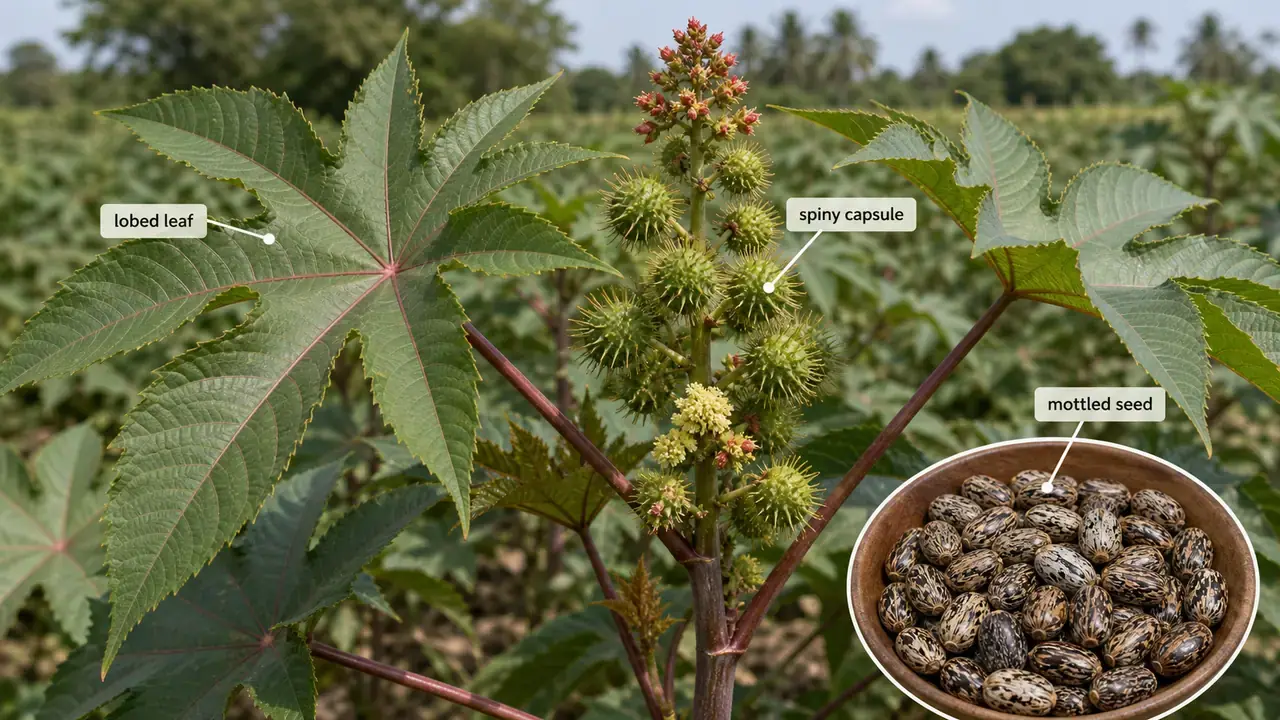
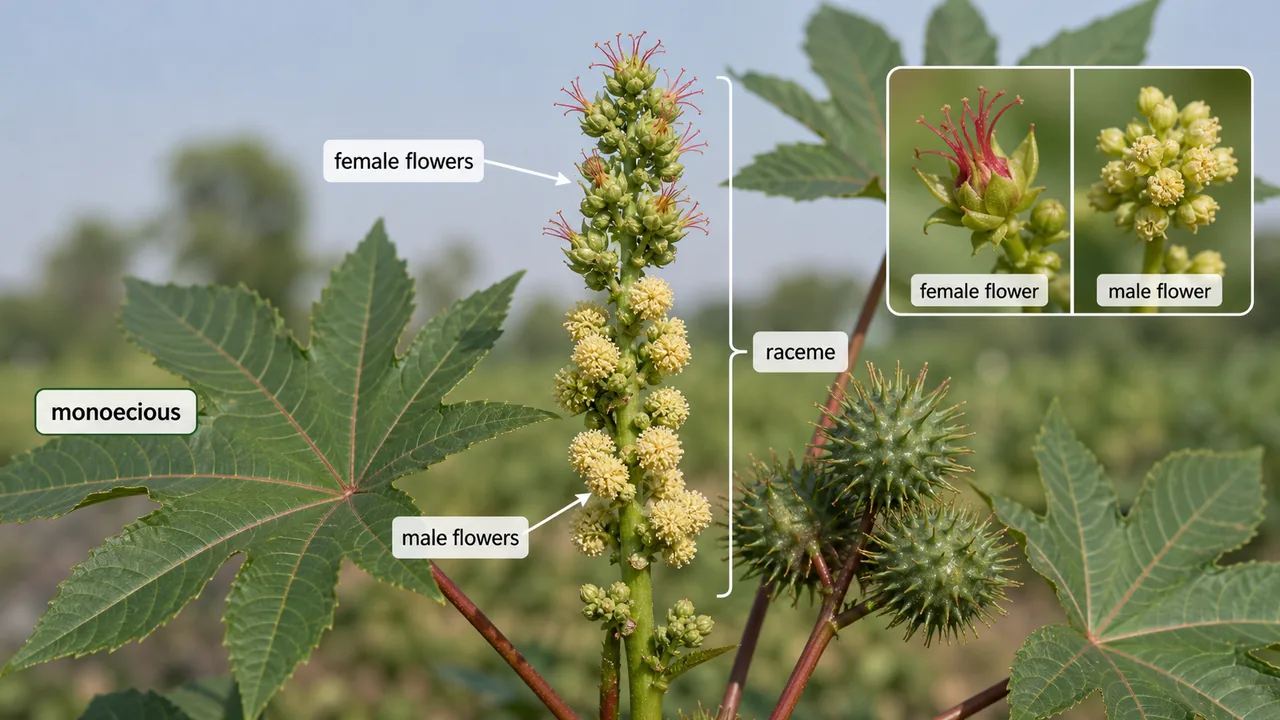
Castor belongs to the Euphorbiaceae family -- distinctly different from edible oilseeds (which are mostly legumes or composites). It is a cross-pollinated crop with a monoecious flower arrangement (male flowers below, female flowers above on the same inflorescence).
Pro Content Locked
Upgrade to Pro to access this lesson and all other premium content.
Pay once valid for one year · Effective ₹99/month
- All Agriculture & Banking Courses
- AI Lesson Questions (100/day)
- AI Doubt Solver (50/day)
- Glows & Grows Feedback (30/day)
- AI Section Quiz (20/day)
- 22-Language Translation (100/day)
- Recall Questions (20/day)
- AI Quiz (15/day)
- AI Quiz Paper Analysis (100/day)
- AI Step-by-Step Explanations (100/day)
- Spaced Repetition Recall (FSRS)
- AI Tutor
- Immersive Text Questions
- Audio Lessons — Hindi & English
- Mock Tests & Previous Year Papers
- Summary & Mind Maps
- XP, Levels, Leaderboard & Badges
- Generate New Classrooms
- Voice AI Teacher (AgriDots Live)
- AI Revision Assistant
- Knowledge Gap Analysis
- Interactive Revision (LangGraph)
🔒 Secure one-time yearly payment via Razorpay · No hidden fees
Walk through the arid plains of Gujarat's Banaskantha district during kharif season, and you will see vast stretches of castor -- a tall, hardy crop thriving where most oilseeds would fail. India is the largest producer and exporter of castor oil in the world, and Gujarat alone contributes over 80% of national output. Castor is unique among oilseeds: its oil is not edible, yet it drives a multi-billion-dollar industrial chain from lubricants and paints to cosmetics and hydraulic fluids. This chapter covers every testable aspect of this remarkable industrial crop.
This lesson covers:
- Botanical profile -- Euphorbiaceae family, cross-pollinated, monoecious
- Composition and uses -- ricinoleic acid (>90%), ricin toxin, Turkey Red Oil
- Climate and cultivation -- drought tolerance, Gujarat dominance
- Varieties -- GCH 3 (world's first castor hybrid)
- Harvesting -- 2-3 pickings as capsules mature progressively
Botanical Profile
Castor belongs to the Euphorbiaceae family -- distinctly different from edible oilseeds (which are mostly legumes or composites). It is a cross-pollinated crop with a monoecious flower arrangement (male flowers below, female flowers above on the same inflorescence).
| Parameter | Details |
|---|---|
| Botanical name | Ricinus communis |
| Family | Euphorbiaceae |
| Chromosome number | 2n = 20 |
| Origin | East Africa (Ethiopia) |
| Pollination | Cross-pollinated (monoecious -- male flowers below, female above) |
| Inflorescence | Raceme (spike-like) |
| Fruit | Spiny capsule with 3 seeds |
| Crop type | Industrial oilseed crop |
Composition and Uses
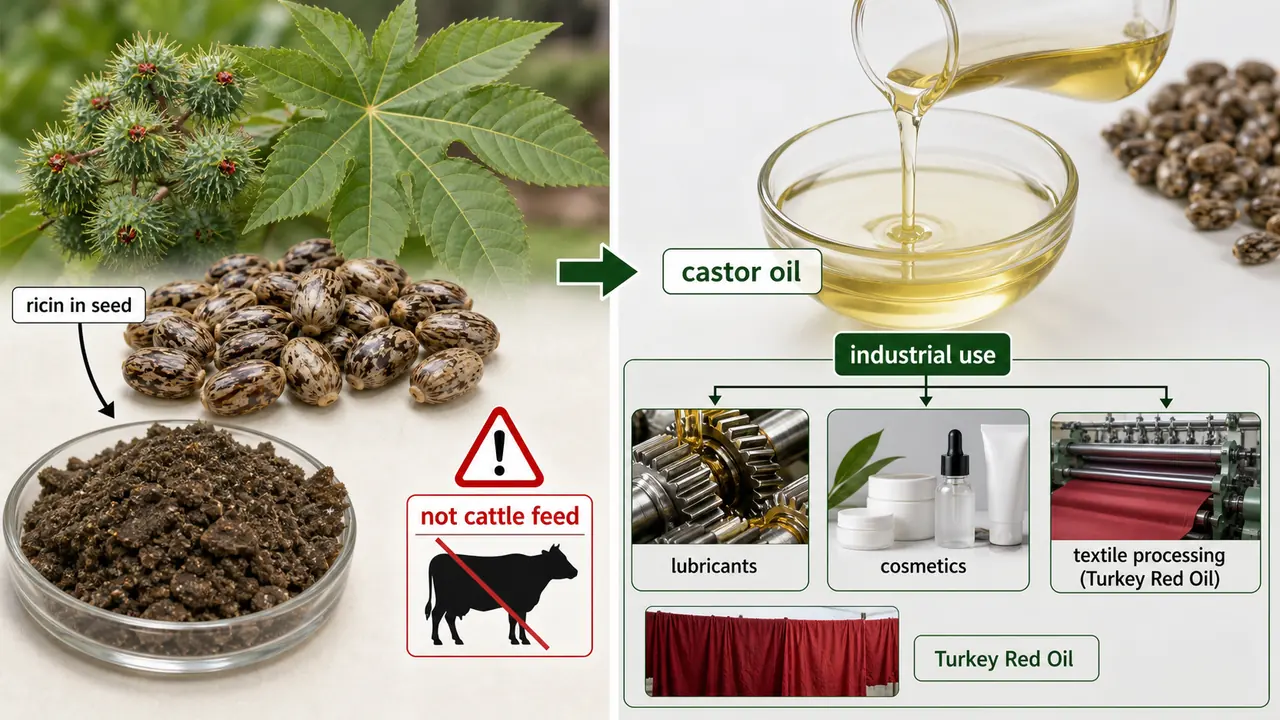
Unlike most oilseed crops, castor oil is not edible due to the presence of the deadly toxin ricin in seeds. Its value lies entirely in industrial applications driven by the unique chemistry of ricinoleic acid.
| Component | Details |
|---|---|
| Oil content | 45-52% |
| Key fatty acid | Ricinoleic acid (>90%) -- a unique hydroxyl fatty acid |
| Toxic protein | Ricin -- a highly toxic poisonous alkaloid in seeds |
| Turkey Red Oil | Sulphonated castor oil -- used in textile dyeing and finishing |
Industrial Applications
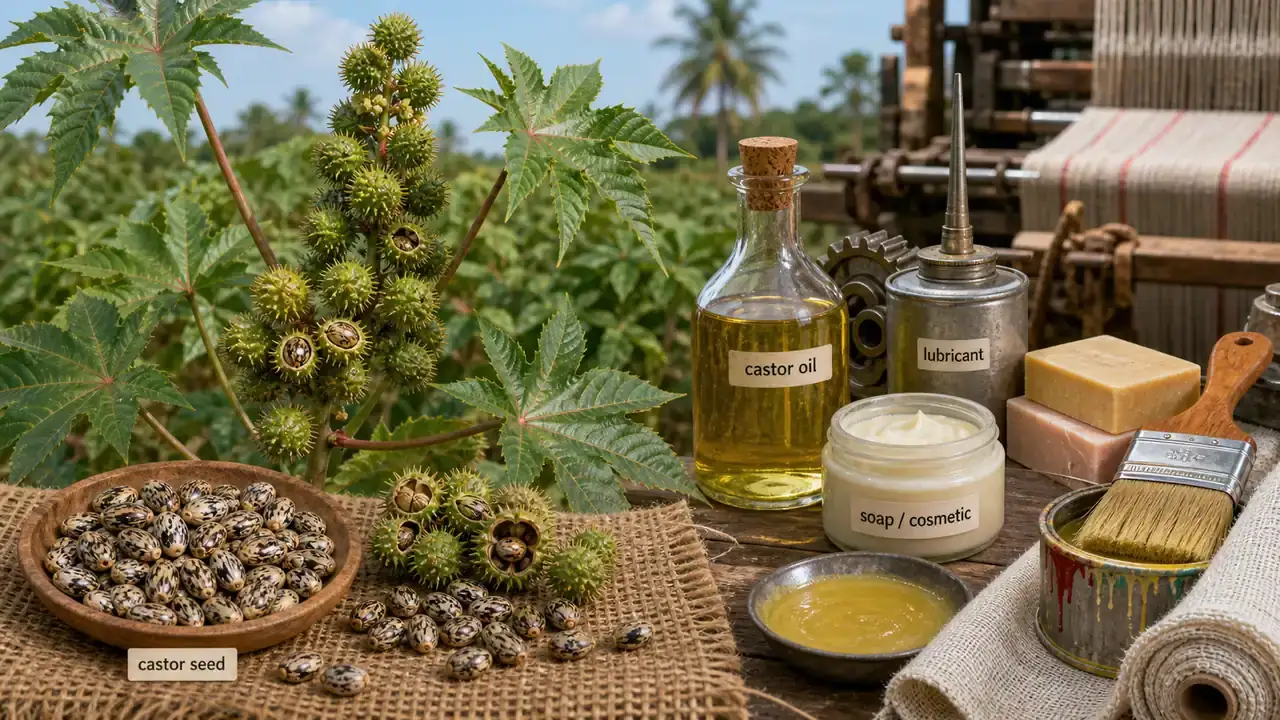
- Lubricants -- high-viscosity oil for engines and machinery
- Paints and varnishes -- excellent drying properties
- Soaps and cosmetics -- moisturising properties of ricinoleic acid
- Pharmaceuticals -- purgative, medicinal uses
- Castor cake -- used as organic manure (not suitable as cattle feed due to ricin). De-oiled cake contains about 5.5% N, 1.8% P2O5, 1.0% K2O.
Climate and Soil Requirements
| Parameter | Details |
|---|---|
| Climate | Tropical (can grow in sub-tropical areas) |
| Optimum temperature | 20-26°C |
| Rainfall | 500-750 mm |
| Drought tolerance | Highly drought tolerant (deep tap root system) |
| Sensitivity | Sensitive to frost and waterlogging |
| Soil | Well-drained sandy loam to loam |
| pH | 5.5-6.5 |
Cultivation Practices
| Parameter | Details |
|---|---|
| Seed rate | 12-15 kg/ha (hybrids: 6-8 kg/ha) |
| Spacing | 90 x 60 cm (irrigated), 120 x 60 cm (rainfed) |
| Sowing time | Kharif: June-July |
| Fertilizers (NPK) | 80:40:0 kg/ha (irrigated) |
| Irrigations | 4-5 irrigations at critical stages |
| Yield | 15-25 q/ha (irrigated), 8-12 q/ha (rainfed) |
Insect-Pest
Castor is often revised for industrial uses and hybrid history, but exam books also repeatedly attach a small pest complex to the crop. The important point is to separate the defoliator, the shoot-and-capsule borer, and the sap feeder.
| Pest | Key Feature |
|---|---|
| Castor semilooper (Achaea janata) | Larvae feed voraciously on leaves and may leave only midribs and stalks behind |
| Shoot and capsule borer (Spodoptera litura) | Larvae web the terminal shoot and can bore into tender shoots and capsules |
| Whitefly | Nymphs and adults suck sap from the lower surface of leaves |
TIP
Castor semilooper should be remembered as the classic defoliator, while Spodoptera litura is the crop's more structural pest because it injures terminal shoots and capsules.
Important Varieties
| Type | Varieties |
|---|---|
| Varieties | Aruna, Bhagya, Sobhaya, Tarai 3, 4, RC 8, GAUC 1, TMV 5, 6, Kranti, AKC 1, Kiran, Haritha, 48-1 (Jwala) |
| Hybrids | GAUCH 1, GCH 2, 3, 4, 5, 6, 7, 17, 32, 519, RCH 1 |
| 1st castor hybrid in the world | GCH 3 (TSP 10 R x JI 15) |
TIP
Exam mnemonic -- "GCH 3 = First": The world's first castor hybrid was GCH 3, developed at Gujarat Agricultural University. Gujarat is also India's #1 castor state. Think Gujarat = GCH = Global first.
Harvesting
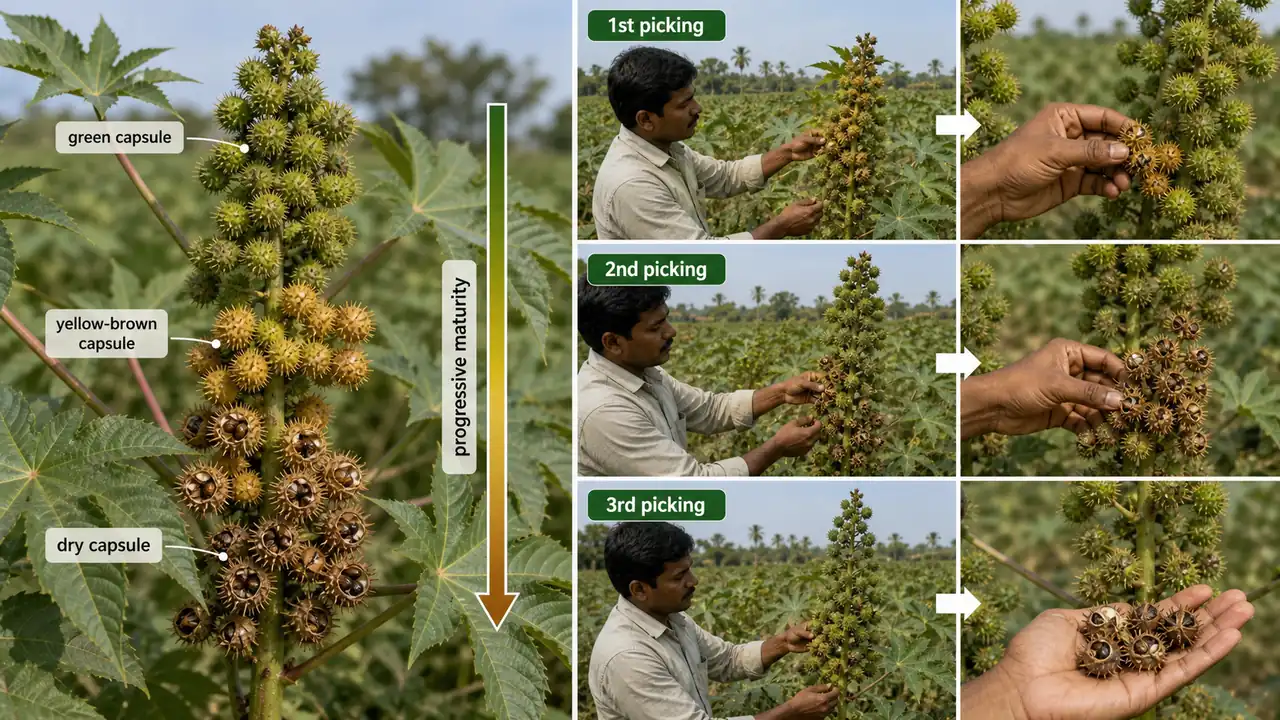
- Capsules are harvested when they turn yellowish-brown and start drying
- Harvesting is done in 2-3 pickings as capsules mature at different times
- Seeds are separated by drying and threshing
Summary Table -- Castor Key Exam Facts
| Fact | Details |
|---|---|
| Family | Euphorbiaceae |
| Origin | East Africa (Ethiopia) |
| Chromosome | 2n = 20 |
| Oil content | 45-52% |
| Key fatty acid | Ricinoleic acid (>90%) |
| Toxin | Ricin (poisonous alkaloid) |
| Turkey Red Oil | Sulphonated castor oil (textile use) |
| World's first hybrid | GCH 3 |
| India's position | Largest producer and exporter |
| Leading state | Gujarat |
| Pollination | Cross-pollinated (monoecious) |
| Castor cake | Organic manure (5.5% N) -- NOT cattle feed |
IMPORTANT
Castor key exam facts: Ricinoleic acid >90% (unique hydroxyl fatty acid), ricin is a deadly toxin, Turkey Red Oil = sulphonated castor oil, Euphorbiaceae family (NOT a legume), cross-pollinated crop. India is the largest producer and exporter of castor oil in the world. Gujarat is the leading state.
Summary Cheat Sheet
| Concept / Topic | Key Details |
|---|---|
| Botanical name | Ricinus communis |
| Family | Euphorbiaceae (NOT a legume) |
| Chromosome | 2n = 20 |
| Origin | East Africa (Ethiopia) |
| Pollination | Cross-pollinated (monoecious — male below, female above) |
| Oil content | 45-52% |
| Key fatty acid | Ricinoleic acid (>90%) — unique hydroxyl fatty acid |
| Toxic protein | Ricin — highly poisonous alkaloid |
| Turkey Red Oil | Sulphonated castor oil — used in textile dyeing |
| India's position | Largest producer and exporter of castor oil globally |
| Leading state | Gujarat (>80% of national output) |
| World's first castor hybrid | GCH 3 (TSP 10 R × JI 15) |
| Castor cake | Organic manure (5.5% N) — NOT cattle feed (ricin) |
| Optimum temperature | 20-26°C |
| Rainfall | 500-750 mm; highly drought tolerant |
| Sensitivity | Frost and waterlogging |
| Seed rate | 12-15 kg/ha (hybrids: 6-8 kg/ha) |
| Nipping in castor | Removing terminal tip at 40-45 DAS to promote branching |
| Harvest sign | Capsules turn yellowish-brown; done in 2-3 pickings |
| Inflorescence | Raceme |
Lesson Doubts
Ask questions, get expert answers