🍄Mushroom Cultivation -- From Solan to Your Plate (Button, Oyster, Paddy Straw & Exam Facts)
Complete guide to mushroom cultivation -- button mushroom (Agaricus bisporus) dominates 85% of Indian production, six-step cultivation technology (spawn to fruiting), compost C:N ratios, casing with peat moss, oyster and paddy straw mushrooms, pests, diseases, and poisoning types for AFO/NABARD/ICAR exams.
From Forest Floor to Farm Income
In the cool hills of Solan, Himachal Pradesh — rightly called the Mushroom City of India — rows of climate-controlled growing rooms produce tonnes of white button mushrooms every winter. A farmer fills trays with composted wheat straw, mixes in grain-based spawn, covers the surface with a thin casing layer, and within three weeks the first flush of mushrooms pushes through. Mushroom cultivation is unique in agriculture: there is no soil, no sunlight, and no photosynthesis — instead, the crop feeds on decomposing organic matter in the dark.
This lesson covers:
- What mushrooms are — classification and edible types
- Button mushroom cultivation — the six-step technology (spawn to fruiting)
- Other commercial types — oyster and paddy straw mushrooms
- Pests, diseases, and poisoning — exam-critical identification facts
All sections are high-yield for IBPS AFO, NABARD, and ICAR exams.
What Is a Mushroom?
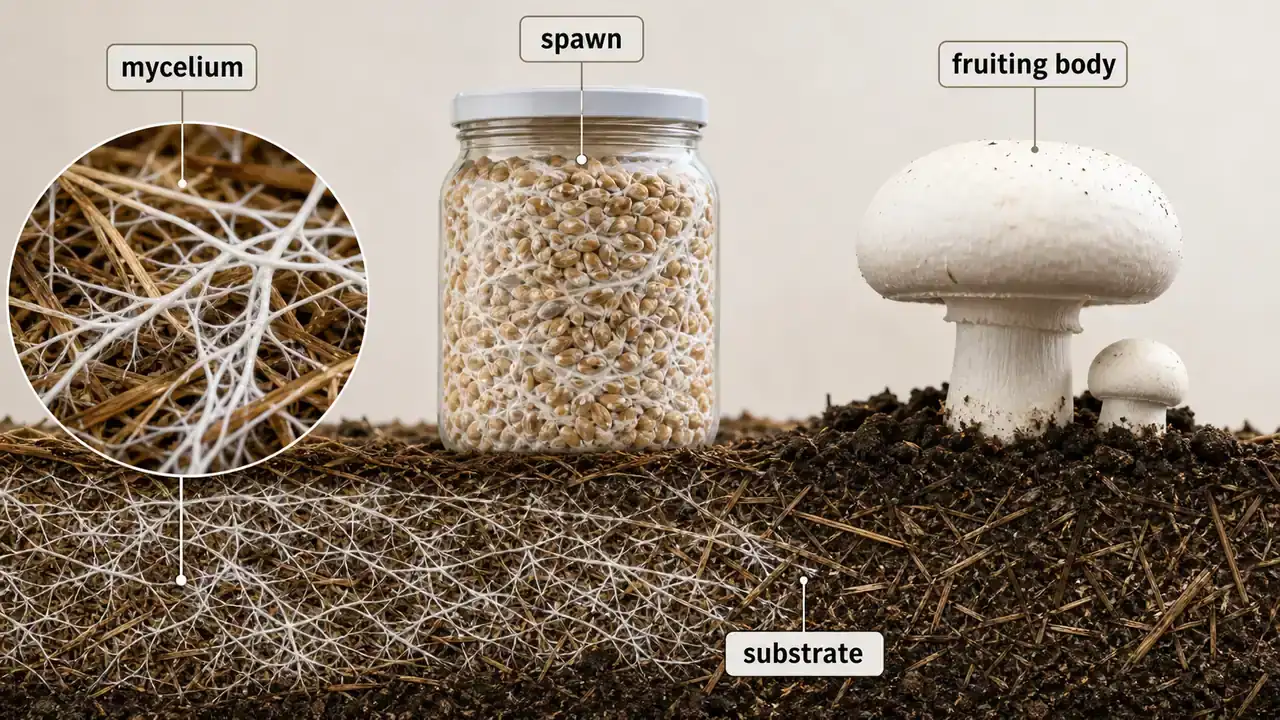
A mushroom is a fleshy fruiting body of certain fungi, arising from a network of mycelium (thread-like fungal cells) buried in the growing substrate. Mushrooms are not plants — they lack chlorophyll and cannot photosynthesise. Instead, they obtain nutrition by decomposing organic matter.
- Most edible mushrooms belong to the Sub-Division Basidiomycotina
- A few belong to Ascomycotina of Kingdom Fungi
- Mushroom City of India: Solan (Himachal Pradesh)
Classification of Edible Mushrooms
| Common Name | Scientific Name | Key Feature |
|---|---|---|
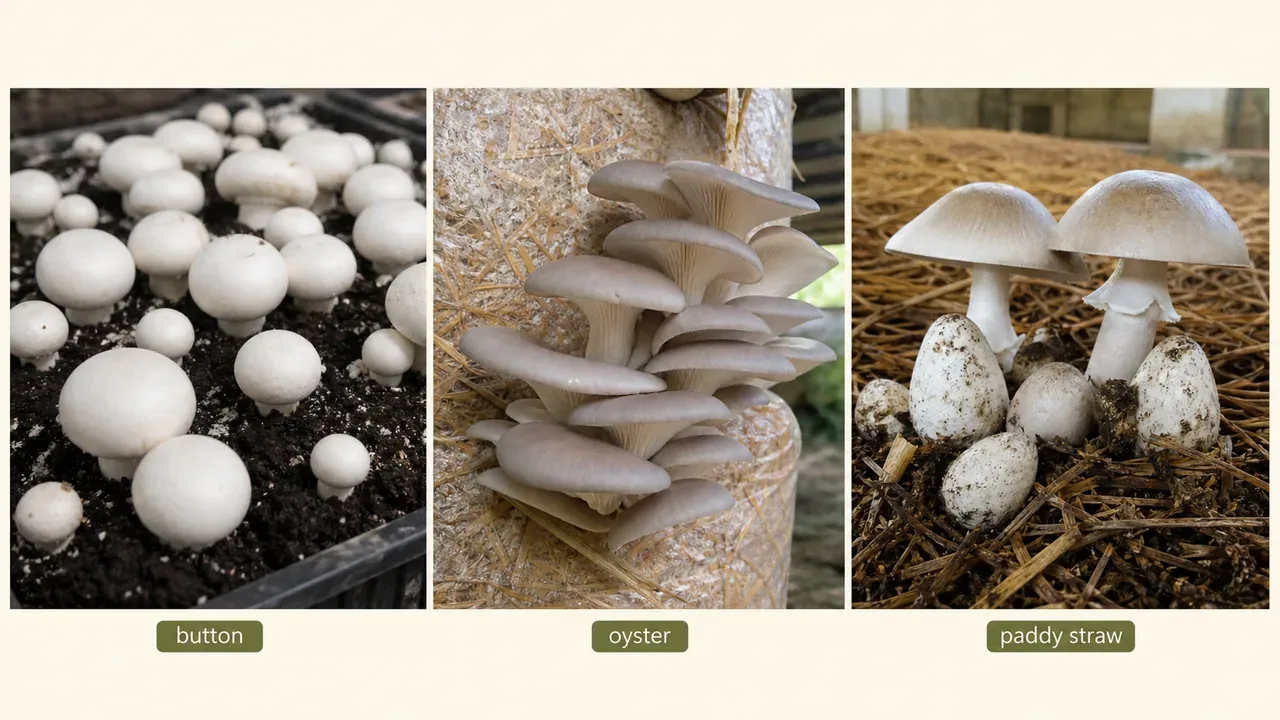
| Button mushroom | Agaricus bisporus | Most widely cultivated in the world; 85% of Indian production |
| Oyster mushroom | Pleurotus spp. | Easiest to cultivate; grows on a wide range of substrates |
| Paddy straw mushroom | Volvariella spp. | Tropical mushroom; grows at 28-35°C |
| Milky mushroom | Calocybe spp. | Suited to Indian tropical conditions |
| Shiitake mushroom | Lentinula spp. | Popular in East Asian cuisine |
| Jew’s ear mushroom | Auricularia sp. | Ear-shaped; used in Chinese cooking |
TIP
Mushroom names mnemonic — “BOPS-MJ”: Button (Agaricus), Oyster (Pleurotus), Paddy straw (Volvariella), Shiitake (Lentinula), Milky (Calocybe), Jew’s ear (Auricularia). For exams, the genus name is almost always tested alongside the common name.
Button Mushroom (Agaricus bisporus) — The Dominant Species
Key Facts
| Parameter | Details |
|---|---|
| Cap size | 3-16 cm |
| Natural habitat | Soil enriched with cow dung, horse dung, or forest litter in temperate climate |
| India’s share | 85% of total mushroom production |
| Season | Winter |
| Crops per year | 5-6 |
Nutritional Value
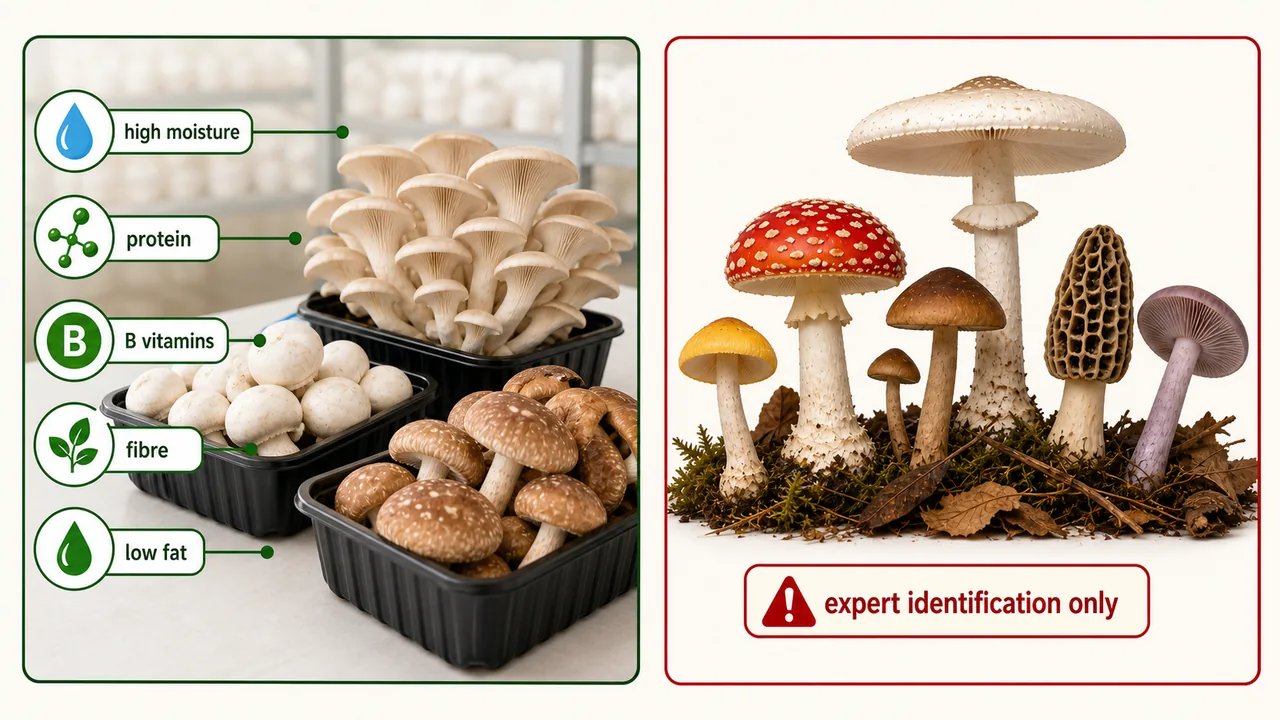
Button mushrooms are a low-calorie, high-protein food source with negligible fat:
| Nutrient | Content |
|---|---|
| Water | 90-92% (dry matter only 8-9%) |
| Protein | 3.92% |
| Crude fibre | 1.09% |
| Ash | 1.25% |
| Fat | 0.19% (very low) |
| Niacin | 56 mg per 100 g |
Growing Conditions — Vegetative vs Reproductive
The growing conditions for the two stages are opposite in temperature and CO2 requirements — a frequently tested distinction:
| Parameter | Vegetative Growth (Spawn Run) | Reproductive Growth (Fruiting) |
|---|---|---|
| Temperature | 20-28°C (avg. 24 +/- 2°C) | 12-18°C (avg. 16-18°C) |
| Relative Humidity | ~90% | 85-90% |
| CO2 | High (5,000-10,000 ppm) beneficial | Low (0.08-0.15%) favourable |
TIP
Temperature and CO2 mnemonic — “Veg = Warm + CO2 Up; Fruit = Cool + CO2 Down”: Vegetative growth (spawn run) needs warm temperature (24°C) and high CO2. Reproductive growth (fruiting) needs cool temperature (17°C) and low CO2. The two stages have exactly opposite requirements.
Six-Step Cultivation Technology
Button mushroom cultivation follows a precise sequence — each step creates the conditions needed for the next. Deviations in temperature, humidity, or CO2 at any stage can ruin the entire crop. Understanding this sequence is essential for both practical cultivation and exams.
The cultivation of button mushroom involves 6 sequential steps. Understanding this sequence is essential for exams:
Spawn Production —> Compost Preparation —> Spawning —> Spawn Running —> Casing —> Fruiting
Step 1: Spawn Production
- Spawn = the vegetative mycelial network of a mushroom developed after germination of fungal spores, grown on a convenient medium
- It comprises mycelium along with a supporting medium providing nutrition
- Master culture and spawn are produced on wheat or rye grains buffered with Calcium carbonate (CaCO3) and Calcium sulphate (CaSO4)
Think of spawn as the “seed” of mushroom cultivation. Just as a farmer needs quality seed for a good crop, quality spawn determines the success of mushroom production.
Step 2: Compost Preparation
The substrate for button mushroom is prepared from:
- Plant wastes: cereal straw, sugarcane bagasse, etc.
- Salts: urea, superphosphate, gypsum
- Supplements: rice bran, wheat bran
- Water
Key ratios and requirements:
| Parameter | Value |
|---|---|
| Dry substrate per 1 kg mushroom | 220 g |
| N:P:K per ton of compost | 6.6 : 2.0 : 5.0 kg (33:10:25) |
| C:N ratio at staking | 25-30 : 1 |
| C:N ratio in final compost | 16-17 : 1 |
NOTE
C:N ratio change (exam favourite): The C:N ratio decreases from 25-30:1 (at staking) to 16-17:1 (final compost) because carbon is consumed by microorganisms during composting while nitrogen is conserved. This drop in C:N ratio indicates that composting has been successful.
Step 3: Spawning
- The process of mixing spawn with compost is called spawning
- Spawn is thoroughly mixed into or layered onto the compost in growing trays or beds
- Uniform distribution of spawn ensures even colonisation of the compost
Step 4: Spawn Running
- Fungal mycelium grows out from spawn grains and colonises the compost in about 12-14 days (2 weeks)
- Temperature maintained at 23 +/- 2°C
- Relative humidity: ~90%
- Higher CO2 concentration (5,000-10,000 ppm) is beneficial at this stage
- Higher temperature is detrimental; lower temperature causes slower spawn run
Step 5: Casing
After complete spawn run, compost beds are covered with a layer of soil (casing) about 3-4 cm thick to induce fruiting.
| Parameter | Details |
|---|---|
| Purpose | Induce fruiting body formation |
| Thickness | 3-4 cm |
| Required properties | High porosity, high water holding capacity |
| pH | 7.0-7.5 |
| Best casing material | Peat moss (not available in India) |
Alternatives used in India:
| Mixture | Ratio |
|---|---|
| Garden loam soil + Sand | 4:1 |
| Decomposed cowdung + Loam soil | 1:1 |
| Spent compost (2-3 years old) + Sand + Lime | Variable |
Casing soil must be sterilised before application:
- Pasteurised at 66-70°C for 7-8 hours
- OR treated with Formaldehyde (2%) + Bavistin (75 ppm)
- OR steam sterilised
- Treatment must be done at least 15 days before use
After casing: temperature maintained at 23-28°C, RH 85-90% for 8-10 days. Low CO2 is favourable for the transition to reproductive growth.
Step 6: Fruiting
- Induced by lowering temperature to 17 +/- 1°C
- Humidity: 85-90%
- CO2 concentration: 0.08-0.15%
- Proper ventilation is required to maintain low CO2 levels
Harvesting and Yield
| Parameter | Details |
|---|---|
| Harvest stage | Button stage — caps measuring 2.5-4 cm across, still closed |
| First crop appears | About 3 weeks after casing |
| Normal yield | 10-14 kg fresh mushrooms per 100 kg fresh compost (2-month crop) |
| Short method yield | 15-20 kg per 100 kg compost (compost under natural conditions) |
| Preservation | Canning is the most popular method for long-duration preservation |
IMPORTANT
Canning is the preferred preservation method for button mushrooms. This is a commonly asked exam fact. Fresh mushrooms have 90-92% water content and deteriorate rapidly, making preservation essential for commercial viability.
Other Important Mushroom Types
While button mushroom dominates Indian production, two other species are commercially important and frequently tested in exams. They differ from button mushroom in climate requirements, substrate, and ease of cultivation.
Oyster Mushroom (Pleurotus spp.)
| Parameter | Details |
|---|---|
| Cap diameter | 50-150 mm |
| Colour | Whitish to grey to blue-grey |
| Ease of cultivation | Easiest mushroom to cultivate |
| Substrates | Grows on a wide range (straw, sawdust, cotton waste) |
Oyster mushroom is recommended for beginners because it tolerates a wider range of growing conditions and substrates compared to button mushroom.
Paddy Straw Mushroom (Volvariella spp.)
| Parameter | Details |
|---|---|
| Cap | 5-15 cm broad |
| Shape | Egg-shaped, expands to campanulate or convex with slight umbo |
| Climate | Tropical — grows at 28-35°C |
| Substrate | Paddy straw beds |
Button vs Oyster vs Paddy Straw — Comparison
| Character | Button (Agaricus) | Oyster (Pleurotus) | Paddy Straw (Volvariella) |
|---|---|---|---|
| Climate | Temperate (winter) | Temperate to tropical | Tropical |
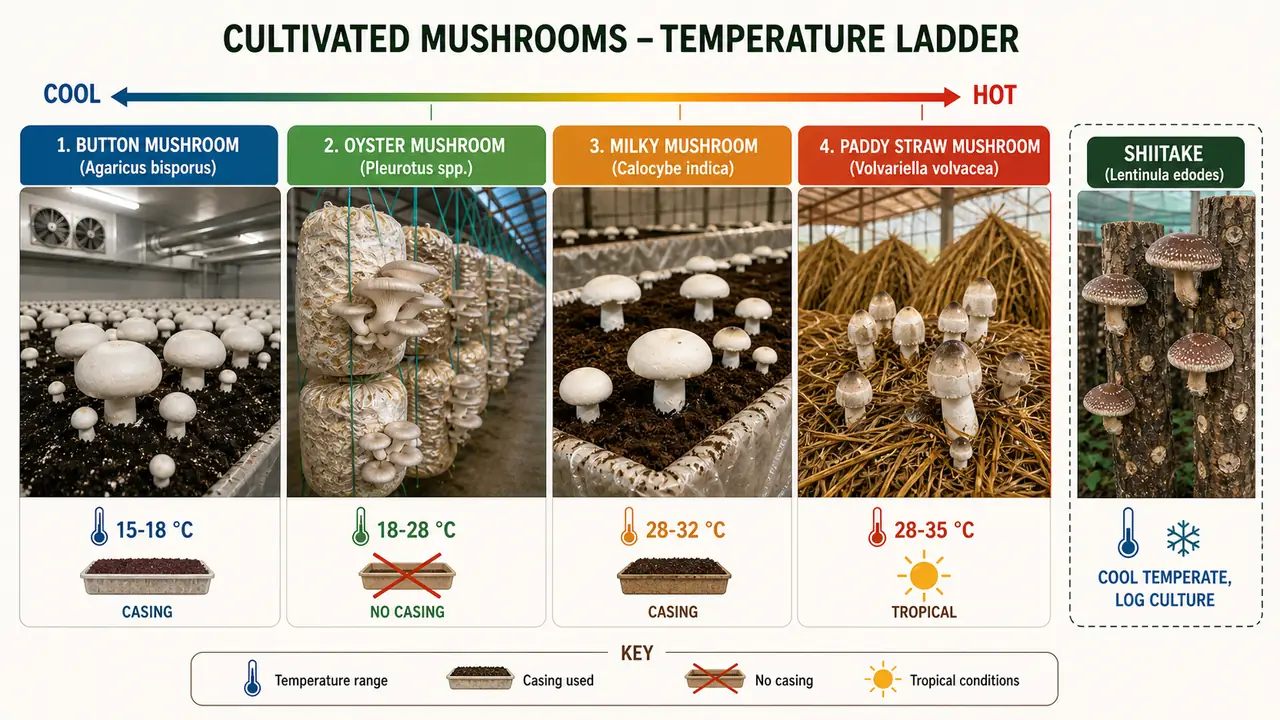
| Growing temp | 16-18°C (fruiting) | 20-28°C | 28-35°C |
| Ease | Moderate (needs controlled environment) | Easiest | Moderate |
| Substrate | Composted straw | Straw, sawdust, cotton waste | Paddy straw |
| India’s share | 85% | Growing | Small |
| Casing needed | Yes | No | No |
TIP
Mushroom climate mnemonic — “BOPs temperature ladder”: Button = coolest (16-18°C), Oyster = middle (20-28°C), Paddy straw = hottest (28-35°C). As you go from B to P, the temperature requirement increases. Button needs casing; the other two do not.
Pests and Diseases of Mushrooms
Mushroom growing rooms provide ideal conditions for pests and pathogens — warm, humid, and rich in organic matter. Maintaining hygiene at every step (from compost preparation to harvesting) is the primary defence. The following pests and diseases are frequently tested in exams.
Insect Pests
Common pests include: Nematodes, Sciarids (fungus gnats), Phorids (scuttle flies), Mites, and Springtails
Diseases
| Disease | Also Known As |
|---|---|
| Dry Bubble | Brown spot |
| Wet Bubble | White mould |
| Cobweb disease | — |
| Green Mould | — |
| False Truffle | Truffle disease |
| Olive Green Mould | — |
| Brown Plaster Mould | — |
| Bacterial Blotch | — |
TIP
Disease mnemonic — “Dry Wet Cob Green False Olive Brown Bact”: Dry bubble, Wet bubble, Cobweb, Green mould, False truffle, Olive green mould, Brown plaster mould, Bacterial blotch. The first two (Dry and Wet bubble) are the most commonly tested.
Mushroom Poisoning
Poisonous mushrooms can cause four types of disorders:
- Gastric disorder
- Nervous disorder
- Muscular disorder
- Haemolytic disorder
WARNING
Never consume wild mushrooms without expert identification. Poisonous mushrooms can cause severe gastric, nervous, muscular, and haemolytic disorders. Remember “GNMH” — Gastric, Nervous, Muscular, Haemolytic.
Summary Table — Mushroom Cultivation Key Exam Facts
| Fact | Answer |
|---|---|
| Mushroom City of India | Solan (HP) |
| Most cultivated in world | Button mushroom (Agaricus bisporus) |
| Button mushroom share in India | 85% |
| Spawn produced on | Wheat/Rye grains + CaCO3 + CaSO4 |
| Vegetative growth temp | 20-28°C (avg. 24°C) |
| Fruiting temp | 17 +/- 1°C |
| Spawn run duration | 12-14 days |
| Casing thickness | 3-4 cm |
| Casing pH | 7.0-7.5 |
| Best casing material | Peat moss |
| C:N at staking | 25-30:1 |
| C:N of final compost | 16-17:1 |
| Harvest cap size | 2.5-4 cm |
| Yield per 100 kg compost | 10-14 kg (normal), 15-20 kg (short method) |
| Preservation method | Canning |
| Protein content | 3.92% |
| Water content | 90-92% |
| Oyster mushroom | Pleurotus spp. (easiest to cultivate) |
| Paddy straw mushroom | Volvariella spp. (tropical, 28-35°C) |
| Milky mushroom | Calocybe spp. |
| Poisoning types | Gastric, Nervous, Muscular, Haemolytic |
IMPORTANT
Top exam facts: Button mushroom = Agaricus bisporus = 85% of Indian production. Spawn run needs warm (24°C) + high CO2; fruiting needs cool (17°C) + low CO2 — opposite conditions. C:N drops from 25-30:1 to 16-17:1 during composting. Casing pH 7.0-7.5 with peat moss (ideal). Canning is the preservation method. Solan (HP) = Mushroom City of India.
Summary Cheat Sheet
| Concept / Topic | Key Details / Explanation |
|---|---|
| Mushroom Classification | Fleshy fruiting body of fungi; no chlorophyll; belongs to Basidiomycotina (most) or Ascomycotina |
| Mushroom City of India | Solan, Himachal Pradesh |
| Button Mushroom | Agaricus bisporus; most widely cultivated in world; 85% of Indian production; winter crop |
| Oyster Mushroom | Pleurotus spp.; easiest to cultivate; grows on wide range of substrates |
| Paddy Straw Mushroom | Volvariella spp.; tropical; grows at 28–35°C; no casing needed |
| Milky Mushroom | Calocybe spp.; suited to Indian tropical conditions |
| Shiitake | Lentinula spp.; popular in East Asian cuisine |
| Jew’s Ear Mushroom | Auricularia sp.; ear-shaped |
| Button Mushroom Nutritional Profile | Water 90–92%; Protein 3.92%; Fat 0.19% (very low) |
| Six Cultivation Steps | Spawn Production → Compost Preparation → Spawning → Spawn Running → Casing → Fruiting |
| Spawn | Vegetative mycelial network; produced on wheat/rye grains + CaCO₃ + CaSO₄ |
| Compost C:N Ratio at Staking | 25–30:1 |
| Compost C:N Ratio (Final) | 16–17:1 (drops as carbon is consumed; indicates successful composting) |
| Compost N:P:K per ton | 6.6 : 2.0 : 5.0 kg (33:10:25) |
| Vegetative Growth (Spawn Run) | Temp: 20–28°C (avg. 24°C); RH ~90%; High CO₂ (5000–10000 ppm) beneficial |
| Spawn Run Duration | 12–14 days |
| Fruiting Stage | Temp: 17 ± 1°C; RH 85–90%; Low CO₂ (0.08–0.15%) required |
| Casing | Covers compost after spawn run; thickness 3–4 cm; pH 7.0–7.5; best material: peat moss |
| Casing Sterilisation | Pasteurise at 66–70°C for 7–8 hours OR treat with Formaldehyde 2% + Bavistin 75 ppm; ≥15 days before use |
| Harvest Stage | Button stage; cap 2.5–4 cm; about 3 weeks after casing |
| Yield | Normal: 10–14 kg per 100 kg compost; Short method: 15–20 kg per 100 kg |
| Preservation | Canning is the most popular method |
| Insect Pests | Nematodes, Sciarids (fungus gnats), Phorids (scuttle flies), Mites, Springtails |
| Major Diseases | Dry Bubble (brown spot), Wet Bubble (white mould), Cobweb disease, Green mould, False truffle, Bacterial blotch |
| Mushroom Poisoning Types | Gastric, Nervous, Muscular, Haemolytic disorders |
| Temperature Ladder (Climate) | Button (16–18°C) < Oyster (20–28°C) < Paddy Straw (28–35°C) |
Pro Content Locked
Upgrade to Pro to access this lesson and all other premium content.
₹2388 billed yearly
- All Agriculture & Banking Courses
- AI Lesson Questions (100/day)
- AI Doubt Solver (50/day)
- Glows & Grows Feedback (30/day)
- AI Section Quiz (20/day)
- 22-Language Translation (30/day)
- Recall Questions (20/day)
- AI Quiz (15/day)
- AI Quiz Paper Analysis
- AI Step-by-Step Explanations
- Spaced Repetition Recall (FSRS)
- AI Tutor
- Immersive Text Questions
- Audio Lessons — Hindi & English
- Mock Tests & Previous Year Papers
- Summary & Mind Maps
- XP, Levels, Leaderboard & Badges
- Generate New Classrooms
- Voice AI Teacher (AgriDots Live)
- AI Revision Assistant
- Knowledge Gap Analysis
- Interactive Revision (LangGraph)
🔒 Secure via Razorpay · Cancel anytime · No hidden fees
From Forest Floor to Farm Income
In the cool hills of Solan, Himachal Pradesh — rightly called the Mushroom City of India — rows of climate-controlled growing rooms produce tonnes of white button mushrooms every winter. A farmer fills trays with composted wheat straw, mixes in grain-based spawn, covers the surface with a thin casing layer, and within three weeks the first flush of mushrooms pushes through. Mushroom cultivation is unique in agriculture: there is no soil, no sunlight, and no photosynthesis — instead, the crop feeds on decomposing organic matter in the dark.
This lesson covers:
- What mushrooms are — classification and edible types
- Button mushroom cultivation — the six-step technology (spawn to fruiting)
- Other commercial types — oyster and paddy straw mushrooms
- Pests, diseases, and poisoning — exam-critical identification facts
All sections are high-yield for IBPS AFO, NABARD, and ICAR exams.
What Is a Mushroom?
A mushroom is a fleshy fruiting body of certain fungi, arising from a network of mycelium (thread-like fungal cells) buried in the growing substrate. Mushrooms are not plants — they lack chlorophyll and cannot photosynthesise. Instead, they obtain nutrition by decomposing organic matter.
- Most edible mushrooms belong to the Sub-Division Basidiomycotina
- A few belong to Ascomycotina of Kingdom Fungi
- Mushroom City of India: Solan (Himachal Pradesh)
Classification of Edible Mushrooms
| Common Name | Scientific Name | Key Feature |
|---|---|---|
| Button mushroom | Agaricus bisporus | Most widely cultivated in the world; 85% of Indian production |
| Oyster mushroom | Pleurotus spp. | Easiest to cultivate; grows on a wide range of substrates |
| Paddy straw mushroom | Volvariella spp. | Tropical mushroom; grows at 28-35°C |
| Milky mushroom | Calocybe spp. | Suited to Indian tropical conditions |
| Shiitake mushroom | Lentinula spp. | Popular in East Asian cuisine |
| Jew’s ear mushroom | Auricularia sp. | Ear-shaped; used in Chinese cooking |
TIP
Mushroom names mnemonic — “BOPS-MJ”: Button (Agaricus), Oyster (Pleurotus), Paddy straw (Volvariella), Shiitake (Lentinula), Milky (Calocybe), Jew’s ear (Auricularia). For exams, the genus name is almost always tested alongside the common name.
Button Mushroom (Agaricus bisporus) — The Dominant Species
Key Facts
| Parameter | Details |
|---|---|
| Cap size | 3-16 cm |
| Natural habitat | Soil enriched with cow dung, horse dung, or forest litter in temperate climate |
| India’s share | 85% of total mushroom production |
| Season | Winter |
| Crops per year | 5-6 |
Nutritional Value
Button mushrooms are a low-calorie, high-protein food source with negligible fat:
| Nutrient | Content |
|---|---|
| Water | 90-92% (dry matter only 8-9%) |
| Protein | 3.92% |
| Crude fibre | 1.09% |
| Ash | 1.25% |
| Fat | 0.19% (very low) |
| Niacin | 56 mg per 100 g |
Growing Conditions — Vegetative vs Reproductive
The growing conditions for the two stages are opposite in temperature and CO2 requirements — a frequently tested distinction:
| Parameter | Vegetative Growth (Spawn Run) | Reproductive Growth (Fruiting) |
|---|---|---|
| Temperature | 20-28°C (avg. 24 +/- 2°C) | 12-18°C (avg. 16-18°C) |
| Relative Humidity | ~90% | 85-90% |
| CO2 | High (5,000-10,000 ppm) beneficial | Low (0.08-0.15%) favourable |
TIP
Temperature and CO2 mnemonic — “Veg = Warm + CO2 Up; Fruit = Cool + CO2 Down”: Vegetative growth (spawn run) needs warm temperature (24°C) and high CO2. Reproductive growth (fruiting) needs cool temperature (17°C) and low CO2. The two stages have exactly opposite requirements.
Six-Step Cultivation Technology
Button mushroom cultivation follows a precise sequence — each step creates the conditions needed for the next. Deviations in temperature, humidity, or CO2 at any stage can ruin the entire crop. Understanding this sequence is essential for both practical cultivation and exams.
The cultivation of button mushroom involves 6 sequential steps. Understanding this sequence is essential for exams:
Spawn Production —> Compost Preparation —> Spawning —> Spawn Running —> Casing —> Fruiting
Step 1: Spawn Production
- Spawn = the vegetative mycelial network of a mushroom developed after germination of fungal spores, grown on a convenient medium
- It comprises mycelium along with a supporting medium providing nutrition
- Master culture and spawn are produced on wheat or rye grains buffered with Calcium carbonate (CaCO3) and Calcium sulphate (CaSO4)
Think of spawn as the “seed” of mushroom cultivation. Just as a farmer needs quality seed for a good crop, quality spawn determines the success of mushroom production.
Step 2: Compost Preparation
The substrate for button mushroom is prepared from:
- Plant wastes: cereal straw, sugarcane bagasse, etc.
- Salts: urea, superphosphate, gypsum
- Supplements: rice bran, wheat bran
- Water
Key ratios and requirements:
| Parameter | Value |
|---|---|
| Dry substrate per 1 kg mushroom | 220 g |
| N:P:K per ton of compost | 6.6 : 2.0 : 5.0 kg (33:10:25) |
| C:N ratio at staking | 25-30 : 1 |
| C:N ratio in final compost | 16-17 : 1 |
NOTE
C:N ratio change (exam favourite): The C:N ratio decreases from 25-30:1 (at staking) to 16-17:1 (final compost) because carbon is consumed by microorganisms during composting while nitrogen is conserved. This drop in C:N ratio indicates that composting has been successful.
Step 3: Spawning
- The process of mixing spawn with compost is called spawning
- Spawn is thoroughly mixed into or layered onto the compost in growing trays or beds
- Uniform distribution of spawn ensures even colonisation of the compost
Step 4: Spawn Running
- Fungal mycelium grows out from spawn grains and colonises the compost in about 12-14 days (2 weeks)
- Temperature maintained at 23 +/- 2°C
- Relative humidity: ~90%
- Higher CO2 concentration (5,000-10,000 ppm) is beneficial at this stage
- Higher temperature is detrimental; lower temperature causes slower spawn run
Step 5: Casing
After complete spawn run, compost beds are covered with a layer of soil (casing) about 3-4 cm thick to induce fruiting.
| Parameter | Details |
|---|---|
| Purpose | Induce fruiting body formation |
| Thickness | 3-4 cm |
| Required properties | High porosity, high water holding capacity |
| pH | 7.0-7.5 |
| Best casing material | Peat moss (not available in India) |
Alternatives used in India:
| Mixture | Ratio |
|---|---|
| Garden loam soil + Sand | 4:1 |
| Decomposed cowdung + Loam soil | 1:1 |
| Spent compost (2-3 years old) + Sand + Lime | Variable |
Casing soil must be sterilised before application:
- Pasteurised at 66-70°C for 7-8 hours
- OR treated with Formaldehyde (2%) + Bavistin (75 ppm)
- OR steam sterilised
- Treatment must be done at least 15 days before use
After casing: temperature maintained at 23-28°C, RH 85-90% for 8-10 days. Low CO2 is favourable for the transition to reproductive growth.
Step 6: Fruiting
- Induced by lowering temperature to 17 +/- 1°C
- Humidity: 85-90%
- CO2 concentration: 0.08-0.15%
- Proper ventilation is required to maintain low CO2 levels
Harvesting and Yield
| Parameter | Details |
|---|---|
| Harvest stage | Button stage — caps measuring 2.5-4 cm across, still closed |
| First crop appears | About 3 weeks after casing |
| Normal yield | 10-14 kg fresh mushrooms per 100 kg fresh compost (2-month crop) |
| Short method yield | 15-20 kg per 100 kg compost (compost under natural conditions) |
| Preservation | Canning is the most popular method for long-duration preservation |
IMPORTANT
Canning is the preferred preservation method for button mushrooms. This is a commonly asked exam fact. Fresh mushrooms have 90-92% water content and deteriorate rapidly, making preservation essential for commercial viability.
Other Important Mushroom Types
While button mushroom dominates Indian production, two other species are commercially important and frequently tested in exams. They differ from button mushroom in climate requirements, substrate, and ease of cultivation.
Oyster Mushroom (Pleurotus spp.)
| Parameter | Details |
|---|---|
| Cap diameter | 50-150 mm |
| Colour | Whitish to grey to blue-grey |
| Ease of cultivation | Easiest mushroom to cultivate |
| Substrates | Grows on a wide range (straw, sawdust, cotton waste) |
Oyster mushroom is recommended for beginners because it tolerates a wider range of growing conditions and substrates compared to button mushroom.
Paddy Straw Mushroom (Volvariella spp.)
| Parameter | Details |
|---|---|
| Cap | 5-15 cm broad |
| Shape | Egg-shaped, expands to campanulate or convex with slight umbo |
| Climate | Tropical — grows at 28-35°C |
| Substrate | Paddy straw beds |
Button vs Oyster vs Paddy Straw — Comparison
| Character | Button (Agaricus) | Oyster (Pleurotus) | Paddy Straw (Volvariella) |
|---|---|---|---|
| Climate | Temperate (winter) | Temperate to tropical | Tropical |
| Growing temp | 16-18°C (fruiting) | 20-28°C | 28-35°C |
| Ease | Moderate (needs controlled environment) | Easiest | Moderate |
| Substrate | Composted straw | Straw, sawdust, cotton waste | Paddy straw |
| India’s share | 85% | Growing | Small |
| Casing needed | Yes | No | No |
TIP
Mushroom climate mnemonic — “BOPs temperature ladder”: Button = coolest (16-18°C), Oyster = middle (20-28°C), Paddy straw = hottest (28-35°C). As you go from B to P, the temperature requirement increases. Button needs casing; the other two do not.
Pests and Diseases of Mushrooms
Mushroom growing rooms provide ideal conditions for pests and pathogens — warm, humid, and rich in organic matter. Maintaining hygiene at every step (from compost preparation to harvesting) is the primary defence. The following pests and diseases are frequently tested in exams.
Insect Pests
Common pests include: Nematodes, Sciarids (fungus gnats), Phorids (scuttle flies), Mites, and Springtails
Diseases
| Disease | Also Known As |
|---|---|
| Dry Bubble | Brown spot |
| Wet Bubble | White mould |
| Cobweb disease | — |
| Green Mould | — |
| False Truffle | Truffle disease |
| Olive Green Mould | — |
| Brown Plaster Mould | — |
| Bacterial Blotch | — |
TIP
Disease mnemonic — “Dry Wet Cob Green False Olive Brown Bact”: Dry bubble, Wet bubble, Cobweb, Green mould, False truffle, Olive green mould, Brown plaster mould, Bacterial blotch. The first two (Dry and Wet bubble) are the most commonly tested.
Mushroom Poisoning
Poisonous mushrooms can cause four types of disorders:
- Gastric disorder
- Nervous disorder
- Muscular disorder
- Haemolytic disorder
WARNING
Never consume wild mushrooms without expert identification. Poisonous mushrooms can cause severe gastric, nervous, muscular, and haemolytic disorders. Remember “GNMH” — Gastric, Nervous, Muscular, Haemolytic.
Summary Table — Mushroom Cultivation Key Exam Facts
| Fact | Answer |
|---|---|
| Mushroom City of India | Solan (HP) |
| Most cultivated in world | Button mushroom (Agaricus bisporus) |
| Button mushroom share in India | 85% |
| Spawn produced on | Wheat/Rye grains + CaCO3 + CaSO4 |
| Vegetative growth temp | 20-28°C (avg. 24°C) |
| Fruiting temp | 17 +/- 1°C |
| Spawn run duration | 12-14 days |
| Casing thickness | 3-4 cm |
| Casing pH | 7.0-7.5 |
| Best casing material | Peat moss |
| C:N at staking | 25-30:1 |
| C:N of final compost | 16-17:1 |
| Harvest cap size | 2.5-4 cm |
| Yield per 100 kg compost | 10-14 kg (normal), 15-20 kg (short method) |
| Preservation method | Canning |
| Protein content | 3.92% |
| Water content | 90-92% |
| Oyster mushroom | Pleurotus spp. (easiest to cultivate) |
| Paddy straw mushroom | Volvariella spp. (tropical, 28-35°C) |
| Milky mushroom | Calocybe spp. |
| Poisoning types | Gastric, Nervous, Muscular, Haemolytic |
IMPORTANT
Top exam facts: Button mushroom = Agaricus bisporus = 85% of Indian production. Spawn run needs warm (24°C) + high CO2; fruiting needs cool (17°C) + low CO2 — opposite conditions. C:N drops from 25-30:1 to 16-17:1 during composting. Casing pH 7.0-7.5 with peat moss (ideal). Canning is the preservation method. Solan (HP) = Mushroom City of India.
Summary Cheat Sheet
| Concept / Topic | Key Details / Explanation |
|---|---|
| Mushroom Classification | Fleshy fruiting body of fungi; no chlorophyll; belongs to Basidiomycotina (most) or Ascomycotina |
| Mushroom City of India | Solan, Himachal Pradesh |
| Button Mushroom | Agaricus bisporus; most widely cultivated in world; 85% of Indian production; winter crop |
| Oyster Mushroom | Pleurotus spp.; easiest to cultivate; grows on wide range of substrates |
| Paddy Straw Mushroom | Volvariella spp.; tropical; grows at 28–35°C; no casing needed |
| Milky Mushroom | Calocybe spp.; suited to Indian tropical conditions |
| Shiitake | Lentinula spp.; popular in East Asian cuisine |
| Jew’s Ear Mushroom | Auricularia sp.; ear-shaped |
| Button Mushroom Nutritional Profile | Water 90–92%; Protein 3.92%; Fat 0.19% (very low) |
| Six Cultivation Steps | Spawn Production → Compost Preparation → Spawning → Spawn Running → Casing → Fruiting |
| Spawn | Vegetative mycelial network; produced on wheat/rye grains + CaCO₃ + CaSO₄ |
| Compost C:N Ratio at Staking | 25–30:1 |
| Compost C:N Ratio (Final) | 16–17:1 (drops as carbon is consumed; indicates successful composting) |
| Compost N:P:K per ton | 6.6 : 2.0 : 5.0 kg (33:10:25) |
| Vegetative Growth (Spawn Run) | Temp: 20–28°C (avg. 24°C); RH ~90%; High CO₂ (5000–10000 ppm) beneficial |
| Spawn Run Duration | 12–14 days |
| Fruiting Stage | Temp: 17 ± 1°C; RH 85–90%; Low CO₂ (0.08–0.15%) required |
| Casing | Covers compost after spawn run; thickness 3–4 cm; pH 7.0–7.5; best material: peat moss |
| Casing Sterilisation | Pasteurise at 66–70°C for 7–8 hours OR treat with Formaldehyde 2% + Bavistin 75 ppm; ≥15 days before use |
| Harvest Stage | Button stage; cap 2.5–4 cm; about 3 weeks after casing |
| Yield | Normal: 10–14 kg per 100 kg compost; Short method: 15–20 kg per 100 kg |
| Preservation | Canning is the most popular method |
| Insect Pests | Nematodes, Sciarids (fungus gnats), Phorids (scuttle flies), Mites, Springtails |
| Major Diseases | Dry Bubble (brown spot), Wet Bubble (white mould), Cobweb disease, Green mould, False truffle, Bacterial blotch |
| Mushroom Poisoning Types | Gastric, Nervous, Muscular, Haemolytic disorders |
| Temperature Ladder (Climate) | Button (16–18°C) < Oyster (20–28°C) < Paddy Straw (28–35°C) |
Knowledge Check
Take a dynamically generated quiz based on the material you just read to test your understanding and get personalized feedback.
Lesson Doubts
Ask questions, get expert answers