🌿 Weeds: The Invisible Crop Robbers
Learn what weeds are, why they cause more crop losses than insects and diseases combined, their survival traits like prolific seed production and dormancy, and landmark incidents like the Delhi Dropsy tragedy.
A Farmer's First Enemy
Picture a wheat field in Punjab just weeks before harvest. The crop looks healthy from a distance, but walk closer and you see wild oat (Avena fatua) and canary grass (Phalaris minor) standing shoulder-to-shoulder with the wheat, stealing water, nutrients and sunlight. The farmer may lose a third of his yield -- not to any insect or disease, but to weeds. Across India, weeds silently cause more economic damage than all other crop pests combined.
This lesson introduces the science of weeds: what defines them, how they survive, and why they matter so much for Indian agriculture.
This lesson covers:
- Definition and criteria -- what makes a plant a weed
- Key facts -- India's research bodies, worst weeds, crop loss rankings
- Landmark incidents -- Dropsy tragedy, HCN poisoning
- Survival traits -- characteristics, seed production, dormancy, vegetative propagation
- Yield losses and economic impact -- crop-wise losses and national-level damage
- Beneficial uses -- the surprising value of weeds
All sections are high-yield for exams, NABARD, and state agriculture officer exams.
Pro Content Locked
Upgrade to Pro to access this lesson and all other premium content.
Charged once for one year · ₹1188 total
Save ₹100/month vs ₹2388/year launch price
- All Agriculture & Banking Courses
- AI Lesson Questions (100/day)
- AI Doubt Solver (50/day)
- Glows & Grows Feedback (30/day)
- AI Section Quiz (20/day)
- 22-Language Translation (100/day)
- Recall Questions (20/day)
- AI Quiz (15/day)
- AI Quiz Paper Analysis (100/day)
- AI Step-by-Step Explanations (100/day)
- Spaced Repetition Recall (FSRS)
- AI Tutor
- Immersive Text Questions
- Audio Lessons — Hindi & English
- Mock Tests & Previous Year Papers
- Summary & Mind Maps
- XP, Levels, Leaderboard & Badges
- Generate New Classrooms
- Voice AI Teacher (AgriDots Live)
- AI Revision Assistant
- Knowledge Gap Analysis
- Interactive Revision (LangGraph)
🔒 Secure one-time yearly payment via Razorpay · No hidden fees
A Farmer's First Enemy
Picture a wheat field in Punjab just weeks before harvest. The crop looks healthy from a distance, but walk closer and you see wild oat (Avena fatua) and canary grass (Phalaris minor) standing shoulder-to-shoulder with the wheat, stealing water, nutrients and sunlight. The farmer may lose a third of his yield -- not to any insect or disease, but to weeds. Across India, weeds silently cause more economic damage than all other crop pests combined.
This lesson introduces the science of weeds: what defines them, how they survive, and why they matter so much for Indian agriculture.
This lesson covers:
- Definition and criteria -- what makes a plant a weed
- Key facts -- India's research bodies, worst weeds, crop loss rankings
- Landmark incidents -- Dropsy tragedy, HCN poisoning
- Survival traits -- characteristics, seed production, dormancy, vegetative propagation
- Yield losses and economic impact -- crop-wise losses and national-level damage
- Beneficial uses -- the surprising value of weeds
All sections are high-yield for exams, NABARD, and state agriculture officer exams.
What is a Weed?
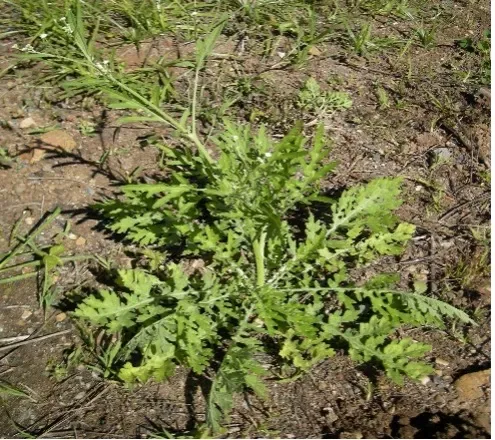
Jethro Tull, widely regarded as the Father of Weed Science, first coined the term "weed" in 1731 in his book Horse Hoeing Husbandry.
- Plants that grow where they are not wanted -- the simplest and most cited definition (Jethro Tull, 1731).
- Plants out of place -- a rice plant growing in a wheat field would be considered a weed. "Weediness" is contextual, not an inherent property of the plant.
- Unwanted plants that compete with crops for water, nutrients, light and space (CO2) and thereby reduce crop yields.
- Plants that interfere with the utilization of land and water resources and adversely affect human welfare -- a broader definition covering environmental and health impacts.
TIP
Exam mnemonic -- "PUPI": A weed is a Plant that is Unwanted, out of Place, and causes Interference with crops and resources.
Key Facts About Weeds
| Fact | Detail |
|---|---|
| Premier Indian research body | Directorate of Weed Research (DWR), Jabalpur, MP (est. 1988) |
| Highest crop loss cause in India | Weeds -- 33%, followed by pathogens (26%), insects (20%), storage pests (7%), rodents (6%), others (8%) |
| Total plant species worldwide | More than 2,50,000; over 5% behave as weeds |
| Known harmful weed species | About 18,000 globally |
| World's worst weed (Rank 1) | Cyperus rotundus (nut grass / motha) |
| World's 2nd worst weed | Cynodon dactylon (doob grass / Bermuda grass) |
IMPORTANT
Exam favourite: Order of crop losses in India: Weeds (33%) > Pathogens (26%) > Insects (20%). Weeds cause more annual loss than insect pests and diseases combined.
Landmark Weed-Related Incidents
Several weeds cause harm far beyond crop competition -- they directly affect human health and animal life.
| Weed | Incident / Effect | Why It Happens |
|---|---|---|
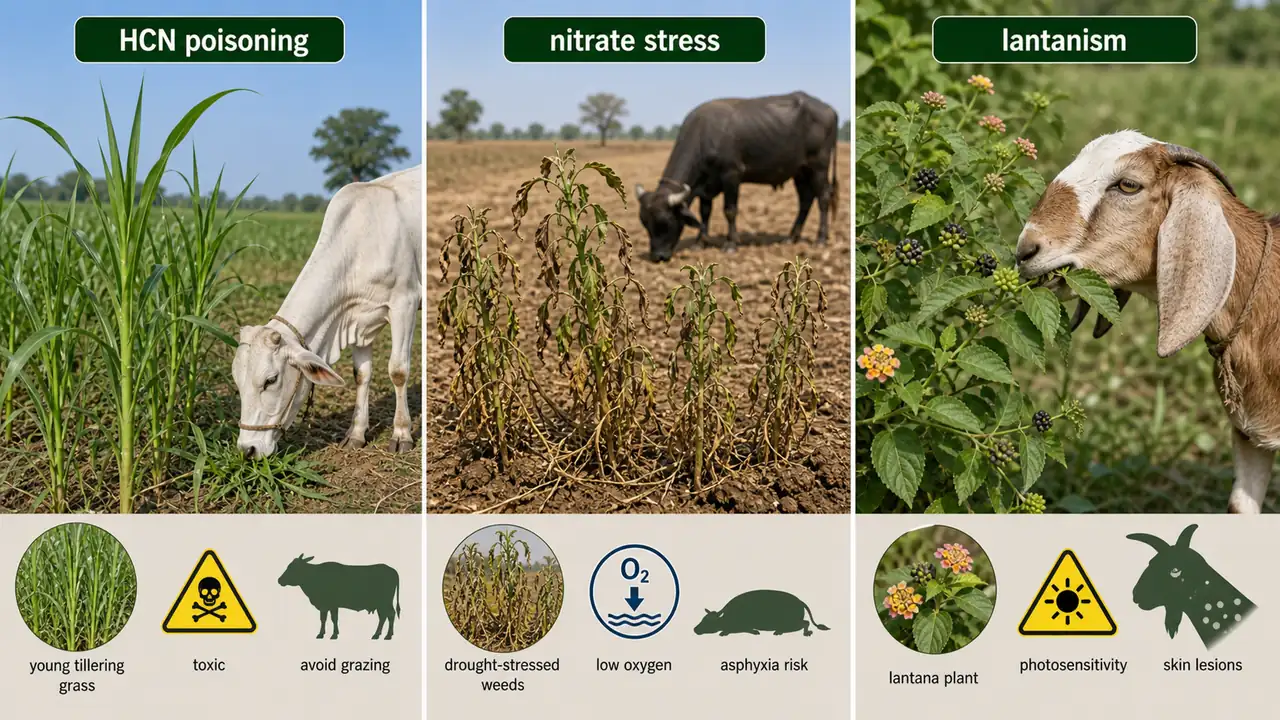
| Parthenium hysterophorus (Congress grass) | Causes dermatitis, rhinitis, asthma in humans | Allergenic sesquiterpene lactones in pollen and trichomes |
| Sorghum halepense (Johnson grass) | Death of cattle at tillering stage | Release of prussic acid (HCN); concentration peaks in young tillers |
| Argemone mexicana (Mexican Prickly poppy) | Dropsy tragedy, Delhi, 1998 -- death and blindness | Seeds mixed with mustard; toxic alkaloid sanguinarine in contaminated oil |
| Amaranthus spp. (Pigweed) | Oxalate poisoning in livestock | Oxalates bind calcium, causing kidney damage |
WARNING
The 1998 Delhi Dropsy tragedy caused by Argemone mexicana contamination in mustard oil is a landmark food-safety case and a frequent exam question.
What Makes a Plant a Weed?
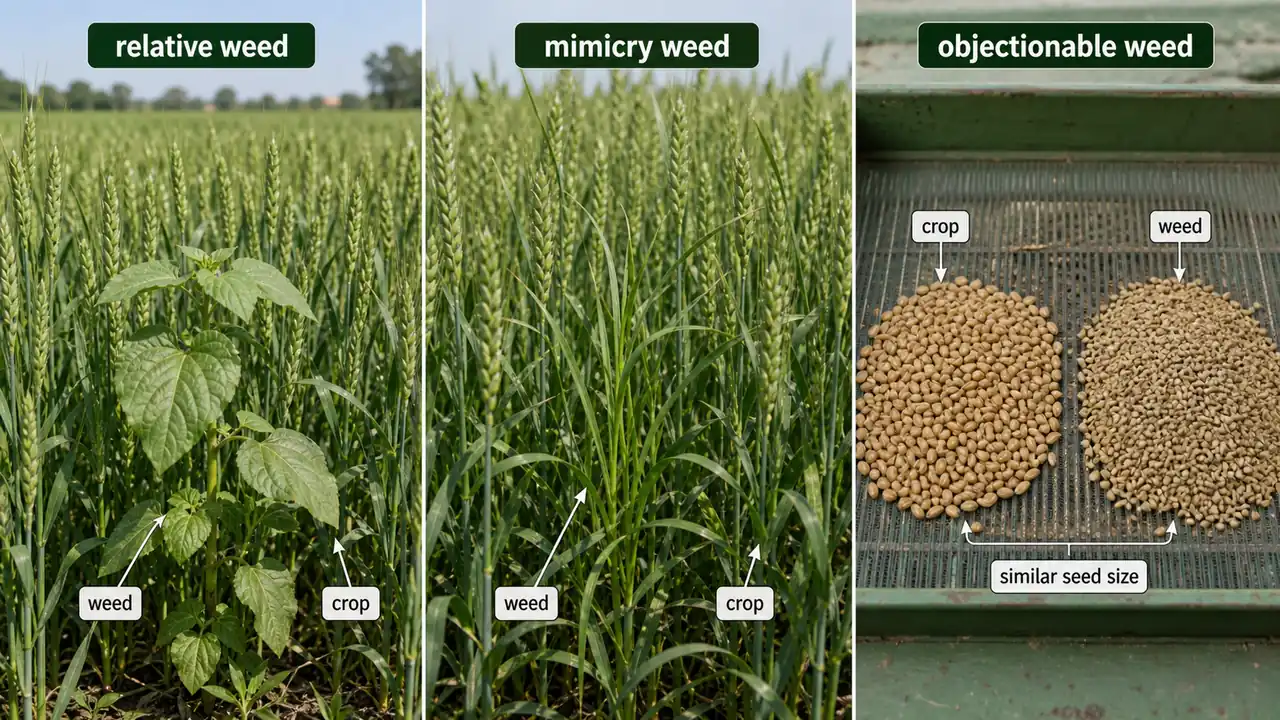
Whether a plant is a weed depends on three criteria:
| Criterion | Explanation | Agricultural Example |
|---|---|---|
| Characteristics and habit | Some species are inherently aggressive colonisers | Cyperus rotundus spreads through dormant tubers |
| Relative position | A plant desirable in one field is a weed in another | Rice seedlings in a wheat field |
| Time of occurrence | A previous-season crop growing in the current crop is a weed | Wheat volunteers in a subsequent rice crop |
Therefore, all plants may become weeds in a particular situation. No plant is inherently and permanently a weed.
Characteristics of Weeds
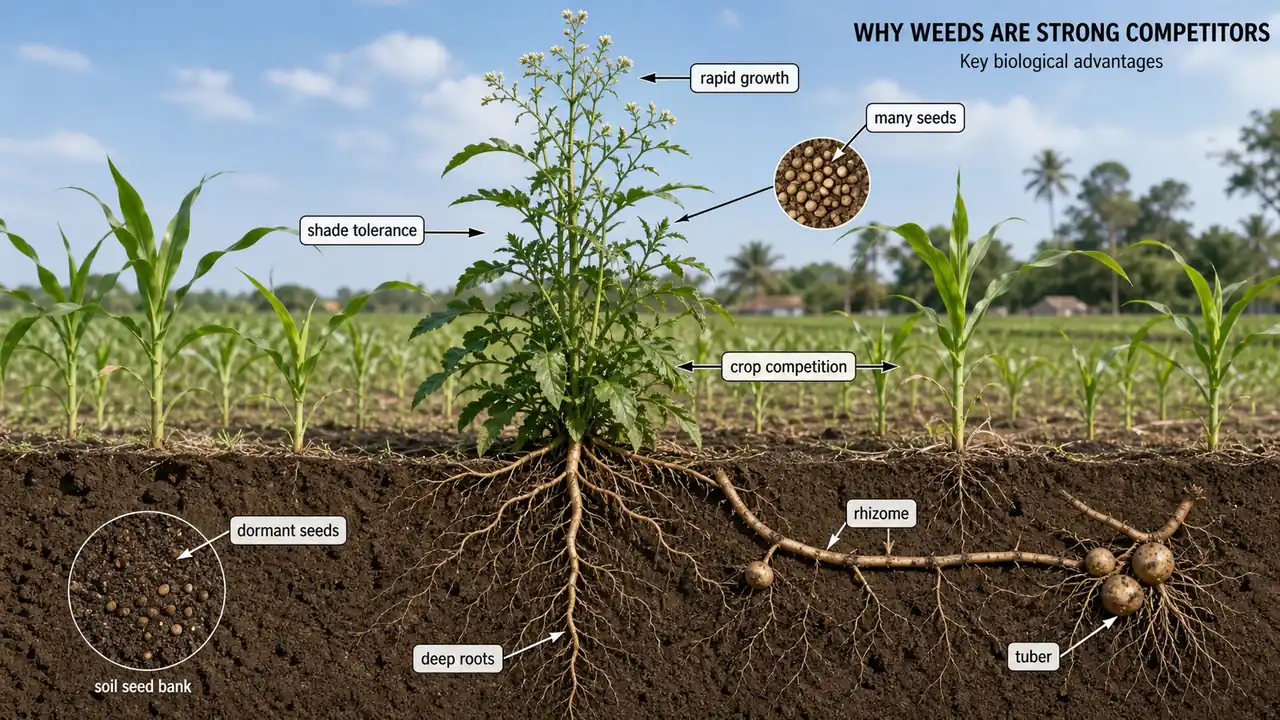
Weeds share biological traits that make them formidable competitors. Think of these as the "survival toolkit" of weeds:
| Trait | What It Means | Agricultural Impact |
|---|---|---|
| Ubiquitous | Present in nearly all habitats and climatic zones | No field is naturally weed-free |
| Great competitive ability | Rosette formation, climbing growth, allelopathy | Outcompete crops for light, water, nutrients |
| Rapid seedling growth | Establish before crops do | Early canopy capture |
| Quick maturation | Complete life cycle before crop harvest | Seeds shed before weeding is done |
| Seed mimicry | Seeds match crop seed size and shape | Mechanical separation extremely difficult |
| Dual reproduction | Sexual (seeds) + vegetative (rhizomes, tubers, stolons) | Survival even if one mode fails |
| Environmental plasticity | Adapt to varied and changing conditions | Thrive under stress that kills crops |
| Multiple dormancy types | Seeds viable in soil for years or decades | Soil seed bank persists across seasons |
| Prolific seed production | Thousands to hundreds of thousands per plant | One missed plant can re-infest a field |
| Modified structures | Hooks, hairs, thorns and spines on seeds/fruits | Deter grazing; aid dispersal via animal attachment |
| Germination synchronisation | Weed flushes germinate alongside the crop | Intense early-stage competition for resources |
| Shade tolerance | Survive under low-light conditions | Persist even beneath a closed crop canopy |
TIP
Mnemonic -- "CROPS DUPE": Competitive, Rapid growth, Omnipresent (ubiquitous), Prolific seeds, Same-size seeds, Dual reproduction, Unmatched plasticity, Persistent dormancy, Early maturity.
Prolific Seed Production
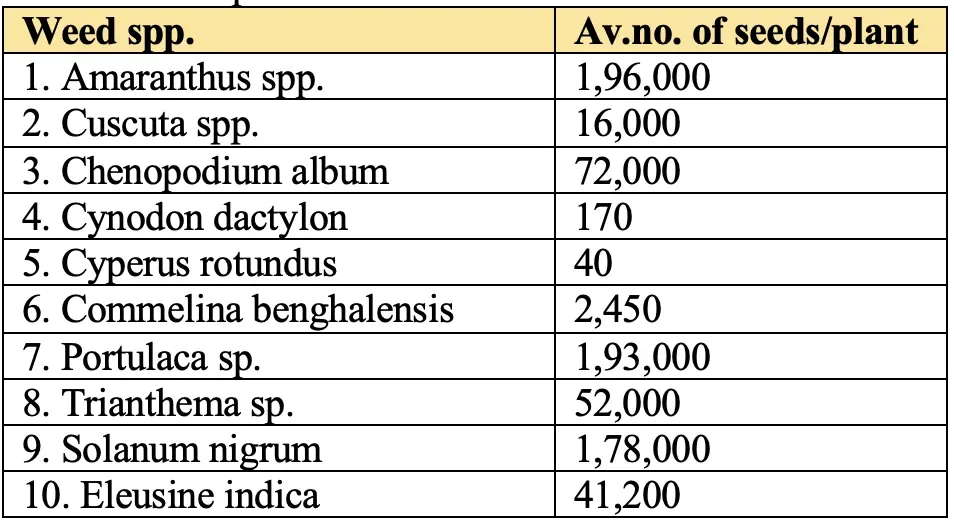
One of the most remarkable survival strategies of weeds is their enormous seed output compared to crop plants:
| Weed Species | Average Seeds per Plant |
|---|---|
| Amaranthus spp. | 1,96,000 |
| Portulaca spp. | 1,93,000 |
| Solanum nigrum | 1,78,000 |
| Chenopodium album | 72,000 |
| Brassica nigra | 58,000 |
| Cuscuta spp. | 16,000 |
| Parthenium spp. | Up to 10,000 |
| Wheat / Rice (comparison) | 90-100 |
Amaranthus produces nearly 2,000 times more seeds per plant than wheat or rice. Some weeds can also produce seeds through apomixis (seed formation without fertilization), bypassing pollination entirely.
TIP
Exam shortcut: For seed production ranking, remember "APS" -- Amaranthus > Portulaca > Solanum nigrum as the top three seed producers.
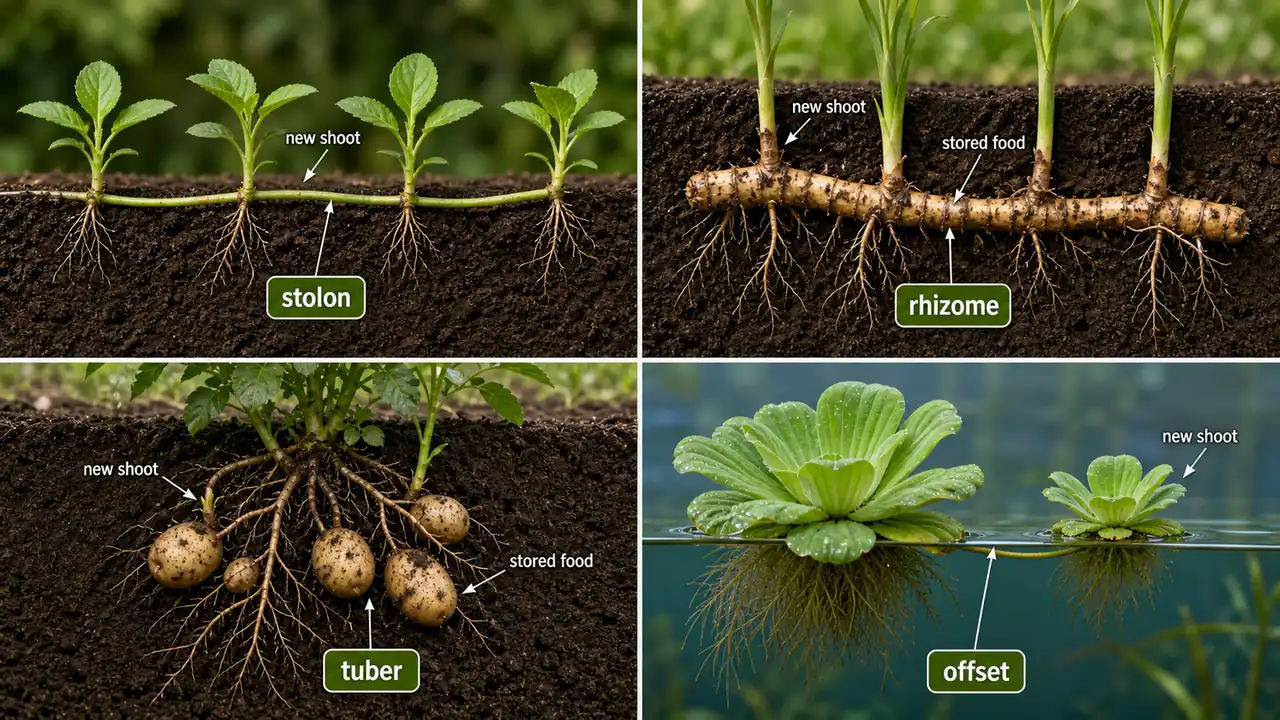
Vegetative Propagation of Weeds
Many perennial weeds rely primarily on vegetative propagation. Even small fragments of underground parts can regenerate, making these weeds extremely difficult to eradicate.
| Weed | Common Name | Propagation Method |
|---|---|---|
| Cynodon dactylon | Bermuda grass (Doob) | Rhizome + Runners + Stolons |
| Saccharum spontaneum | Tiger grass (Kans) | Rhizome |
| Sorghum halepense | Johnson grass (Baru) | Rhizome |
| Cyperus rotundus | Purple nut sedge (Motha) | Tubers |
| Eichhornia crassipes | Water hyacinth | Offset |
NOTE
Cynodon dactylon uses three vegetative methods (rhizomes, runners, stolons) -- making it one of the most resilient weeds globally. Cyperus rotundus spreads through tubers that can remain dormant in soil for years.
Test Weight Comparison
Test weight (weight of 1000 seeds) shows why some weed seeds are hard to separate from crop seeds during cleaning:
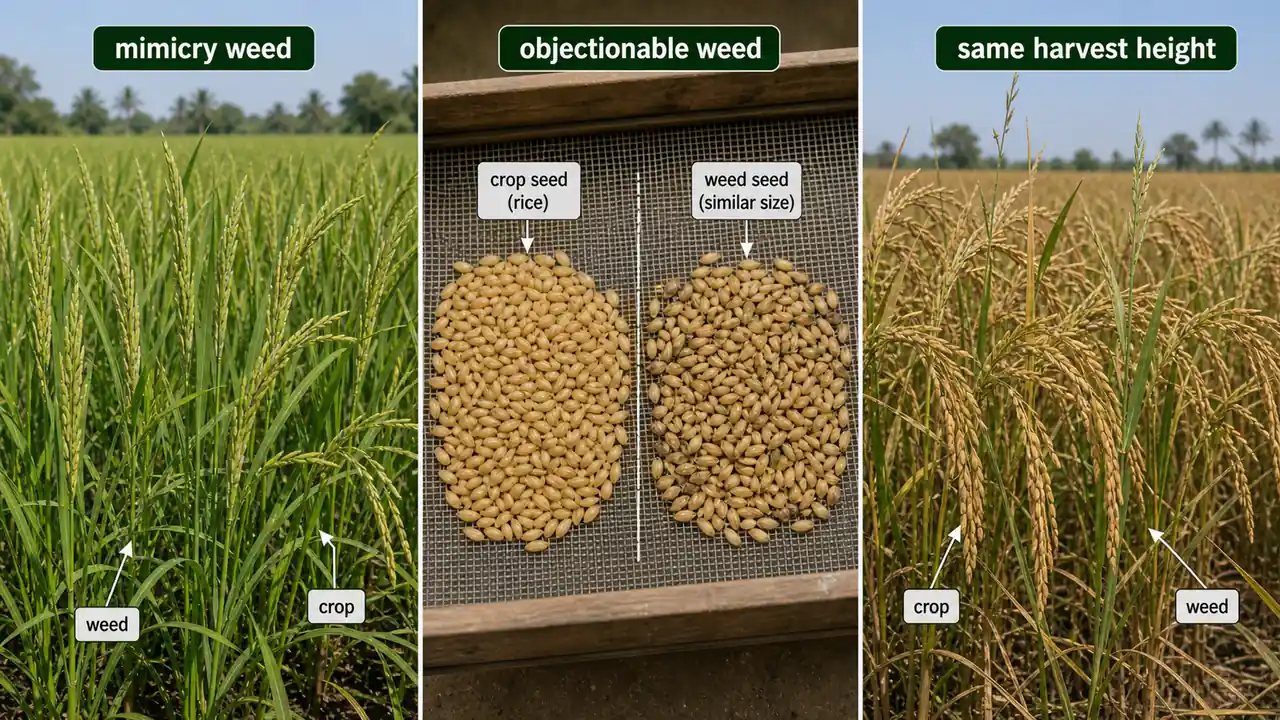
| Species | Test Weight |
|---|---|
| Paddy | 22-25 gm |
| Avena fatua / A. ludoviciana | 17.52 gm |
| Phalaris minor | 4.66 gm |
| Rumex dentatus | 1.75 gm |
Avena fatua (wild oat) has test weight close to paddy, which is why its seeds readily contaminate grain during harvest.
Yield Losses Caused by Weeds
The economic impact of weeds varies by crop. Widely spaced crops and slow-growing crops suffer most because weeds have more space and time to establish.
| Crop | Yield Loss (%) | Crop | Yield Loss (%) |
|---|---|---|---|
| Rice | 41.6 | Groundnut | 33.8 |
| Maize | 39.8 | Sugarcane | 34.2 |
| Pea | 32.9 | Sugar beet | 70.3 |
| Soybean | 30.5 | Carrot | 47.5 |
| Millets | 29.5 | Cotton | 72.5 |
| Potato | 20.1 | Onion | 68.0 |
| Wheat | 16.0 | Gram | 11.6 |
TIP
Top 3 crops most affected by weeds: Cotton (72.5%) > Sugar beet (70.3%) > Onion (68.0%). All three are widely spaced with slow initial canopy closure. Wheat and gram suffer the least among major field crops.
Weed Dormancy -- The Hidden Seed Bank
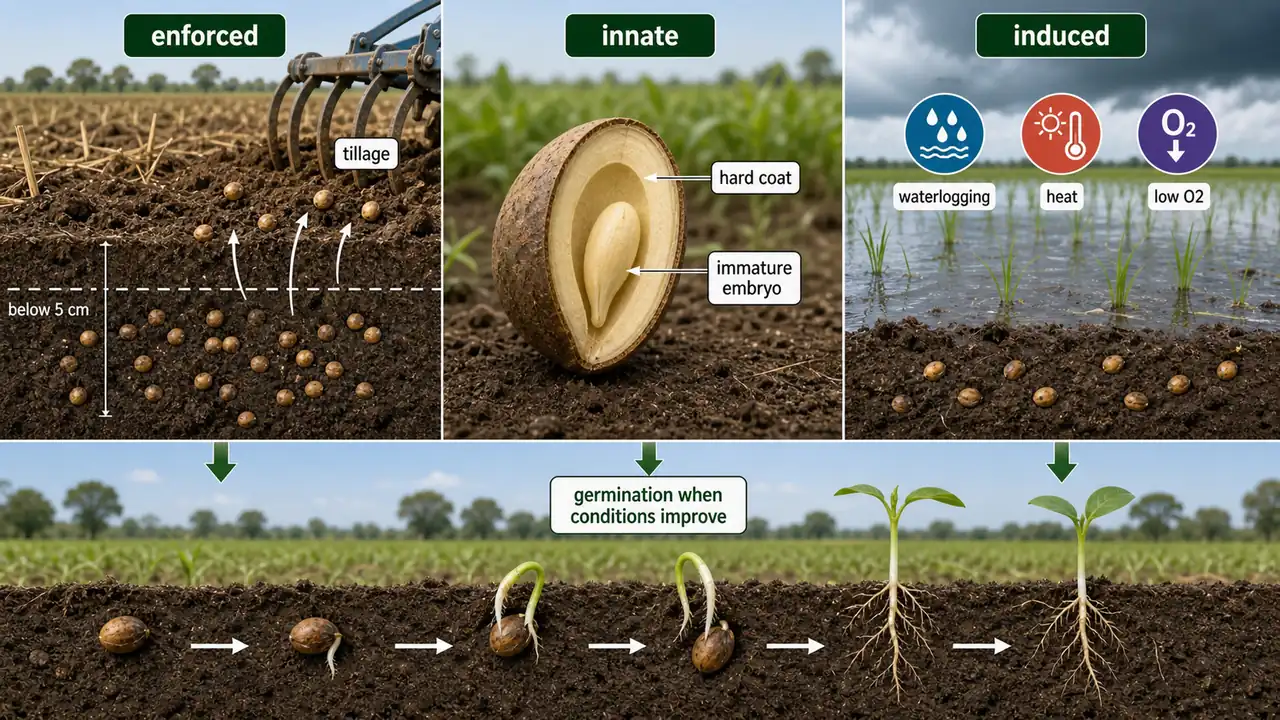
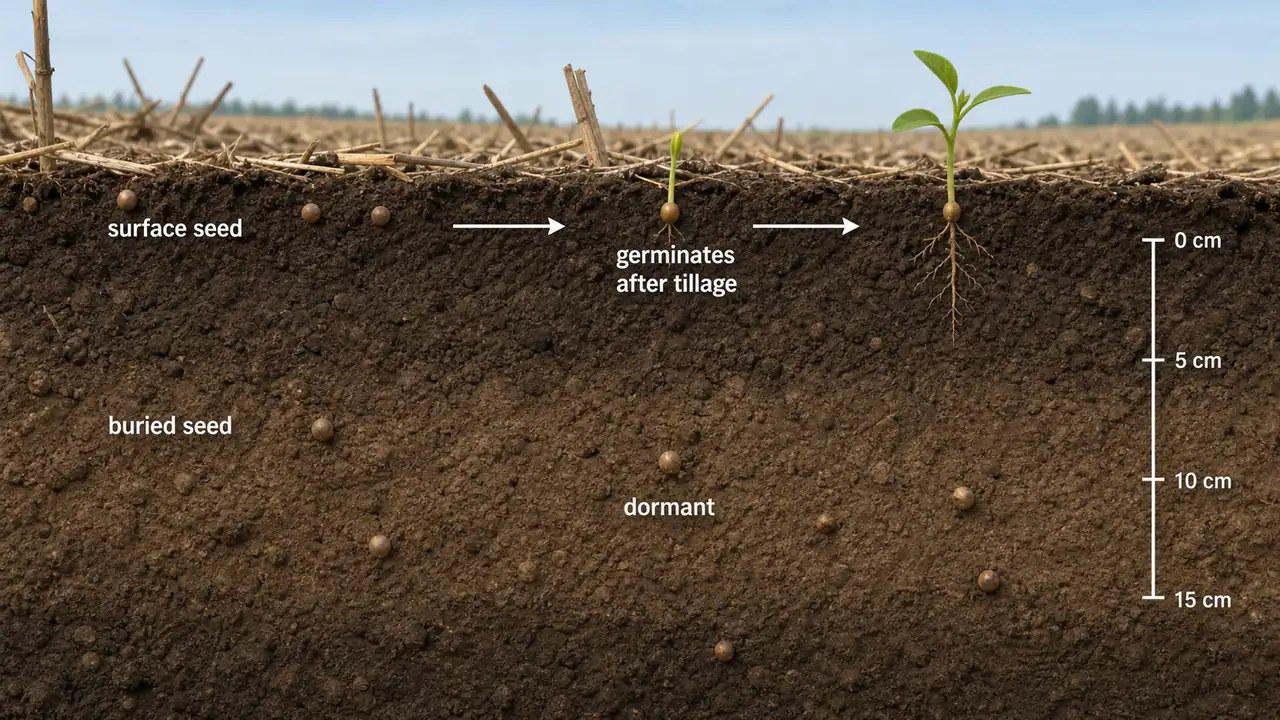
Dormancy is a stage of suspended development where weed seed germination is halted despite favourable conditions. This allows seeds to persist in the soil seed bank for years or decades.
| Dormancy Type | Cause | Agricultural Implication |
|---|---|---|
| Enforced Dormancy | Seeds placed deeper than ~5 cm lack light, temperature or oxygen for germination | Tillage brings them to the surface, triggering germination |
| Innate Dormancy | Genetically controlled -- hard seed coat, immature embryo, or internal chemical inhibitors | Seeds fail to germinate even in the top 3-5 cm |
| Induced Dormancy | Sudden environmental stress -- waterlogging, high temperature, increased CO2, low O2 | Previously non-dormant seeds enter dormancy as a survival response |
Wild oat (Avena fatua) exhibits all three types of dormancy (Thurston, 1959), making it one of the most persistent weed species in the world.
TIP
Mnemonic -- "EII" (like the Roman numeral III): Enforced (depth), Innate (genetic), Induced (environment). Wild oat shows all three -- remember "Wild oat has EII dormancy."
Seed Viability -- How Long Can Weed Seeds Survive?
Dormancy enables extraordinarily long seed viability. Some weed seeds remain germinable for decades or even centuries in the soil:
| Species | Maximum Seed Viability |
|---|---|
| Lotus (Nelumbo) | 1,000 years |
| Wild mustard (Brassica) | 30 years |
| Chenopodium (Bathua) | 20 years |
IMPORTANT
Exam favourite: Lotus holds the record for seed viability at 1,000 years. This illustrates why soil seed banks are virtually impossible to exhaust through a single season of weed control.
Economic Losses Due to Weeds
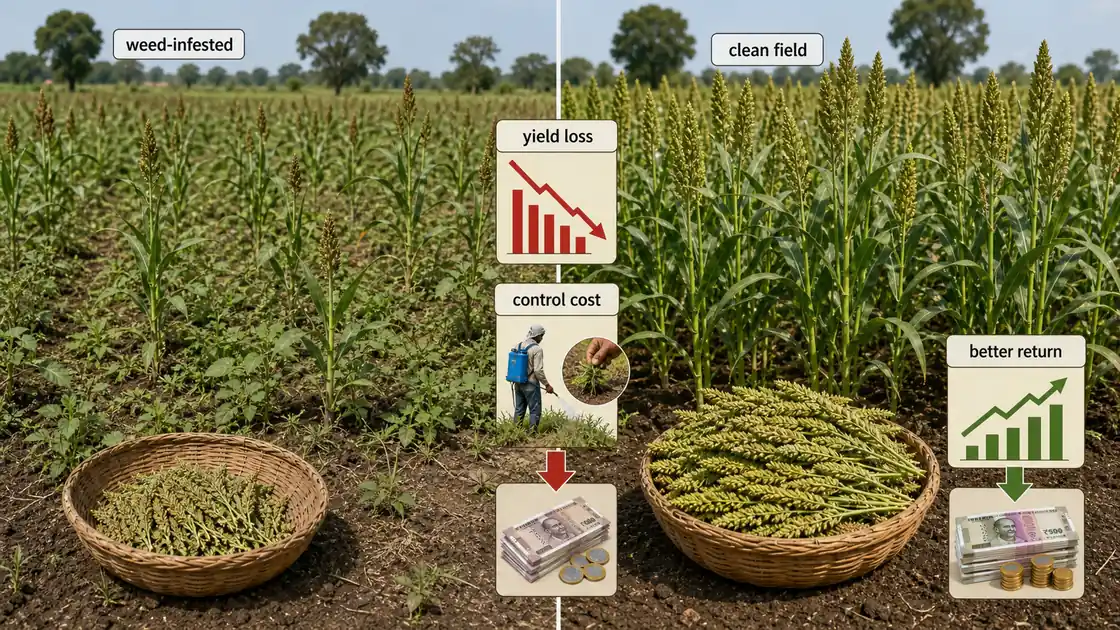
Beyond yield losses in individual crops, weeds impose enormous aggregate costs on the Indian economy:
| Fact | Value |
|---|---|
| Potential additional foodgrain production with proper weed management | 103 MT per year |
| Estimated economic loss to Indian agriculture | Rs. 20-28 billion |
| Potential additional pulses production | 15 MT |
| Potential additional oilseeds production | 10 MT |
| Potential additional commercial crop production | 52 MT |
| Additional income potential (DWSR 2007) | Rs. 1,05,036 crores/year |
| Possible increase in agriculture's share of GDP | 15% |
| Annual spending on weed management in India | Rs. 100 billion |
TIP
Exam shortcut: Remember "103 MT foodgrains + 15% GDP" -- proper weed management alone could boost India's agricultural output by these amounts.
Beneficial Uses of Weeds
Not all weeds are villains. Many have practical, economic, or ecological value:
| Use | Examples |
|---|---|
| Fodder | Cichorium intybus, Cynodon spp. |
| Medicinal | Leucas aspera (snake bite), Striga (diabetes), Phyllanthus niruri (jaundice), Argemone mexicana (skin disease) |
| Soil erosion control | Cynodon dactylon, Convolvulus arvensis, Agropyron repens (soil binders) |
| pH modification | Argemone mexicana (converts alkaline → acidic soil), Rumex acetosella (converts acidic → alkaline soil) |
| Ornamental | Lantana camara, Eichhornia crassipes |
| Phytoremediation | Eichhornia crassipes (absorbs heavy metals from water bodies) |
| Vegetables | Chenopodium album (Bathua), Amaranthus viridis |
| Religious | Cynodon spp. (doob grass used in Hindu ceremonies) |
| Cottage industries | Saccharum spontaneum (roof making), Typha (mats, baskets) |
| Gene donors | Saccharum spontaneum (used in sugarcane breeding programmes) |
| Nematicides | Crotalaria, Parthenium |
| Pollution indicators | Brassica kaber (indicates NO2), Stellaria redia (indicates SO2) |
| Maintain soil fertility | Typha spp. (adds 1-35% N to soil) |
| Economic products | Cichorium roots (coffee flavouring), Cyperus rotundus (agarbati) |
TIP
Mnemonic -- "FMSE-OPVR-CGNPE": Fodder, Medicinal, Soil erosion, pE-modification, Ornamental, Phytoremediation, Vegetables, Religious, Cottage industry, Gene donors, Nematicides, Pollution indicators, fErtility. Weeds are not always the enemy!
Summary Cheat Sheet
| Concept / Topic | Key Details |
|---|---|
| Father of Weed Science | Jethro Tull (1731) |
| Weed Research Centre (India) | DWR, Jabalpur, MP (est. 1988) |
| Biggest crop loss factor | Weeds -- 33% > Pathogens (26%) > Insects (20%) |
| World's worst weed | Cyperus rotundus (motha / nut grass) |
| World's 2nd worst weed | Cynodon dactylon (doob / Bermuda grass) |
| Highest seed producer | Amaranthus spp. -- 1,96,000 seeds/plant |
| Most versatile vegetative propagation | Cynodon dactylon -- 3 methods (rhizome, runner, stolon) |
| Highest yield loss crop | Cotton -- 72.5% |
| Top 3 yield loss crops | Cotton (72.5%) > Sugar beet (70.3%) > Onion (68.0%) |
| All three dormancy types | Avena fatua (wild oat) -- Enforced, Innate, Induced |
| Longest seed viability | Lotus -- 1,000 years |
| Economic loss potential (DWSR 2007) | Rs. 1,05,036 crores/year; 103 MT foodgrains |
| Annual weed management spending | Rs. 100 billion |
| Potential GDP increase | 15% with proper weed management |
| Beneficial uses of weeds | 14 uses -- fodder, medicinal, phytoremediation, ornamental, etc. |
| Dropsy tragedy | Delhi 1998, Argemone mexicana in mustard oil |
| HCN poisoning weed | Sorghum halepense at tillering stage |
| Weed definition mnemonic | PUPI -- Plant, Unwanted, out of Place, causes Interference |