💐 Biotechnology and Crop Improvement: GM Crops in India and World
Understand GM crop milestones, Bt cotton, Bt brinjal, GM mustard, GEAC, terminator technology, and biopharming — with agricultural examples and exam tips.
Why GM Crops Matter in Agriculture
Before Bt cotton was introduced in India in 2002, Indian cotton farmers lost up to 50% of their crop to bollworm infestation. Today, India is the world's largest cotton producer, with over 95% of cotton area under Bt varieties. This single biotechnology innovation transformed an entire agricultural sector. Understanding the regulatory framework (GEAC), the science behind GM crops, and current debates (Bt brinjal moratorium, GM mustard) is essential for every agricultural science student.
Biotechnology and Crop Improvement
Biotechnology has revolutionized crop improvement by providing tools that allow scientists to introduce specific, targeted genetic changes in plants. This section covers the key milestones, regulatory bodies, and major genetically modified crops that have shaped modern agriculture.
-
In 1982, the first biotech plant, an antibiotic resistant Tobacco, was developed (in the world). This landmark achievement marked the beginning of the transgenic era in plant science, demonstrating for the first time that foreign genes could be successfully introduced and expressed in plants.
-
In direct milestone-style recall, this first transgenic tobacco example is commonly linked with Fraley et al. and resistance screening against kanamycin.
-
First transgenic crop in India is Cotton. India's journey into commercial GM crop cultivation began with Bt cotton, which was specifically engineered to resist devastating bollworm pests.
-
Commercially genetically modified (GM) crops include Cotton, Potato, Maize, Tobacco, Papaya, Chilli, Tomato, Soybean, Carnation, Flax etc. These crops have been engineered for a variety of traits including insect resistance, herbicide tolerance, virus resistance, and improved quality characteristics.
-
The top biotech regulator in India is Genetic Engineering Appraisal Committee (GEAC). It is responsible for granting permits to conduct experimental and large-scale open field trials and also granting approval for commercial release of biotech crops. GEAC functions under the Ministry of Environment, Forest and Climate Change and serves as the final authority for approving the environmental release of genetically modified organisms in India.
-
World acreage under GM crops is 189.8 million hectares (2017). This enormous global adoption demonstrates the widespread acceptance and perceived benefits of GM technology by farmers worldwide.

- India's rank in transgenic plant acreage -- 5th (1st -- USA, 2nd -- Mexico, 3rd -- Argentina, 4th -- Canada). The USA leads the world in GM crop adoption, growing GM varieties of soybean, maize, cotton, canola, sugar beet, and other crops across hundreds of millions of acres.

-
Crops having highest transgenic plant cultivation area:
Soybean > Maize > Cotton
-
India has the world's fifth largest cultivated area under genetically modified (GM) crops, at 11.4 million hectares (mh) in 2017. But unlike other big growers, its entire GM crop area is under a single crop -- cotton -- incorporating genes from the Bacillus thuringiensis or Bt soil bacterium coding for resistance against Heliothis bollworm insect pests. This unique situation means that while India is a major GM crop grower by area, its GM crop diversity is limited compared to countries like the USA, Brazil, and Argentina, which grow multiple GM crops.
IMPORTANT
India grows GM crops on 11.4 million hectares but only one crop -- Bt cotton -- is approved for commercial cultivation. No GM food crop has been approved in India yet.
- Transgenic plant -- Flavr Savr Tomato for delayed ripening was released for commercial cultivation in 1994 by Calgene Company. The Flavr Savr tomato was the world's first commercially grown genetically modified food crop. It was engineered using antisense RNA technology to suppress the production of the enzyme polygalacturonase, which degrades pectin in the fruit cell wall and is responsible for softening the fruit. This allowed the tomato to ripen on the vine without softening rapidly, giving it a longer shelf life and better flavor compared to tomatoes picked green and ripened artificially.

-
First genetic engineering company established in 1976 -- Genentech. Genentech (Genetic Engineering Technology) was co-founded by Herbert Boyer and Robert Swanson and became the pioneer of the biotechnology industry. The company was the first to successfully produce human insulin using recombinant DNA technology.
-
Opaque-2 gene was transferred in maize for obtaining lysine rich maize varieties. The Opaque-2 gene modifies the storage protein composition of the maize endosperm, significantly increasing lysine and tryptophan content -- two essential amino acids that are normally deficient in maize. This improvement greatly enhances the nutritional quality of maize as a food and feed crop.
-
Transgenic plant Proteina has been developed by modification of the target protein against Glyphosate (herbicide). This demonstrates how genetic engineering can create herbicide-tolerant crops, allowing farmers to use specific herbicides to control weeds without harming the crop.
-
Bt gene possessed by Bacillus thuringiensis (bacteria), introduced in Cotton, Tomato and Tobacco against insects. The Bt gene encodes Cry proteins (crystal proteins) that are toxic to specific insect pests when ingested. The toxin binds to receptors in the insect's midgut, creating pores that lead to the insect's death, while being completely harmless to humans and other mammals.
-
Genetically Engineered Organisms (GEOs) were introduced in crops resistant to pests.
-
Selection of salt tolerant varieties of rice i.e. IR 42, IR 43 & IR 52 etc. Salt tolerance is an increasingly important trait as soil salinization affects millions of hectares of agricultural land worldwide. These varieties were developed to maintain productivity in saline conditions where conventional rice varieties would fail.
-
Agrobacterium tumefaciens (a bacterium, natural genetic engineer) was developed to carry new genes from one organism into another. Agrobacterium tumefaciens is called nature's own genetic engineer because it naturally transfers a segment of its DNA (T-DNA) into the plant genome. Scientists have harnessed this natural ability to create the most widely used plant transformation system in biotechnology.
Bt Cotton

Bt cotton is one of the most commercially successful transgenic crops worldwide and has had a transformative impact on cotton farming in India.
-
Bt is shorthand for common soil-inhabiting bacteria UPPSC 2021 called Bacillus thuringiensis. Bacillus thuringiensis was first discovered in 1901 by the Japanese biologist Shigetane Ishiwatari and was later rediscovered in the German region of Thuringia (from which it gets its name) by Ernst Berliner in 1911.
-
In older history-style recall, Ishiwatari's original isolate is also linked with the name Bacillus sotto, and Berliner is additionally associated with the early report of the characteristic crystal inclusion in the bacterium.
-
Bt also refers to insecticide products made from these bacteria. Bt-based biopesticides have been used in organic and conventional farming for decades as a safe, environmentally friendly alternative to chemical insecticides.
-
How insect is exposed to Bt: Delta endotoxins are stomach poisons that must be eaten by the insect in order to be effective. After ingestion, the toxin is activated in the highly alkaline insect midgut. The Cry protein crystals are solubilized in the alkaline environment (pH 9-12) of the insect gut, and then proteolytic enzymes cleave the protoxin into its active toxic form.
-
How does Bt kill insects: Delta endotoxins rapidly paralyze the insect's digestive system, so damage to the plant stops soon after the insect is exposed to the crystals. Mortality may take several days, so the effects of delta endotoxins are very different from what we expect from conventional insecticides. The activated toxin binds to specific receptor proteins on the epithelial cells lining the insect's midgut, creating pores in the cell membrane. This leads to cell lysis, disruption of the gut lining, septicemia (blood poisoning), and ultimately death of the insect.
NOTE
Commercial Bt biopesticide products: Bactimos, Biobit, Dipel, Javelin, Teknar, Vectobac. Used against caterpillar pests, mosquito and black fly larvae. Formulated as sprays, dusts, and granules containing spores and crystal proteins of various Bt strains.
-
Bt cotton was first used in India in 2002. The GEAC approved Bt cotton for commercial cultivation in India on March 26, 2002, making it the country's first and (as of now) only approved GM crop.
-
A useful milestone bridge is that Monsanto developed one of the earliest transgenic Bt-cotton lines in the USA in the late 1980s, with commercial cultivation beginning there in the mid-1990s before the technology reached India.
-
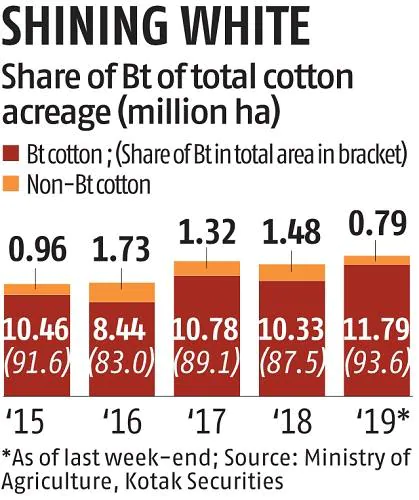
In India Bt cotton is the only approved GM crop for commercial cultivation which is grown over 11.79 million hectares (93.6%) of total cotton area. This near-total adoption rate demonstrates the overwhelming acceptance of Bt cotton by Indian farmers, driven by significant reductions in pesticide costs and improved yields.
-
The Union Government notifies maximum sale price (MSP) of Bt cotton seed for the year 2020-21. It was announced by the Union Agriculture and Farm. In this regard, Union Government has issued notification as per the Cotton Seed Price (Control) Order, 2015 under the Section 3 of the Essential Commodity Act, 1955.
-
As per the notification

- BG-I version: Not used now. BG-I (Bollgard I) contained a single Cry1Ac gene and was the first generation of Bt cotton in India. It has been phased out in favor of the more effective BG-II version.
- Price of BG-II version of Bt cotton hybrid was fixed Rs. 730 per packet (450 gm). BG-II (Bollgard II) contains two Bt genes (Cry1Ac and Cry2Ab), providing broader and more durable protection against bollworms compared to the single-gene BG-I.
- Refugia is 120 gm. Refugia refers to a portion of non-Bt cotton seeds included in each packet that must be planted alongside the Bt crop. This refuge area allows some susceptible insects to survive and mate with any potentially resistant insects, thereby delaying the development of resistance in the pest population -- a critical component of Insect Resistance Management (IRM) strategy.
TIP
Refugia is a frequently tested concept. Remember: it is the non-Bt seed component (120 gm in a 450 gm packet) planted to slow down pest resistance development by maintaining a susceptible insect population.
Bt Brinjal

-
The GEAC in 2007, recommended the commercial release of Bt Brinjal, which was developed by Mahyco (Maharashtra Hybrid Seeds Company) in collaboration with the Dharwad University of Agricultural Sciences and the Tamil Nadu Agricultural University. Bt Brinjal was engineered to express the Cry1Ac gene from Bacillus thuringiensis, providing resistance against the fruit and shoot borer (Leucinodes orbonalis), which is the most destructive pest of brinjal in India, causing yield losses of 50-70%.
-
In direct India-focused recall, Bt brinjal is also remembered as the first transgenic crop developed domestically in India, even though it has not received commercial cultivation approval.
-
But the initiative was blocked in 2010. The then Environment Minister Jairam Ramesh imposed an indefinite moratorium on Bt brinjal's commercial release, citing concerns about its potential impact on human health, biodiversity, and the livelihoods of small farmers. This decision was based on the precautionary principle and remains in effect, making Bt brinjal a continuing subject of debate in India's biotechnology policy.
GM-mustard
-
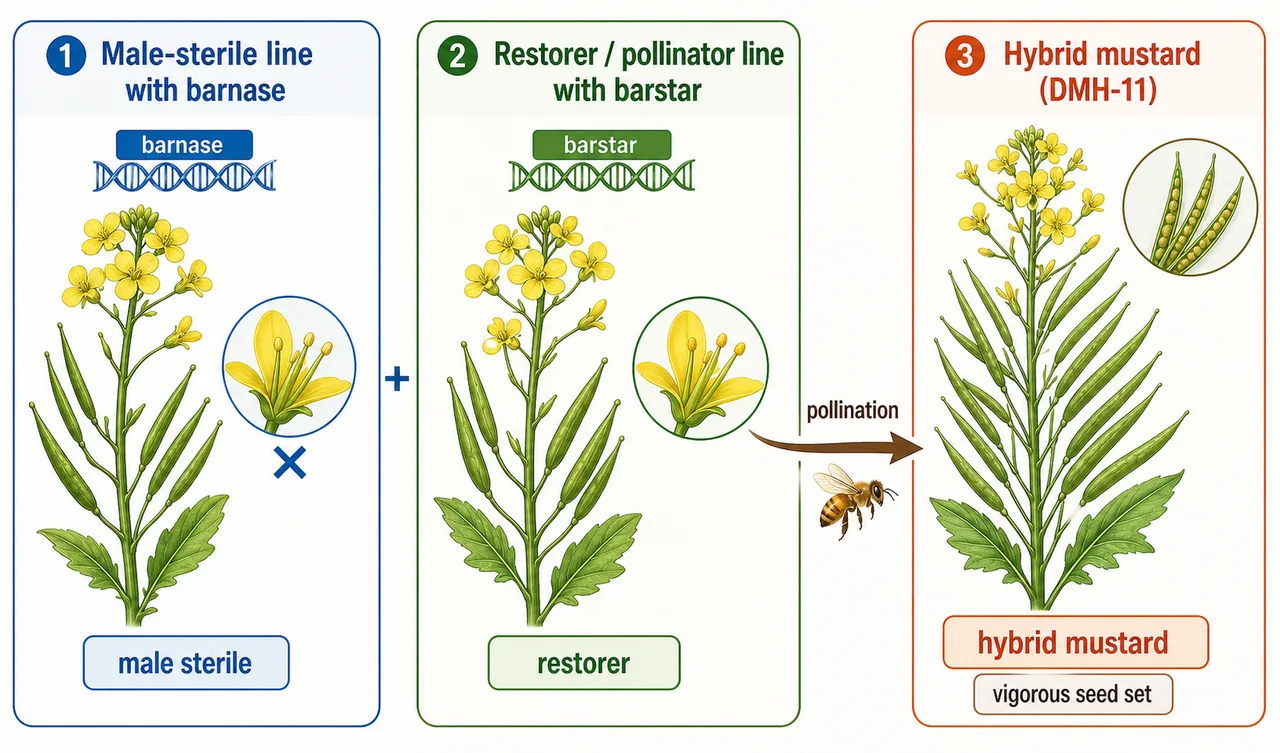
Dhara Mustard Hybrid-11 (DMH-11) is a genetically modified variety of mustard developed by the Delhi University's Centre for Genetic Manipulation of Crop Plants. DMH-11 was developed by a team led by Professor Deepak Pental using the barnase-barstar transgenic hybridization system, which enables the creation of hybrid mustard -- something difficult to achieve through conventional methods since mustard is a self-pollinating crop.
-
In direct exam recall, DMH-11 is classically linked with the parental combination Varuna × Early Heera-2. The barnase-barstar system itself is traced to Bacillus amyloliquefaciens.
-
If approved by the Centre, this will be the second GM crop, after Bt Cotton, and the first transgenic food crop to be allowed for cultivation in the country. The approval of GM mustard would be significant because it would open the door to GM food crops in India (as opposed to Bt cotton, which is a non-food crop), and could potentially boost India's domestic oilseed production, reducing dependence on imported edible oils.
Terminator Technology
-
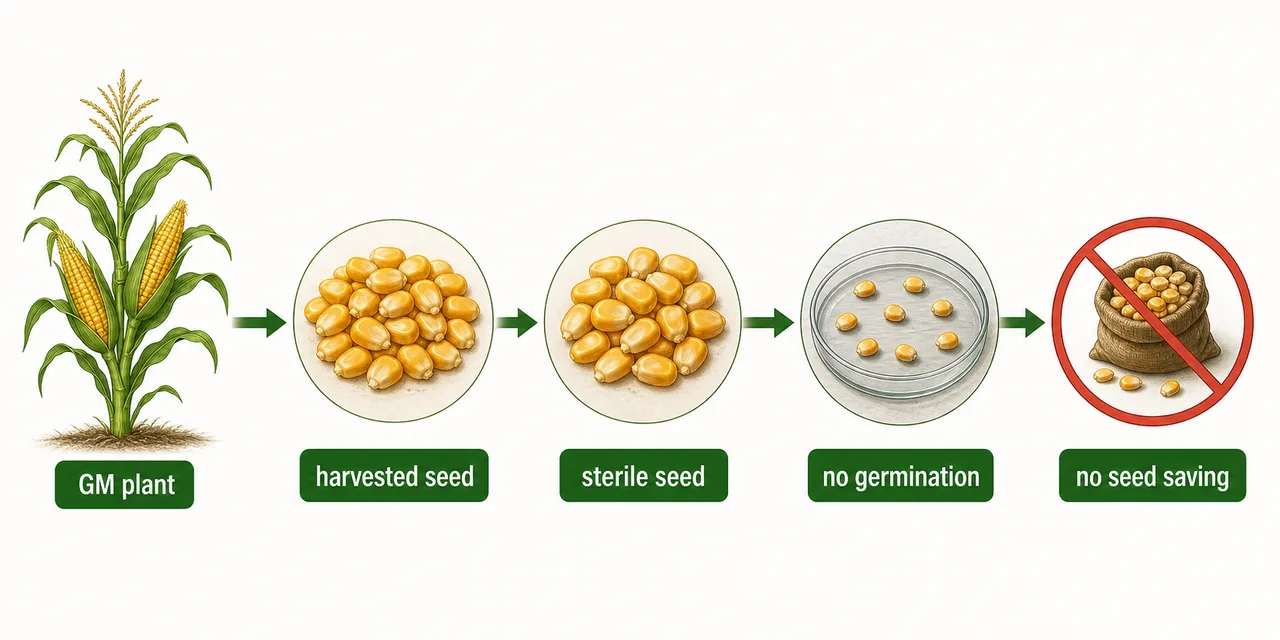
Terminator technology refers to research on seeds/plants that produce sterile seeds. Also known as Genetic Use Restriction Technologies (GURTs), this technology modifies plants so that the seeds they produce are unable to germinate in the next generation.
-
This technology could be used to prevent any gene flow between biotechnology and traditional crops. By ensuring that transgenic seeds cannot reproduce, terminator technology addresses concerns about the uncontrolled spread of genetically modified traits into wild plant populations or conventional crop fields. However, it is also highly controversial because it would force farmers to purchase new seeds every season, impacting the traditional practice of seed saving, particularly among smallholder farmers in developing countries.
WARNING
Terminator technology is highly controversial. While it prevents gene flow from GM to non-GM crops, it eliminates farmers' ability to save seeds -- a major concern for developing nations.
Bio pharming
-
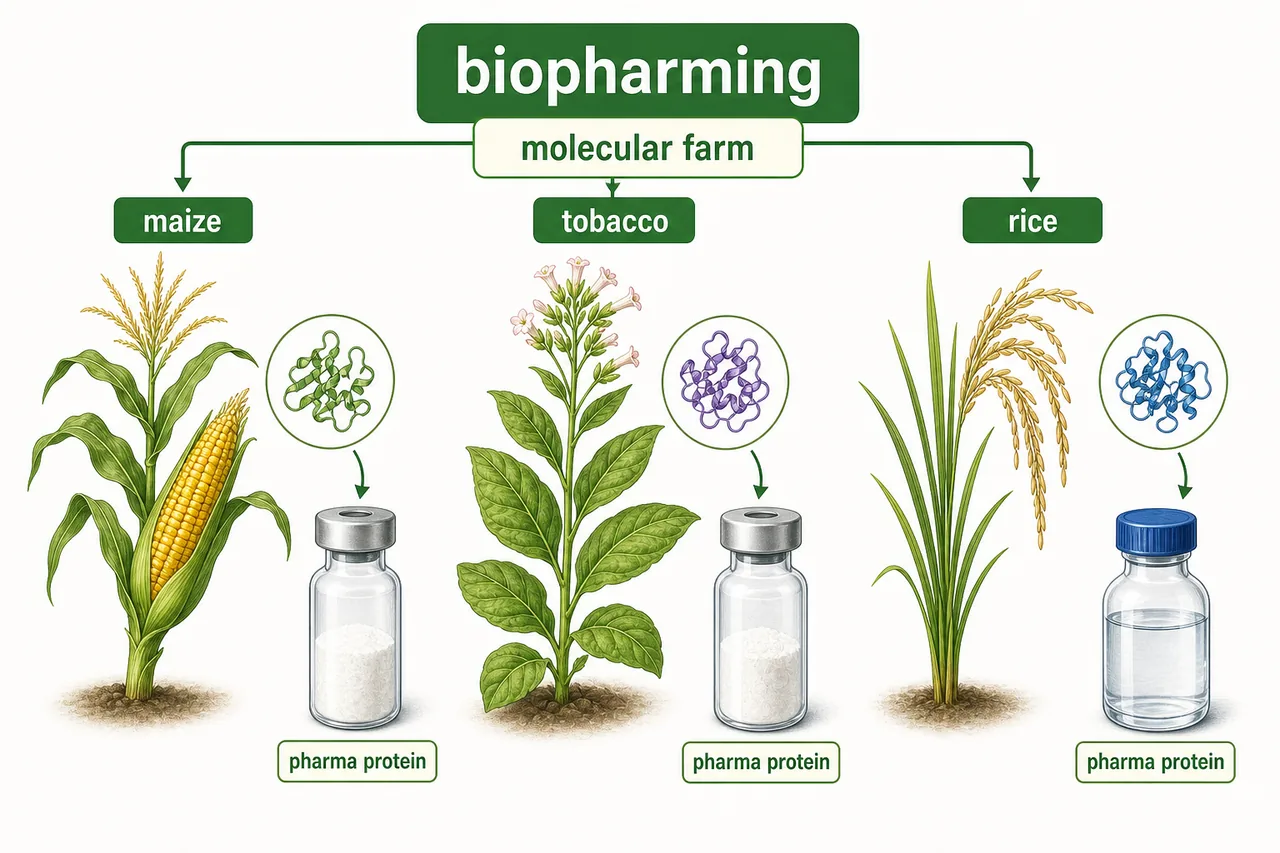
"Biopharming" is an experimental application of biotechnology in which genetic engineering (GE) is used to create plants that can produce pharmaceutical proteins and chemicals. In spite of this enhancement, biopharm crops are virtually indistinguishable from edible varieties. This technology essentially turns plants into living factories (or "molecular farms") for producing valuable medicines, vaccines, antibodies, and industrial enzymes at a potentially lower cost than conventional pharmaceutical manufacturing.
-
In compact terminology, this same idea is also described as molecular farming.
-
Corn is by far the most popular substrate plant for biopharming, followed by soybeans, tobacco and rice. Corn is preferred due to its high biomass, well-established cultivation practices, and relatively high protein expression levels. Tobacco is also popular because it is a non-food crop (reducing the risk of pharmaceutical proteins entering the food supply) and produces large amounts of leaf biomass in a short time.
Other Important Transgenic Examples
- Bt tobacco is one of the early transgenic Bt-plant examples and is classically linked with resistance against the tobacco hornworm (Manduca sexta).
- Bt maize is commonly recalled with resistance to the European corn borer (Ostrinia nubilalis).
- Roundup Ready soybean is the standard glyphosate-tolerant example; its tolerance is linked with the EPSPS / aroA logic widely used in herbicide-tolerance teaching.
- In cotton, the standard glufosinate-tolerance label is Liberty Link cotton.
- A classical insect-resistant fruit example is apple carrying the CpTi transgene from cowpea for protection against the codling moth, Cydia pomonella.
- In rice biotechnology recall, resistance genes against brown planthopper and white-backed planthopper are often linked with the wild donor Oryza officinalis.
- In advanced insect-pathogen engineering, recombinant baculoviruses may be constructed with exogenous genes encoding neurotoxins, hormones, or enzymes so that the infected host dies faster and feeds less.
- The naming of Bt Cry genes is based on their amino-acid sequence, and older objective recall commonly links Cry-II toxins with activity against Lepidoptera and Diptera.
Summary Cheat Sheet
| Concept / Topic | Key Details |
|---|---|
| First biotech plant (world) | Antibiotic-resistant Tobacco (1982) |
| First transgenic crop in India | Bt Cotton (approved 2002) |
| Flavr Savr Tomato | First commercial GM food crop (1994); delayed ripening by Calgene |
| Flavr Savr mechanism | Antisense RNA suppresses polygalacturonase, reducing pectin breakdown |
| First genetic engineering company | Genentech (1976) by Herbert Boyer & Robert Swanson |
| GEAC | Genetic Engineering Appraisal Committee; under MoEFCC |
| World GM crop area | 189.8 million hectares (2017) |
| India's GM rank | 5th (after USA, Mexico, Argentina, Canada) |
| India GM area | 11.4 million hectares — only Bt cotton |
| Top GM crop globally (by area) | Soybean > Maize > Cotton |
| Bt gene source | Bacillus thuringiensis — produces Cry proteins |
| Bt toxin mechanism | Delta endotoxins → alkaline gut activation → midgut pore → insect death |
| BG-II (Bollgard II) genes | Cry1Ac + Cry2Ab (two-gene stack) |
| BG-II seed price | Rs. 730 per packet (450 gm); Refugia = 120 gm |
| Refugia purpose | Delays pest resistance; maintains susceptible insect population (IRM) |
| Bt Brinjal status | Developed by Mahyco; moratorium since 2010 (Jairam Ramesh) |
| GM Mustard (DMH-11) | Barnase-barstar system; by Prof. Deepak Pental, Delhi University |
| Opaque-2 gene | Transferred to maize for lysine-rich varieties (QPM) |
| Agrobacterium tumefaciens | Nature's genetic engineer; transfers T-DNA into plant genome |
| Salt-tolerant rice varieties | IR 42, IR 43, IR 52 |
| Terminator technology (GURTs) | Seeds produce sterile offspring; prevents gene flow but blocks seed saving |
| Biopharming | Plants as pharmaceutical factories; corn is most popular substrate |