🚩 Genetic Markers: Types, Selection, and Breeding Applications
Understand molecular markers (RFLP, RAPD, AFLP, SSR, SNP), marker-assisted selection, QTL mapping, gene pyramiding, and genomics — with agricultural examples and exam tips.
Why Genetic Markers Matter in Agriculture
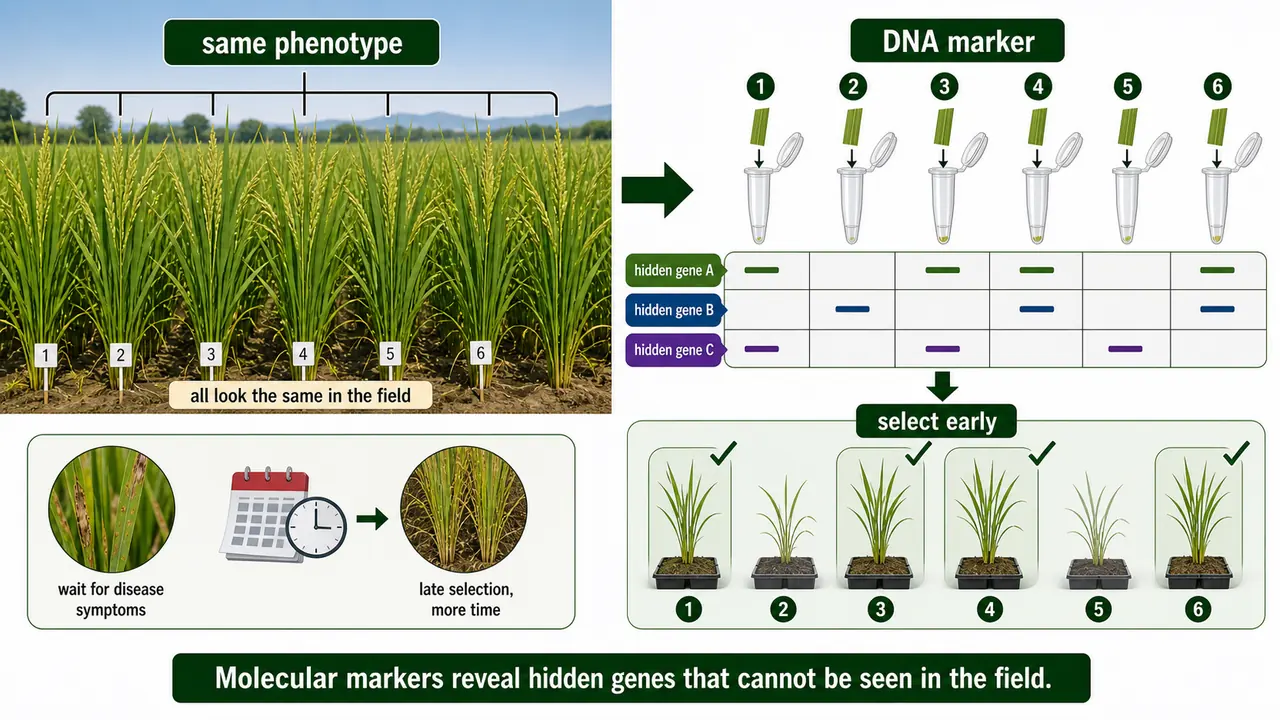
When a rice breeder wants to combine three different blast-resistance genes into a single variety, they cannot tell by looking at the plant which genes are present — because one resistance gene masks the others phenotypically. Molecular markers solve this problem by allowing breeders to track each gene's DNA signature independently. This is marker-assisted selection (MAS), and it has revolutionised crop improvement by enabling selection at the DNA level rather than waiting for disease to appear in the field.
-
A genetic marker is a gene or DNA sequence with a known location on a chromosome that can be used to identify individuals or species. Genetic markers serve as reference points on the genome, much like landmarks on a map, helping researchers navigate and study the vast stretches of DNA.
-
It can be described as a variation (which may arise due to mutation or alteration in the genomic loci) that can be observed. These variations create detectable differences between individuals, which can be tracked through generations and used to study inheritance patterns.
-
Generally, they do not represent the target genes themselves but act as 'signs' or 'flags'. This means that markers are typically not the actual genes controlling a trait of interest, but rather nearby DNA sequences that can be used to indirectly detect the presence of those genes.
-
Genetic markers that are located in close proximity to genes (i.e. tightly linked) may be referred to as gene 'tags'. The closer a marker is to the gene of interest, the less likely they are to be separated during recombination (crossing over), making the marker a more reliable indicator of the gene's presence.
-
Such markers themselves do not affect the phenotype of the trait of interest because they are located only near or 'linked' to genes controlling the trait. This phenotypic neutrality is actually an advantage, as it means the marker does not interfere with the trait being studied.
-
All genetic markers occupy specific genomic positions within chromosomes (like genes) called 'loci' (singular 'locus'). Each marker has a fixed, identifiable address on a specific chromosome, which makes it possible to create genetic maps showing the relative positions of genes and markers.
Types of Genetic markers
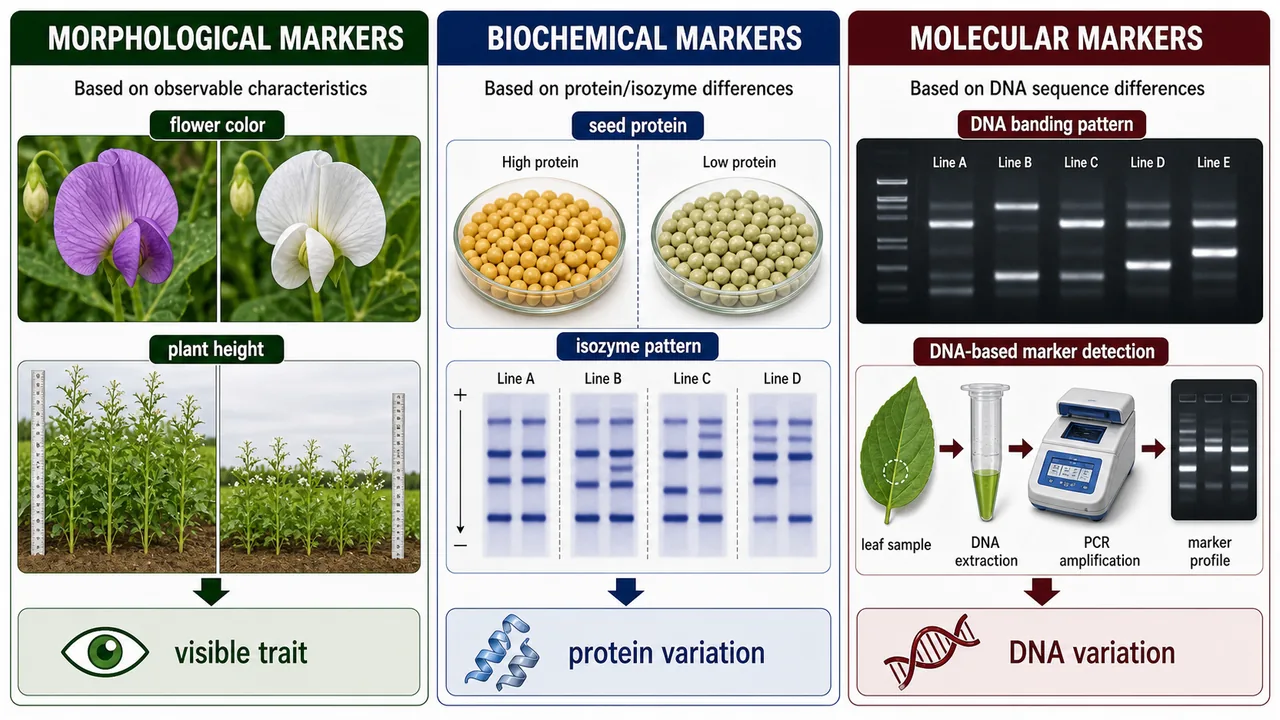
Genetic markers can be broadly classified into morphological markers (based on visible traits), biochemical markers (based on protein variations), and molecular markers (based on DNA variations). Among these, molecular markers are the most widely used in modern plant breeding and genetics due to their abundance, reliability, and ability to detect variation directly at the DNA level.
Molecular Marker
-
Molecular markers are specific fragments of DNA that can be identified within the whole genome. They represent detectable DNA-level differences between individuals, which arise from mutations, insertions, deletions, or other changes in the DNA sequence.
-
Molecular markers are found at specific locations of the genome. Their known positions make them useful for mapping genes, tracking inheritance, and identifying individuals.
-
They are used to 'flag' the position of a particular gene or the inheritance of a particular character. By tracking whether a specific marker is present in an individual, breeders can predict whether that individual also carries the desired gene linked to that marker.
-
Molecular markers are phenotypically neutral. This means they do not influence the physical appearance or performance of the plant -- they are silent at the phenotypic level and serve purely as genetic signposts.

Important Molecular Markers
The following molecular marker techniques are commonly used in plant genetics and breeding. Each has its own strengths and is suited to specific applications.
TIP
A quick way to remember the marker types: RFLP (restriction-based, no PCR), RAPD (random PCR, single short primer), AFLP (restriction + PCR combo), SSR (repeat-based, co-dominant), SNP (single base change, most abundant).
RFLP
-
Restriction Fragment Length Polymorphism. RFLP was one of the first molecular marker techniques developed and has been widely used in genetic mapping.
-
It is a non-PCR based technique where genomic DNA is digested with restriction enzyme(s). Unlike later techniques, RFLP does not require DNA amplification by PCR -- instead, it relies on restriction enzyme digestion and hybridization with labeled probes.
-
In historical sequencing of marker systems, RFLP is classically remembered as a major pre-PCR marker platform.
-
The whole genetic material is cut at specific nucleotide sequences. The restriction enzymes recognize specific palindromic sequences and cut the DNA at those sites, producing fragments of various lengths.
-
The digest is put on electrophoresis, blotted on a membrane and labelled with a probe. The fragments are separated by gel electrophoresis (based on size), transferred to a nylon membrane (Southern blotting), and then detected using a labeled DNA probe that binds to complementary sequences.
-
In lab-practice recall, DNA bands are commonly visualized after staining with ethidium bromide, and the probe itself is often described as a short labeled nucleic-acid sequence, historically with isotopes such as 32P.
-
Polymorphism in the hybridization pattern indicates the genetic difference between individuals. If there is a mutation at or near a restriction site, the fragment lengths will differ between individuals, creating a detectable polymorphism that can be used as a genetic marker.

RAPD
-
Random Amplified Polymorphic DNA. RAPD is a simpler and more cost-effective alternative to RFLP.
-
In direct historical recall, RAPD is commonly associated with Williams et al..
-
It is PCR based genome characterization technique. RAPD uses PCR to amplify random segments of the genome, making it faster and requiring less DNA than RFLP.
-
Single short oligonucleotide (9-12 bases) is used as primers for PCR amplification of genomic DNAs. Unlike conventional PCR that uses two specific primers, RAPD uses a single, arbitrary primer of known sequence that binds to multiple sites across the genome.
-
Genomic DNA from two different individuals produces different amplification patterns and can be used for molecular characterization of individuals. The resulting banding pattern on a gel reveals polymorphisms between individuals, which can be used for genetic diversity studies, identification, and mapping.
DAF
-
DNA Amplification Fingerprinting. DAF is a variation of the RAPD technique that generates more detailed banding patterns.
-
It is similar to RAPD with the difference that the primer is shorter, of 5-8 nucleotide sequence, and used in higher concentration. The shorter primers bind to more sites in the genome, producing a greater number of amplified fragments and a more complex fingerprint pattern.
AP-PCR
-
Arbitrarily Primed Polymerase Chain Reaction. AP-PCR is another variation that bridges the gap between RAPD and conventional PCR.
-
These patterns are generated by employing single primers of 10-50 nucleotide bases length in PCR of genomic DNA. The longer primers used in AP-PCR compared to RAPD and DAF provide greater specificity and more reproducible results.
AFLP
-
Amplified Fragment Length Polymorphism. AFLP is a powerful technique that combines the strengths of RFLP (restriction enzyme digestion) and PCR (amplification), making it one of the most informative marker systems available.
-
This method is based on PCR amplification of genomic restriction fragments generated by specific restriction enzymes and oligonucleotide adapters of few nucleotide bases. AFLP can generate a large number of polymorphic markers in a single experiment without requiring prior sequence information.
-
DNA is cut with restriction enzymes and double-stranded oligonucleotide adapters are joined to the ends of DNA fragments. These adapters provide known sequences at the ends of each fragment, which serve as binding sites for PCR primers.
-
Sets of restriction fragments are selectively amplified by 32P labeled primers. The selective amplification step uses primers that match the adapter sequences plus a few additional selective nucleotides, reducing the number of fragments amplified to a manageable subset.
-
The amplified products are separated on gel and screened using autoradiography. The resulting banding pattern reveals numerous polymorphisms that can be used for genetic mapping, diversity analysis, and cultivar identification.
SSR
-
Simple Sequence Repeats. SSRs, also known as microsatellites, are among the most widely used molecular markers in plant breeding today.
-
This is also known as microsatellites. The term "microsatellite" distinguishes these short repeats from minisatellites (which have longer repeat units) and satellites (which are even larger repeat arrays).
-
These are tandemly arranged repeats of mono, di, tri, tetra, penta nucleotides with different lengths of repeat motifs. For example, (CA)n represents a dinucleotide repeat where "CA" is repeated n times. The number of repeats varies between individuals, creating length polymorphisms that are highly informative. SSRs are valued for being co-dominant (distinguishing homozygotes from heterozygotes), highly polymorphic, and reproducible.
STMS
- Sequence Tagged Micro-Satellite Sites. STMS markers are essentially SSR markers detected using PCR with primers designed from the unique flanking sequences surrounding the microsatellite repeat. This approach combines the high polymorphism of microsatellites with the specificity and ease of PCR-based detection.
SNP
- Single or Simple Nucleotide Polymorphism. SNPs are the most abundant type of genetic variation in any genome. They represent a difference in a single nucleotide (A, T, G, or C) at a specific position in the DNA sequence between individuals. Because SNPs occur very frequently (approximately every 100-300 base pairs), they provide an extremely high-resolution tool for genetic mapping, association studies, and marker-assisted selection.
Selection of Ideal Molecular Markers
When choosing a molecular marker system for a particular study, several criteria should be considered to ensure the markers are effective and practical.
-
Highly polymorphic nature: It must be polymorphic as it is polymorphism that is measured for genetic diversity studies. A marker that shows no variation between individuals is useless -- the more allelic variants a marker displays, the more informative it is.
-
Co-dominant inheritance: Determination of homozygous and heterozygous states of diploid organisms. Co-dominant markers can distinguish between individuals that are homozygous (two identical alleles) and heterozygous (two different alleles), providing more complete genetic information than dominant markers.
-
Frequent occurrence in genome: A marker should be evenly and frequently distributed throughout the genome. Uniform genome coverage ensures that markers are available to tag genes on all chromosomes and in all genomic regions.
-
Selective neutral behaviors: The DNA sequences of any organism are neutral to environmental conditions or management practices. Ideal markers should not be influenced by the environment or by the developmental stage of the organism, ensuring consistent results across different conditions.
-
Easy Access (Availability): It should be easy, fast and cheap to detect. Practical considerations like cost, time, and technical difficulty are important when selecting markers, especially for large-scale breeding programs.
-
Easy and fast assay
-
High reproducibility. A marker must give the same results when the experiment is repeated, ensuring reliability of the data.
Uses of DNA markers
DNA markers have become indispensable tools in modern genetics and plant breeding, with applications spanning from basic research to practical crop improvement.
- DNA fingerprinting:
- To establish distinctness among biological entities
- Genetic diversity studies
- Evolutionary studies
- Molecular mapping:
- To prepare saturated genetic map
- Chromosome identification
- Map based cloning of genes
- Marker Assisted Selection
- QTLs
- Disease resistance
- Construction of genetic maps
Use of Molecular Markers in Breeding
Molecular markers have transformed plant breeding by enabling indirect selection for traits that are difficult, expensive, or time-consuming to evaluate directly. The following sections describe the major applications of markers in breeding programs.
Marker Assisted Selection (MAS)
-
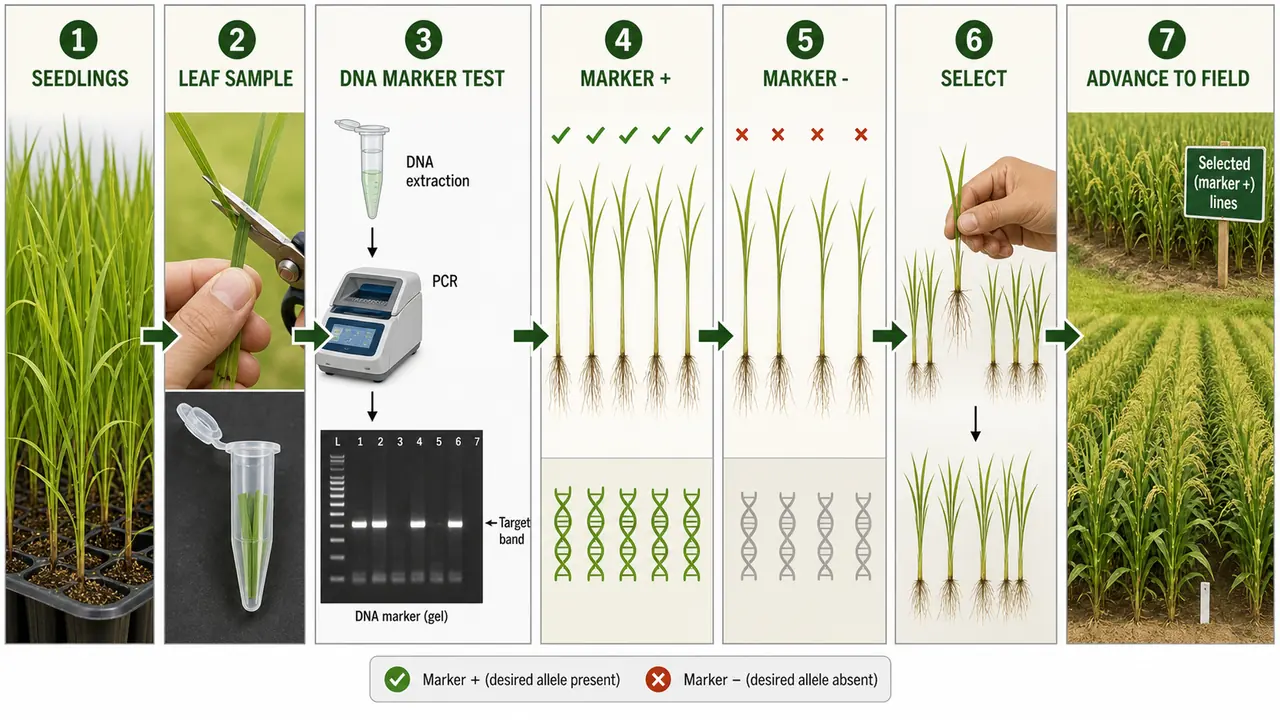
Marker aided selection is a tool for breeding, wherein genetic marker(s) tightly linked with the desired trait/gene(s) are utilized for indirect selection for that trait in segregating/non-segregating generations. In its simplest form it can be applied to replace evaluation of a trait that is difficult or expensive to evaluate. Instead of waiting for a disease to appear or conducting expensive field trials, breeders can simply test for the presence of a DNA marker in young seedlings and select plants that carry the desired genes at the earliest possible stage.
-
In compact terminology, molecular breeding is the selection of traits on the basis of molecular markers.
-
MAS is most useful for traits that are difficult to select e.g., disease resistance, salt tolerance, drought tolerance, heat tolerance, quality traits (aroma of basmati rice, flavour of vegetables). For these traits, conventional phenotypic selection often requires specific environmental conditions, destructive testing, or many years of evaluation -- all of which can be bypassed using MAS.
IMPORTANT
MAS is a game-changer for traits that are hard to screen phenotypically. It enables selection at the seedling stage using DNA tests, saving years of field evaluation.
QTL mapping
-
Some of the most difficult tasks of plant breeders relate to the improvement of traits that show a continuous range of values. Unlike simple Mendelian traits (like flower color) that are controlled by one or a few genes, quantitative traits (like yield, height, or grain weight) are controlled by many genes, each with a small effect, and are strongly influenced by the environment.
-
Genetic factors that are responsible for a part of the observed phenotypic variation for a quantitative trait are called Quantitative Trait Loci (QTLs). QTL mapping uses molecular markers to identify the approximate chromosomal locations of these loci, allowing breeders to understand the genetic architecture of complex traits and select for them more effectively.
-
The term QTL was coined by Gelderman. Gelderman introduced this concept to describe the individual genetic loci that contribute to continuously varying traits.
Tagging of disease resistance genes
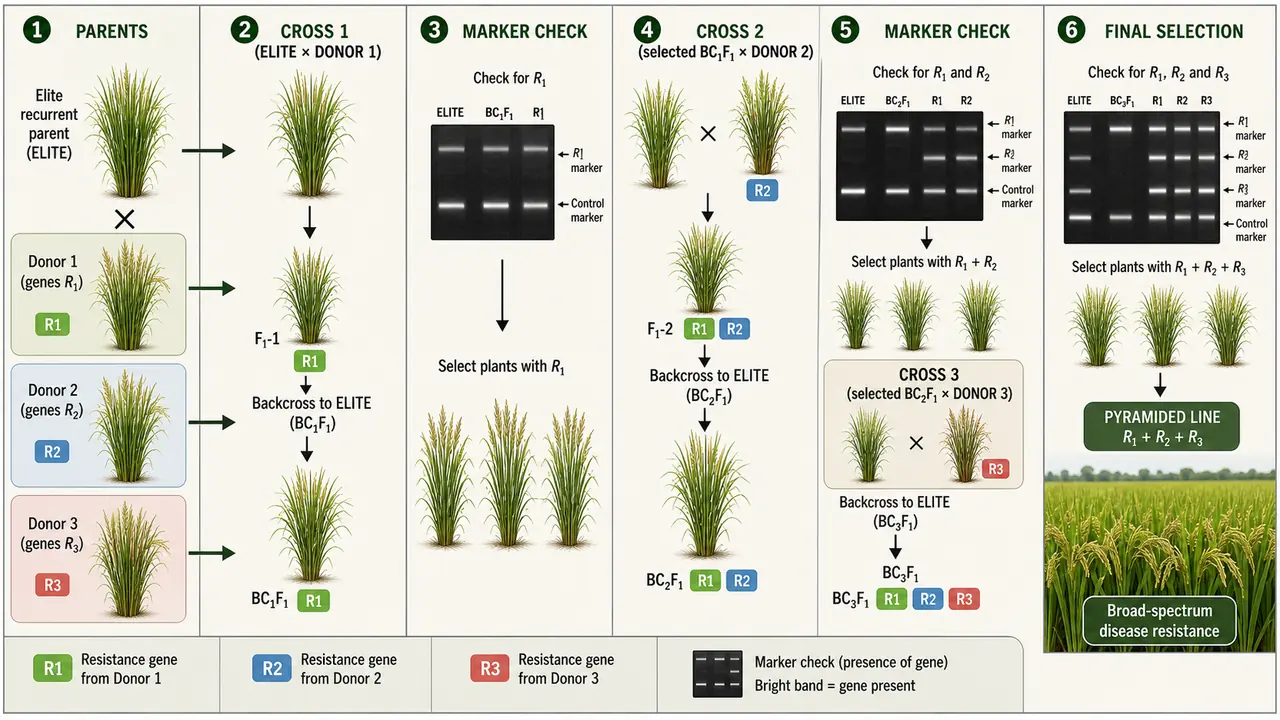
- The identification of molecular markers closely linked with resistance genes can facilitate expeditious pyramiding of major genes into elite background, making it more cost effective. Gene pyramiding involves stacking multiple resistance genes into a single variety so that it has durable resistance against different races or strains of a pathogen. Without molecular markers, pyramiding is extremely difficult because the presence of one resistance gene can mask the effects of others in conventional screening.
Tagging of male sterility genes
- A cytoplasmic male sterile system is desirable for use in hybrid seed production, as it eliminates the need for hand emasculation. Molecular markers linked to male sterility genes allow breeders to efficiently identify and maintain male sterile lines, restorer lines, and maintainer lines in hybrid breeding programs, significantly reducing the cost and effort of hybrid seed production.
Diversity evaluation
-
Recent advances in molecular biology have provided powerful genetic tools, which can provide rapid and detailed genetic resolution. Molecular markers enable researchers to quantify the genetic diversity within and between populations of crop species, which is essential for germplasm conservation, breeding strategy design, and understanding evolutionary relationships.
-
Molecular marker based genotyping involves the development of a marker profile unique to an individual. Each individual produces a unique pattern of DNA fragments, much like a human fingerprint.
-
This unambiguous pattern of crop varieties obtained using a DNA marker is termed as "DNA Fingerprinting". DNA fingerprinting provides a definitive molecular identity for each variety, which can be used for varietal identification, intellectual property protection, and resolving disputes about variety purity.
-
The technique was developed by Alec Jeffreys in 1985 in humans and was used first time in crop (rice) in 1988 by Dallas for cultivar identification. Alec Jeffreys' discovery of DNA fingerprinting at the University of Leicester was initially applied in forensic science and paternity testing, and its extension to crop species opened new frontiers in plant genetics.
-
In India, an important institutional recall for this field is the Centre for DNA Fingerprinting and Diagnostics (CDFD) at Hyderabad.
Heterosis breeding
-
Another important application of DNA markers is their prediction of heterosis in hybrids. Heterosis (or hybrid vigor) refers to the phenomenon where the hybrid offspring outperforms both parents in terms of growth, yield, or other desirable traits.
-
Evaluation of hybrids for heterosis or combining ability in the field is expensive. Field trials to test thousands of potential hybrid combinations require enormous resources in terms of land, labor, and time.
-
Molecular markers have been used to correlate genetic diversity and heterosis in several cereal crops (like rice, oat, and wheat). The underlying principle is that greater genetic distance between parents (as measured by molecular markers) often correlates with higher heterosis in their hybrid offspring. This allows breeders to pre-select promising parent combinations before making crosses, significantly improving the efficiency of hybrid breeding programs.
Hybrid seed purity testing
-
To determine the hybrid seed quality it is to be verified that the designated cross has occurred, the number of self-pollinations between the female parents meet the necessary purity and the product has adequate quality. Seed purity is critical because impure seed lots containing selfed plants will produce lower-performing crops that fail to show the expected hybrid vigor.
-
For years, the only method to check the hybrid seed purity has been the grow out test. Now the RAPD and RFLP markers are used to test the purity of F1 hybrids. The traditional grow-out test (GOT) requires growing seeds to maturity and evaluating morphological traits, which is time-consuming (takes an entire growing season) and occupies valuable field space. Molecular markers like RAPD and RFLP can verify seed purity in a matter of days using DNA extracted from seeds, without needing to grow the plants at all.
Blotting and Probe Concepts
- Southern blotting, developed by E.M. Southern, transfers DNA fragments from gel to a membrane for DNA-DNA hybridization analysis.
- In the same naming family, Northern blotting is associated with RNA / mRNA detection, while Western blotting is associated with protein detection.
- A probe is a short labeled nucleotide sequence used to detect complementary DNA or RNA sequences in a sample after hybridization.
Pyramiding of Bt genes
- Many Bt strains with novel insecticidal genes have been found. A desired combination of Cry proteins can be assembled via site-specific recombination vectors into a recipient Bt strain to create a genetically improved biopesticide. Cry proteins (Crystal proteins) are the insecticidal toxins produced by Bacillus thuringiensis. By pyramiding multiple Cry genes with different modes of action, scientists can create biopesticides with a broader spectrum of insect control and reduced risk of insects developing resistance.
Map based cloning of genes
Map-based cloning (also called positional cloning) is a strategy for identifying a gene by first determining its chromosomal location using molecular markers and then physically isolating the gene from that region. This approach does not require any prior knowledge of the gene's function -- only its position on the genetic map.
Gene pyramiding
-
Gene pyramiding or stacking can be defined as a process of combining two or more genes from multiple parents to develop elite lines and varieties. This strategy is particularly important for developing varieties with durable disease resistance, where multiple resistance genes are stacked to prevent pathogens from overcoming resistance.
-
Pyramiding entails stacking multiple genes leading to the simultaneous expression of more than one gene in a variety. Molecular markers are essential for gene pyramiding because they allow breeders to track the presence of each individual gene in the breeding population, even when the effects of one gene may mask others at the phenotypic level.
Genomics
-
It is the science of identifying the sequence of DNA in species. They are the complete set of chromosomes found in the gamete of a true diploid (true diploids are individuals with two sets of chromosomes). Genomics encompasses the study of the entire genome of an organism -- all its genes, their sequences, organization, functions, and interactions.
-
In direct terminology recall, the term genomics is associated with Thomas Roderick (1986).
-
Important milestone anchors often used in exam recall are the Human Genome Project launched in 1990 and completed in 2003, Arabidopsis thaliana as the first fully sequenced model plant genome, and rice as the first fully sequenced major crop genome.
-
The genome of rice, soybean & sorghum are completely sequenced but for wheat it is not completely sequenced. Rice was the first crop plant to have its genome fully sequenced (in 2005), which was a landmark achievement given its importance as a staple food for more than half the world's population. The wheat genome, being much larger and more complex (hexaploid with three sub-genomes), posed a far greater challenge.
-
Germplasm is the genetic background of a species. Germplasm refers to the living genetic resources (seeds, plant tissues, or entire plants) that are maintained for the purpose of breeding, conservation, and research. It represents the raw material from which new varieties are developed.
-
Gene Cluster is a group of adjacent genes that are identical or related. Gene clusters often arise through gene duplication events and may encode proteins with similar or related functions.
-
Map unit: The distance between two genes that recombine with a frequency of 1 per cent. One map unit is also called a centiMorgan (cM), named after the geneticist Thomas Hunt Morgan. It provides a measure of genetic distance based on recombination frequency rather than physical distance.
-
Cybrids or Cytoplasmic hybrids: Hybrids produced using the nucleus of one parent cell and cytoplasm of both cells are called Cybrids. Cybrids are valuable because they allow the transfer of cytoplasmic traits (such as cytoplasmic male sterility) from one species to another without altering the nuclear genome.
- It involves the fusion of a normal protoplast of one species with a protoplast having an inactivated nucleus of another species. The nucleus of one parent is selectively inactivated (usually by irradiation), so the resulting hybrid cell has the nucleus from one species and cytoplasm (including mitochondria and chloroplasts) from both species.
-
DNA replicase: DNA-synthesizing enzyme required specifically for replication. This enzyme ensures that the entire genome is faithfully copied before cell division.
-
Genetic map is a map of the genome showing relative positions of genes and/or markers on chromosomes. Genetic maps are constructed based on recombination frequencies between linked markers and genes, and they are essential tools for gene discovery, QTL mapping, and marker-assisted selection.
-
Vector: A plasmid, phage, virus or bacterium used to deliver selected foreign DNA for cloning and in gene transfer. Vectors serve as molecular vehicles that carry the gene of interest into the host cell.
-
Cosmids are plasmid vectors that contain bacteriophage DNA packaged into phage particles. Cosmids combine the advantages of plasmids (easy manipulation) and phage vectors (ability to carry larger DNA inserts, typically 37-52 kb), making them useful for constructing genomic libraries.
-
Transgenic plants are genetically modified organisms. These are plants that have had foreign genes introduced into their genome using genetic engineering techniques.
-
Transgenics or Genetically Modified Organisms (GMO) are organisms with a gene or genetic construct introduced by molecular or recombinant DNA. The foreign gene (called the transgene) is stably integrated into the host genome and is inherited by subsequent generations.
-
Transformation is a process by which genetic material carried by a species cell is altered by incorporation of exogenous DNA into the genome. Transformation is the fundamental process that creates transgenic organisms, and it can be achieved through various methods including Agrobacterium-mediated transfer, biolistics (gene gun), and electroporation.
-
In direct-method recall, the broader set also includes lipofection, microinjection, pollen transformation, and silicon-carbide-fibre-mediated transfer; the gene-gun / particle-bombardment method is classically linked with Klein and Sanford.
-
Transcription is the process during which the information in a sequence of DNA is used to construct mRNA. Transcription is the first step in gene expression, where the DNA code is copied into messenger RNA (mRNA), which then serves as the template for protein synthesis (translation).
-
Virus that lives in bacteria -- Bacteriophage (1st observed by Ruska in 1940). Bacteriophages (literally "bacteria eaters") are viruses that specifically infect bacteria. They have been instrumental in molecular biology research and are used as vectors in genetic engineering.
-
Transgenics are genetically modified plants, which have been created by mobilizing genes of interest from one species to another species. The ability to move genes across species barriers represents one of the most powerful capabilities of modern biotechnology.
Plasmid
-
Plasmid is an independent, double-stranded, closed circular, self-replicating, autonomous molecule of DNA, existing in cells as extra-chromosomal genomes or units, i.e. PBR322, pACYC, Psc101, ColE1 etc. Plasmids are among the most important tools in genetic engineering. Their small size, ability to replicate independently of the host chromosome, and capacity to carry selectable marker genes (like antibiotic resistance) make them ideal vectors for cloning.
-
Categories of Plasmids
- Stringent plasmids, which replicate only when the chromosome replicates. These plasmids are present in low copy numbers (1-2 copies per cell) because their replication is tightly controlled and synchronized with the host chromosome.
- Relaxed plasmids, which replicate on their own. These plasmids are present in high copy numbers (10-700 copies per cell) because they can replicate independently of the cell cycle, making them more useful for producing large quantities of cloned DNA.
- Ti plasmid: Tumor-induced plasmid, often responsible for crown gall (tumor) induction in plants. Ti plasmids are used as vectors to introduce foreign DNA into plant cells. The Ti plasmid of Agrobacterium tumefaciens is the most widely used vector system for plant transformation. Its natural ability to transfer T-DNA into the plant genome has been exploited to create disarmed vectors that deliver useful genes without causing disease.

Summary Cheat Sheet
| Concept / Topic | Key Details |
|---|---|
| Genetic marker | Gene/DNA sequence with known chromosomal location; acts as "flag" |
| Markers are phenotypically neutral | Do not affect the trait; serve as indirect indicators |
| Locus (plural: loci) | Specific genomic position of a marker on chromosome |
| RFLP | Restriction Fragment Length Polymorphism; non-PCR; co-dominant; uses Southern blotting |
| RAPD | Random Amplified Polymorphic DNA; PCR-based; single primer (9–12 bases); dominant |
| DAF | DNA Amplification Fingerprinting; shorter primers (5–8 bases); more complex pattern |
| AP-PCR | Arbitrarily Primed PCR; primers 10–50 bases; more reproducible than RAPD |
| AFLP | Amplified Fragment Length Polymorphism; combines restriction digestion + PCR |
| SSR / Microsatellite | Simple Sequence Repeats; co-dominant; most widely used in crop breeding |
| STMS | Sequence Tagged Microsatellite Sites; PCR-based SSR detection |
| SNP | Single Nucleotide Polymorphism; most abundant marker; every 100–300 bp |
| Ideal marker traits | Polymorphic, co-dominant, frequent, neutral, reproducible, easy/cheap |
| MAS | Marker-Assisted Selection; select at DNA level in seedling stage |
| QTL | Quantitative Trait Loci; term coined by Gelderman |
| Gene pyramiding | Stacking multiple genes using markers for durable resistance |
| DNA fingerprinting inventor | Alec Jeffreys (1985); first in rice by Dallas (1988) |
| Heterosis prediction | Greater genetic distance (by markers) correlates with higher hybrid vigor |
| Plasmid | Extra-chromosomal, circular, self-replicating DNA (e.g., PBR322) |
| Stringent plasmid | Low copy (1–2); replicates with chromosome |
| Relaxed plasmid | High copy (10–700); replicates independently |
| Ti plasmid | From Agrobacterium; most used plant transformation vector |
| Cosmids | Plasmid + phage DNA; carry 37–52 kb inserts |
| Map unit / centiMorgan | Distance = 1% recombination frequency; named after T.H. Morgan |
| Cybrids | Cytoplasmic hybrids; nucleus of one species + cytoplasm of both |
| Bacteriophage | Virus in bacteria; first observed by Ruska (1940) |