🐣 Cell: The Basic Unit of Life
Understand cell discovery, cell theory, types of cells, plasma membrane structure, and the difference between prokaryotic and eukaryotic cells — with agricultural examples and exam-focused notes.
Why Cells Matter in Agriculture
When a plant breeder selects a high-yielding rice variety or a pathologist examines a disease-resistant wheat line, the action happens at the cellular level. Every trait we see in a crop — grain size, drought tolerance, pest resistance — traces back to processes inside individual cells. Understanding cell structure is therefore the first step toward understanding genetics, plant breeding, and modern biotechnology.
Discovery of the Cell
- The word cell comes from the Latin word "Cellula", meaning a little room.
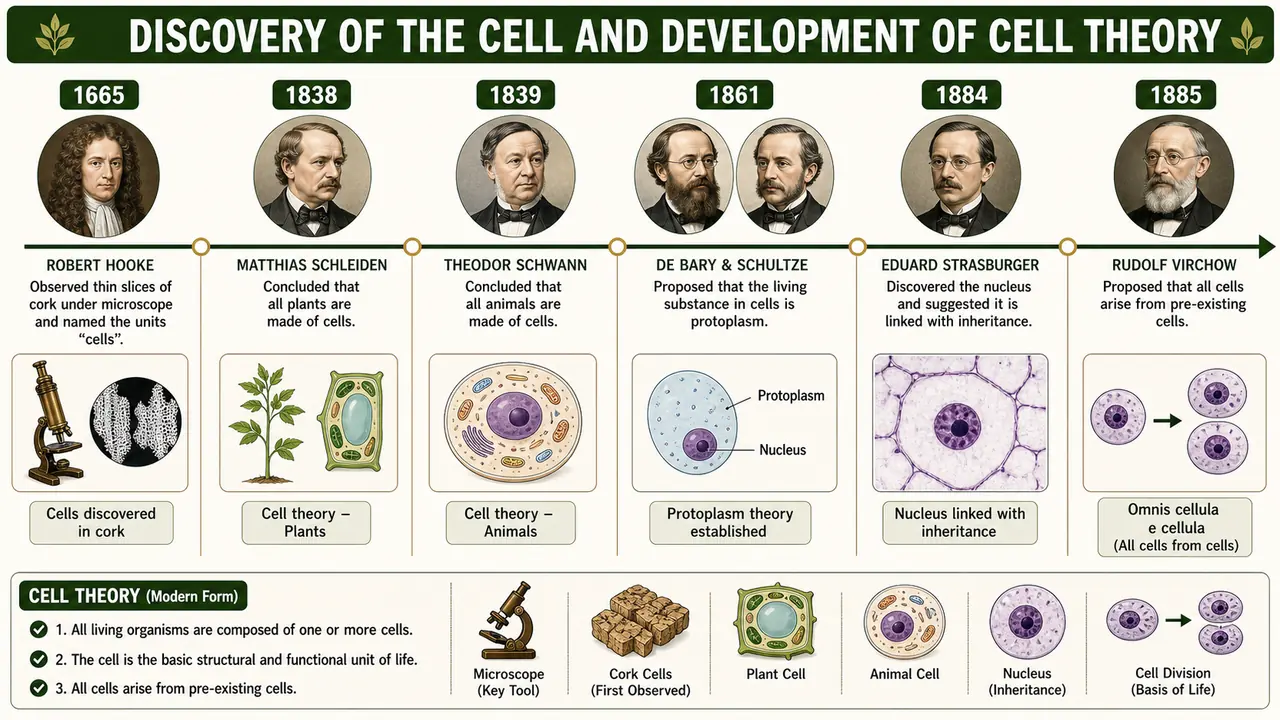
- English scientist Robert Hooke discovered the cell in 1665 while examining a thin section of cork (bark of the oak tree, Quercus suber) under his simple microscope.
- He observed empty hexagonal chambers resembling a honeycomb and named them "cells." What Hooke actually saw were the dead cell walls of cork tissue — the living contents had long dried out.
- Hooke recorded his observations in the book Micrographia, one of the most influential scientific works of the 17th century.
- In exam-oriented cell-biology history, Robert Hooke is also remembered as the father of cytology / cell biology, C. P. Swanson as the father of modern cytology, and A. K. Sharma as the father of Indian cytology.
- The first living cell was observed by Antonie van Leeuwenhoek in 1674 using improved microscopes. This is an important contrast with Hooke's cork observation, which involved dead cells.
- In older objective-style history tables, Leeuwenhoek's first living-cell observation is sometimes linked more specifically with simple algal material rather than with fixed plant tissue, reinforcing the contrast between living microscopic cells and Hooke's dead cork chambers.
Agricultural connection: Cork tissue protects tree bark from water loss and infection — the same cell-wall chemistry that Hooke first observed is what makes suberin-rich potato skin resist storage diseases.
Pro Content Locked
Upgrade to Pro to access this lesson and all other premium content.
Charged once for one year · ₹1188 total
Save ₹100/month vs ₹2388/year launch price
- All Agriculture & Banking Courses
- AI Lesson Questions (100/day)
- AI Doubt Solver (50/day)
- Glows & Grows Feedback (30/day)
- AI Section Quiz (20/day)
- 22-Language Translation (100/day)
- Recall Questions (20/day)
- AI Quiz (15/day)
- AI Quiz Paper Analysis (100/day)
- AI Step-by-Step Explanations (100/day)
- Spaced Repetition Recall (FSRS)
- AI Tutor
- Immersive Text Questions
- Audio Lessons — Hindi & English
- Mock Tests & Previous Year Papers
- Summary & Mind Maps
- XP, Levels, Leaderboard & Badges
- Generate New Classrooms
- Voice AI Teacher (AgriDots Live)
- AI Revision Assistant
- Knowledge Gap Analysis
- Interactive Revision (LangGraph)
🔒 Secure one-time yearly payment via Razorpay · No hidden fees
Why Cells Matter in Agriculture
When a plant breeder selects a high-yielding rice variety or a pathologist examines a disease-resistant wheat line, the action happens at the cellular level. Every trait we see in a crop — grain size, drought tolerance, pest resistance — traces back to processes inside individual cells. Understanding cell structure is therefore the first step toward understanding genetics, plant breeding, and modern biotechnology.
Discovery of the Cell
- The word cell comes from the Latin word "Cellula", meaning a little room.
- English scientist Robert Hooke discovered the cell in 1665 while examining a thin section of cork (bark of the oak tree, Quercus suber) under his simple microscope.
- He observed empty hexagonal chambers resembling a honeycomb and named them "cells." What Hooke actually saw were the dead cell walls of cork tissue — the living contents had long dried out.
- Hooke recorded his observations in the book Micrographia, one of the most influential scientific works of the 17th century.
- In exam-oriented cell-biology history, Robert Hooke is also remembered as the father of cytology / cell biology, C. P. Swanson as the father of modern cytology, and A. K. Sharma as the father of Indian cytology.
- The first living cell was observed by Antonie van Leeuwenhoek in 1674 using improved microscopes. This is an important contrast with Hooke's cork observation, which involved dead cells.
- In older objective-style history tables, Leeuwenhoek's first living-cell observation is sometimes linked more specifically with simple algal material rather than with fixed plant tissue, reinforcing the contrast between living microscopic cells and Hooke's dead cork chambers.
Agricultural connection: Cork tissue protects tree bark from water loss and infection — the same cell-wall chemistry that Hooke first observed is what makes suberin-rich potato skin resist storage diseases.
What Is a Cell?
A cell is the structural and functional unit of life — a mass of protoplasm bounded by a plasma membrane.
- Structural unit means cells are the building blocks from which all organisms (from soil bacteria to banyan trees) are constructed.
- Functional unit means all life processes — photosynthesis in a leaf mesophyll cell, respiration in a root hair cell — are carried out at the cellular level.
Cell Theory and Its Development
| Year | Scientist | Contribution |
|---|---|---|
| 1838 | Schleiden (German botanist) | Plants are composed of cells |
| 1839 | Schwann (German zoologist) | Animals are also composed of cells |
| 1861 | De Bary & Schultze | Protoplasm theory — cells are tiny masses of protoplasm, each containing a nucleus |
| 1884 | Strasburger | Nucleus is related to inheritance of characters |
| 1885 | Virchow | "Omnis cellula e cellula" — all cells arise from pre-existing cells |
Schleiden and Schwann together formulated the Cell Theory: the cell is the basic unit of all life. Virchow's principle completed it by ruling out spontaneous generation of cells.
- Virchow's extension is also described as the Cell Lineage Theory because every cell is traced back to a pre-existing cell.
Exam tip: Remember the chronological order with the mnemonic "SS-DBS-SV" (Schleiden–Schwann → De Bary–Schultze → Strasburger → Virchow).
Cell Size and Microscopy
| Parameter | Value | Details |
|---|---|---|
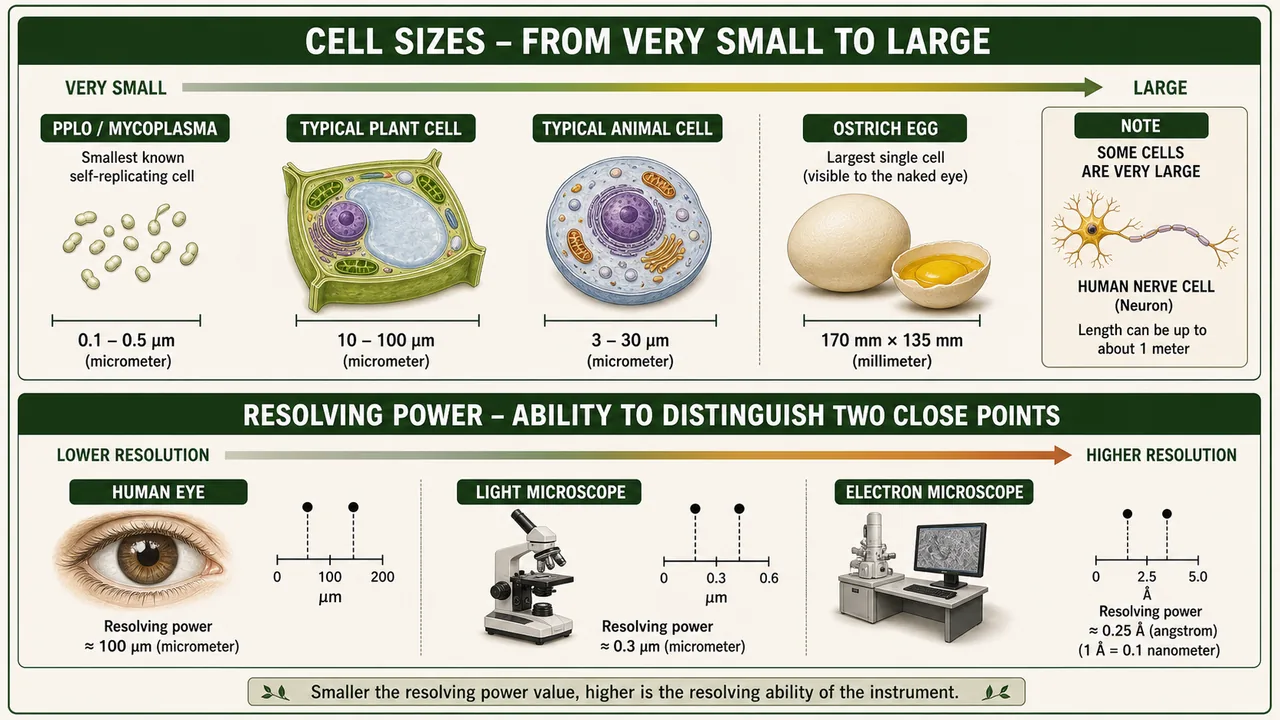
| Majority of cells | 3–30 µm | Most plant and animal cells fall in this range |
| Smallest cell | PPLO — 0.1–0.5 µm | Pleuro-Pneumonia-Like Organism (Mycoplasma); smallest cell capable of independent life |
| Largest cell | Ostrich egg — 170 mm × 135 mm | Large due to massive yolk reserves |
| Largest human cell | Female ovum | Largest cell in the human body by size |
| Smallest human cell | Male sperm | Smallest highly specialized human cell |
| Longest human cell | Nerve cell (neuron) | Exceptionally elongated for transmitting electrical impulses |
| Resolving power — human eye | 100 µm | Cannot distinguish two points closer than this |
| Resolving power — light microscope | 0.3 µm (3000 Å) | ~300× better than the naked eye |
| Resolving power — electron microscope | 0.25 Å | ~1000× better than a light microscope |
Agricultural relevance: Electron microscopy allowed scientists to visualise plant viruses (e.g., Tobacco Mosaic Virus at ~300 nm) and study ultrastructural damage caused by fungal pathogens in crop cells.
Structural Parts of a Cell
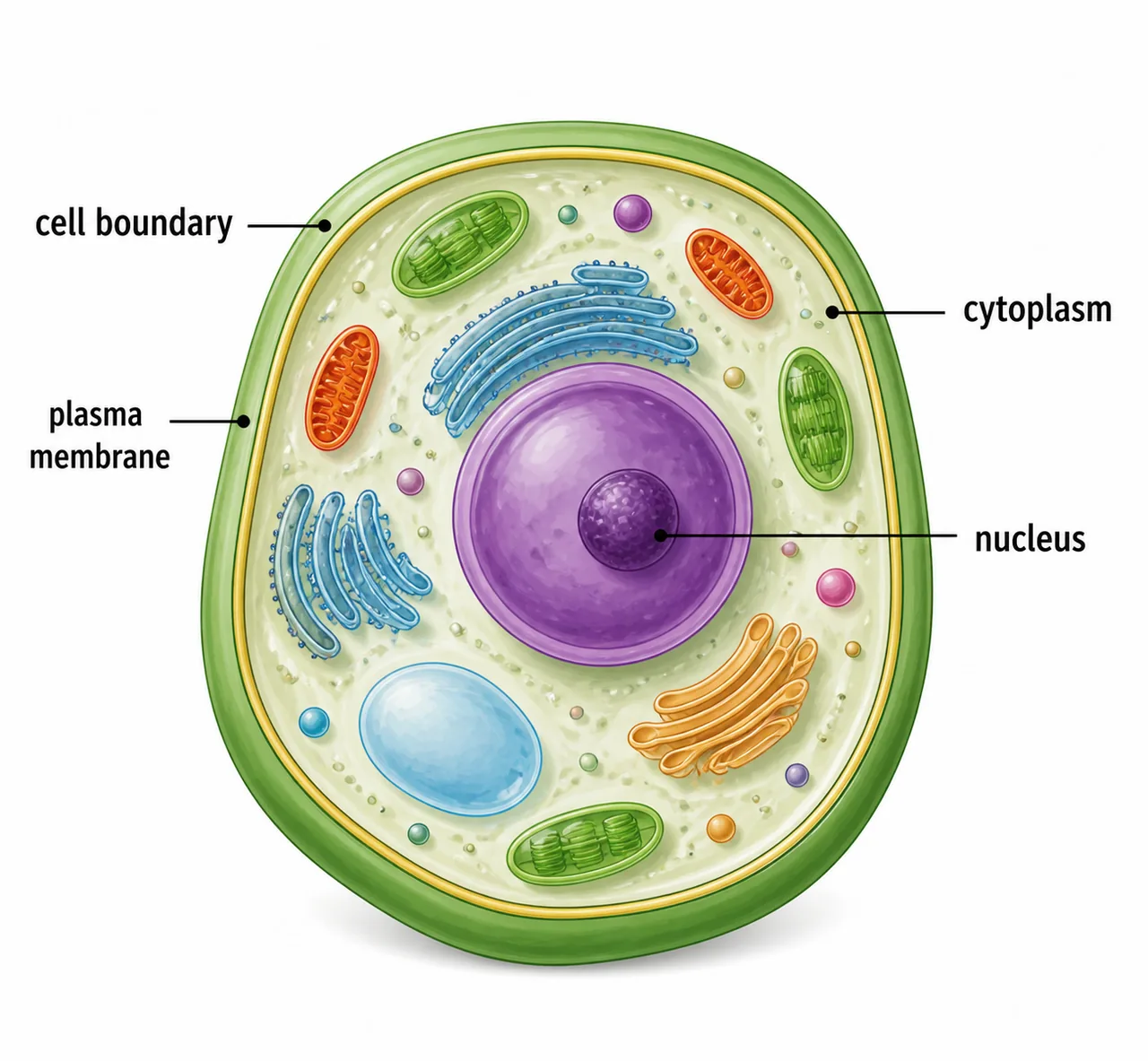
Every cell is broadly organised into three parts:
- Cell boundaries — plasma membrane (and cell wall in plants) that protect the cell and regulate what enters and exits.
- Cytoplasm — the gel-like substance where most cellular reactions occur.
- Nucleus — houses the genetic material (DNA) and controls cell activities.
Hyaloplasm Under the Electron Microscope
The hyaloplasm (cytosol) is the clear, fluid portion of the cytoplasm containing water, minerals, ions, amino acids, and sugars. It forms the ground substance in which all organelles are suspended and provides the medium for many biochemical reactions.
Structures visible in hyaloplasm under an electron microscope:
| Structure | Key Role |
|---|---|
| Plasma membrane | Controls entry and exit of substances |
| Endoplasmic Reticulum (Smooth & Rough) | Synthesis and transport |
| Dictyosomes (Golgi apparatus of plants) | Packaging and secretion |
| Lysosomes | Digestion of waste material |
| Tonoplast (vacuolar membrane) | Encloses the vacuole |
| Spherosomes | Fat storage |
| Plasmodesmata | Channels connecting adjacent plant cells |
Prokaryotic vs. Eukaryotic Cells
All living cells fall into two broad categories:
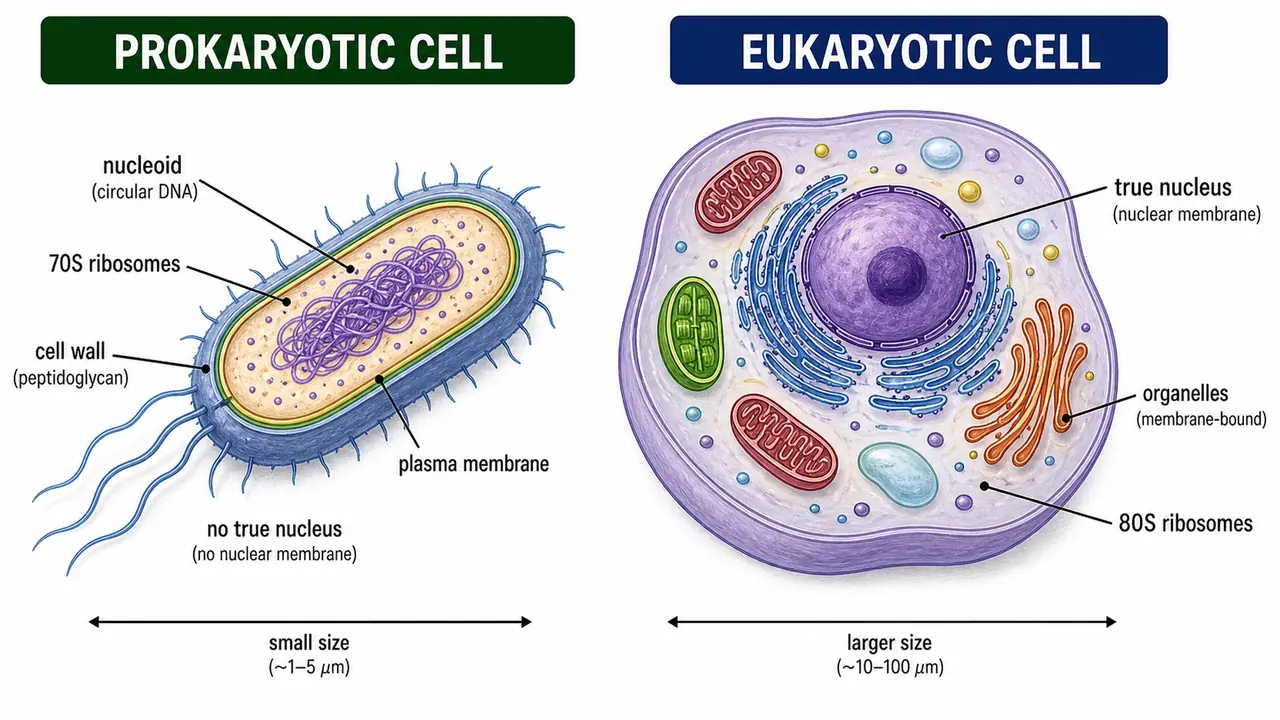
- Prokaryotic (pro = before, karyon = nucleus) — lack a true membrane-bound nucleus. Example: Rhizobium bacteria in legume root nodules.
- Eukaryotic (eu = true, karyon = nucleus) — possess a well-defined nucleus enclosed by a nuclear membrane. Example: all crop plants, animals, fungi.
- Animals, plants, fungi, protozoa, and algae except blue-green algae (cyanobacteria) are eukaryotic.
- The terms prokaryote and eukaryote are classically credited to Édouard Chatton.
- Among eukaryotes, fungi are generally multicellular, but yeast is a familiar unicellular exception.
| Feature | Prokaryotic Cell | Eukaryotic Cell |
|---|---|---|
| Nucleus | No true nucleus (nucleoid region) | True membrane-bound nucleus |
| Membrane-bound organelles | Absent | Present (mitochondria, chloroplasts, ER, etc.) |
| DNA | Single, circular, naked (no histones) | Multiple, linear chromosomes with histones |
| Ribosome type | 70S | 80S (cytoplasm); 70S in mitochondria & chloroplasts |
| Cell division | Mainly binary fission | Mitosis and meiosis |
| Cell size | 0.1–5 µm | 10–100 µm |
| Examples in agriculture | Rhizobium, Azotobacter, Bacillus thuringiensis (Bt) | Rice, wheat, cotton, all crop plants |
- In classical microbiology-style exam notes, the respiratory support comparison is often written as mesosomes in prokaryotes versus mitochondria in eukaryotes. Modern biology treats mesosomes cautiously, but the contrast still appears in some competitive-exam material.
Plasma Membrane (Cell Membrane / Plasmalemma)
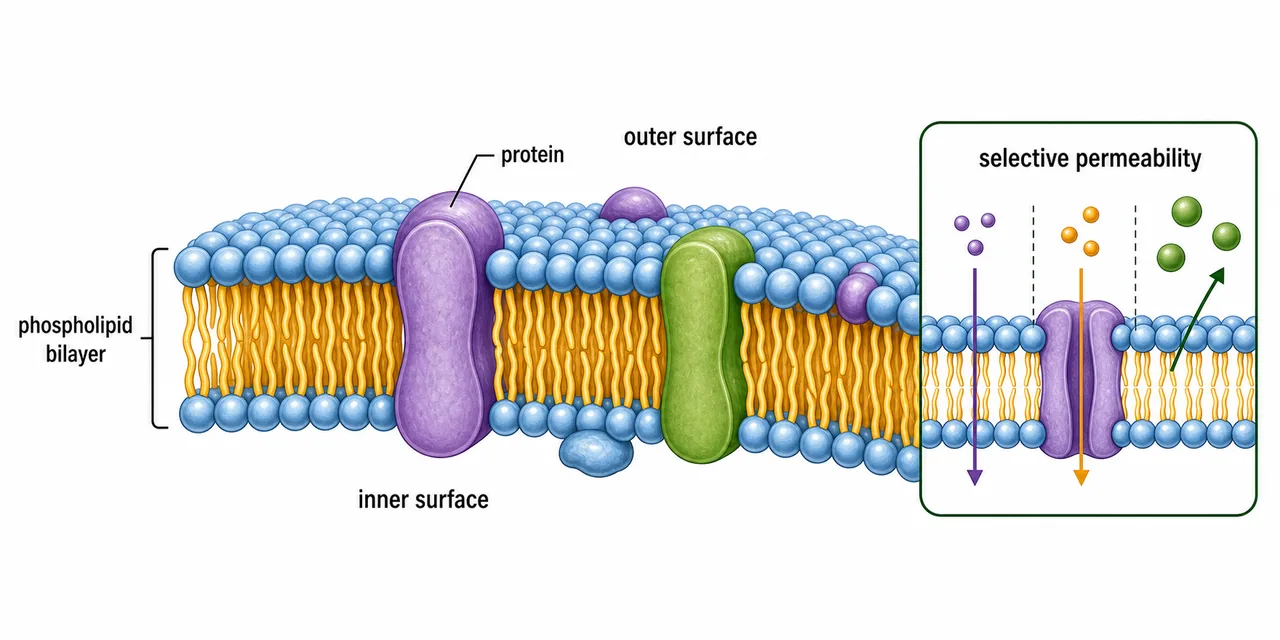
- The plasma membrane is an extremely thin, elastic, and living membrane that surrounds every cell, acting as a biological barrier between internal and external environments.
- In plant cells, it lies on the inner side of the cell wall.
- It is a lipoprotein membrane built according to the Fluid Mosaic Model:
- Protein layer — 20 Å thickness
- Lipid bilayer — 35 Å
- Protein layer — 20 Å
- Total thickness: 75–100 Å
Properties and Functions
- Selectively permeable (semi-permeable) — allows only certain molecules to pass, maintaining homeostasis. This is how root cells absorb water and nutrients from soil while keeping harmful substances out.
- In animal cells (which lack a cell wall), the plasma membrane is the outermost structure, hence called ectoplast.
- Plasma membrane is absent in viruses — viruses have a protein coat (capsid) instead.
- Sialic acid — a nine-carbon monosaccharide constituent of the membrane — acts as a cell receptor and plays a key role in cell-to-cell recognition and pathogen interactions.
Membrane Classification of Organelles
IMPORTANT
This classification is frequently tested in competitive exams (IBPS AFO, ICAR, and NABARD Grade A).
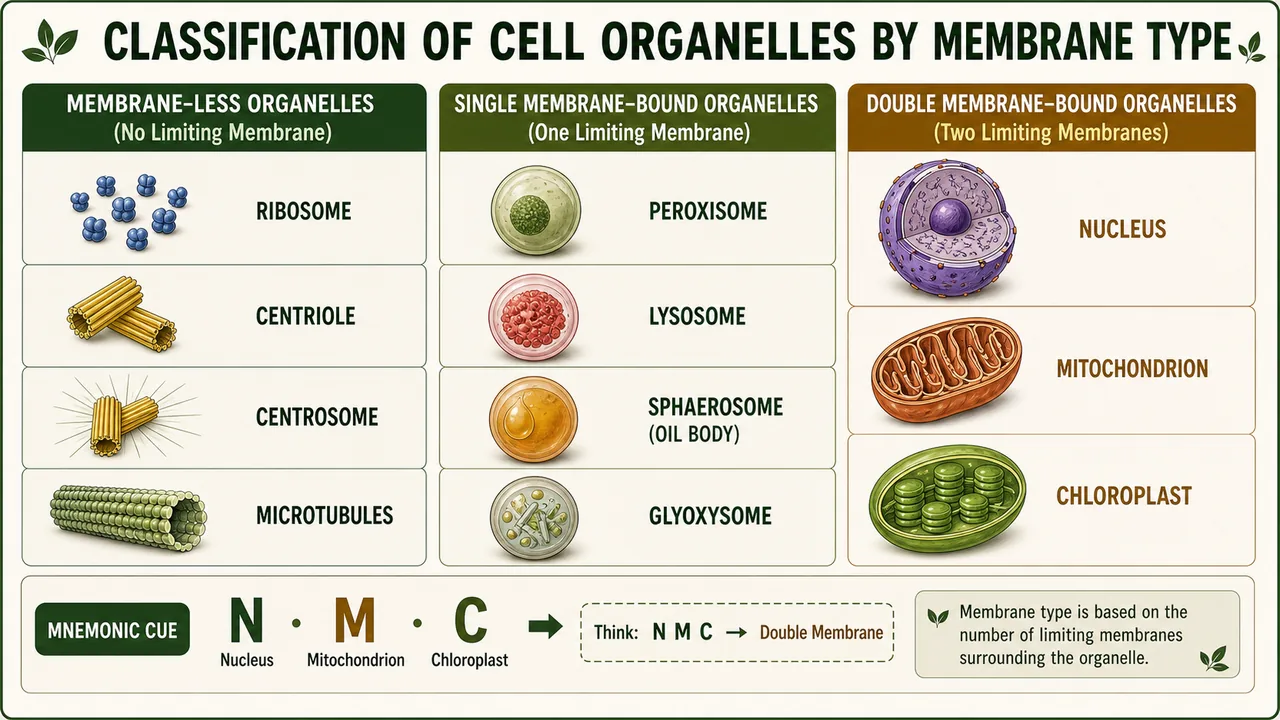
| Category | Organelles |
|---|---|
| Membrane-less | Ribosome, Centriole, Centrosome, Microtubules |
| Single membrane-bound | Peroxisomes, Lysosomes, Sphaerosome, Glyoxysomes |
| Double membrane-bound | Nucleus, Mitochondria, Chloroplast |
Mnemonic for double-membrane organelles: "NMC" — Nucleus, Mitochondria, Chloroplast. Both mitochondria and chloroplasts are semi-autonomous (they contain their own DNA).
Quick Plant Cell vs Animal Cell Contrast
| Feature | Plant Cell | Animal Cell |
|---|---|---|
| Plastids | Present | Absent |
| Nucleus position | Often pushed to one side in the peripheral cytoplasm by the large vacuole | Usually more central |
| Lysosomal role | Classical exam notes often say lysosomal activity is largely performed by vacuoles | Lysosomes clearly present |
| Glyoxysomes / sphaerosomes | May be present, especially in plant metabolic contexts | Generally absent |
| Shape | Usually more rigid / rectangular because of cell wall support | More irregular or rounded |
Explore More
Summary Table
| Topic | Key Fact | Exam Pointer |
|---|---|---|
| Cell discovery | Robert Hooke, 1665, cork section | Term "Cell" coined by Hooke |
| Cell Theory | Schleiden (1838) + Schwann (1839) | Cell = basic unit of life |
| "Omnis cellula e cellula" | Virchow, 1885 | All cells from pre-existing cells |
| Smallest cell | PPLO (Mycoplasma), 0.1–0.5 µm | Smallest independent cell |
| Largest cell | Ostrich egg | Single largest cell in nature |
| Membrane thickness | 75–100 Å | Fluid Mosaic Model |
| Prokaryote vs. Eukaryote | Nucleus absent vs. present | 70S vs. 80S ribosomes |
| Double-membrane organelles | Nucleus, Mitochondria, Chloroplast | Semi-autonomous = own DNA |
| Protoplasm | Physical basis of life (Huxley) | 80–90% water |
Summary Cheat Sheet
| Concept / Topic | Key Details |
|---|---|
| Cell discovered by | Robert Hooke (1665) — cork section; term from Latin "Cellula" |
| Father of cytology / cell biology | Robert Hooke |
| Father of modern cytology | C. P. Swanson |
| Father of Indian cytology | A. K. Sharma |
| First living cell observed by | Antonie van Leeuwenhoek (1674) |
| Cell = | Structural and functional unit of life |
| Cell Theory | Schleiden (1838) + Schwann (1839) |
| "Omnis cellula e cellula" | Virchow (1885) — all cells from pre-existing cells |
| Smallest cell | PPLO / Mycoplasma (0.1–0.5 µm) |
| Largest cell | Ostrich egg (170 mm x 135 mm) |
| Electron microscope resolution | 0.25 Å (~1000x better than light microscope) |
| Prokaryotic cell | No true nucleus; single circular DNA; 70S ribosomes |
| Eukaryotic cell | Membrane-bound nucleus; linear chromosomes; 80S ribosomes |
| Eukaryote examples | Plants, animals, fungi, protozoa, and algae except BGA / cyanobacteria |
| Fungal exception | Fungi are generally multicellular, but yeast is a common unicellular exception |
| Classical respiration recall | Mesosomes in prokaryotic exam framing vs mitochondria in eukaryotes |
| Plasma membrane thickness | 75–100 Å; Fluid Mosaic Model (lipoprotein) |
| Membrane = selectively permeable | Controls entry/exit; absent in viruses |
| Double membrane organelles | Nucleus, Mitochondria, Chloroplast (NMC) |
| Single membrane organelles | Peroxisomes, Lysosomes, Sphaerosome, Glyoxysomes |
| Membrane-less organelles | Ribosome, Centriole, Centrosome, Microtubules |
| Sialic acid | Cell receptor; 9-carbon monosaccharide on membrane |
| Three structural parts of cell | Cell boundaries, Cytoplasm, Nucleus |
| Hyaloplasm / cytosol | Clear fluid portion; ground substance for organelles |
| Plasmodesmata | Channels connecting adjacent plant cells |