🥭 Mango
King of fruits — origin, varieties, cultivation, physiology, disorders and exam facts
Introduction
- Botanical Name: Mangifera indica
- Family: Anacardiaceae
- Origin: Indo-Burma region (Primary centre of origin)
- Chromosome number: 2n = 40
- Fruit type: Drupe (fleshy mesocarp with stony endocarp)
- National fruit of India and known as the King of Fruits
- India is the largest producer of mango in the world, contributing approximately 45% of world production
- Uttar Pradesh is the largest mango-producing state in India
- Highest productivity in the world: Venezuela
- Pollinator: House fly and other dipteran insects (not bees)
- Mango hybridization work was first started by Burns & Prayag in 1911 at Pune
- Caging technique of breeding was used by Dr. R.N. Singh
- Good mango varieties have a TSS of 20%
- Only 0.1% of perfect flowers develop fruits to maturity
IMPORTANT
Mango is a drupe (not a berry). India contributes ~45% of world mango production. Chromosome number 2n = 40. These are the three most frequently tested facts.
Climate & Soil Requirements
- Type: Tropical fruit crop
- Optimum temperature: 24-27°C for flowering, fruit set and development
- Altitude: Can be grown up to 1400 m above sea level
- Rainfall: 75-250 cm well-distributed rainfall is ideal
- Soil: Deep, well-drained alluvial or laterite soils with pH 5.5-7.5
- Mango is highly susceptible to frost and low temperature injury
- Storage temperature:
- Mature fruit: 6-7°C
- Ripened fruit: 20°C
- Fruits should be stored above 5°C to avoid chilling injury
- Longevity of mango seed: 30 days (4 weeks) — recalcitrant seed
- Mango can withstand deficiency of P but not K (potassium is critical for fruit quality)
NOTE
Mango is a tropical fruit but can tolerate subtropical conditions. It cannot tolerate waterlogging or frost. The variety Malbhog is most susceptible to waterlogged conditions.
Important Varieties by State
| State | Important Varieties |
|---|---|
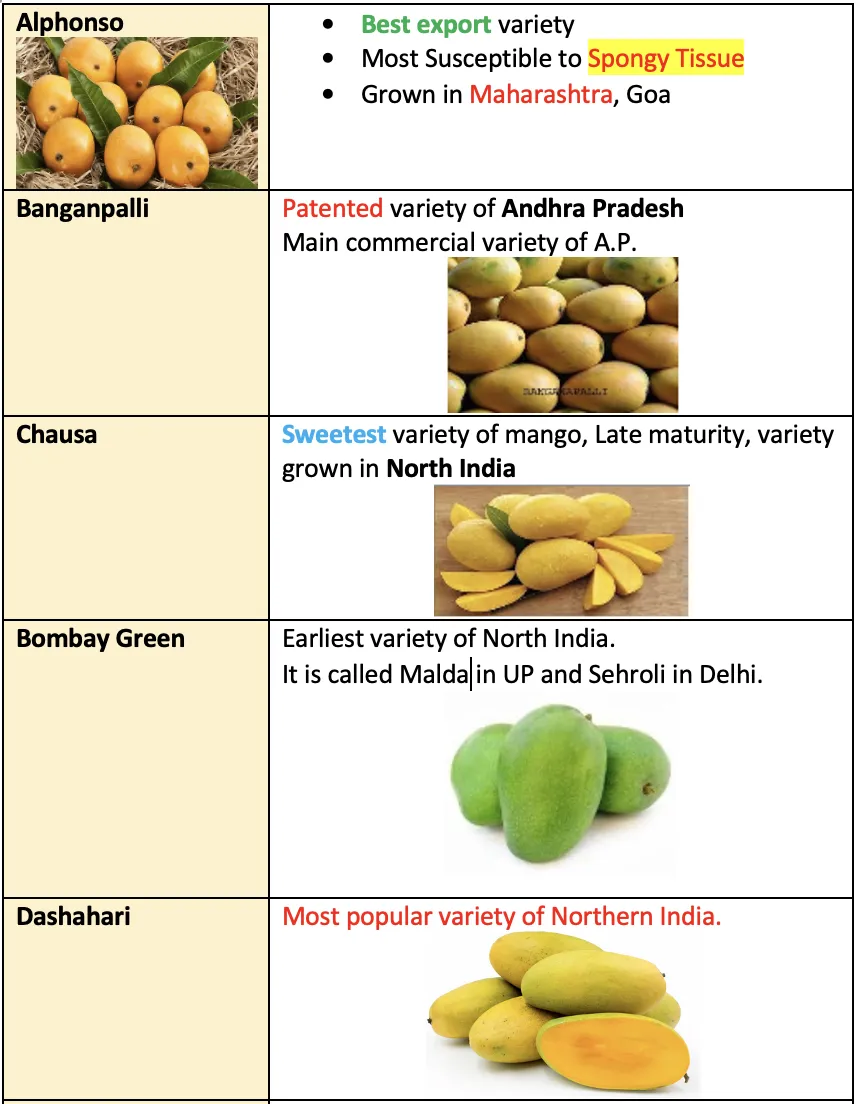
| Uttar Pradesh | Dasheri, Langra, Chausa, Bombay Green, Lucknow Safeda, Mallika |
| Bihar | Gulabkhas, Jardalu, Himsagar, Bombai |
| Gujarat | Kesar, Alphonso, Rajapuri |
| Maharashtra | Alphonso (Hapus), Pairi, Totapuri |
| AP / Telangana | Benishan (Banganapalli), Suvarnarekha, Neelum |
| Karnataka | Totapuri, Mulgoa, Neelum, Alphonso |
| Tamil Nadu | Neelum, Rumani, Banganapalli |
| West Bengal | Himsagar, Langra, Fazli |
Types of Mango Varieties
- North Indian cultivars: Alternate bearer, monoembryonic, self-incompatible
- South Indian cultivars: Regular bearing, polyembryonic
- Regular bearing varieties: Neelum, Totapuri, Pairi, Gulabkhas, Himsagar
- Alternate bearers: Langra, Dasheri, Chausa
- Off-season bearing: Niranjan, Madhulica
- Polyembryonic varieties: Goa, Mulgoa, Olour, Bellary, Chandrakaran
- Exotic coloured cultivars: Tommy Atkins, Haden, Sensation, Julie
- Mulgoa is mother of all coloured cultivars
- Rosica — mutant variety of mango
- Madhulica — most precocious cultivar
- Two crops of mango are taken in Kanyakumari district of Tamil Nadu
TIP
- North: Alternate bearer + monoembryonic
- South: Regular bearer + polyembryonic
Polyembryonic Rootstocks
| Rootstock | Dwarfing Effect on |
|---|---|
| Rumani | Dasheri |
| Olour | Langra & Himsagar |
| Villicolumban | Alphonso |
- Salt-resistant rootstocks: Kurukkan, Moovandan, Nekkare
Hybrid Varieties
| Hybrid | Cross | Notable Feature |
|---|---|---|
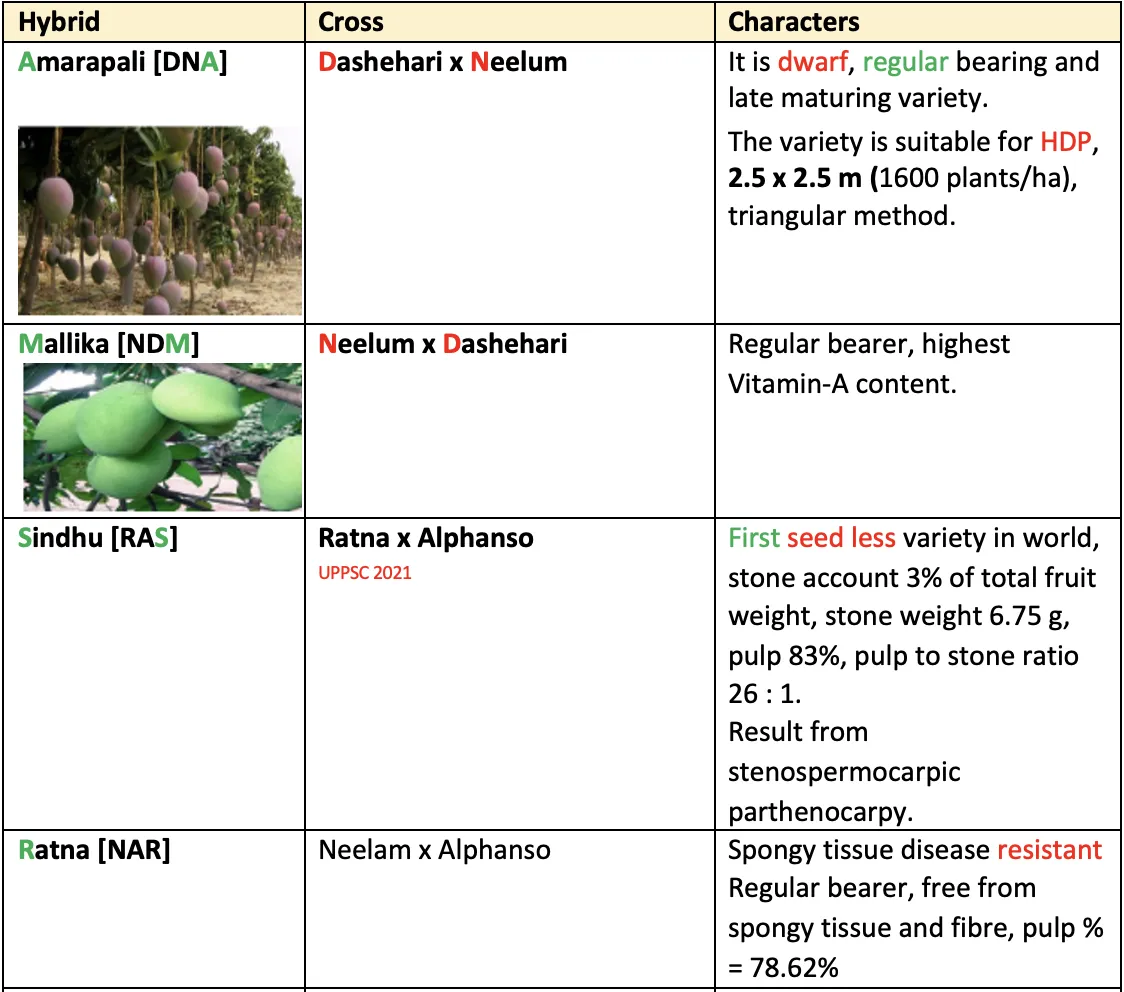
| Mallika | Neelum x Dasheri | Regular bearer, excellent quality |
| Amrapali | Dasheri x Neelum | Dwarf, regular bearer, suitable for HDP |
| Arka Aruna | Banganapalli x Alphonso | Free from spongy tissue |
| Arka Anmol | Alphonso x Janardhan Pasand | Free from spongy tissue |
| Arka Puneet | Alphonso x Banganapalli | Free from spongy tissue |
| Ratna | Neelum x Alphonso | Regular bearer |
| Sindhu | Ratna x Alphonso | Seedless mango |
IMPORTANT
Mallika = Neelum x Dasheri and Amrapali = Dasheri x Neelum — note the reciprocal crosses. Amrapali is the most important hybrid for high density planting due to its dwarf habit.
New Varieties Released by IARI
- Pusa Surya
- Pusa Arunima: Amrapali x Sensation (USA variety) — attractive colour
- Akshay: Selection from Dasheri
- Sai Sugandha: Totapuri x Kesar — regular bearer, free from malformation, suitable for pulp
Propagation
| Method | Details |
|---|---|
| Veneer grafting | Most popular commercial method |
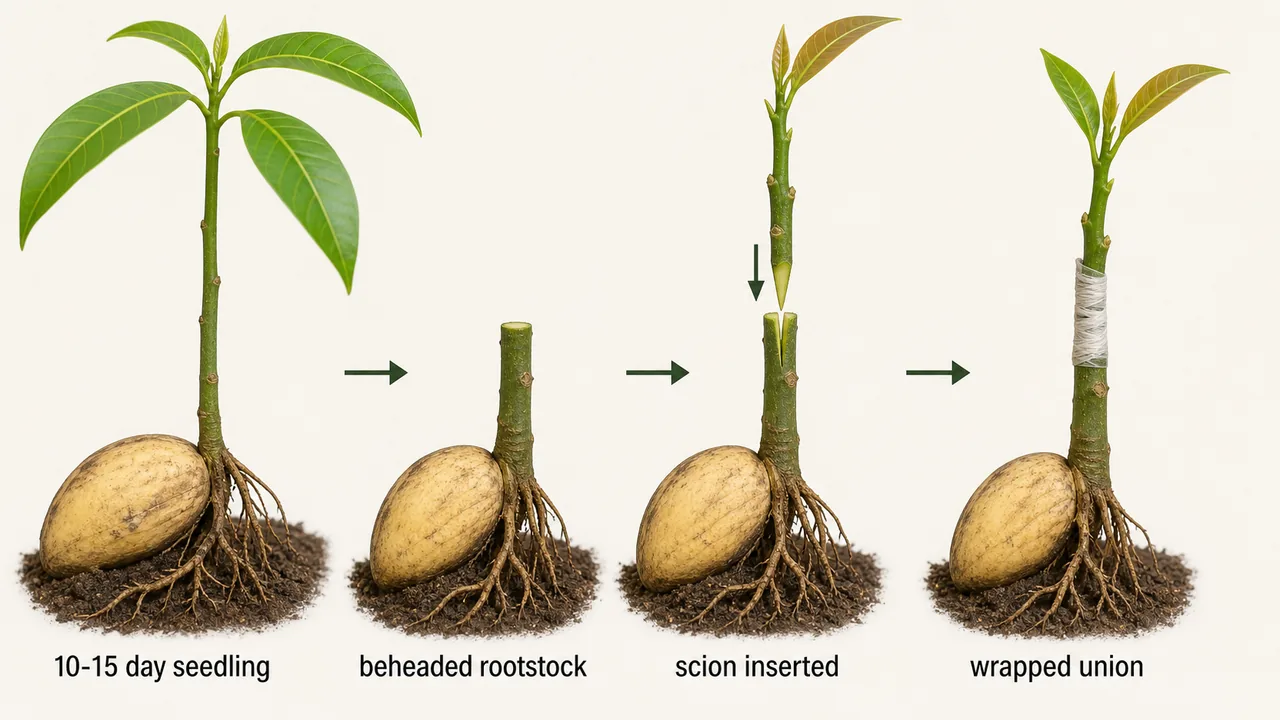
| Epicotyl / Stone grafting | 95% success rate, done in June-July, uses 10-15 day old seedlings |
| Inarching | Traditional method, approach grafting |
| Softwood grafting | Used in South India |
- Graft union must be kept 15 cm above ground level to prevent scion rooting
- Rootstock: Polyembryonic varieties (Goa, Olour, Bellary, Chandrakaran) are preferred as rootstocks because nucellar seedlings are genetically uniform
NOTE
Epicotyl grafting is also called stone grafting because grafting is done on very young seedlings when the stone (seed) is still attached. It is the cheapest and fastest method with 95% success.
Planting
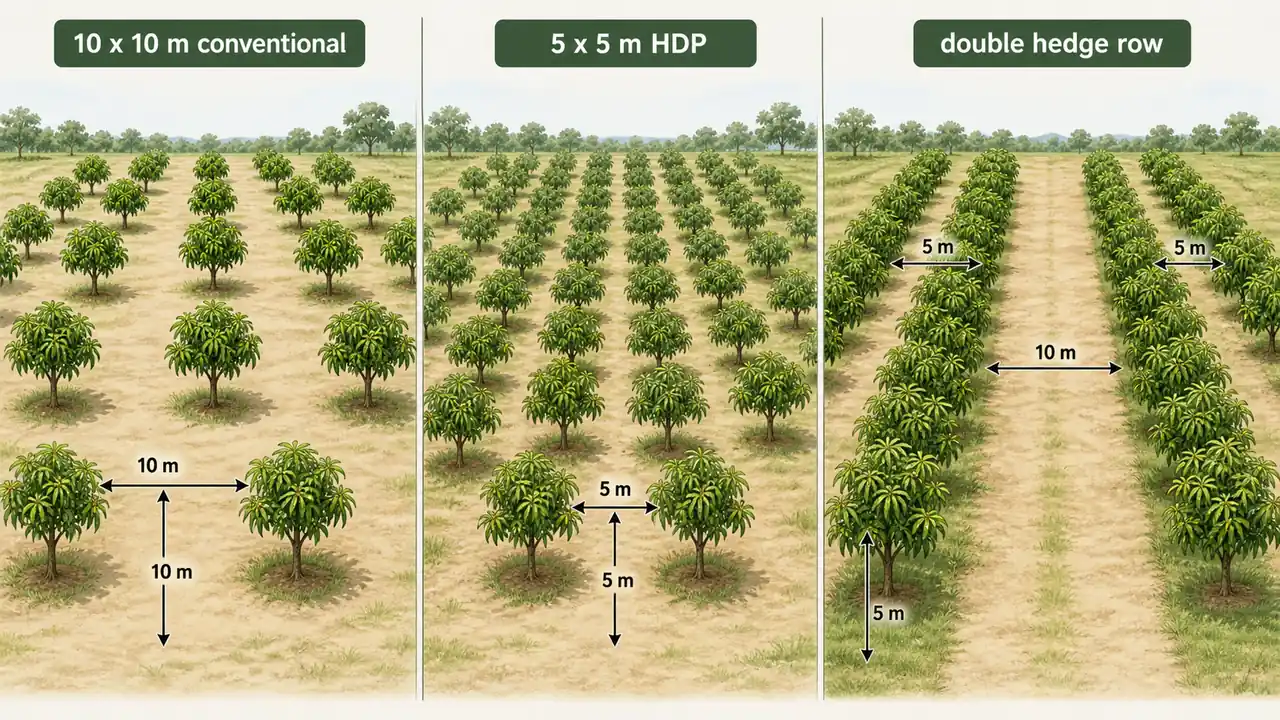
- Spacing: 10 m x 10 m (square system) — 100 plants/ha under conventional planting
- High Density Planting (HDP): 5 m x 5 m (400 plants/ha) using dwarf varieties like Amrapali
- Double hedge row: 5 m x 5 m within rows, 10 m between double rows (266 plants/ha)
- Planting season: June-July (onset of rainy season)
- Pit size: 1 m x 1 m x 1 m filled with topsoil + 10 kg FYM
- Flowering occurs in January; harvesting in May-June
Physiology & Disorders
Alternate / Biennial Bearing
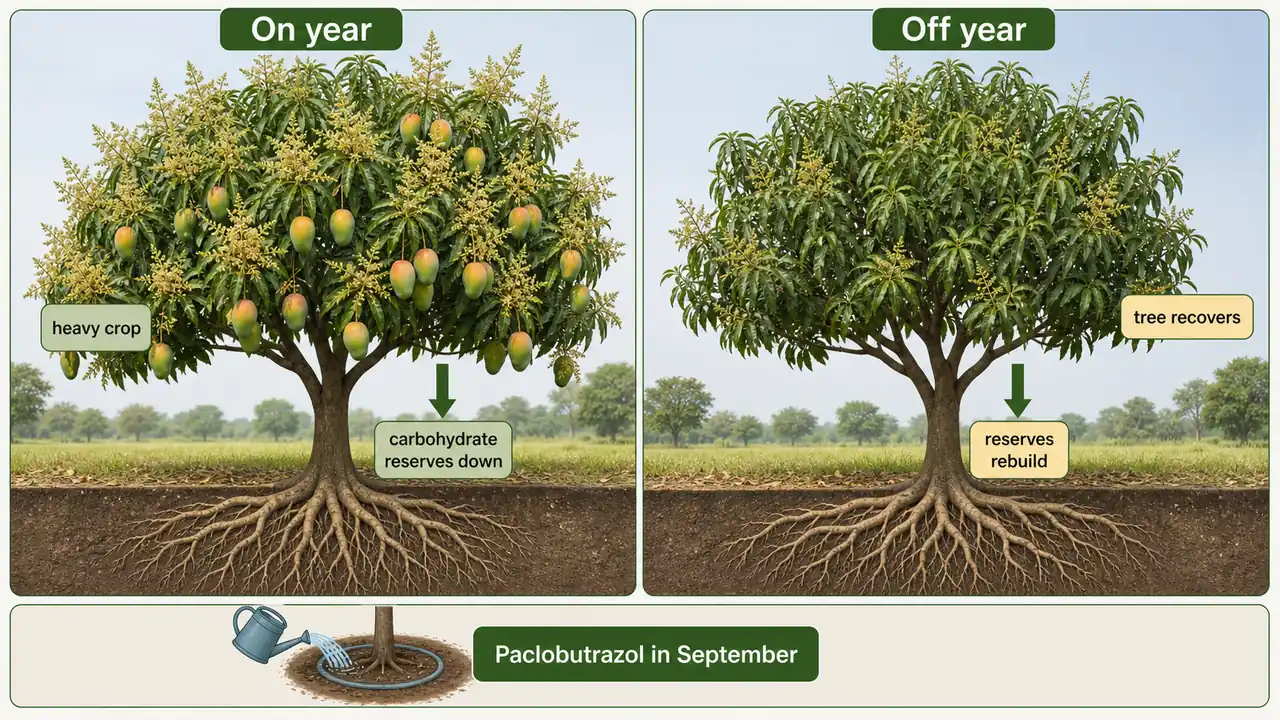
- On year: Heavy flowering and fruiting — exhausts carbohydrate reserves
- Off year: No or very little flowering — tree recovers reserves
- Major problem in Dasheri, Langra, Chausa (North Indian varieties)
- Management:
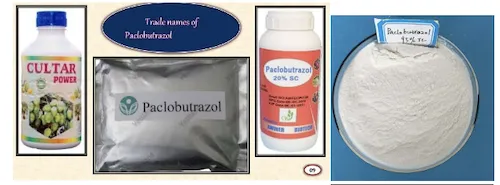
- Application of Paclobutrazol (Cultar) @ 5-10 g/tree as soil drench in September
- Planting regular bearing varieties (Amrapali, Neelum, Ratna)
Mango Malformation
- First observed in 1891 in Bihar
- Caused by the fungus Fusarium mangiferae
- Two types:
- Vegetative malformation — bunchy top in young plants
- Floral malformation — compact, distorted panicles that do not set fruit
- Management: Pruning of affected panicles, spray of NAA @ 200 ppm
Spongy Tissue (Internal Breakdown)
- Major problem in Alphonso variety
- First observed by Cheema & Dhani in 1934
- Fruits appear normal outside but flesh becomes spongy, yellowish and sour inside
- Caused by inactivation of ripening enzymes due to high temperature and post-harvest sun exposure
- Resistant varieties: Neelum, Dasheri, Arka Aruna, Ratna, Arka Puneet
Black Tip
- First observed in 1909 by Woodhouse
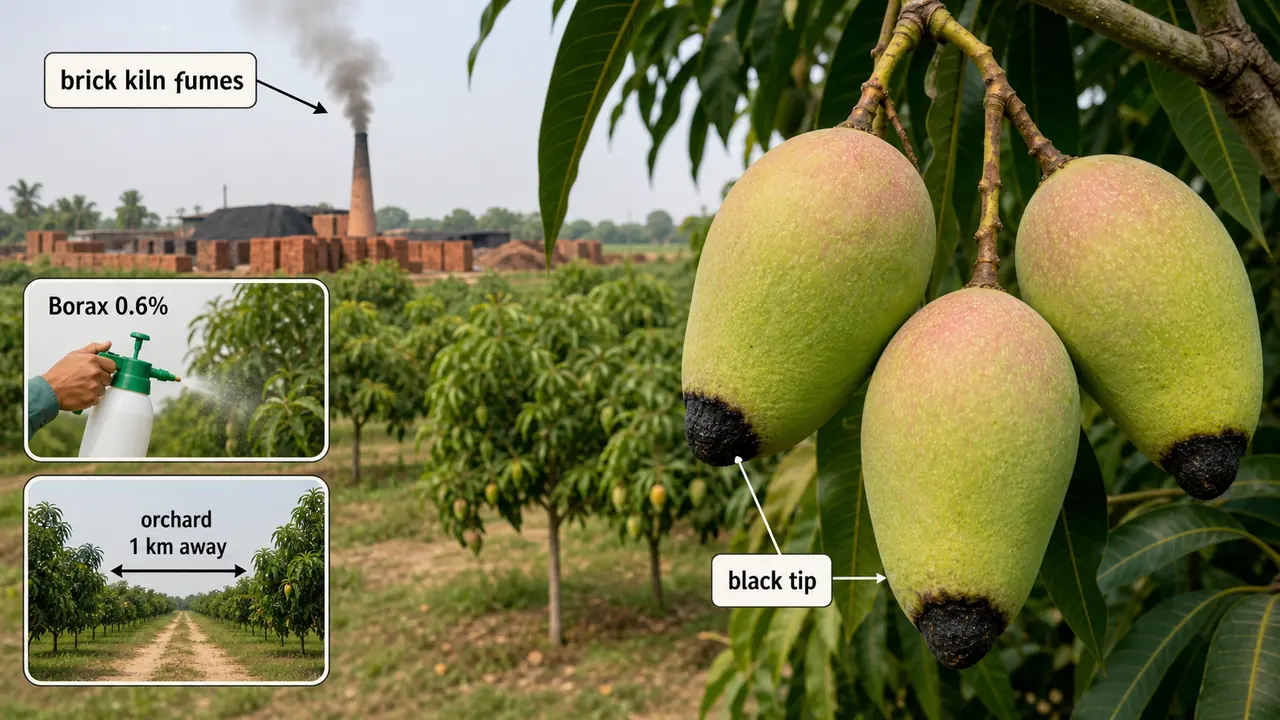
- Near brick kilns — distal end of fruit turns black and hardens
- Caused by SO₂, CO, CO₂ and acetylene gases from brick kiln fumes
- Management:
- Plant orchards at least 1 km away from brick kilns
- Spray Borax (0.6%) three times — before flowering, during flowering, at fruit set
TIP
- Black tip is linked with brick kiln fumes.
- The most important gas mentioned is SO₂.
- A standard management step is Borax 0.6% spray.
Other Disorders
| Disorder | Cause / Details |
|---|---|
| Fruit drop | Hormonal imbalance — spray NAA @ 20 ppm or 2,4-D @ 10 ppm |
| Jelly seed | Over-ripening on tree, flesh near stone becomes jelly-like |
| Clustering (Jhumka) | Cluster of fruitlets at panicle tip, drop at pea stage |
| Leaf scorching | Potassium (K) deficiency — spray K₂SO₄ @ 5% |
| Internal necrosis | Boron (B) deficiency — apply Borax @ 0.6% |
| Little leaf | Zinc (Zn) deficiency |
Maturity Indices
| Method | Details |
|---|---|
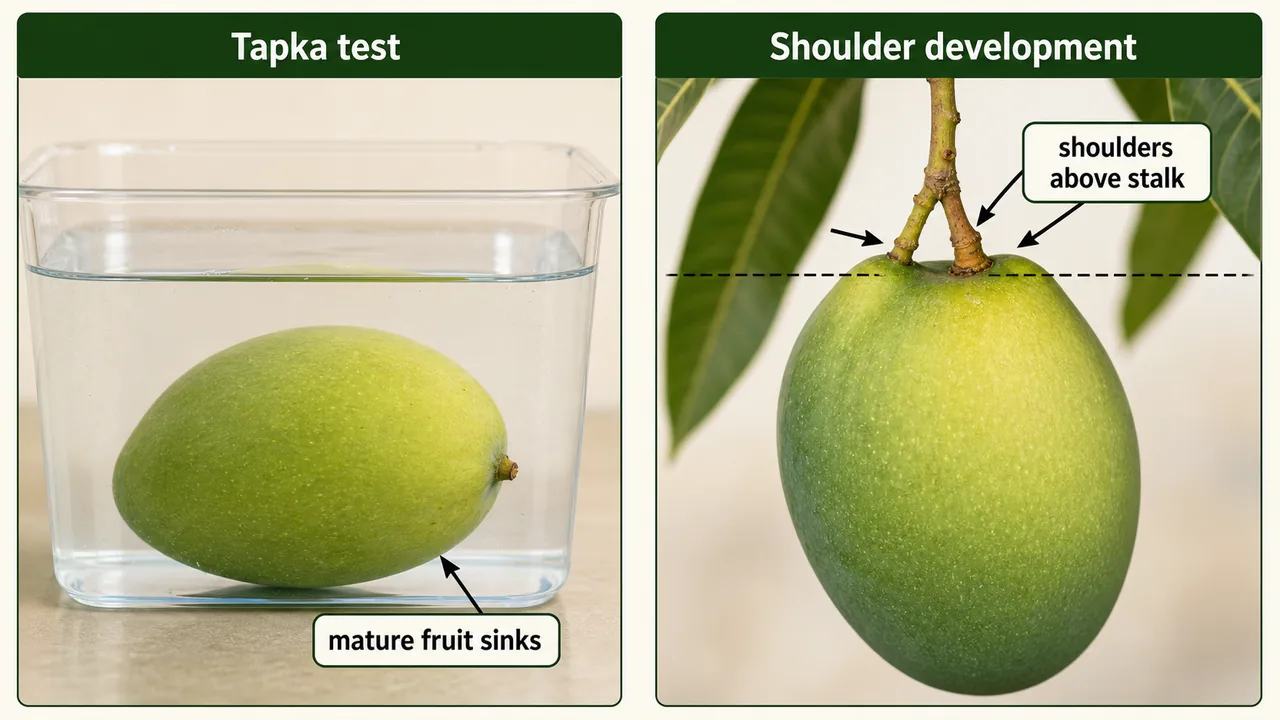
| Tapka | Fruit sinks when dropped in water (specific gravity > 1.0) |
| Shoulder development | Shoulders of fruit rise above the stalk level |
| Specific gravity | Alphonso: 1.01-1.02, Dasheri: 1.0 |
| Colour change | Skin colour changes from dark green to light green/yellowish |
IMPORTANT
Tapka is the most important maturity index for mango — fruit is mature when it sinks in water. This is asked very frequently.
Growth Regulators
| Chemical | Purpose | Dose |
|---|---|---|
| Paclobutrazol (Cultar) | Flowering induction in off-year | 5-10 g/tree (soil drench, September) |
| NAA | Prevent fruit drop, increase retention | 20 ppm spray at flowering |
| 2,4-D | Reduce premature fruit drop | 10 ppm spray |
| KNO₃ | Increase fruit set and retention | 2% spray at mustard stage |
| Ethrel (Ethephon) | Uniform ripening | Post-harvest dip/spray |
- VHT (Vapour Heat Treatment) is recommended for disinfection of mango against fruit flies and stone weevil for export purposes
Pests & Diseases
Key Pests
| Pest | Scientific Name | Details |
|---|---|---|
| Mango mealy bug | Drosicha mangiferae | Major pest, sucking insect — band trunk with alkathene sheets |
| Mango hopper | Idioscopus spp. | Sucks sap from panicles, causes flower drop & sooty mould |
| Mango stone weevil | Sternochetus mangiferae | Larvae bore into seed; VHT used for export control |
| Mango fruit fly | Bactrocera dorsalis | Maggots feed inside pulp; VHT required for export |
| Stem borer | — | Tunnels into trunk and branches |
Key Diseases
| Disease | Pathogen | Details |
|---|---|---|
| Anthracnose | Colletotrichum gloeosporioides | Black spots on leaves, flowers and fruits; major post-harvest disease |
| Powdery mildew | Oidium mangiferae | White powdery coating on panicles and young fruits |
| Mango malformation | Fusarium mangiferae | First reported 1891 in Bihar |
| Sooty mould | Capnodium spp. | Black coating on leaves due to honeydew from hoppers |
| Die-back | Lasiodiplodia theobromae | Drying of twigs from tip downwards |
GI-Tagged Mango Varieties
Several mango varieties have received Geographical Indication (GI) tags, providing legal protection and premium market value:
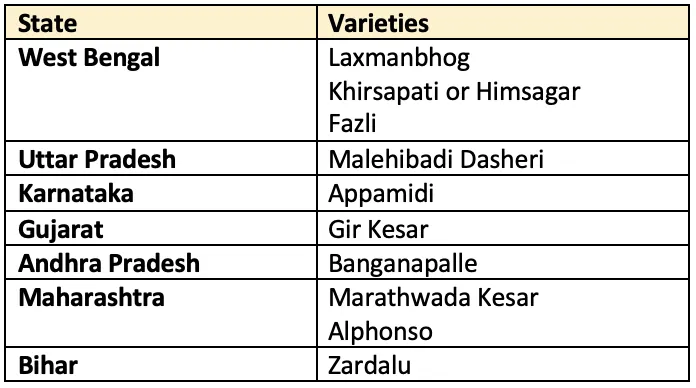
| Variety | Region |
|---|---|
| Dasheri | Lucknow (UP) |
| Langra | Varanasi (UP) |
| Alphonso (Hapus) | Ratnagiri (Maharashtra) |
| Banganapalli | Andhra Pradesh |
| Jardalu | Bhagalpur (Bihar) |
| Kesar | Junagadh (Gujarat) |
| Himsagar & Laxman Bhog | West Bengal |
Summary Cheat Sheet
| Concept / Topic | Key Details / Explanation |
|---|---|
| Identity and importance | Mango is Mangifera indica of family Anacardiaceae, originated in the Indo-Burma region, has 2n = 40, bears a drupe fruit, and India contributes about 45% of world mango production. |
| Core exam facts | It is the national fruit of India and king of fruits, Uttar Pradesh leads Indian production, Venezuela is noted for highest productivity, and house fly plus other dipterans are major pollinators. |
| Climate and soil | Mango is a tropical fruit preferring 24-27°C, can grow up to about 1400 m, does best in deep well-drained alluvial or laterite soils of pH 5.5-7.5, and is sensitive to frost, waterlogging, and chilling below 5°C. |
| Seed and storage facts | Mango seed is recalcitrant with about 30 days viability; mature fruits are stored around 6-7°C and ripened fruits around 20°C. |
| Important varieties by state | Dasheri, Langra, and Chausa are key in Uttar Pradesh, Kesar in Gujarat, Alphonso in Maharashtra, Benishan in Andhra Pradesh, Totapuri in Karnataka, Neelum in Tamil Nadu, and Himsagar in West Bengal. |
Summary Continued
| Concept / Topic | Key Details / Explanation |
|---|---|
| Bearing and embryo type | North Indian cultivars are mainly alternate bearers, monoembryonic, and self-incompatible, while South Indian cultivars are mostly regular bearers and polyembryonic. |
| Special varieties | Regular bearers include Neelum, Totapuri, Pairi, Gulabkhas, and Himsagar; alternate bearers include Langra, Dasheri, and Chausa; Madhulica is precocious, Rosica is a mutant, and Mulgoa is mother of coloured cultivars. |
| Rootstocks and hybrids | Polyembryonic rootstocks such as Rumani, Olour, and Villicolumban are important; key hybrids are Mallika (Neelum x Dasheri), Amrapali (Dasheri x Neelum), Ratna, Sindhu, Arka Aruna, and Arka Puneet. |
| Propagation | Veneer grafting is the main commercial method, epicotyl or stone grafting in June-July on 10-15 day seedlings may give about 95% success, while inarching and softwood grafting are also used. |
| Planting and HDP | Conventional spacing is 10 x 10 m, HDP with dwarf types like Amrapali uses 5 x 5 m, double hedge row gives about 266 plants/ha, planting is mainly in June-July, flowering occurs in January, and harvest is in May-June. |
Summary Continued
| Concept / Topic | Key Details / Explanation |
|---|---|
| Alternate bearing management | Biennial bearing is serious in Dasheri, Langra, and Chausa and is managed with regular bearers and paclobutrazol soil drench at 5-10 g/tree in September. |
| Mango malformation | Mango malformation was first observed in Bihar in 1891, is caused by Fusarium mangiferae, occurs as vegetative or floral malformation, and is managed by pruning affected panicles and spraying NAA 200 ppm. |
| Spongy tissue | Spongy tissue is mainly a problem of Alphonso, was noted by Cheema and Dhani in 1934, is linked to high temperature and post-harvest sun exposure, and resistant varieties include Neelum, Dasheri, Ratna, Arka Aruna, and Arka Puneet. |
| Black tip | Black tip was reported by Woodhouse in 1909, occurs near brick kilns due to SO2, CO, CO2, and acetylene fumes, and is managed by keeping orchards 1 km away plus Borax 0.6% spray three times. |
| Other disorders | Fruit drop is managed with NAA 20 ppm or 2,4-D 10 ppm, leaf scorching indicates potassium deficiency, internal necrosis indicates boron deficiency, and little leaf indicates zinc deficiency. |
| Maturity indices | Important maturity signs are shoulder development, colour change, specific gravity near 1.0, and especially Tapka, where a mature fruit sinks in water. |
| Growth regulators and export | Paclobutrazol induces flowering, NAA and 2,4-D reduce fruit drop, KNO3 2% improves set and retention, Ethrel aids ripening, and VHT is used for export disinfestation against fruit fly and stone weevil. |
| Major pests | Key pests are mango mealy bug, hopper, stone weevil, fruit fly, and stem borer. |
| Major diseases | Important diseases are anthracnose, powdery mildew, mango malformation, sooty mould, and die-back. |
| GI-tagged varieties | GI-protected mangoes listed here include Dasheri, Langra, Alphonso, Banganapalli, Jardalu, Kesar, and Himsagar with Laxman Bhog. |
Lesson Doubts
Ask questions, get expert answers