🫐 Other Fruits
Apple, Grapes, Walnut, Strawberry, Fig
Apple

- Botanical Name: Malus pumila
- Family: Rosaceae
- King of temperate fruits. Apple holds this title due to its global popularity, outstanding flavour, excellent storage life, and enormous economic importance in temperate fruit-growing regions worldwide.
- Storage temperature of apple is 0 to 1.1 °C. At this temperature, respiration is minimized while avoiding freezing injury, allowing apples to be stored for several months in cold storage.
- Cider is made from apple after fermentation. Apple cider is produced by fermenting freshly pressed apple juice using yeast, which converts sugars into alcohol. It is a major apple product in Europe and North America.
- Commercial method of propagation in apple is tounge grafting. Tongue grafting (also called whip-and-tongue grafting) provides a strong interlocking union between rootstock and scion, ensuring high graft success rates.
Varieties

Other Important Varities:
- Gala: A sweet, crisp apple with a distinctive yellow-orange skin.
- Granny Smith: A tart, crisp apple with a bright green skin.
- Honeycrisp: A sweet, juicy apple with a crisp texture and red-and-yellow skin.
- Fuji: A sweet, juicy apple with a yellow-green skin with red highlights.
- Pink Lady: A tangy, sweet apple with a pinkish-red skin.
- Red Delicious: A sweet, mildly tart apple with a bright red skin. Red Delicious is the most widely grown apple variety in India, particularly in Himachal Pradesh and Jammu & Kashmir.
- Golden Delicious: A sweet, juicy apple with a golden yellow skin.
- Braeburn: A crisp, sweet-tart apple with a red and green skin.
Root stocks of Apple

Apple rootstocks are classified into the Malling (M) and Malling-Merton (MM) series, developed at East Malling Research Station, England. They range from very dwarfing (M9, M27) to very vigorous (M25), allowing growers to match rootstock vigour to the desired planting density.
Pro Content Locked
Upgrade to Pro to access this lesson and all other premium content.
Charged once for one year · ₹1188 total
Save ₹100/month vs ₹2388/year launch price
- All Agriculture & Banking Courses
- AI Lesson Questions (100/day)
- AI Doubt Solver (50/day)
- Glows & Grows Feedback (30/day)
- AI Section Quiz (20/day)
- 22-Language Translation (100/day)
- Recall Questions (20/day)
- AI Quiz (15/day)
- AI Quiz Paper Analysis (100/day)
- AI Step-by-Step Explanations (100/day)
- Spaced Repetition Recall (FSRS)
- AI Tutor
- Immersive Text Questions
- Audio Lessons — Hindi & English
- Mock Tests & Previous Year Papers
- Summary & Mind Maps
- XP, Levels, Leaderboard & Badges
- Generate New Classrooms
- Voice AI Teacher (AgriDots Live)
- AI Revision Assistant
- Knowledge Gap Analysis
- Interactive Revision (LangGraph)
🔒 Secure one-time yearly payment via Razorpay · No hidden fees
Apple
- Botanical Name: Malus pumila
- Family: Rosaceae
- King of temperate fruits. Apple holds this title due to its global popularity, outstanding flavour, excellent storage life, and enormous economic importance in temperate fruit-growing regions worldwide.
- Storage temperature of apple is 0 to 1.1 °C. At this temperature, respiration is minimized while avoiding freezing injury, allowing apples to be stored for several months in cold storage.
- Cider is made from apple after fermentation. Apple cider is produced by fermenting freshly pressed apple juice using yeast, which converts sugars into alcohol. It is a major apple product in Europe and North America.
- Commercial method of propagation in apple is tounge grafting. Tongue grafting (also called whip-and-tongue grafting) provides a strong interlocking union between rootstock and scion, ensuring high graft success rates.
Varieties
Other Important Varities:
- Gala: A sweet, crisp apple with a distinctive yellow-orange skin.
- Granny Smith: A tart, crisp apple with a bright green skin.
- Honeycrisp: A sweet, juicy apple with a crisp texture and red-and-yellow skin.
- Fuji: A sweet, juicy apple with a yellow-green skin with red highlights.
- Pink Lady: A tangy, sweet apple with a pinkish-red skin.
- Red Delicious: A sweet, mildly tart apple with a bright red skin. Red Delicious is the most widely grown apple variety in India, particularly in Himachal Pradesh and Jammu & Kashmir.
- Golden Delicious: A sweet, juicy apple with a golden yellow skin.
- Braeburn: A crisp, sweet-tart apple with a red and green skin.
Root stocks of Apple
Apple rootstocks are classified into the Malling (M) and Malling-Merton (MM) series, developed at East Malling Research Station, England. They range from very dwarfing (M9, M27) to very vigorous (M25), allowing growers to match rootstock vigour to the desired planting density.
Diseases
- Crown Gall -- Agrobacterium tumefaciens (Bacteria). This soil-borne bacterium enters through wounds and causes tumour-like growths (galls) at the crown and roots, disrupting water and nutrient uptake.

- Fire Blight of apple and pear -- Erwinia amylovora. Fire blight is a devastating bacterial disease that causes rapid wilting and blackening of blossoms, shoots, and branches, giving them a scorched or "fire-burnt" appearance.

- Apple Scab - Venturia subinaequalis (Fungi). This is the most serious fungal disease of apple worldwide, causing dark, olive-green to black spots on leaves and fruits that reduce market value.

- Water core: B deficiency. Water core appears as glassy, water-soaked areas in the flesh, caused by accumulation of sorbitol in intercellular spaces.
- Bitter pit and cracking: Ca deficiency. Calcium is essential for cell wall strength, and its deficiency causes small, sunken, bitter-tasting spots (bitter pit) and fruit cracking.
Insect of apple/pear/peach
- Sanjose scale: Quadraspidiotus perniciosus

- Suck the cell sap from leaves, twigs and fruits, the infested fruits also have a scaly appearance & each spot is surrounded by a scarlet or red area. San Jose scale is a quarantine pest in many countries and can cause complete crop loss if unmanaged.
- Important parasitoid of sanjose is Encarsia perniciosi
- Wooly apple aphid: Eriosoma lanigerum

- The infested plants have pale-green leaves and whitish cotton patches on stem and branches, characteristic galls/knots are formed on roots & underground portion of plants. The white waxy covering gives a "woolly" appearance, making this aphid easy to identify.
- Its main parasitoid is Aphelinus mali. Biological control using Aphelinus mali has been one of the most successful examples of classical biological control in fruit crops.
Walnut

- King of nut crops. (Queen = Peanut). Walnut (Juglans regia) earns the title king of nuts due to its exceptionally high nutritional value, including omega-3 fatty acids, antioxidants, and protein, making it one of the most health-beneficial nuts available.
Fig
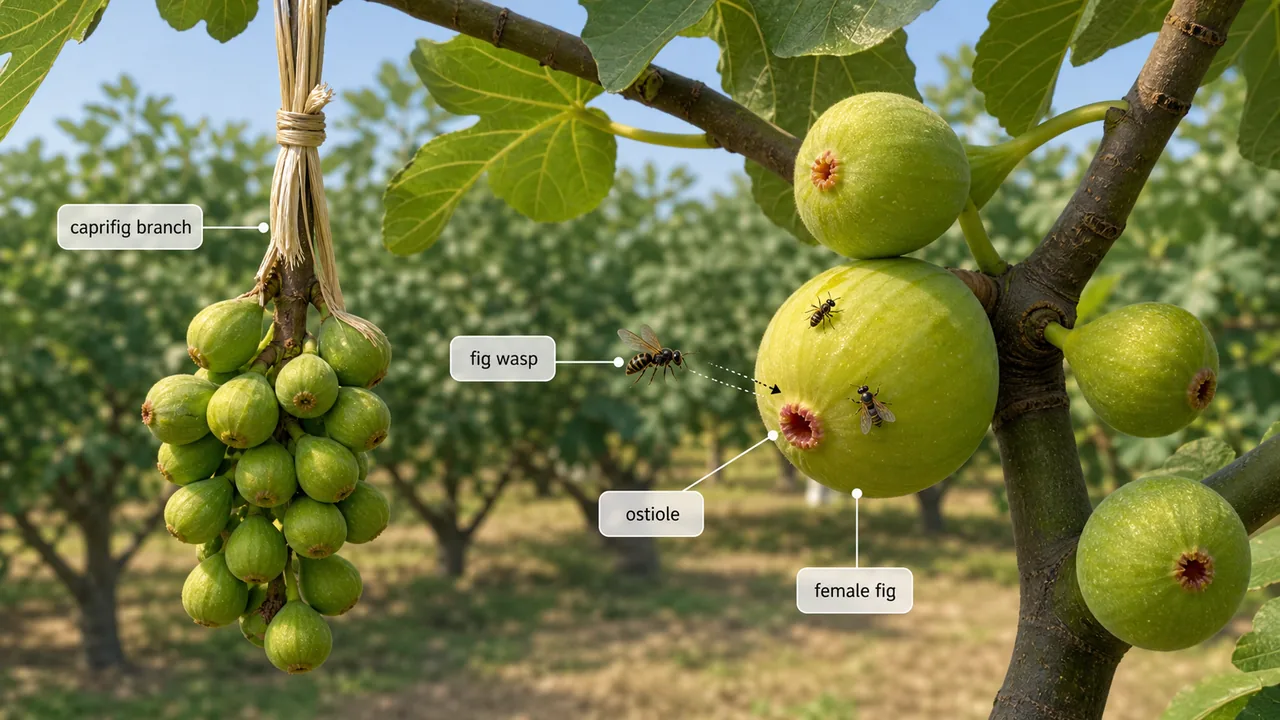
Caprification
- Artificial pollination of figs that usually bear only pistillate flowers by hanging male flowering branches of the caprifig in the trees to facilitate pollen transfer by a fig wasp. Caprification is a unique pollination method specific to figs. The tiny fig wasp (Blastophaga psenes) enters the female fig through a small opening (ostiole), carrying pollen from the male caprifig. This symbiotic relationship between the fig and its wasp is one of the most remarkable examples of co-evolution in the plant kingdom.
Pineapple
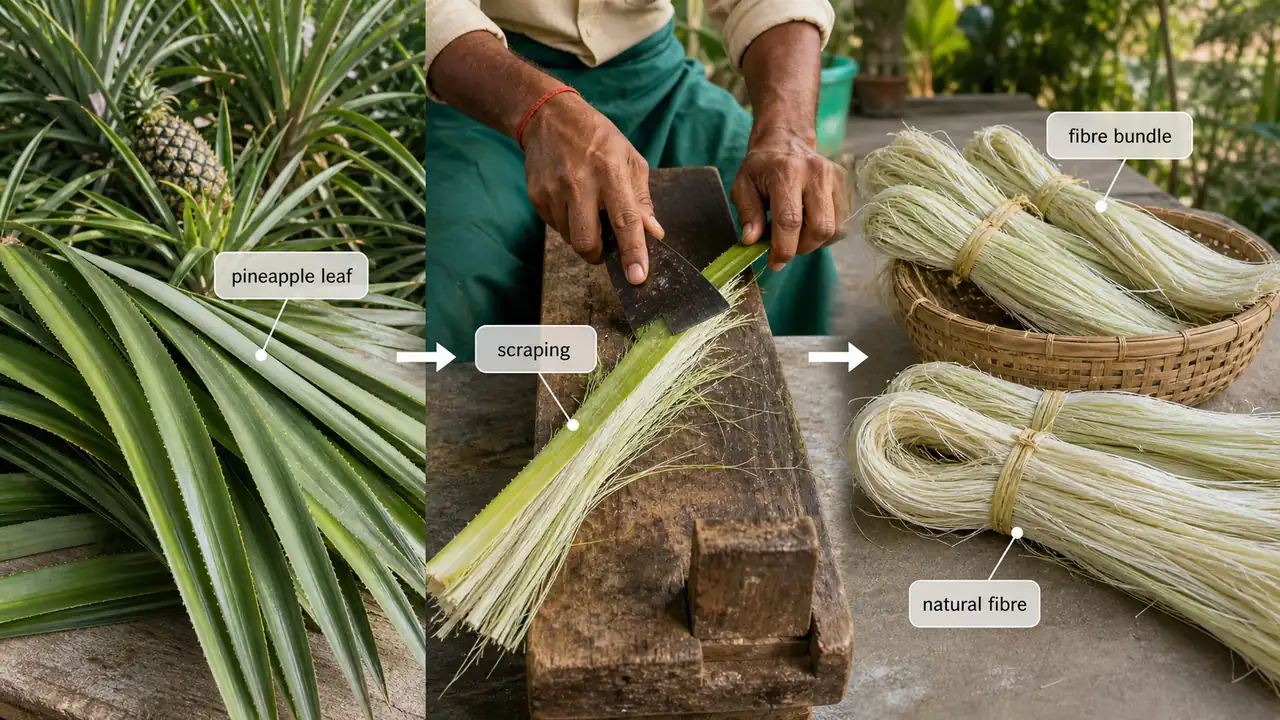
- Leaf fiber is obtained from pineapple. Pineapple leaf fibre (PALF) is a natural, biodegradable textile fibre extracted from pineapple leaves. It is gaining popularity as a sustainable alternative to synthetic fibres, used in making fabrics, paper, and even vegan leather (Pinatex).
Strawberry
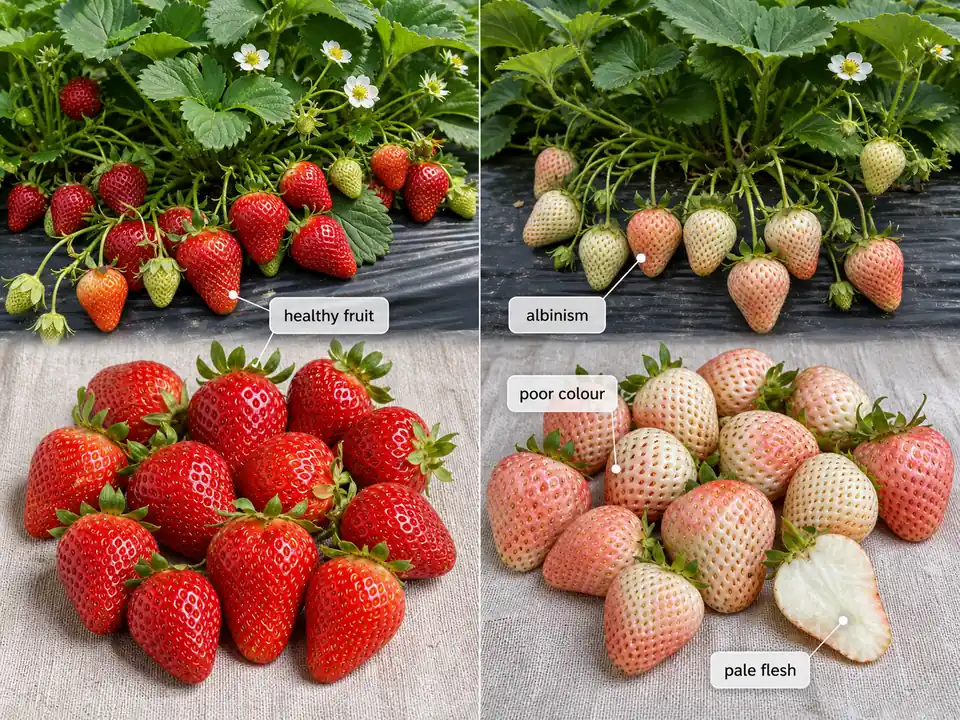
- Albinism: This is a physiological disorder of strawberry, due to lack of fruit colour during ripening in which fruit remain irregular pink or even totally white and sometimes swollen beside having acid test and become less firm. Exams Albinism is triggered by high temperatures during fruit development, which inhibit anthocyanin biosynthesis (the pigment responsible for the red colour), resulting in pale, unmarketable fruits.
Summary Cheat Sheet
| Concept / Topic | Key Details / Explanation |
|---|---|
| Apple basics | Apple is Malus pumila of Rosaceae, called king of temperate fruits, stored around 0-1.1°C, used for cider making, and propagated commercially by tongue grafting. |
| Apple varieties and rootstocks | Important varieties listed are Gala, Granny Smith, Honeycrisp, Fuji, Pink Lady, Red Delicious, Golden Delicious, and Braeburn, while rootstocks are grouped into Malling and Malling-Merton series. |
| Apple protection points | Key apple diseases noted are crown gall, fire blight, and apple scab; water core is linked to boron deficiency, bitter pit plus cracking to calcium deficiency, and major insect issues include San Jose scale and woolly apple aphid with parasitoids Encarsia perniciosi and Aphelinus mali. |
Summary Continued
Summary Continued
| Concept / Topic | Key Details / Explanation |
|---|---|
| Walnut | Walnut is highlighted simply as the king of nut crops. |
| Fig | Caprification is the artificial pollination system in fig using male caprifig branches and the fig wasp Blastophaga psenes. |
| Pineapple | Pineapple leaf fibre is the notable point here and is used as a natural textile fibre. |
| Strawberry | Strawberry albinism is the listed physiological disorder and results in pale or white poorly coloured fruit under high temperature conditions. |