🌿 Horticulture
Definition, origin, scope, and branches of horticulture for exams and agriculture competitive exams.
What is Horticulture?
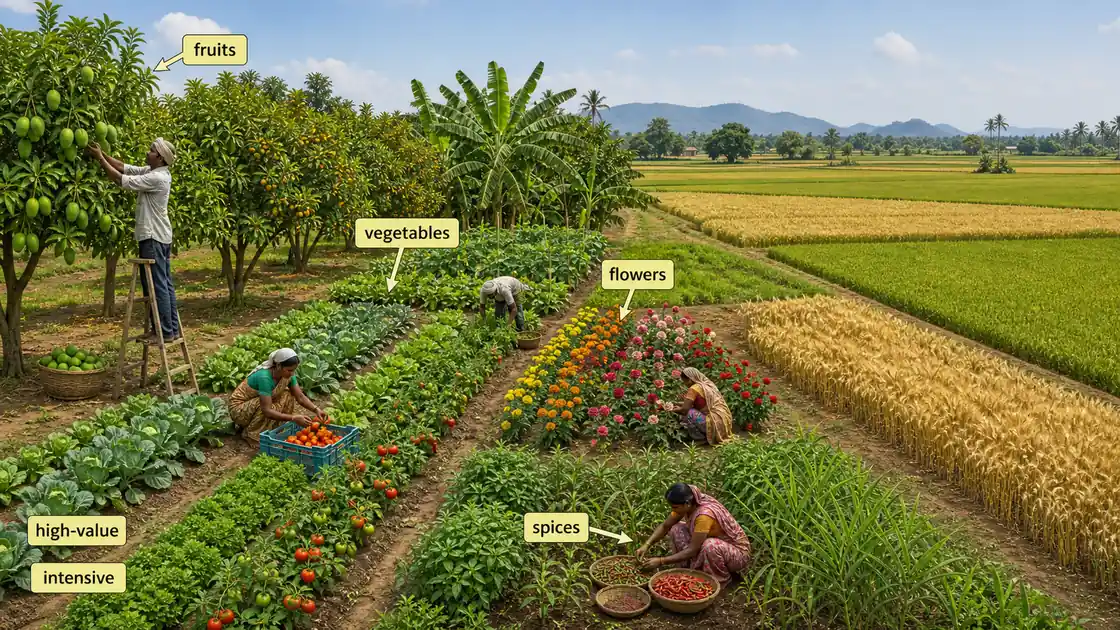
Horticulture is the branch of agriculture that deals with the science, art, business, and technology of growing high-value crops such as fruits, vegetables, flowers, spices, plantation crops, medicinal plants, and aromatic plants.
The term is derived from two Latin words:
- hortus = garden
- cultura = cultivation
So, horticulture literally means garden cultivation.
In competitive exam language, horticulture can be defined as:
The science and practice of production, improvement, protection, harvesting, handling, processing, and marketing of fruits, vegetables, flowers, and other specialty crops.
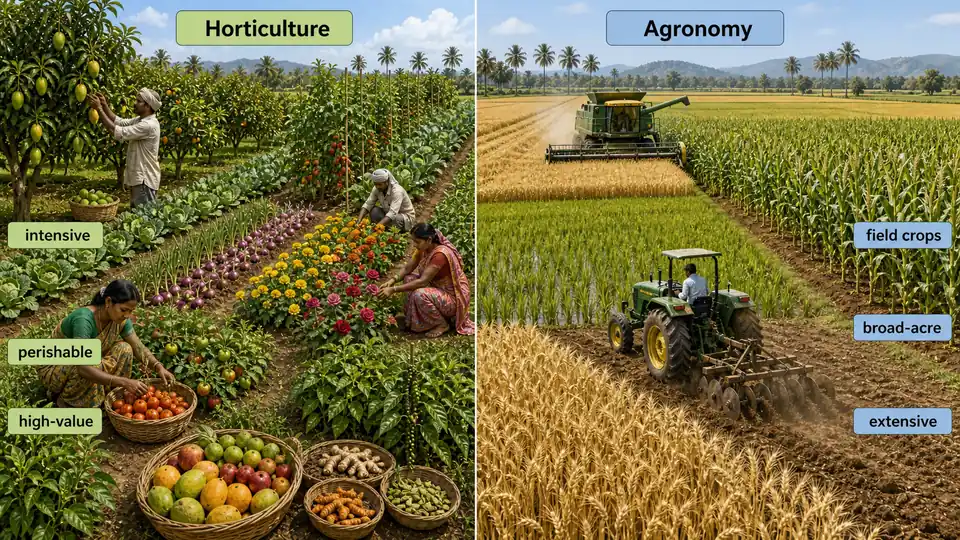
This is why horticulture is different from general field-crop agriculture. Agronomy mainly focuses on large-acreage crops such as rice, wheat, maize, and pulses, while horticulture focuses on intensive cultivation of quality-rich and value-rich crops.
Origin and Development of Horticulture
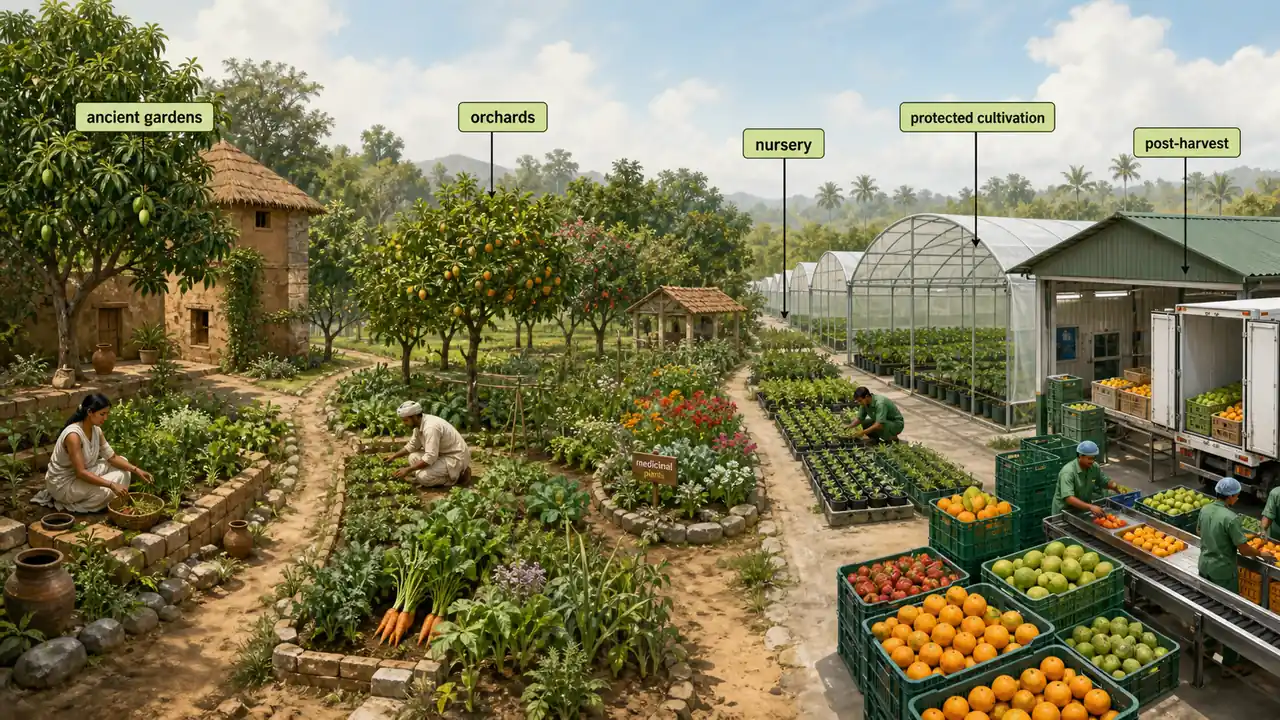
Horticulture began with the settled cultivation of useful garden plants near human habitations. Long before modern agricultural science developed, people were already maintaining small gardens for food, medicine, fragrance, ornamentation, and religious use.
Pro Content Locked
Upgrade to Pro to access this lesson and all other premium content.
₹99 charged monthly · Cancel anytime
- All Agriculture & Banking Courses
- AI Lesson Questions (100/day)
- AI Doubt Solver (50/day)
- Glows & Grows Feedback (30/day)
- AI Section Quiz (20/day)
- 22-Language Translation (100/day)
- Recall Questions (20/day)
- AI Quiz (15/day)
- AI Quiz Paper Analysis (100/day)
- AI Step-by-Step Explanations (100/day)
- Spaced Repetition Recall (FSRS)
- AI Tutor
- Immersive Text Questions
- Audio Lessons — Hindi & English
- Mock Tests & Previous Year Papers
- Summary & Mind Maps
- XP, Levels, Leaderboard & Badges
- Generate New Classrooms
- Voice AI Teacher (AgriDots Live)
- AI Revision Assistant
- Knowledge Gap Analysis
- Interactive Revision (LangGraph)
🔒 Secure via Razorpay · Cancel anytime · No hidden fees
What is Horticulture?
Horticulture is the branch of agriculture that deals with the science, art, business, and technology of growing high-value crops such as fruits, vegetables, flowers, spices, plantation crops, medicinal plants, and aromatic plants.
The term is derived from two Latin words:
- hortus = garden
- cultura = cultivation
So, horticulture literally means garden cultivation.
In competitive exam language, horticulture can be defined as:
The science and practice of production, improvement, protection, harvesting, handling, processing, and marketing of fruits, vegetables, flowers, and other specialty crops.
This is why horticulture is different from general field-crop agriculture. Agronomy mainly focuses on large-acreage crops such as rice, wheat, maize, and pulses, while horticulture focuses on intensive cultivation of quality-rich and value-rich crops.
Origin and Development of Horticulture
Horticulture began with the settled cultivation of useful garden plants near human habitations. Long before modern agricultural science developed, people were already maintaining small gardens for food, medicine, fragrance, ornamentation, and religious use.
- In ancient civilizations such as Egypt, Mesopotamia, India, China, Greece, and Rome, gardens were used for fruit trees, vegetables, herbs, and flowers.
- Over time, these garden practices became more organized and led to specialized cultivation of orchards, kitchen gardens, pleasure gardens, and medicinal plant plots.
- With the development of scientific agriculture, horticulture evolved into a specialized discipline dealing with crop improvement, propagation, nursery management, post-harvest handling, and market-oriented production.
In India, horticulture has always been linked with:
- fruit growing under varied agro-climates
- vegetable cultivation near settlements and irrigation sources
- flower use in worship, decoration, and trade
- spice and plantation crop cultivation in region-specific belts
Today, horticulture is one of the fastest-growing parts of Indian agriculture because it supports better income, nutritional security, processing industries, exports, and employment.
Scope of Horticulture
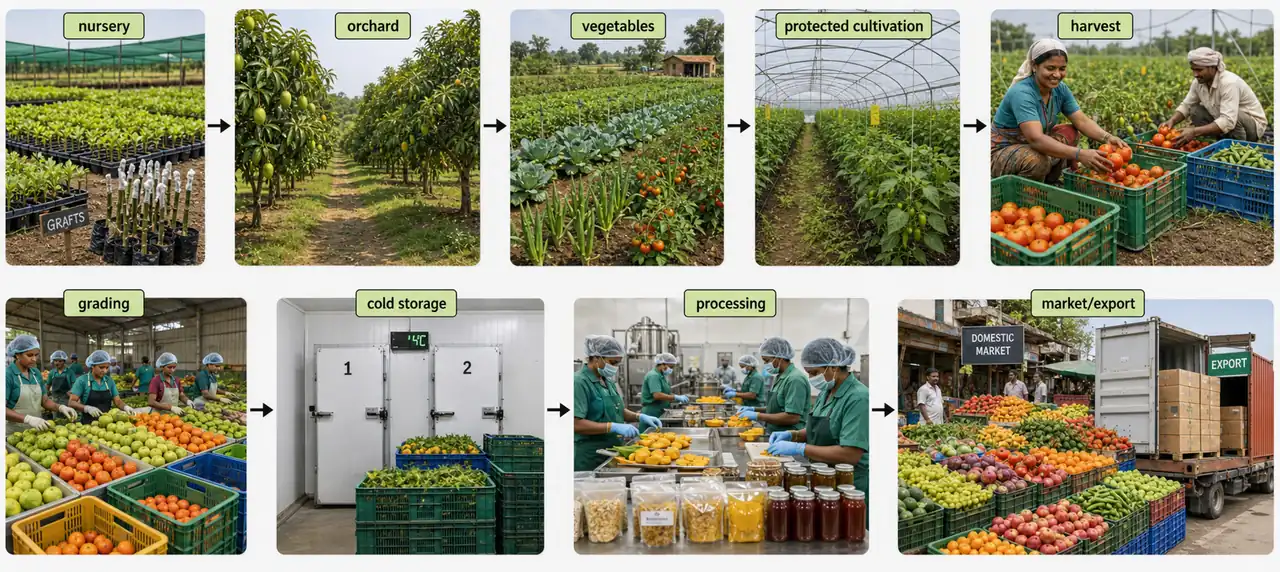
The scope of horticulture is much wider than simple gardening. It includes:
- production of fruits, vegetables, flowers, spices, and plantation crops
- nursery raising and propagation of planting material
- orchard establishment and management
- protected cultivation and precision input management
- post-harvest handling, grading, packaging, storage, and value addition
- processing, marketing, export, and supply-chain development
From an exam point of view, remember this clearly:
Horticulture is both a production science and a value-addition sector.
Why Horticulture Matters
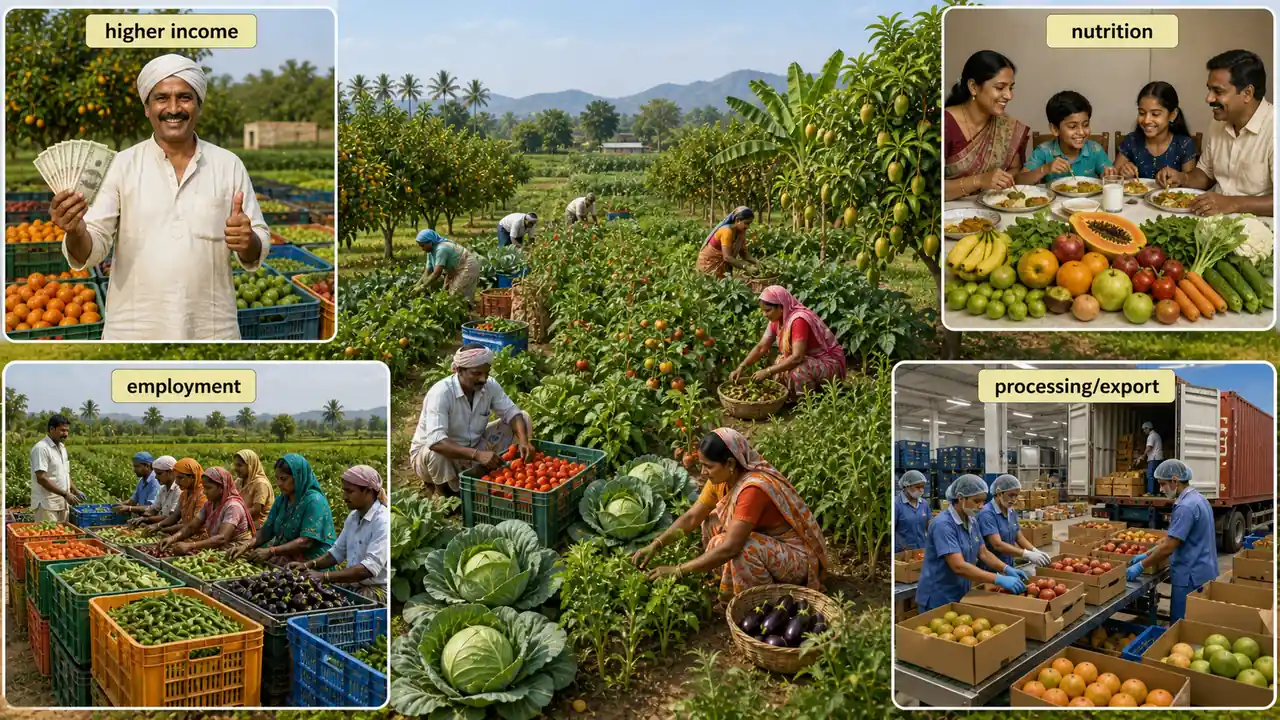
Horticultural crops are often called high-value crops because they usually provide:
- higher return per unit area
- more employment than many staple field crops
- better nutrition through fruits and vegetables
- strong linkage with processing and export markets
- diversification opportunities for farmers
That is why horticulture is important in discussions on income-led agricultural growth, crop diversification, and nutritional security.
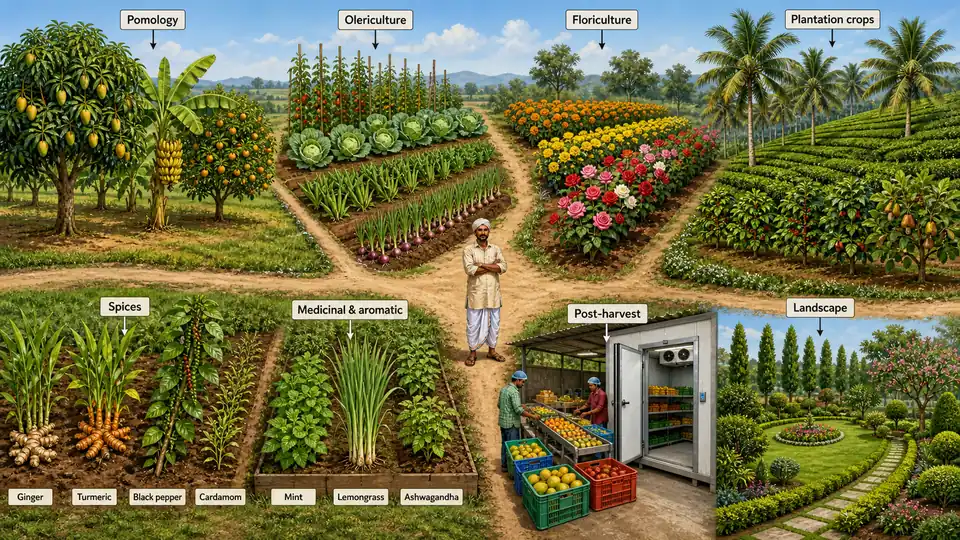
Branches of Horticulture
| Branch | What it deals with |
|---|---|
| Pomology | Cultivation and study of fruit crops |
| Olericulture | Cultivation and study of vegetable crops |
| Floriculture | Cultivation and management of flower and ornamental crops |
| Plantation Crops | Coconut, arecanut, cashew, cocoa, coffee, tea, rubber and similar perennial commercial crops |
| Spices | Pepper, cardamom, clove, turmeric, ginger, cumin, coriander and allied crops |
| Medicinal and Aromatic Plants | Crops grown for medicine, essential oils, fragrance, and pharmaceutical use |
| Post-Harvest Technology | Harvesting, grading, packaging, storage, transport, processing, and value addition |
| Landscape Horticulture | Gardening, parks, lawns, avenues, ornamental design, and aesthetic plant use |
Important Branches Explained
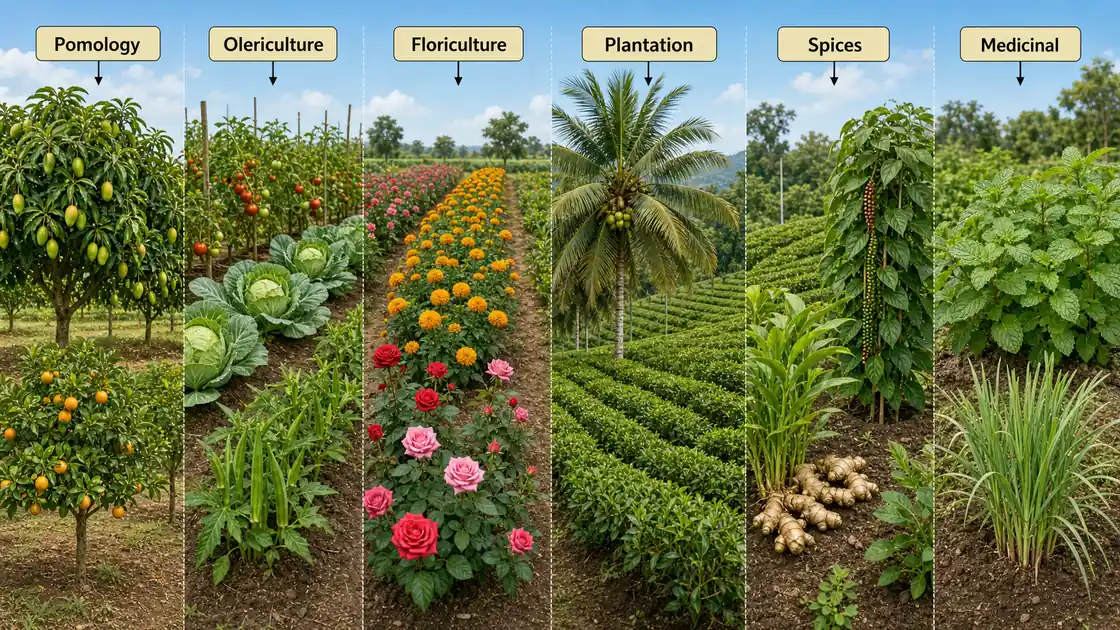
Pomology
Pomology is the branch of horticulture concerned with fruit crops. It includes fruit production, orchard management, pruning, training, propagation, and fruit crop classification.
Examples: mango, banana, citrus, guava, apple, grape, papaya.
Olericulture
Olericulture deals with vegetable crops and their cultivation.
Examples: tomato, onion, cabbage, cauliflower, brinjal, okra, cucurbits.
Floriculture
Floriculture deals with flowers and ornamental crops used for loose flowers, cut flowers, landscaping, worship, and decoration.
Examples: rose, marigold, chrysanthemum, gladiolus, jasmine.
Plantation Crops
These are generally commercial perennial crops, many of them concentrated in specific climatic belts.
Examples: coconut, arecanut, cashew, cocoa, coffee, tea, rubber.
Spices
These crops are grown for flavour, aroma, seasoning, and processing value.
Examples: black pepper, cardamom, ginger, turmeric, cumin, coriander, fennel.
Medicinal and Aromatic Plants
These crops are grown for therapeutic compounds, essential oils, perfume ingredients, and herbal products.
Examples: isabgol, senna, ashwagandha, lemongrass, citronella, mint.
Post-Harvest Technology
This branch is especially important because horticultural produce is often perishable. It focuses on reducing loss and preserving quality after harvest.
Main areas include:
- grading
- packaging
- storage
- cold chain
- transportation
- processing
- marketing
Horticulture vs Agronomy
| Point | Horticulture | Agronomy |
|---|---|---|
| Main focus | High-value specialty crops | Field crops and broad-acre farming |
| Crop examples | Fruits, vegetables, flowers, spices | Rice, wheat, maize, pulses, oilseeds |
| Nature of cultivation | Intensive | Extensive |
| Value addition | High | Moderate |
| Perishability | Usually high | Usually lower than horticultural produce |
Summary Cheat Sheet
| Concept / Topic | Key Details / Explanation |
|---|---|
| Meaning and origin | Horticulture is the branch of agriculture dealing with the science, art, business, and technology of high-value crops; the term comes from hortus = garden and cultura = cultivation, so it literally means garden cultivation. |
| Core definition | In exam language, horticulture covers production, improvement, protection, harvesting, handling, processing, and marketing of fruits, vegetables, flowers, and allied specialty crops. |
| Development and role | Horticulture evolved from ancient garden cultivation into a specialized discipline and is now a major driver of income, nutrition, exports, processing, and employment in Indian agriculture. |
| Scope | The scope includes fruit, vegetable, flower, spice, and plantation-crop production, nursery raising, propagation, orchard management, protected cultivation, and post-harvest value addition. |
| Why it is a high-value sector | Horticulture gives higher return per unit area, better nutrition, stronger processing and export linkages, and more employment than many staple field crops. |
| Main branches | Major branches are Pomology (fruit crops), Olericulture (vegetable crops), Floriculture (flower crops), Plantation crops, Spices, Medicinal and Aromatic Plants, Post-Harvest Technology, and Landscape Horticulture. |
| Branch examples | Pomology includes mango, banana, citrus, guava, apple, grape; olericulture includes tomato, onion, cabbage, cauliflower, brinjal, okra; floriculture includes rose, marigold, chrysanthemum, gladiolus, jasmine. |
| Horticulture vs agronomy | Horticulture focuses on high-value, perishable, intensively grown specialty crops, while agronomy focuses on broad-acre field crops like rice, wheat, maize, pulses, and oilseeds. |
| Quick exam anchors | Hortus means garden, cultura means cultivation, horticulture literally means garden cultivation, and the fastest branch matches to remember are Pomology = fruits, Olericulture = vegetables, and Floriculture = flowers. |