🐇 Rabbit Farming - Types, Breeds (Angora, NZ White), Cecotrophy and Management
Complete guide to rabbit farming covering rabbit vs hare differences, breeds (Angora, New Zealand White, Soviet Chinchilla, Grey Giant, White Giant, Californian White), cecotrophy, nomenclature (buck, doe, kitten), utility, housing, and feeding management for IBPS AFO and NABARD exams.
Types
This side-by-side board helps students separate rabbits from hares using the exam favorites: body size, ear length, gestation period, and whether the young are born hairless or furred.
| Rabbits | Hares |
|---|---|
| Rabbits are smaller and have shorter ears. | Hares are larger. |
| Born without fur and with closed eyes. | Born with fur and with opened eyes. |
| Gestation Period: 30-31 days | Gestation Period: 42 days |
| These prefer to hide rather than run from their enemies. | They are good runner |
| They prefer habitats composed of trees and shrubs, where they live in burrows dug into the soil. | Prefer open areas where they make their nests in small open depressions. |
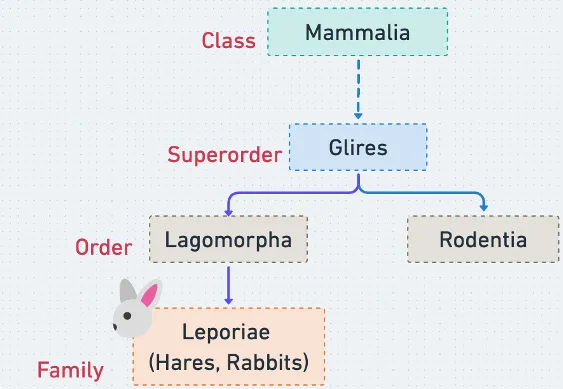
- Both belongs to Family: Leporidae. The Leporidae family encompasses both rabbits and hares. Although they look similar, rabbits are generally smaller, born blind and hairless (altricial), and live in burrows, while hares are larger, born fully furred with open eyes (precocial), and live above ground.
- Rabbits belong to Order Lagomorpha, Family Leporidae — distinct from rodents (Order Rodentia) though superficially similar. Lagomorphs differ from rodents by having two pairs of upper incisors (peg teeth behind the main incisors) and other anatomical features.
Utility
- For meat. Rabits grow very fast. (2kg in just 12 weeks). This rapid growth rate makes rabbit farming (also called cuniculture) an attractive option for small-scale farmers seeking a quick source of lean, high-protein meat.
- For Fur/wool. Rabbit fur and wool are used in the textile industry to produce warm, lightweight garments.
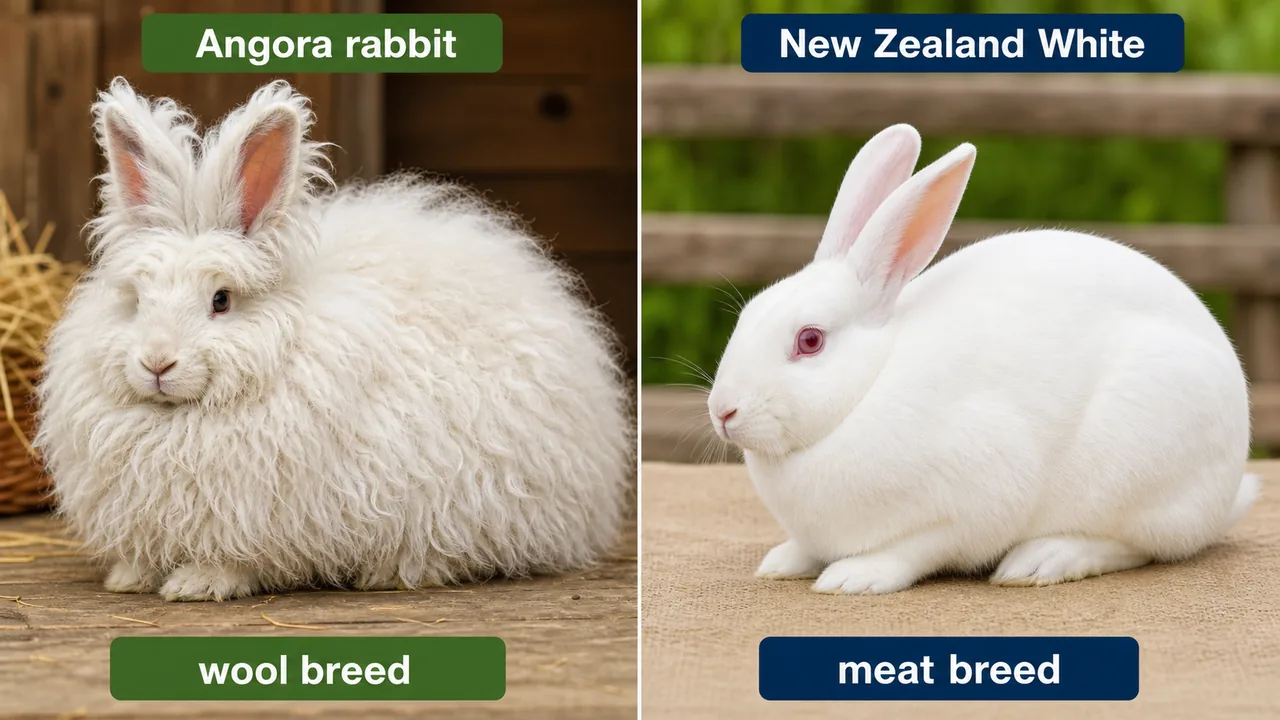
- Angora breed of rabbits are white, small, reared exclusively for their excellent wool, quality and quantity. Weight varies by variety: Indian/English Angora: 2.5–3 kg; French Angora: 3.4–4.8 kg; Giant Angora: >4.3 kg. The Angora rabbit produces one of the finest natural fibres — 300–400 g of wool per year (Indian/English Angora), harvested by combing every 3 months through regular shearing or plucking.
IMPORTANT
Pro Content Locked
Upgrade to Pro to access this lesson and all other premium content.
₹2,388 billed annually · Cancel anytime
You save ₹4,800/year vs original price
🔒 Secure via Razorpay · No hidden fees
Everything in one plan
- All Agriculture & Banking Courses
- Unlimited AI-Powered Lesson Tests
- Audio Lessons — Hindi & English
- Interactive Infographics & Mind Maps
- Spaced Repetition Recall (FSRS)
- Glows & Grows AI Study Feedback
- 22 Indian Language Translation
- Pomodoro Focus Timer & Planner
- XP Points, Levels & Leaderboard
- Achievement Badges & Milestones
- Daily Streaks & Smart Reminders
- Memory Health Dashboard
- Instant Search Across All Content
- Live Telegram Feed Mirror
- Mock Tests & Previous Year Papers
- IBPS · NABARD · ICAR · ASRB · SBI · RRB
Cancel anytime · Secure payment via Razorpay · See our methodology
Types
This side-by-side board helps students separate rabbits from hares using the exam favorites: body size, ear length, gestation period, and whether the young are born hairless or furred.
| Rabbits | Hares |
|---|---|
| Rabbits are smaller and have shorter ears. | Hares are larger. |
| Born without fur and with closed eyes. | Born with fur and with opened eyes. |
| Gestation Period: 30-31 days | Gestation Period: 42 days |
| These prefer to hide rather than run from their enemies. | They are good runner |
| They prefer habitats composed of trees and shrubs, where they live in burrows dug into the soil. | Prefer open areas where they make their nests in small open depressions. |
- Both belongs to Family: Leporidae. The Leporidae family encompasses both rabbits and hares. Although they look similar, rabbits are generally smaller, born blind and hairless (altricial), and live in burrows, while hares are larger, born fully furred with open eyes (precocial), and live above ground.
- Rabbits belong to Order Lagomorpha, Family Leporidae — distinct from rodents (Order Rodentia) though superficially similar. Lagomorphs differ from rodents by having two pairs of upper incisors (peg teeth behind the main incisors) and other anatomical features.
Utility
- For meat. Rabits grow very fast. (2kg in just 12 weeks). This rapid growth rate makes rabbit farming (also called cuniculture) an attractive option for small-scale farmers seeking a quick source of lean, high-protein meat.
- For Fur/wool. Rabbit fur and wool are used in the textile industry to produce warm, lightweight garments.
- Angora breed of rabbits are white, small, reared exclusively for their excellent wool, quality and quantity. Weight varies by variety: Indian/English Angora: 2.5–3 kg; French Angora: 3.4–4.8 kg; Giant Angora: >4.3 kg. The Angora rabbit produces one of the finest natural fibres — 300–400 g of wool per year (Indian/English Angora), harvested by combing every 3 months through regular shearing or plucking.
IMPORTANT
Common MCQ confusion — Angora rabbit vs Angora goat:
- Angora rabbit → produces Angora wool (fine, soft, silky; used in knitwear and luxury garments)
- Angora goat → produces Mohair (lustrous, coarser fibre; NOT the same as Angora wool) These are two completely different animals and fibres. Exam questions frequently test this distinction.
Nomenclature
Understanding the correct terminology is essential for proper rabbit management and record keeping:
- Doe: Mature female. A doe is the primary breeding animal in a rabbitry and can produce multiple litters per year.
- Buck: Mature male. A healthy buck can service several does and is selected based on body conformation, growth rate, and temperament.
- Kit / Kitten: Young rabbit whose eyes are not yet opened. Kits are born blind and helpless and rely entirely on the doe's milk for the first few weeks of life.
- Bunny: Young rabbit of below 20 weeks age. The term bunny is used to describe a young rabbit that has opened its eyes and begun growing fur but has not yet reached full maturity.
- Fryer: Young rabbit raised for meat, typically 2–3 months old, weighing 1.5–2 kg. Most commercial rabbit meat comes from fryers.
- Roaster: Older rabbit raised for meat, typically 3–6 months old, heavier and with more developed flavour than fryers.
- Kindling: Process of parturition in rabbits. Kindling is the act of giving birth in rabbits. A doe typically kindles a litter of 4 to 12 kits (commercial average 6–8 kits), and the gestation period is approximately 28–32 days (most cited); authoritative range 30–33 days; average ~31 days, one of the shortest among domesticated animals.
- Litter frequency: 4–6 litters/year under management. A productive doe can produce 40–50 kits per year.
TIP
Rabbit terminology: Doe = female, Buck = male, Kit/Kitten = newborn (eyes closed), Bunny = young (<20 weeks), Kindling = giving birth, Fryer = meat rabbit 2–3 months, Roaster = meat rabbit 3–6 months. Gestation: 28–32 days (avg ~31 days). Litter: 6–8 kits (commercial avg); 4–6 litters/year.
Reproductive Parameters
Rabbits are among the most prolific domestic animals — a frequently tested area in IBPS AFO, NABARD, and CUET Agriculture exams.
- Gestation period: 28–31 days — shortest among common domestic animals (compare: cow 280 days, goat 150 days, pig 114 days)
- Litter size: 6–8 kits (range 4–12)
- Litters per year: 6–8 litters/year under intensive management (commonly cited as 4–6 under semi-intensive)
- Age at first mating: Does: 5–6 months; Bucks: 6–7 months
- Weaning age: 4–6 weeks
- Post-partum estrus: Does come back into heat immediately after kindling — allows rapid re-mating for maximum productivity
- Induced ovulators: Rabbits do NOT ovulate spontaneously. Ovulation is induced by mating — copulation triggers a LH (Luteinizing Hormone) surge within 10 hours, causing the follicle to rupture and release the egg. This is why a doe must be taken to the buck's cage for mating (not the reverse, to avoid territorial aggression).
IMPORTANT
Induced ovulation (MCQ alert): Rabbits are classic examples of induced/reflex ovulators — ovulation occurs only after mating stimulates an LH surge. Other induced ovulators: cats, ferrets, mink. Compare with spontaneous ovulators (cows, sheep, pigs, humans) where ovulation follows a fixed hormonal cycle regardless of mating.
Caecotropes
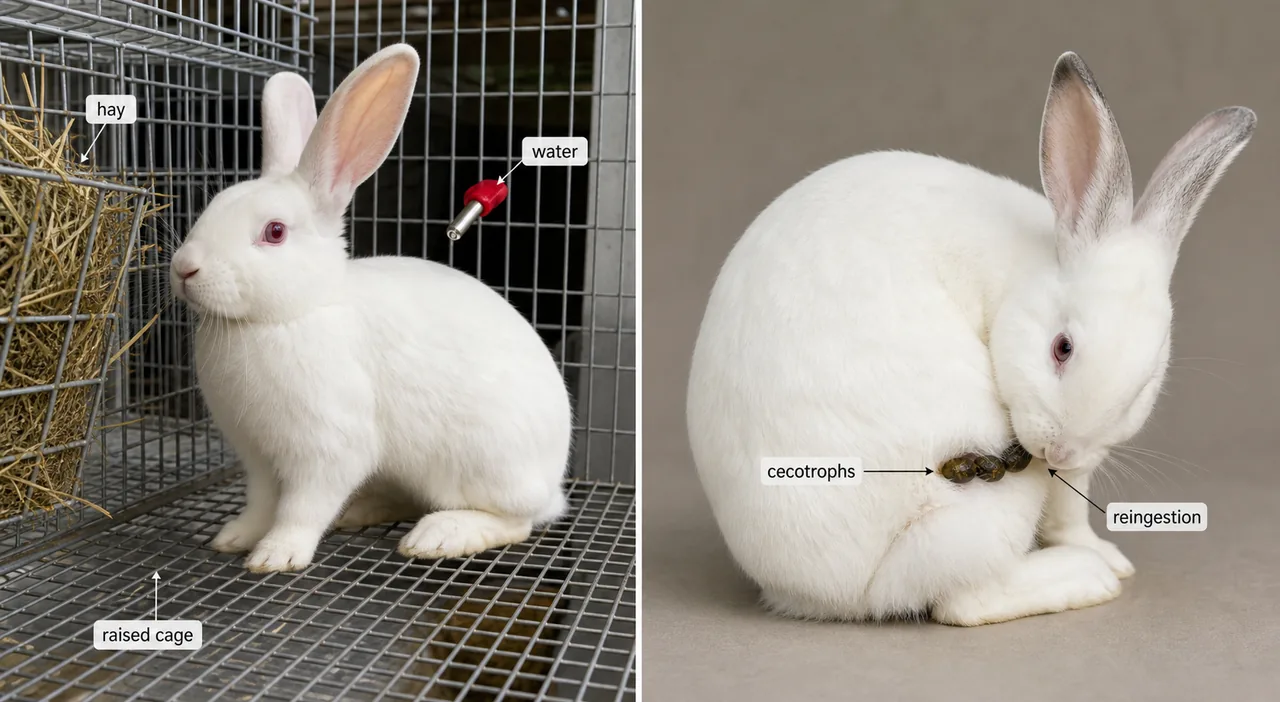
- When the soft pellets reaches at the anus, a neutral response in rabbit which results in licking the anal area. Caecotropes (also called night faeces or cecal pellets) are nutrient-rich, soft droppings produced in the caecum of the rabbit. They are different from the hard, round faecal pellets normally seen, and are essential for the rabbit's nutritional health.
NOTE
Rabbits produce two types of feces: (1) Hard, round dry pellets — true waste excreted normally during the day; (2) Soft, moist cecotropes (cecal pellets) — produced mainly at night and eaten directly from the anus. Only the soft cecotropes are re-ingested. If you observe a rabbit "cleaning its hindquarters," it is likely practising cecotrophy.
Cecotrophy (commonly but incorrectly called Coprophagy)
- Greek copros means excrement and phagein means to eat.
- Rabbits practice cecotrophy — the eating of soft cecotropes (night feces) — which is nutritionally essential. This is distinct from true coprophagy (eating hard fecal pellets). Cecotropes are produced in the caecum and are rich in protein, vitamins B and K, volatile fatty acids, and beneficial microorganisms.
- The re-ingestion of soft cecotropes is technically cecotrophy, not coprophagy. By re-ingesting caecotropes, rabbits are able to extract B vitamins, volatile fatty acids, and other nutrients that were not absorbed during the first pass through the digestive tract.
- This behaviour is analogous to the cud chewing seen in ruminants and allows rabbits to maximise nutrient extraction from fibrous plant material, effectively compensating for their relatively simple, non-ruminant digestive system.
- Note: Rabbits are Lagomorphs (Order Lagomorpha), not rodents — though similar cecotrophy behaviour is also seen in some rodents and hares.
- Preventing cecotrophy leads to serious nutritional deficiency — particularly B-vitamin deficiency — and impaired growth. It is therefore essential that rabbits have free access to their cecotropes and are not obstructed (e.g., by too-tight harnesses or obesity preventing them from reaching the anus).
Breeds of Rabbits
Existing Popular Breeds
| Breed | Origin | Body Weight | Purpose | Notable Feature |
|---|---|---|---|---|
| New Zealand White | USA | 4–5 kg | Meat (most popular commercial breed) | White fur, red eyes (albino); docile temperament |
| Soviet Chinchilla | USSR | 4–5 kg | Fur + Meat (dual purpose) | Grey coat; popular in India |
| Angora (Indian/English) | Turkey/India | 2.5–3 kg | Wool (finest fibre) | Produces 300–500 g wool/year; varieties: White, Grey, Black |
NOTE
New Zealand White is the most widely farmed commercial meat breed globally and in India. Its albino (red-eyed) white coat is a classic MCQ identifier. Docile temperament makes it easy to handle. Soviet Chinchilla is the most popular dual-purpose breed in India — grey coat distinguishes it easily in exams.
Grey Giant
- Origin: France
- Large body; body weight: 5–7 kg
- Grey coat; dual purpose: meat + fur
- 6–8 litters/year
- Well-suited for commercial rabbit farming
White Giant
- Origin: Germany
- Large body; body weight: 5–6 kg
- White coat; primarily a meat breed
- Good frame and feed conversion efficiency
Californian White
- Origin: USA (California)
- Body weight: 3.5–4.5 kg
- White body with dark points (nose, ears, feet, tail) — distinctive colouration
- Good meat breed; popular in commercial farms for fast growth and meat quality
Housing and Management
Housing System
- Individual wire cages recommended: minimum 30 × 45 × 35 cm per adult rabbit; standard commercial cage for medium breeds: 60 × 60 × 45 cm
- Cages allow good ventilation, hygiene, and prevention of fighting
- All-wire hutches preferred in commercial operations
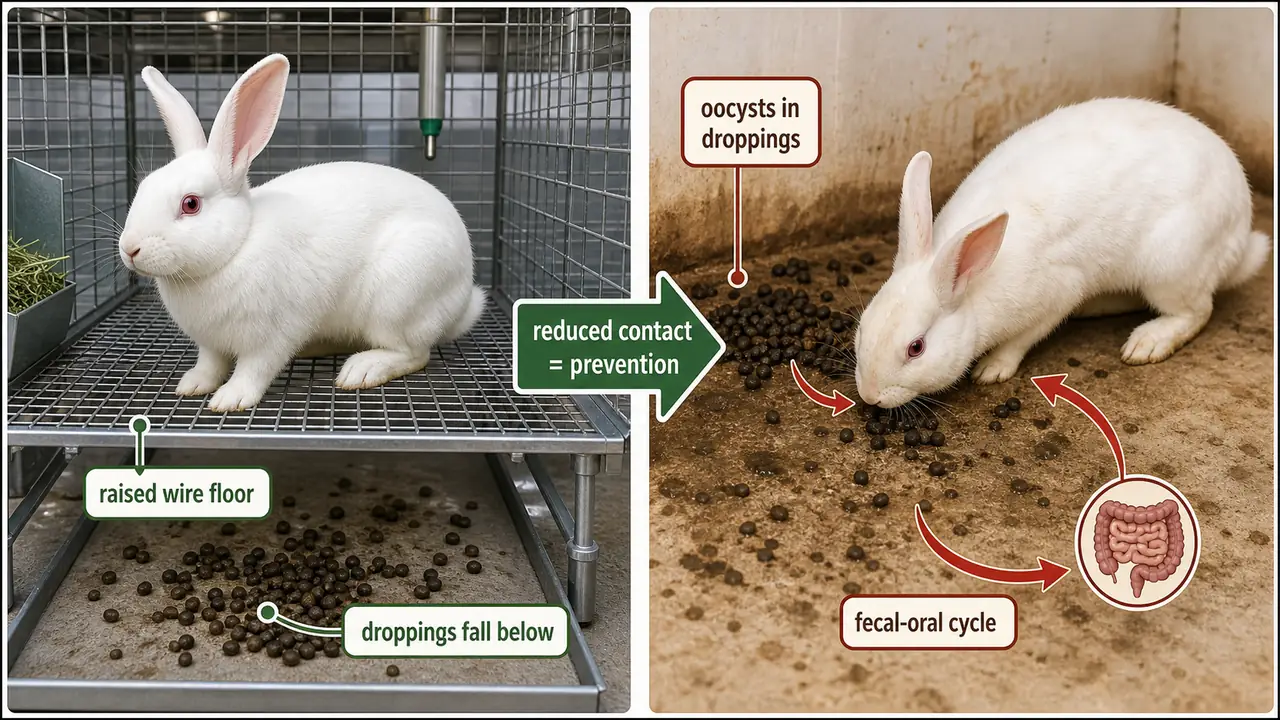
- Raised wire-floor cages are critical for coccidiosis control — droppings fall through the wire and rabbits have no contact with feces, breaking the Eimeria oocyst transmission cycle
- Rabbits are obligate nasal breathers — they cannot breathe through their mouths. Dusty or ammonia-rich environments cause serious respiratory disease. Good ventilation is not optional.
Temperature Requirements
- Ideal temperature: 15–25°C
- Heat stress above 30°C is dangerous — can cause reduced fertility, heat exhaustion, and death
- Proper ventilation and shade essential in summer
Feeding Management
- Pelleted feed recommended: 18% crude protein (CP) for growers; 16% CP for adults
- Hay should always be available for proper gut motility and dental health
- Rabbits are hindgut fermenters — fibre is essential
- Feed Conversion Ratio (FCR): 3–4 kg feed per kg live weight gain — better than beef (FCR ~7–10) but less efficient than broiler chicken (FCR ~1.8–2.0)
Water Supply
- Continuous fresh water supply is essential
- Rabbits deprived of water reduce feed intake and productivity significantly
Rabbit Meat and Economics
- Rabbit meat (especially from fryers) is high in protein, low in fat, and low in cholesterol — among the healthiest red meats
- Rabbit farming produces multiple outputs: meat, fur, Angora wool, manure, and laboratory animals
- Rabbit manure is excellent for vermicomposting (earthworm cultivation) — nitrogen-rich, low odour, pellet form ideal for worm beds
- The industry term for rabbit farming/rearing is cuniculture
Common Diseases of Rabbits
IMPORTANT
Disease knowledge is frequently tested in IBPS AFO and NABARD exams. Know the causative organism and key symptom for each.
| Disease | Causative Agent | Key Signs | Control |
|---|---|---|---|
| Coccidiosis | Eimeria spp. (protozoa) | Diarrhoea, weight loss, liver lesions (hepatic form) or intestinal lesions | Raised wire-floor cages; sulphonamide drugs |
| Pasteurellosis ("Snuffles") | Pasteurella multocida (bacteria) | Sneezing, nasal discharge, head tilt (torticollis), conjunctivitis | Antibiotic treatment; biosecurity |
| Rabbit Haemorrhagic Disease (RHD) | Calicivirus (RHDV) | Sudden death, bleeding from nose/mouth; highly fatal | Vaccination; notifiable disease |
| Myxomatosis | Poxvirus (Myxoma virus) | Swollen head/eyelids, skin tumours; transmitted by insects | Vaccination (not reported in India but important globally) |
- Coccidiosis is the most common disease of rabbits. It occurs in two forms: hepatic coccidiosis (E. stiedae — affects liver) and intestinal coccidiosis (multiple Eimeria spp.). Raised wire cages prevent fecal-oral transmission.
- Pasteurellosis ("Snuffles") is the most common bacterial disease — the characteristic "head tilt" (torticollis) results from inner ear infection spreading from nasal passages.
- RHD is a notifiable disease in India — any outbreak must be reported to veterinary authorities.
ICAR-CIARI: National Centre for Rabbit Research in India
- Full name: ICAR-Central Island Agricultural Research Institute (CIARI), Port Blair, Andaman and Nicobar Islands
- National institute for rabbit research in India
- Promotes rabbit farming (cuniculture) for livelihood development in island territories and northeast India
- Provides technical guidance on breed selection, housing, feeding, and disease management
- Developed region-specific rabbit farming protocols for smallholder farmers
References
2 sources • [1] [2]
References
Summary Cheat Sheet
| Concept / Topic | Key Details |
|---|---|
| Order | Lagomorpha (NOT Rodentia); Family: Leporidae |
| Rabbit vs Hare | Rabbits: born blind & hairless (altricial), live in burrows; Hares: born furred with open eyes (precocial) |
| Growth rate | 2 kg in 12 weeks |
| Angora rabbit | White; Indian/English: 2.5–3 kg; French: 3.4–4.8 kg; Giant: >4.3 kg; reared for wool (300–400 g/year; combed every 3 months) |
| New Zealand White | USA origin; 4–5 kg; popular meat breed; white; fast growing |
| Soviet Chinchilla | USSR origin; 4–5 kg; fur + meat (dual purpose) |
| Grey Giant | French origin; 5–7 kg; grey coat; dual purpose; 6–8 litters/year |
| White Giant | German origin; 5–6 kg; white coat; meat breed |
| Californian White | USA origin; 3.5–4.5 kg; white with dark points; good meat breed |
| Doe | Mature female rabbit |
| Buck | Mature male rabbit |
| Kit / Kitten | Young rabbit with eyes not yet opened |
| Bunny | Young rabbit below 20 weeks |
| Fryer | Meat rabbit, 2–3 months old |
| Roaster | Meat rabbit, 3–6 months old |
| Kindling | Process of parturition (birth) in rabbits |
| Gestation period | 28–31 days — shortest among common domestic animals |
| Litter size | 4–12 kits; commercial average 6–8 kits |
| Litter frequency | 6–8 litters/year (intensive); 4–6 (semi-intensive); doe: 40–50 kits/year |
| Age at first mating | Doe: 5–6 months; Buck: 6–7 months |
| Weaning age | 4–6 weeks |
| Post-partum estrus | Doe returns to heat immediately after kindling |
| Induced ovulation | Ovulation triggered by mating (LH surge after copulation) — NOT spontaneous |
| Cecotrophy | Eating soft cecotropes (night feces) — essential nutrition; rich in protein, vitamins B & K; distinct from true coprophagy (hard pellets) |
| Caecotropes | Nutrient-rich soft droppings from caecum; AKA night faeces; produced at night; eaten from anus |
| Housing | Individual wire cages; standard: 60×60×45 cm (medium breed); 15–25°C ideal; dangerous above 30°C |
| Raised wire cages | Prevent coccidiosis — no fecal contact |
| Obligate nasal breather | Rabbits cannot breathe via mouth — dusty air causes respiratory disease |
| Feeding | Pelleted feed: 18% CP (growers), 16% CP (adults); hay always available |
| FCR | 3–4 (better than beef, worse than poultry) |
| Angora wool vs Mohair | Angora rabbit → Angora wool; Angora goat → Mohair (different fibres!) |
| NZ White | Albino — red eyes, white coat; most popular meat breed |
| Soviet Chinchilla | Grey coat; dual-purpose (fur + meat); popular in India |
| Coccidiosis | Eimeria spp.; most common rabbit disease; hepatic + intestinal forms |
| Pasteurellosis | Pasteurella multocida; "Snuffles"; nasal discharge, head tilt |
| RHD | Calicivirus; highly fatal; notifiable disease |
| Myxomatosis | Poxvirus; insect-transmitted; not in India |
| Rabbit manure | Best for vermicomposting (earthworm cultivation) |
| ICAR-CIARI | ICAR-Central Island Agricultural Research Institute, Port Blair, Andaman; national institute for rabbit research; promotes cuniculture in islands and northeast India |
| Rabbit farming AKA | Cuniculture |
| Utility | Meat, fur/wool, laboratory animals, manure |
Lesson Doubts
Ask questions, get expert answers