🧤 Nematode Management -- Control Methods
Cultural, regulatory, physical, biological, chemical, and integrated approaches to nematode control in Indian agriculture
In the previous lesson, we examined nematode ecology -- interactions with fungi, bacteria, and viruses, plus entomopathogenic nematodes. Now we apply this knowledge to the practical question: how do we control nematodes?
A citrus grower in Maharashtra watches his orchard's yield decline year after year. The trees are yellowing, fruit size is shrinking, and the feeder roots look dark and unhealthy. Soil testing reveals high populations of the citrus nematode (Tylenchulus semipenetrans). The grower must decide: should he apply chemicals, add neem cake, rotate crops, or combine several methods?
This lesson covers:
- Cultural control -- crop rotation, trap crops, antagonistic crops, resistant varieties
- Regulatory control -- quarantine nematodes in India
- Physical control -- hot water treatment, soil solarisation
- Biological control -- Paecilomyces, Pasteuria, Trichoderma
- Chemical control -- fumigant and non-fumigant nematicides
- Integrated nematode management (INM) -- combining all approaches
This is the final lesson in the basics section. The next section covers individual nematode species in detail.
Pro Content Locked
Upgrade to Pro to access this lesson and all other premium content.
₹99 charged monthly · Cancel anytime
- All Agriculture & Banking Courses
- AI Lesson Questions (100/day)
- AI Doubt Solver (50/day)
- Glows & Grows Feedback (30/day)
- AI Section Quiz (20/day)
- 22-Language Translation (100/day)
- Recall Questions (20/day)
- AI Quiz (15/day)
- AI Quiz Paper Analysis (100/day)
- AI Step-by-Step Explanations (100/day)
- Spaced Repetition Recall (FSRS)
- AI Tutor
- Immersive Text Questions
- Audio Lessons — Hindi & English
- Mock Tests & Previous Year Papers
- Summary & Mind Maps
- XP, Levels, Leaderboard & Badges
- Generate New Classrooms
- Voice AI Teacher (AgriDots Live)
- AI Revision Assistant
- Knowledge Gap Analysis
- Interactive Revision (LangGraph)
🔒 Secure via Razorpay · Cancel anytime · No hidden fees
In the previous lesson, we examined nematode ecology -- interactions with fungi, bacteria, and viruses, plus entomopathogenic nematodes. Now we apply this knowledge to the practical question: how do we control nematodes?
A citrus grower in Maharashtra watches his orchard's yield decline year after year. The trees are yellowing, fruit size is shrinking, and the feeder roots look dark and unhealthy. Soil testing reveals high populations of the citrus nematode (Tylenchulus semipenetrans). The grower must decide: should he apply chemicals, add neem cake, rotate crops, or combine several methods?
This lesson covers:
- Cultural control -- crop rotation, trap crops, antagonistic crops, resistant varieties
- Regulatory control -- quarantine nematodes in India
- Physical control -- hot water treatment, soil solarisation
- Biological control -- Paecilomyces, Pasteuria, Trichoderma
- Chemical control -- fumigant and non-fumigant nematicides
- Integrated nematode management (INM) -- combining all approaches
This is the final lesson in the basics section. The next section covers individual nematode species in detail.
Principles of Nematode Management
- The goal is to keep nematode populations below the economic threshold level -- not to eliminate them entirely (which is rarely possible).
- Control measures must be profitable and cost-effective.
- Since nematodes live hidden in soil or within plant tissues, effective management requires a combination of strategies.
Six Categories of Control
| Method | Principle |
|---|---|
| 1. Cultural | Agronomic practices to reduce populations |
| 2. Regulatory (Legal) | Quarantine to prevent spread |
| 3. Physical | Heat, water, or mechanical treatments |
| 4. Biological | Using natural enemies of nematodes |
| 5. Chemical | Nematicide application |
| 6. Integrated (INM) | Combining multiple methods |
1. Cultural Control
The most economical and environmentally friendly methods, forming the foundation of any management programme.
Crop Rotation
Growing a non-host crop between two susceptible ones reduces nematode populations below damaging thresholds because nematodes that cannot find a suitable host starve and die.
Best example: Rotation with mustard or gram is most effective for Molya disease control (cereal cyst nematode H. avenae on wheat/barley). The nematode is highly host-specific to wheat and barley, so non-host crops break its life cycle.
Adjusting Planting Time
Planting early lets crops establish before nematodes become active. Early potatoes and sugar beets in cold season escape cyst nematode damage since nematodes are inactive at low temperatures.
Selecting Healthy Planting Material
For vegetatively propagated crops (banana suckers, potato tubers, sugarcane setts, ornamental bulbs), selecting nematode-free material is essential to avoid introducing nematodes into clean fields.
Fallowing
Leaving fields without cultivation, preferably after ploughing, kills nematodes through starvation (no host plant) and sun exposure. However, it is not economical as no income is generated during the fallow period.
Deep Summer Ploughing and Soil Solarisation
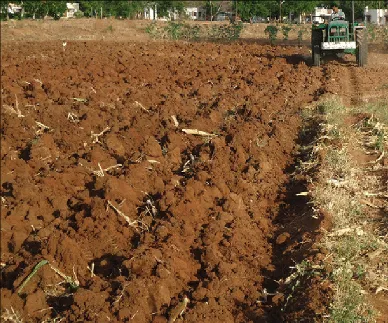
Deep ploughing with a disc plough during summer exposes nematodes to intense heat, desiccation, and UV radiation.
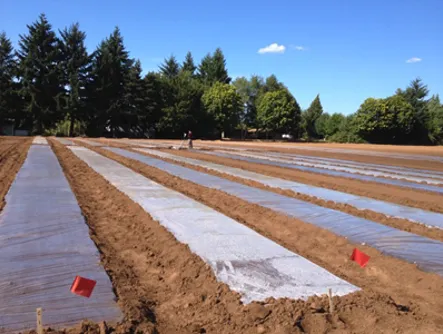
Soil solarisation involves covering moist seed beds with polythene sheets, which raises soil temperature by 5--10 degrees C and effectively pasteurises the top soil layer. Excellent for nursery beds of tomato and brinjal.
Manuring (Organic Amendments)
Adding green manure, farmyard manure, neem and castor oil cakes, press mud, and poultry manure enriches soil and encourages nematode-suppressive organisms:
- Predacious nematodes (e.g., Mononchus spp.)
- Nematode-antagonistic fungi and bacteria
These beneficial organisms suppress plant parasitic nematodes through predation, parasitism, and competition.
Flooding
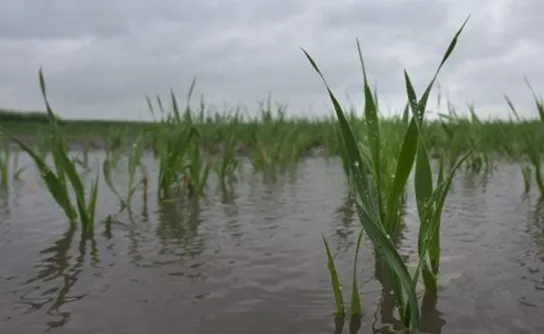
Under submerged conditions, anaerobic conditions develop in soil, killing nematodes by asphyxiation (oxygen deprivation). Additionally, toxic gases like hydrogen sulphide and ammonia released during anaerobic decomposition provide nematicidal effects.
Trap Crop
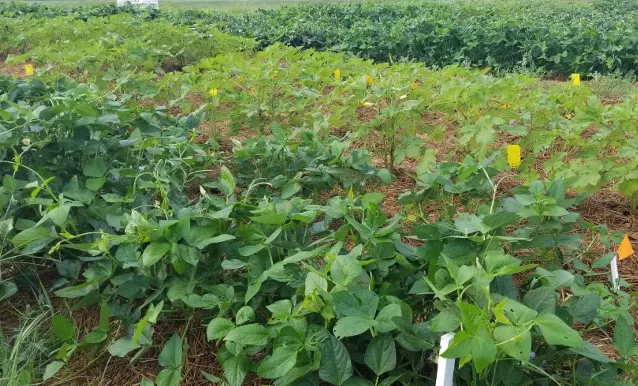
A highly susceptible crop (e.g., cowpea for root-knot nematodes) is planted first to attract nematodes into its roots, then destroyed by burning before nematodes can reproduce. The principle: attract, trap, and destroy.
Antagonistic Crops
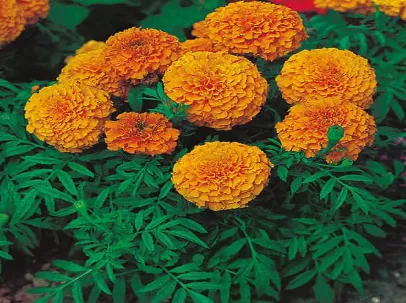
Certain crops produce nematicidal root exudates that repel or kill nematodes:
| Crop | Active Compound | Target Nematodes |
|---|---|---|
| Marigold (Tagetes spp.) | Alpha-terthienyl, bithinyl compounds | Meloidogyne, Paratylenchus, Rotylenchulus |
| Mustard | Allyl isothiocyanate (natural biofumigant) | Cyst nematodes |
| Garlic | Sulphur compounds | Root-knot nematodes |
Antagonistic crops can be grown as intercrops, border crops, or included in crop rotation.
Destruction of Infected Plant Residues
Removing and destroying infected plant debris eliminates the source of inoculum. For example, Ufra disease: Ditylenchus angustus survives in rice stubble, so thorough removal and ploughing after harvest is essential.
Resistant Varieties
Using nematode-resistant varieties is one of the most cost-effective and environmentally friendly management methods.
| Crop | Nematode | Resistant varieties |
|---|---|---|
| Tomato | Root-knot nematodes (Meloidogyne javanica / M. incognita) | PNR-7, NT-3, NT-12, Hisar Lalit, Nemared, Nematex, Atkinson |
| Chilli | Root-knot nematodes (Meloidogyne javanica / M. incognita) | NP-46A, Pusa Jwala, Mohini |
| Cowpea | Root-knot nematodes (Meloidogyne javanica / M. incognita) | GAU-1 |
| Mungbean | Root-knot nematodes (Meloidogyne javanica / M. incognita) | ML-30 and ML-62 |
| Cotton | Meloidogyne incognita | Bikaneri nerma, Sharda, Paymaster |
| Grape | Root-knot nematodes (Meloidogyne javanica / Meloidogyne incognita) | Khalili, Kishmish Beli, Banquabad, Cardinal, Early Muscat, Loose Perlett |
| Potato | Potato cyst nematode (Globodera rostochiensis) | Kufri Swarna, Kufri Giriraj |
2. Regulatory (Legal) Control
Quarantine prevents nematode-infested planting material and contaminated soil from entering clean areas. Many countries maintain elaborate inspection organisations.
Strict quarantine regulations exist in India for:
- Potato cyst nematode (Globodera rostochiensis)
- Red ring nematode of coconut (Rhadinaphelenchus cocophilus)
NOTE
These two nematodes are under quarantine because of their devastating economic impact and the difficulty of eradication once established.
3. Physical Control
| Method | Details | Practical Use |
|---|---|---|
| Hot water treatment | Dip planting material (banana corms, onion bulbs, tubers) at 50--55 degrees C for 10 minutes | Widely used; kills nematodes without damaging plants |
| Irradiation | UV light kills nematodes | Not practical for field conditions |
| Osmotic pressure | Sucrose/dextrose at 1--5% causes nematode death by desiccation | Not practical or economical |
| Washing | Thorough washing removes nematode-contaminated soil from tubers and bulbs | Effective for seed potatoes |
| Seed cleaning | Mechanical removal of seed galls from healthy wheat seeds | Controls Anguina tritici |
| Ultrasonics | Little effect on Heterodera spp. | Not practical |
4. Biological Control
The most environmentally sustainable approach, using parasites, predators, and pathogens of nematodes.
| Agent | Type | Mechanism |
|---|---|---|
| Paecilomyces lilacinus | Fungus (oviparasite) | Colonises and destroys nematode eggs before hatching |
| Pasteuria penetrans | Bacterium (larval parasite) | Endospores attach to juvenile cuticle, germinate, fill body cavity, and kill host |
| Pseudomonas fluorescens | Bacterium | Suppresses nematodes through competition and antibiosis |
| Trichoderma harzianum / T. viride | Fungus | Competition, antibiosis, induced systemic resistance |
5. Chemical Control
Kuhn (1881) first tested CS2 against sugar beet nematode in Germany -- the first recorded chemical nematode control.
Fumigant Nematicides
Volatile chemicals that vaporise and spread through soil pores:
| Chemical | Full Name | Note |
|---|---|---|
| DD mixture | 1,3-dichloropropene + 1,2-dichloropropane | First practical field nematicide (1943) |
| EDB | Ethylene dibromide | |
| MBr | Methyl bromide | Phased out (Montreal Protocol -- ozone depletion) |
| DBCP | Dibromochloropropane (Nemagone) |
Non-Fumigant Nematicides
Applied as granules or liquids; provide systemic or contact action:
| Class | Chemical | Trade Name |
|---|---|---|
| Carbamate | Carbofuran | Furadan (most widely used in India) |
| Carbamate | Aldicarb | Temik |
| Carbamate | Oxamyl | Vydate |
| Carbamate | Metham sodium | Vapam |
| Organophosphate | Phorate | Thimet |
| Organophosphate | Thionazin | Nemaphos |
| Organophosphate | Phenamiphos | Nemacur |
6. Integrated Nematode Management (INM)
INM combines cultural, biological, chemical, and other methods for long-term, sustainable management. Key principles:
- Keep nematode population below economic threshold -- not zero.
- Regular soil sampling and population monitoring guides when and where to apply controls.
- Minimise nematicide use through integration with cultural and biological methods.
- Without advisory services for population monitoring, farmers tend to over-rely on chemicals.
Comparison: Control Methods
| Method | Cost | Environmental Impact | Effectiveness | Best For |
|---|---|---|---|---|
| Cultural | Low | Minimal | Moderate-High | Foundation of all management |
| Regulatory | Low (govt.) | None | Very high (prevention) | Quarantine pests (Globodera, Rhadinaphelenchus) |
| Physical | Moderate | Minimal | High (small areas) | Nurseries, seed treatment |
| Biological | Moderate | Positive | Moderate | Sustainable, long-term control |
| Chemical | High | Negative | High (short-term) | Severe infestations |
| INM | Variable | Balanced | Highest (long-term) | All situations |
Nematode Management Decision Guide
Step-by-step: What to do when you suspect nematode infestation
Step 1: Confirm nematode presence
- Pull up stunted/wilting plants → check roots for galls (root-knot), cysts (tiny lemon-shaped bodies), or lesions (burrowing nematode)
- Send soil + root sample to nematology lab for species identification + population count
- No visible root symptoms but plant still stunted? Could be migratory ectoparasites — need lab extraction
Step 2: Choose management based on severity
| Severity | What You See | Recommended Action |
|---|---|---|
| Preventive (no symptoms yet, known endemic area) | Healthy field, history of nematode problems | Crop rotation (mustard/marigold); neem cake @ 250 kg/ha; resistant varieties |
| Mild (patchy stunting, few galls on roots) | <20% plants affected | Cultural + biological: Paecilomyces lilacinus or Trichoderma viride + organic amendments |
| Moderate (significant yield loss visible) | 20-50% plants affected, heavy galling | Above + chemical: Carbofuran 3G @ 1 kg a.i./ha at planting |
| Severe (crop failure, massive galls) | >50% plants affected | Fallow + soil solarisation (transparent polythene, 45 days in May-June) + fumigation if high-value crop |
Step 3: Prevent re-infestation
- Never move infested soil/seedlings to clean fields
- Use certified nematode-free planting material (especially banana suckers, citrus rootstock)
- Rotate with non-host crops for 2-3 seasons
Economic impact: Nematodes cause estimated ₹24,000 crore/year crop losses in India (14% average yield loss). Root-knot nematode alone affects >3,000 plant species. Most farmers don't know nematodes exist — they blame "soil sickness" or "water problems."
Summary Table
| Control Method | Key Example | Exam-Critical Fact |
|---|---|---|
| Crop rotation | Mustard/gram for Molya disease | Most effective for host-specific nematodes |
| Trap crop | Cowpea for root-knot nematode | Susceptible crop planted and destroyed before reproduction |
| Antagonistic crop | Marigold (Tagetes) | Contains alpha-terthienyl -- toxic to nematodes |
| Deep ploughing | Summer ploughing | Exposes nematodes to heat and desiccation |
| Flooding | Submerged rice fields | Kills by asphyxiation (oxygen deprivation) |
| Soil solarisation | Polythene-covered nursery beds | Raises temperature by 5--10 degrees C |
| Quarantine | Globodera rostochiensis, Rhadinaphelenchus cocophilus | Two nematodes under regulation in India |
| Hot water treatment | 50--55 degrees C, 10 minutes | Used for corms, bulbs, tubers |
| Biological (fungus) | Paecilomyces lilacinus | Oviparasite -- destroys eggs |
| Biological (bacterium) | Pasteuria penetrans | Larval parasite -- endospores kill juveniles |
| First nematicide | CS2 (Kuhn, 1881) | Sugar beet nematode in Germany |
| Most used nematicide (India) | Carbofuran (Furadan) | Non-fumigant carbamate |
| INM | Combined approach | Below economic threshold, not elimination |
TIP
Exam mnemonic -- "CRPBCI" for the 6 control methods: Cultural, Regulatory, Physical, Biological, Chemical, Integrated.
References
- Dropkin, V.H. 1980. Introduction to plant nematology. John Wiley and sons, INC. New York.
- Singh, R.S and Sitaramaiah, K. 1994. Plant pathogens. The plant parasitic nematodes. Oxford & IBH Pub. Co. Pvt. Ltd. New Delhi.
- Parvata Reddy, P. 1983. Plant nematology. Agricole Pub. Co., New Delhi.
- Southey, J. F. Laboratory methods for work with plant and soil nematodes Tech.
- Bull. Min. Agric. Fish. Food. Her Majesty's Stationary Office, London.
- Walia, R. K and Bajaj, H. K (2014). Textbook of Introductory Plant Nematology. Directorate of Knowledge Management in Agriculture, ICAR, New Delhi.
- Kumar, V., Khan, M.R. & Walia, R.K. Crop Loss Estimations due to Plant-Parasitic Nematodes in Major Crops in India. Natl. Acad. Sci. Lett. 43, 409-412 (2020). https://doi.org/10.1007/s40009-020-00895-2
Summary Cheat Sheet
| Concept / Topic | Key Details |
|---|---|
| Crop rotation | Mustard/gram for Molya disease — Most effective for host-specific nematodes |
| Trap crop | Cowpea for root-knot nematode — Susceptible crop planted and destroyed before reproduction |
| Antagonistic crop | Marigold (Tagetes) — Contains alpha-terthienyl -- toxic to nematodes |
| Deep ploughing | Summer ploughing — Exposes nematodes to heat and desiccation |
| Flooding | Submerged rice fields — Kills by asphyxiation (oxygen deprivation) |
| Soil solarisation | Polythene-covered nursery beds — Raises temperature by 5--10 degrees C |
| Quarantine | Globodera rostochiensis, Rhadinaphelenchus cocophilus — Two nematodes under regulation in India |
| Hot water treatment | 50--55 degrees C, 10 minutes — Used for corms, bulbs, tubers |
| Biological (fungus) | Paecilomyces lilacinus — Oviparasite -- destroys eggs |
| Biological (bacterium) | Pasteuria penetrans — Larval parasite -- endospores kill juveniles |
| First nematicide | CS2 (Kuhn, 1881) — Sugar beet nematode in Germany |
| Most used nematicide (India) | Carbofuran (Furadan) — Non-fumigant carbamate |
| INM | Combined approach — Below economic threshold, not elimination |
TIP
Next: Section 2 begins with the root-knot nematode (Meloidogyne spp.) -- the most economically important plant parasitic nematode worldwide.