🐦 Bird Sanctuaries & Avian Diversity
Bird sanctuaries of UP — Lakh Bahosi, Nawabganj, Okhla, Sur Sarovar, Sarus Crane habitat, migratory birds, and Important Bird Areas for Uttar Pradesh GK.
Avian Wealth of UP
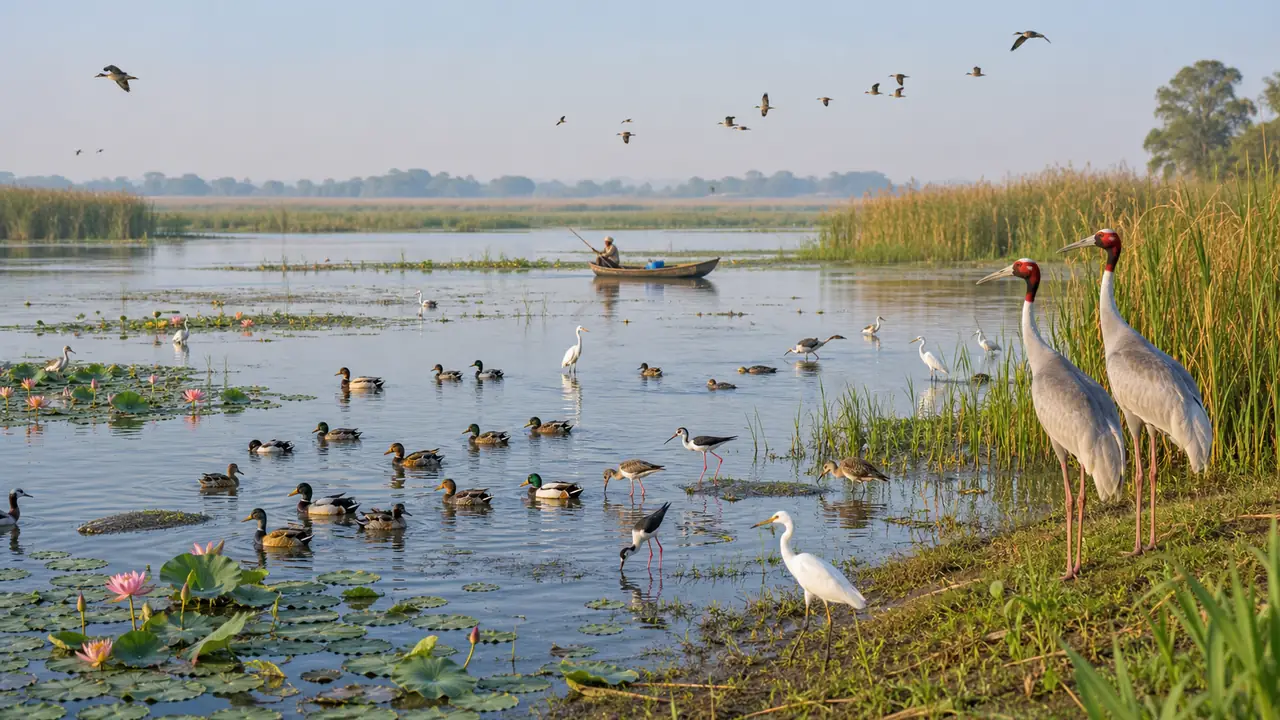
Despite its low forest cover, Uttar Pradesh supports a surprisingly rich avian diversity — over 500 bird species have been recorded across the state. The Gangetic floodplain, Terai wetlands, and numerous lakes and reservoirs provide diverse habitats for resident and migratory birds.
UP's flat terrain with abundant water bodies makes it one of India's premier destinations for wintering migratory birds that travel from Central Asia, Siberia, and Europe along the Central Asian Flyway.
The easiest way to study this lesson is through three anchors:
- wetland bird sanctuaries in the plains
- Sarus Crane as UP's state bird
- migratory birds arriving via the Central Asian Flyway
Major Bird Sanctuaries
Lakh Bahosi Bird Sanctuary — Largest
Lakh Bahosi Bird Sanctuary in Kannauj district is the largest bird sanctuary in Uttar Pradesh.
| Parameter | Details |
|---|---|
| Location | Kannauj district |
| Area | ~80 sq km |
| Habitat | Wetlands, marshes, shallow lakes |
| Key Species | Sarus crane, painted stork, spoonbill, cormorant |
| Migratory Season | October–March |
| Significance | Largest bird sanctuary in UP |
Shaheed Chandra Shekhar Azad Bird Sanctuary (Nawabganj) — Ramsar Site
Shaheed Chandra Shekhar Azad Bird Sanctuary near Unnao, earlier known as Nawabganj Bird Sanctuary, is one of UP's most celebrated birding sites and a Ramsar Wetland.
| Parameter | Details |
|---|---|
| Location | Unnao district |
| Area | ~2.25 sq km |
| Ramsar Status | Yes (designated Ramsar site) |
| Key Species | Sarus crane, painted stork, white ibis, kingfisher |
| Migratory Visitors | Pintail, shoveler, gadwall, common teal |
| Distance from Lucknow | ~40 km |
Exam Tip: Nawabganj and Shaheed Chandra Shekhar Azad Bird Sanctuary refer to the same sanctuary. It is both a bird sanctuary and a Ramsar site, and it is very close to Lucknow.
Saman Bird Sanctuary
| Parameter | Details |
|---|---|
| Location | Mainpuri district |
| Area | ~5.3 sq km |
| Ramsar Status | Yes |
| Key Species | Sarus crane breeding ground, painted stork |
| Significance | Critical nesting habitat for Sarus cranes |
Sur Sarovar (Keetham) Bird Sanctuary
| Parameter | Details |
|---|---|
| Location | Agra district |
| Area | ~7.97 sq km |
| Ramsar Status | Yes |
| Nearby | Adjacent to Agra-Delhi highway, near Taj Mahal |
| Key Species | Sarus crane, spoonbill, cormorant, jacana |
| Other Feature | Bear Rescue Centre (Wildlife SOS) nearby |
Okhla Bird Sanctuary
| Parameter | Details |
|---|---|
| Location | Noida (Gautam Buddh Nagar) |
| River | Yamuna |
| Area | ~4 sq km |
| Key Species | Over 300 species recorded |
| Migratory Birds | Greylag goose, pintail, shoveler, gadwall |
| Unique Feature | Urban bird sanctuary within NCR |
Patna Bird Sanctuary
| Parameter | Details |
|---|---|
| Location | Etah district |
| Area | ~1.1 sq km |
| Ramsar Status | Yes (2026) |
| Key Species | Painted stork, open-billed stork, spoonbill |
| Season | Breeding colony during monsoon (July–October) |
Complete Bird Sanctuary Reference Table
| Sanctuary | District | Area (sq km) | Ramsar | Key Feature |
|---|---|---|---|---|
| Lakh Bahosi | Kannauj | ~80 | No | Largest bird sanctuary in UP |
| Shaheed Chandra Shekhar Azad (Nawabganj) | Unnao | ~2.25 | Yes | Near Lucknow, Sarus crane |
| Saman | Mainpuri | ~5.3 | Yes | Sarus crane breeding |
| Sur Sarovar | Agra | ~7.97 | Yes | Near Taj, bear rescue |
| Okhla | Noida | ~4 | No | Urban sanctuary, 300+ species |
| Patna | Etah | ~1.1 | Yes | Stork breeding colony, Ramsar relevance |
| Bakhira | Sant Kabir Nagar | ~29 | Yes | Largest natural lake in UP |
The Sarus Crane — State Bird
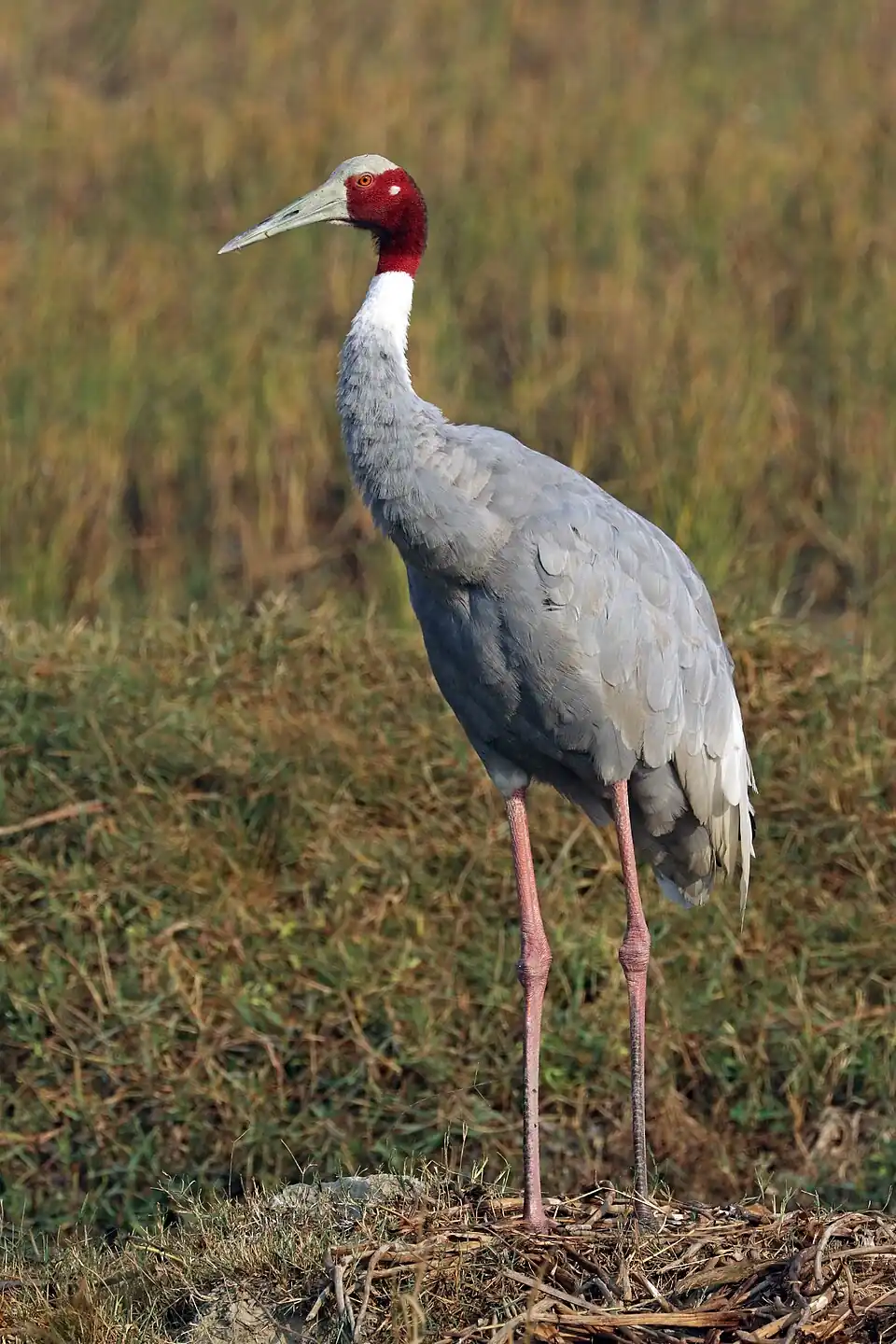
The Sarus Crane (Antigone antigone) is the state bird of Uttar Pradesh and one of the most iconic birds of the Indo-Gangetic plain.
| Parameter | Details |
|---|---|
| Scientific Name | Antigone antigone |
| IUCN Status | Vulnerable |
| Height | Up to 6 feet (1.8 m) — world's tallest flying bird |
| Wingspan | ~2.5 metres |
| Behaviour | Monogamous for life — pairs bond permanently |
| Habitat | Wetlands, paddy fields, marshes |
| UP Importance | One of the strongest Sarus Crane populations in India |
| Breeding Season | July–October (monsoon) |
The Sarus Crane's fidelity to its partner is legendary in Indian culture — it is considered a symbol of marital devotion. Valmiki's Ramayana opens with the poet's grief at seeing a Sarus crane killed.
Sarus Crane Hotspots in UP
| Location | District | Significance |
|---|---|---|
| Saman Bird Sanctuary | Mainpuri | Major breeding ground |
| Sarsai Nawar | Etawah | Key breeding wetland (Ramsar site) |
| Nawabganj | Unnao | Year-round resident population |
| Etawah-Mainpuri belt | Central UP | Highest density in India |
Exam Tip: Sarus Crane = tallest flying bird in the world, state bird of UP, monogamous. The Etawah-Mainpuri region is one of its strongest strongholds in the state.
Migratory Birds of UP
Every winter (October–March), UP's wetlands host thousands of migratory birds from the Palearctic region, travelling along the Central Asian Flyway.
Key Migratory Species
| Species | Origin | Habitat in UP |
|---|---|---|
| Northern Pintail | Siberia, Central Asia | Lakes, reservoirs |
| Northern Shoveler | Europe, Central Asia | Shallow wetlands |
| Bar-headed Goose | Central Asia (crosses Himalayas) | Large lakes |
| Greylag Goose | Europe, Central Asia | Okhla, Nawabganj |
| Common Teal | Siberia | Marshes, ponds |
| Gadwall | Northern Europe | Shallow lakes |
| Siberian Crane | Siberia (historically) | Formerly at Keoladeo (near UP border) |
The Siberian Crane was once a regular winter visitor to northern India but is now treated mainly as a historical migration-reference species in exam preparation. Habitat loss and hunting along the migration route contributed to its disappearance from the regular Indian wintering pattern.
Important Bird Areas (IBAs) in UP
BirdLife International has identified several Important Bird Areas (IBAs) in UP — sites of global significance for bird conservation.
| IBA Site | District | Key Species |
|---|---|---|
| Dudhwa National Park | Lakhimpur Kheri | Bengal florican, swamp partridge |
| National Chambal | Agra-Etawah | Indian skimmer, river tern |
| Hastinapur | Meerut region | Sarus crane, black-necked stork |
| Nawabganj | Unnao | Sarus crane, painted stork |
| Okhla | Noida | 300+ species, migratory ducks |
The Bengal Florican — a critically endangered bustard found in Dudhwa and Pilibhit's grasslands — is one of UP's rarest breeding birds.
Birding Tourism
UP has significant untapped potential for birding tourism (avitourism). Key circuits include:
| Circuit | Districts | Best Season |
|---|---|---|
| Terai Birding Trail | Lakhimpur Kheri, Pilibhit, Bahraich | Nov–Feb |
| Chambal Riverside | Agra, Etawah | Oct–Mar |
| Lucknow Wetland Circuit | Unnao (Nawabganj), Hardoi (Sandi) | Nov–Feb |
| NCR Birding | Noida (Okhla), Greater Noida | Oct–Mar |
Summary Cheat Sheet
| Item | Quick Fact |
|---|---|
| Total Bird Species | 500+ |
| Largest Bird Sanctuary | Lakh Bahosi (Kannauj, ~80 sq km) |
| Key Ramsar Bird Sites | Shaheed Chandra Shekhar Azad (Nawabganj), Saman, Sur Sarovar, Bakhira, Patna |
| State Bird | Sarus Crane (tallest flying bird, 6 ft) |
| Sarus Behaviour | Monogamous for life |
| Sarus Hotspot | Etawah-Mainpuri belt |
| Flyway | Central Asian Flyway |
| Rarest Breeding Bird | Bengal Florican (Critically Endangered) |
Lesson Doubts
Ask questions, get expert answers