☸️ Buddhism & Jainism in UP
Major Buddhist sites (Sarnath, Kushinagar, Shravasti, Kapilvastu, Sankassa, Kaushambi) and Jain sites (Varanasi, Ayodhya, Deogarh) in Uttar Pradesh for Uttar Pradesh GK.
Why UP Is Central to Buddhism and Jainism
Uttar Pradesh is one of the most important regions for Buddhist heritage. While the full life of Buddha spans present-day Nepal, Bihar, and UP, some of the most important events connected with his teaching career, monastic life, and Mahaparinirvana are linked with places in Uttar Pradesh. Similarly, Jainism's foundational traditions also have deep roots in the state.
Exam Fact: For UP exams, the safest memory point is that UP contains several of the most important Buddhist pilgrimage centres — especially Sarnath, Kushinagar, Shravasti, Sankisa, and Kaushambi.
Buddhist Sites in UP
1. Sarnath (Varanasi)
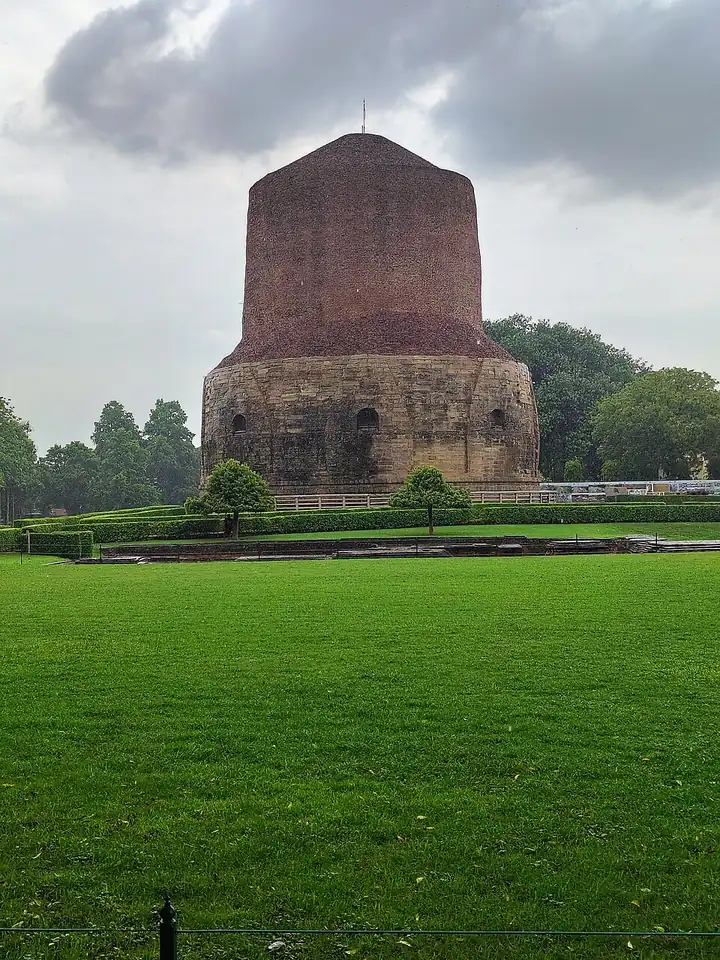
Sarnath is where Buddha delivered his first sermon (Dhammachakkapavattana Sutta) to five ascetics in the Deer Park, an event called "Turning of the Wheel of Dharma".
| Monument | Significance |
|---|---|
| Dhamekh Stupa | Marks the traditional site of the first sermon; major surviving stupa at Sarnath |
| Ashoka Pillar | Four-lion capital = National Emblem of India |
| Chaukhandi Stupa | Where Buddha met his first five disciples |
| Mulagandha Kuti Vihar | Modern temple with Japanese-donated frescoes |
| Sarnath Museum | Houses the original Lion Capital, Buddha statues |
The Lion Capital of Ashoka from Sarnath was adopted as India's national emblem on 26 January 1950.
2. Kushinagar (Kushinagar District)
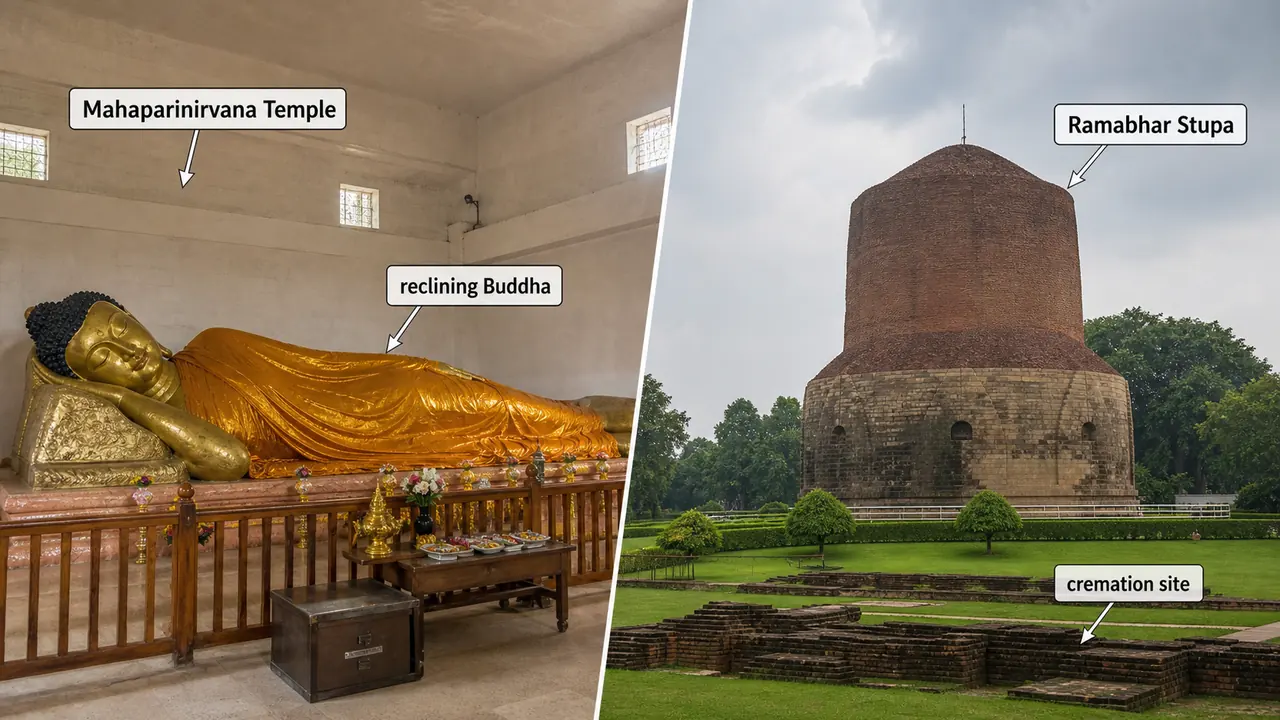
Buddha attained Mahaparinirvana (death) at Kushinagar around 483 BCE at the age of 80, lying between two sal trees.
| Monument | Detail |
|---|---|
| Mahaparinirvana Temple | Houses a 6-metre reclining Buddha statue (5th century CE) |
| Ramabhar Stupa | Marks the cremation site of Buddha |
| Matha Kuar Shrine | 3-metre seated Buddha in Bhumisparsha mudra |
3. Shravasti (Gonda-Bahraich Border)
Shravasti was the capital of Kosala and the city most strongly associated with Buddha's rainy season retreats.
| Site | Significance |
|---|---|
| Jetavana Monastery | Donated by merchant Anathapindika who covered the ground with gold coins |
| Angulimala Stupa | Associated with the reformed bandit-turned-monk |
| Gandhakuti | Buddha's personal dwelling within Jetavana |
| Sobhanath Temple | Jain shrine (Shravasti is sacred to Jains too) |
Exam Tip: Shravasti is associated with the "Twin Miracle" (Yamaka-Patihariya) where Buddha simultaneously produced fire and water from his body.
4. Kapilvastu / Piprahwa (Siddharthnagar)
Kapilvastu was the Shakya republic capital where Prince Siddhartha (Buddha) spent his early life before the Great Renunciation.
- Piprahwa (Siddharthnagar) is one of the major sites linked in the wider Kapilavastu debate
- In 1898, W.C. Peppe discovered a stone casket with an inscription that has been associated with Buddhist relics
- Archaeological remains include monastic complexes dating from 3rd century BCE to 5th century CE
5. Sankassa (Farrukhabad)
Sankassa is where Buddha descended from Trayastrimsha heaven after preaching the Abhidhamma to his mother Maya Devi for three months. He descended on a triple ladder — of gold, silver, and crystal.
- Sankisa tradition is linked with an elephant capital and Mauryan-period memory
- The site is identified with the modern village of Sankisa in Farrukhabad
6. Kaushambi (Prayagraj)
Kaushambi was the Vatsa kingdom capital and an important teaching centre in the Buddhist tradition.
| Site | Detail |
|---|---|
| Ghositarama Monastery | Built by a wealthy merchant; Buddha stayed here |
| Ashoka Pillar | Inscribed edict pillar still standing |
| Prabhasa Vihara | Another monastery visited by Buddha |
Kaushambi is also associated in Buddhist tradition with relic worship and important monasteries.
Jain Sites in UP
Varanasi — Birthplace of Parshvanath
Parshvanath, the 23rd Tirthankara, was born in Varanasi around 872 BCE (traditional dating). He was a prince of the Kashi kingdom who renounced the throne.
- Parshvanath attained Moksha at Shikharji (Jharkhand), but his birth and early life were in Varanasi
- Several Jain temples exist in the old city of Varanasi
Ayodhya — Birthplace of Rishabhanath
Rishabhanath (Adinath), the 1st Tirthankara, was born in Ayodhya according to Jain tradition. Ayodhya is therefore one of the holiest cities for Jains.
- 5 Tirthankaras are traditionally associated with Ayodhya: Rishabhanath (1st), Ajitanath (2nd), Abhinandannath (4th), Sumatinath (5th), and Anantanath (14th)
- Ancient Jain temples and pilgrimage spots exist in the city
Deogarh (Lalitpur) — Jain Rock-Cut Temples
The Jain temples at Deogarh (Lalitpur district, Bundelkhand) are among the finest examples of Jain architecture in India.
- Over 31 Jain temples dating from the 8th to 17th century
- Remarkable sculptural panels depicting all 24 Tirthankaras
- The site is an ASI-protected monument
Ashoka's Role in Spreading Buddhism
Emperor Ashoka (269-232 BCE) played a major role in spreading Buddhism, and UP preserves some of the most important monuments connected with that memory:
- Erected or is traditionally associated with pillars at Sarnath, Prayagraj, Meerut, and Kaushambi
- The Sarnath Lion Capital became India's national emblem
- Built or inspired stupas and commemorative monuments at major Buddhist sites
- Sent missionaries to Sri Lanka, Central Asia, and Southeast Asia
- His Dhamma policy is remembered through inscriptions and monuments across the subcontinent
Summary Cheat Sheet
| Site | District | Buddhist / Jain Event |
|---|---|---|
| Sarnath | Varanasi | First Sermon, Ashoka's Lion Capital |
| Kushinagar | Kushinagar | Mahaparinirvana of Buddha |
| Shravasti | Shravasti | Jetavana, rainy retreats, Twin Miracle |
| Piprahwa | Siddharthnagar | Site linked with Kapilavastu tradition |
| Sankassa | Farrukhabad | Descent from heaven |
| Kaushambi | Kaushambi-Prayagraj region | Teaching centre, Ashoka Pillar |
| Varanasi | Varanasi | Parshvanath birthplace (23rd Tirthankara) |
| Ayodhya | Ayodhya | Rishabhanath birthplace (1st Tirthankara) |
| Deogarh | Lalitpur | 31 Jain temples (8th-17th century) |
Lesson Doubts
Ask questions, get expert answers