🚜 Peasant & Tribal Movements in UP
Kisan Sabha, Eka Movement, Nai-Dhobi Bandh, AIKS, Mahalwari system, and agrarian unrest in Uttar Pradesh for Uttar Pradesh GK.
Land Revenue Systems in UP
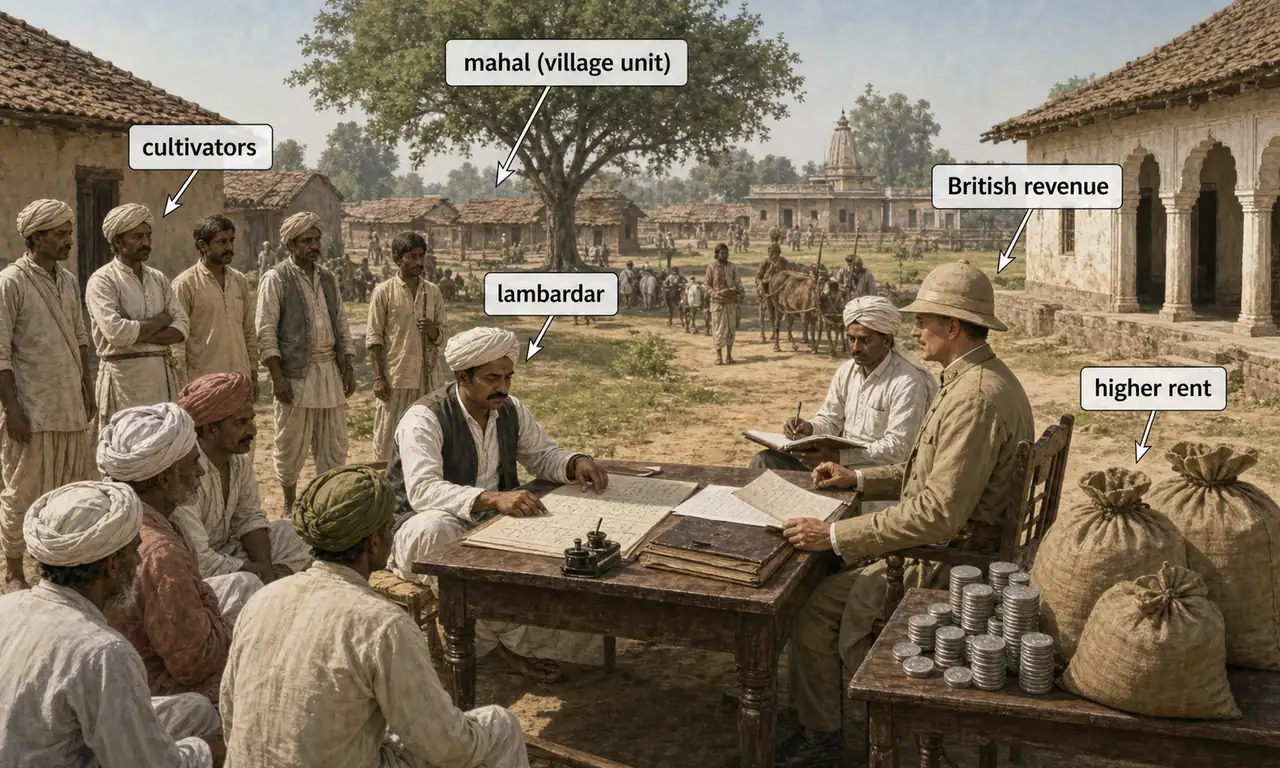
Before understanding peasant revolts, it is essential to know how the British extracted revenue from the land. Three major systems operated in India, with UP under the Mahalwari system.
| System | Region | Introduced By | Key Feature |
|---|---|---|---|
| Permanent Settlement | Bengal, Bihar, Odisha | Lord Cornwallis (1793) | Fixed revenue paid by zamindars |
| Ryotwari | Madras, Bombay | Thomas Munro & Alexander Read | Revenue collected directly from cultivators |
| Mahalwari | UP, Punjab, Central India | Holt Mackenzie (1822) | Revenue collected from the village (mahal) as a whole |
Under the Mahalwari system, the village headman or lambardar was responsible for collecting revenue from all cultivators and paying the British. Revenue was periodically revised, almost always upward.
Taluqdari Exploitation in Awadh
In Awadh, the British retained the taluqdari system after the 1857 Revolt to win taluqdar loyalty. This created a feudal structure where:
- Taluqdars (big landlords) controlled vast estates
- They charged exorbitant rents from peasant tenants
- Peasants had no security of tenure — they could be evicted at will
- Forced labour (begar) was common
- Peasants paid illegal cesses (nazrana, abwab) beyond the official rent
Contemporary observers often described peasant life in Awadh as extremely exploitative, marked by insecure tenancy, illegal cesses, and heavy landlord control.
Champaran and Its Influence on UP (1917)
Although the Champaran Satyagraha (1917) took place in Bihar, its success inspired peasant mobilization across UP. Gandhi's method of peaceful resistance against indigo planters demonstrated that organized peasant action could win concessions from the British.
Key lessons that reached UP peasants:
- Collective petition and non-violent protest can be effective
- National leaders (like Gandhi) could champion peasant causes
- The press could publicize peasant grievances nationally
Kisan Sabha Movement in Awadh (1920-21)
This was one of the most significant peasant mobilizations in UP during the freedom movement.
| Detail | Fact |
|---|---|
| Leader | Baba Ramchandra (a Maharashtrian sanyasi who lived among Awadh peasants) |
| Region | Pratapgarh, Rae Bareli, Sultanpur, Faizabad (Awadh region) |
| Period | 1920-1921 |
| Organization | Awadh Kisan Sabha (founded with support from local activists and Congress-linked leaders) |
Demands
- Reduction of exorbitant rents
- Abolition of begar (forced unpaid labour)
- End to illegal cesses and nazrana
- Security of tenure for tenants
- Social boycott of oppressive taluqdars
Methods
- Mass meetings and rallies across villages
- Nai-Dhobi Bandh (social boycott — see next section)
- Peasants refused to pay illegal cesses
- Some instances of looting taluqdar grain stores
Outcome
- The movement initially had Congress support but was later distanced due to violence
- Jawaharlal Nehru personally visited Awadh villages and supported early mobilization
- The Awadh Rent (Amendment) Act of 1921 provided some tenant protections
Nai-Dhobi Bandh Movement
A unique form of social protest that emerged alongside the Kisan Sabha:
- Barbers (Nai) and washermen (Dhobi) refused to serve taluqdars and their agents
- This was a devastating social boycott since these services were essential for daily life and rituals
- The movement showed how occupational and village networks could be used in peasant protest
- It forced taluqdars to negotiate as their households could not function without these services
- Originated in Pratapgarh and spread across Awadh
Eka Movement (1921-22)
| Detail | Fact |
|---|---|
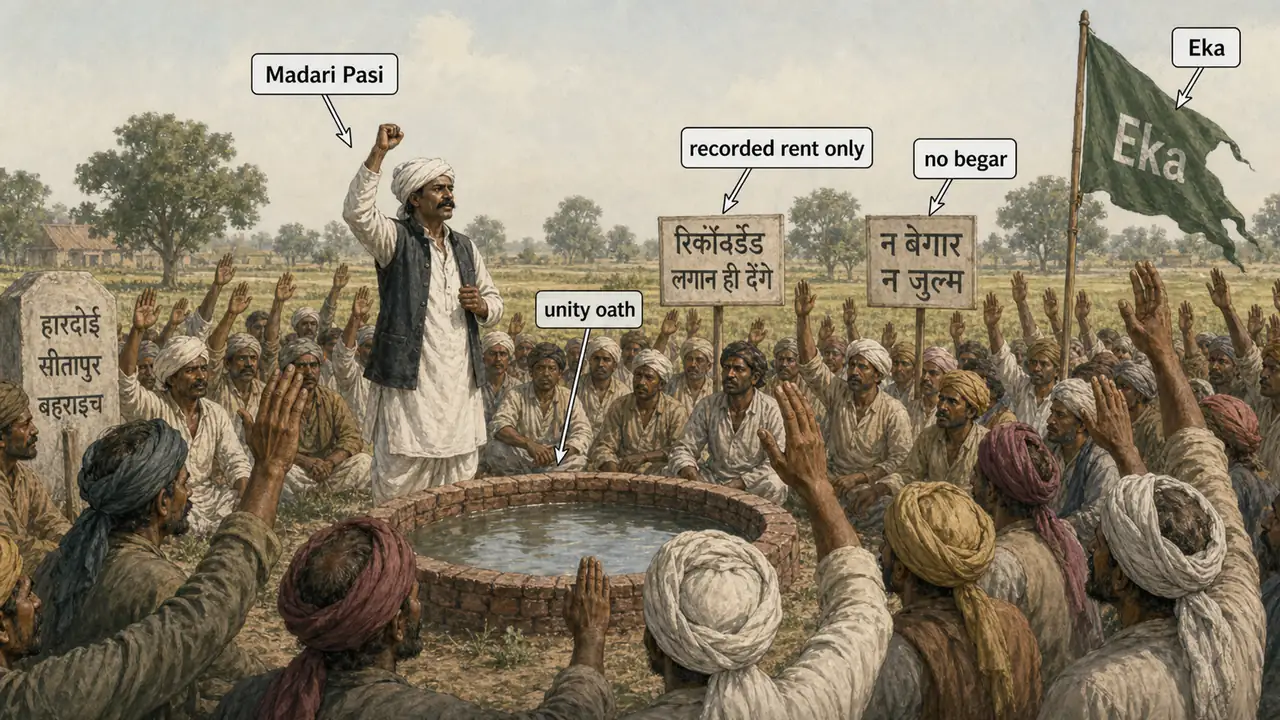
| Region | Hardoi, Bahraich, Sitapur districts of Awadh |
| Leader | Madari Pasi (a low-caste peasant leader) |
| Period | Late 1921 to early 1922 |
| Meaning | "Eka" means unity |
Key Features
- Primarily a movement rooted among poorer peasant and tenant groups, including Pasis, Ahirs, and Kurmis
- Peasants swore oaths of unity at mass gatherings around a pit filled with water from the Ganga
- They pledged to pay only the recorded rent (not a paisa more)
- Refused begar and illegal levies
- Would not leave land when evicted without due process
How It Differed from Kisan Sabha
- Kisan Sabha was led by upper-caste leaders and had Congress support
- Eka Movement was more autonomous than the Kisan Sabha phase and had no sustained Congress backing
- Eka was more radical in its methods and demands
- British suppressed it harshly; Madari Pasi was arrested
All India Kisan Sabha (AIKS) — 1936
| Detail | Fact |
|---|---|
| Founded | 11 April 1936 |
| Place | Lucknow (during the INC session) |
| First President | Swami Sahajanand Saraswati |
| General Secretary | N.G. Ranga |
- AIKS became the first major all-India peasant organization of the late colonial period
- It was founded at Lucknow, linking UP directly to the national peasant movement
- Adopted a red flag as its symbol
- Demanded abolition of zamindari, reduction of rent, and cancellation of peasant debts
- Had strong links with the Congress Socialist Party and later the Communist Party
Connection to Broader National Movements
| Movement | Connection to UP |
|---|---|
| Indigo Revolt (1859-60) | Though Bengal-based, similar exploitation existed in eastern UP; inspired later resistance |
| Champaran (1917) | Gandhi's success motivated UP peasant leaders |
| Mappila Rebellion (1921) | Parallel peasant uprising in Kerala; showed nationwide agrarian discontent |
| Tebhaga Movement (1946) | Bengal sharecroppers; AIKS-led, similar to Awadh tenant demands |
Summary Cheat Sheet
| Item | Key Fact |
|---|---|
| Land Revenue in UP | Mahalwari system (Holt Mackenzie, 1822) |
| Awadh Kisan Sabha | Baba Ramchandra, 1920-21, Pratapgarh-Rae Bareli |
| Eka Movement | Madari Pasi, 1921-22, Hardoi-Bahraich-Sitapur |
| Nai-Dhobi Bandh | Social boycott by barbers and washermen |
| AIKS Founded | 11 April 1936, Lucknow |
| AIKS President | Swami Sahajanand Saraswati |
| AIKS Secretary | N.G. Ranga |
| Key Demand | Rent reduction, tenant protection, later abolition of zamindari |
Lesson Doubts
Ask questions, get expert answers