🔥 The Revolt of 1857 in UP
Causes, key centres (Meerut, Kanpur, Lucknow, Jhansi, Bareilly), leaders, and aftermath of the Revolt of 1857 with focus on Uttar Pradesh for Uttar Pradesh GK.
Why UP Was the Epicentre
Uttar Pradesh (then the North-Western Provinces and Awadh) was one of the main centres of the 1857 Revolt for several reasons:
- The annexation of Awadh (1856) had outraged the nobility and common people
- A large portion of the Bengal Army sepoys were from Awadh and eastern UP
- The Doctrine of Lapse had dispossessed rulers like the Rani of Jhansi
- Taluqdars had lost their estates under British revenue settlements
- Religious and cultural sentiments were deeply hurt by social reform legislation
UP was one of the most intense theatres of the Revolt, with multiple major centres, leaders, and prolonged campaigns.
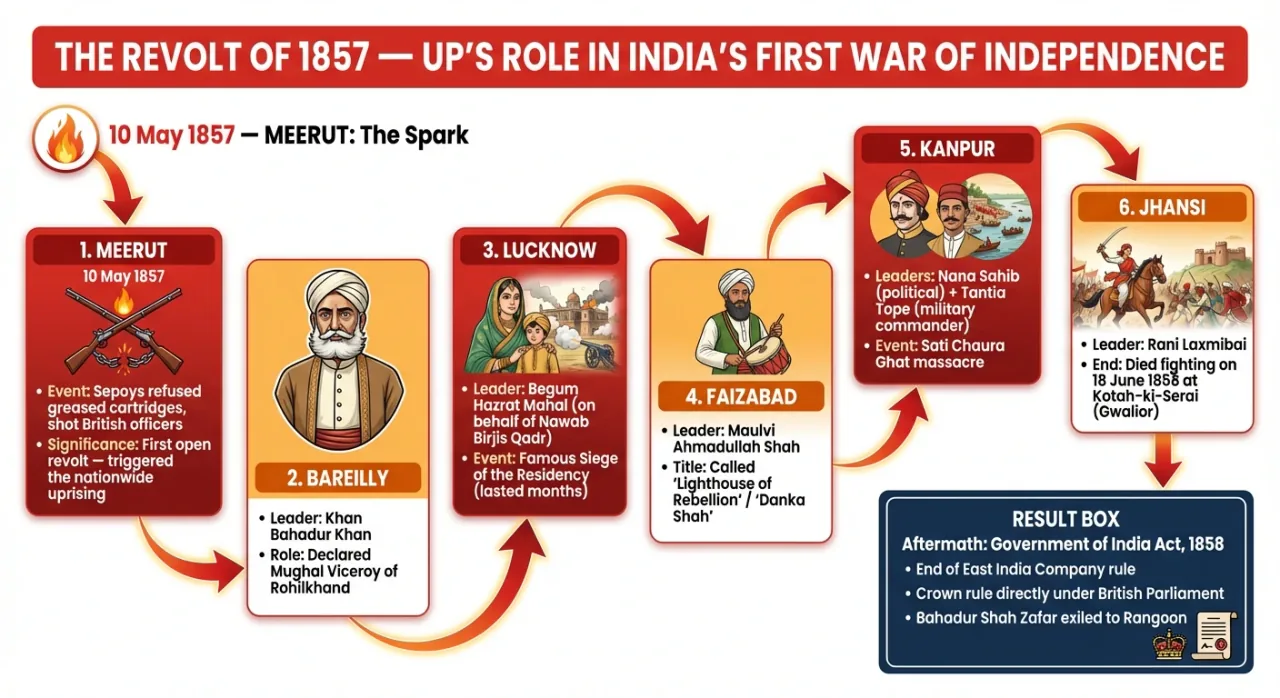
Causes of the Revolt
Immediate Cause
The introduction of the new Enfield rifle with greased cartridges rumoured to contain cow and pig fat. Soldiers had to bite the cartridge to load the rifle, offending both Hindu and Muslim sepoys.
Political Causes
- Doctrine of Lapse — annexation of Jhansi, Satara, Nagpur
- Annexation of Awadh on grounds of "misgovernance"
- Titles and pensions of Indian rulers abolished (e.g., Nana Sahib's pension stopped)
Economic Causes
- Destruction of Indian handicrafts and textiles
- Heavy land revenue under British settlements
- Drain of wealth to England
Social and Religious Causes
- Laws like the Widow Remarriage Act (1856) and abolition of Sati seen as interference in religion
- Christian missionary activity perceived as forced conversion attempts
- Racial discrimination against Indians in civil and military services
The Spark: Meerut (10 May 1857)
| Detail | Fact |
|---|---|
| Date | 10 May 1857 (Sunday) |
| Place | Meerut Cantonment |
| Trigger | 85 sepoys court-martialled for refusing greased cartridges |
| Action | Sepoys broke open jails, killed British officers, marched to Delhi |
| At Delhi | Declared Bahadur Shah Zafar as Emperor of India |
The choice of a Sunday was deliberate — most British officers were at church, making the uprising easier to execute.
Major Centres in UP
Kanpur
- Leader: Nana Sahib (adopted son of last Peshwa Baji Rao II)
- Military Commander: Tantia Tope (Ramchandra Pandurang)
- Nana Sahib's pension had been stopped by Dalhousie
- Massacre at Sati Chaura Ghat — British troops killed while evacuating on boats
- Bibighar massacre — British women and children killed (led to savage British reprisals)
- British recaptured Kanpur under General Neill and Sir Colin Campbell
Lucknow
- Leader: Begum Hazrat Mahal (wife of deposed Nawab Wajid Ali Shah)
- She declared her son Birjis Qadr as Nawab
- The famous Siege of the British Residency lasted from June to November 1857
- Sir Henry Lawrence (British Resident) was killed during the siege on 4 July 1857
- Relief attempts by Havelock and Outram; final recapture by Sir Colin Campbell in March 1858
- Begum Hazrat Mahal eventually fled to Nepal
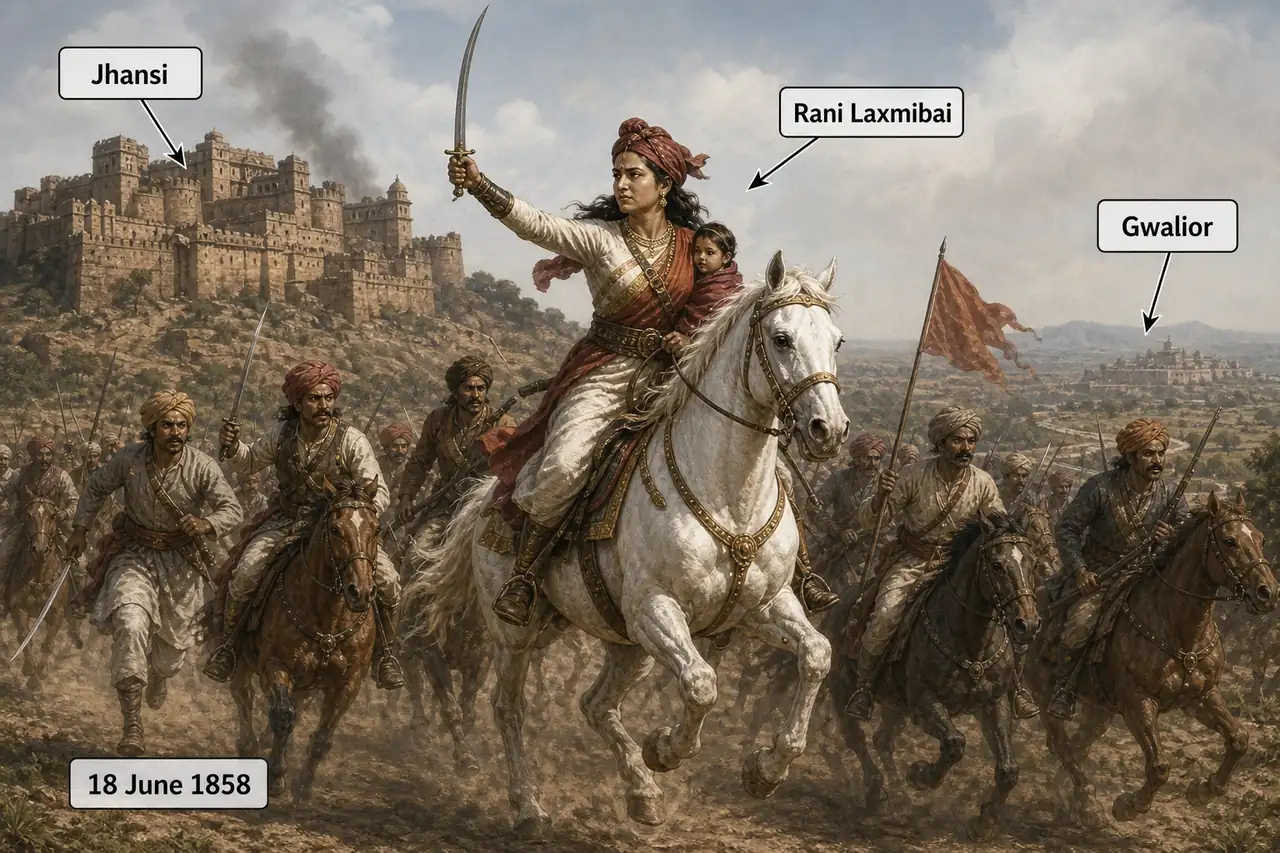
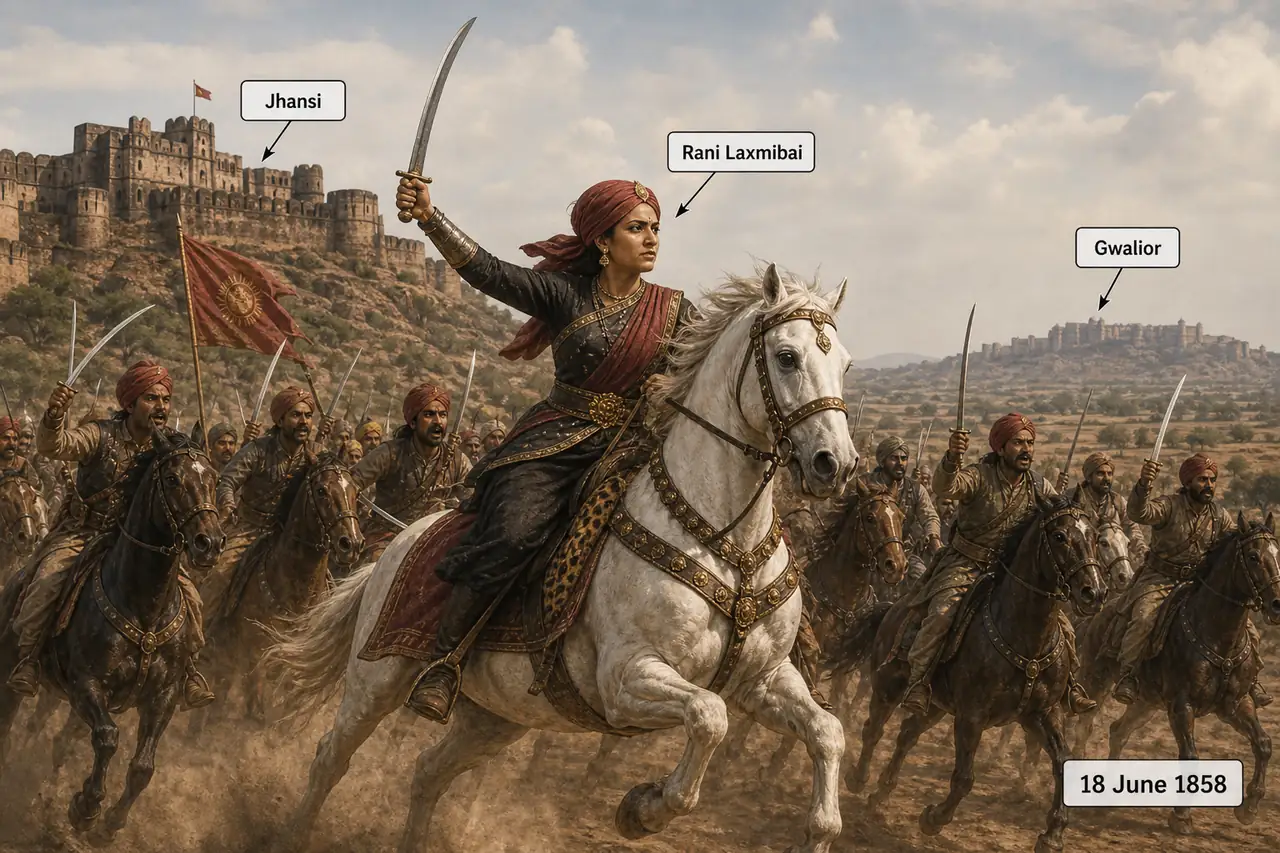
Jhansi
- Leader: Rani Laxmibai (her adopted son's right to rule was denied under Doctrine of Lapse)
- She fought against Sir Hugh Rose
- After losing Jhansi, she rode to Gwalior with Tantia Tope
- Died fighting on 18 June 1858 at Gwalior
Bareilly
- Leader: Khan Bahadur Khan (grandson of Rohilla chief Hafiz Rahmat Khan)
- Declared himself Viceroy of the Mughal Emperor
- Maintained rebel control for nearly a year
- Captured and executed by the British in 1860
Other UP Centres
| Centre | Leader/Notable |
|---|---|
| Faizabad | Maulvi Ahmadullah Shah ("Maulvi of Faizabad") |
| Azamgarh | Kunwar Singh's forces operated here |
| Allahabad | Maulvi Liaquat Ali led the revolt |
| Mathura | Devi Singh led local uprising |
| Mainpuri | Local revolt suppressed early |
Key Leaders of the Revolt — UP Focus
| Leader | Base | Key Contribution |
|---|---|---|
| Nana Sahib | Kanpur | Declared Peshwa, led Kanpur revolt |
| Tantia Tope | Kanpur | Military strategist, guerrilla warfare |
| Begum Hazrat Mahal | Lucknow | Rallied Awadh nobles, declared son as Nawab |
| Rani Laxmibai | Jhansi | Fought to death, symbol of resistance |
| Khan Bahadur Khan | Bareilly | Controlled Rohilkhand region |
| Maulvi Ahmadullah Shah | Faizabad | Called "Lighthouse of Rebellion" |
British Suppression
The British used extreme brutality to crush the revolt:
- Rebels tied to cannons and blown apart ("blowing from guns")
- Entire villages burned for harbouring rebels
- General Neill forced rebels to clean blood before execution
- Martial law imposed across UP for months
Key British commanders: Sir Colin Campbell, Sir Hugh Rose, General Havelock, General Outram, General Neill.
Aftermath and Impact
| Change | Detail |
|---|---|
| End of Company Rule | Government of India Act 1858 — Crown took direct control |
| End of Mughal Dynasty | Bahadur Shah Zafar exiled to Rangoon (died 1862) |
| Army Reorganization | Indian-to-British ratio reduced; artillery kept exclusively with British |
| Doctrine of Lapse | Abandoned; adopted heirs recognized |
| Queen's Proclamation | 1 November 1858 — promised non-interference in religion, equal treatment |
| Administrative Change | Governor-General became Viceroy; Secretary of State for India appointed |
Summary Cheat Sheet
| Item | Key Fact |
|---|---|
| Start | Meerut, 10 May 1857 |
| Kanpur Leader | Nana Sahib, Military: Tantia Tope |
| Lucknow Leader | Begum Hazrat Mahal, son Birjis Qadr |
| Jhansi Leader | Rani Laxmibai, died 18 June 1858 at Gwalior |
| Bareilly Leader | Khan Bahadur Khan |
| Faizabad Leader | Maulvi Ahmadullah Shah |
| Immediate Cause | Enfield rifle greased cartridges |
| Result | Government of India Act 1858, Crown rule begins |
| Queen's Proclamation | 1 November 1858 |
Lesson Doubts
Ask questions, get expert answers