🪡 Chikankari & Zardozi — Lucknow's Textile Art
Explore Lucknow's world-famous Chikankari white embroidery and Zardozi metallic thread work — their history, techniques, GI status, and economic significance for UP.
Introduction
Lucknow is globally recognised for two extraordinary embroidery traditions — Chikankari (delicate white-on-white needlework) and Zardozi (opulent metallic thread embroidery). Both crafts are strongly associated with the Mughal and Nawabi cultural world of north India and remain important artisan industries in Uttar Pradesh.
Chikankari — The Art of White Embroidery
Origin & History
The exact origin of Chikankari is debated. A popular tradition says that Nur Jahan, wife of Mughal emperor Jahangir, helped popularise the craft in Lucknow in the early 17th century. Whether or not she was the sole originator, the important exam fact is that Chikankari became deeply linked with Lucknow and Awadh.
The craft flourished under Nawabi patronage in 18th-century Awadh. Lucknow became its best-known centre because the city already had fine textile demand, courtly fashion, and a long tradition of delicate handwork.
Technique & Stitches
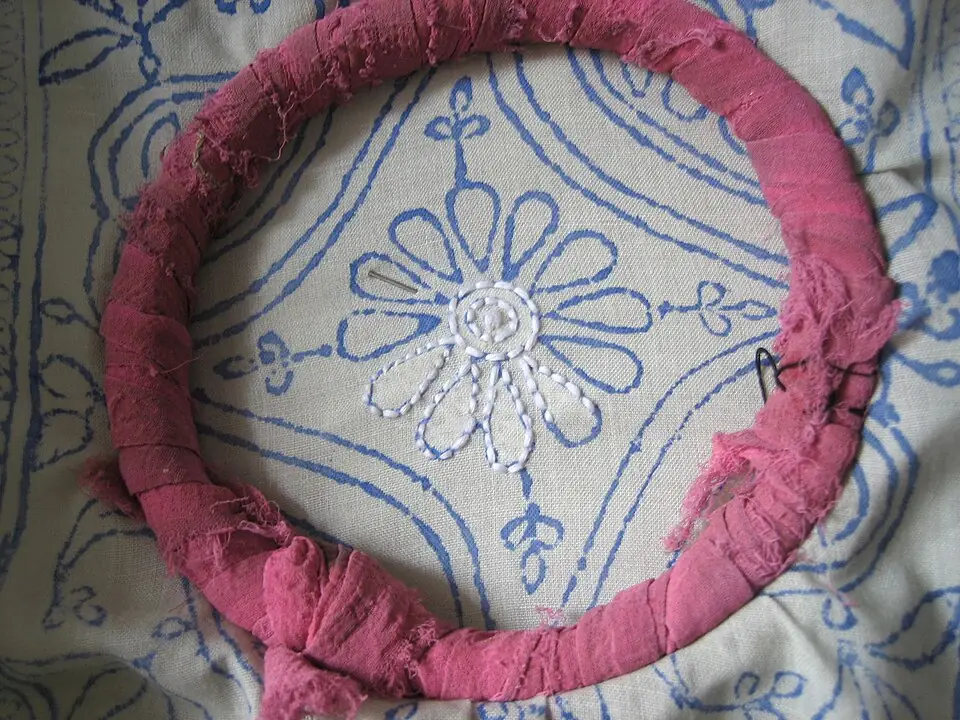
Chikankari is traditionally done on white muslin or cotton fabric using white thread, giving it its signature ethereal appearance. The process involves:
- Block printing the design onto fabric using washable blue ink
- Hand embroidery by skilled artisans (mostly women)
- Washing to remove the printed guidelines
- Finishing with stretching and ironing
Traditional descriptions often speak of around 36 stitch forms, broadly grouped into three families:
| Stitch Family | Key Stitches | Characteristics |
|---|---|---|
| Flat stitches | Tepchi, Pashni, Hool | Lie flat on fabric surface |
| Embossed stitches | Murri, Phanda, Keel Kangan | Raised, grain-like texture |
| Jaali (net) stitches | Jaali, Sidhaul, Ulta Bakhiya | Pulled-thread openwork creating net patterns |
The most celebrated stitch is Murri — tiny knot stitches resembling rice grains that create raised floral patterns.
GI Tag & Economic Impact
- Lucknow Chikankari received its Geographical Indication (GI) tag in 2010
- The industry supports a very large artisan base, with many women working from home or through small production networks
- It serves both everyday wear and premium fashion markets in India and abroad
- Major strength: it combines cultural heritage with modern fashion adaptability
Zardozi — Gold & Silver Thread Embroidery
Origin & History
Zardozi (from Persian: zar = gold, dozi = embroidery) is a heavy metallic embroidery using gold and silver threads, beads, sequins, and stones. The craft received strong Mughal patronage and later became closely associated with Lucknow's courtly culture.
During British rule, the decline of princely courts severely impacted Zardozi artisans. The craft revived in the 20th century through the fashion industry.
Technique
| Element | Description |
|---|---|
| Base fabric | Velvet, silk, satin, or heavy cotton |
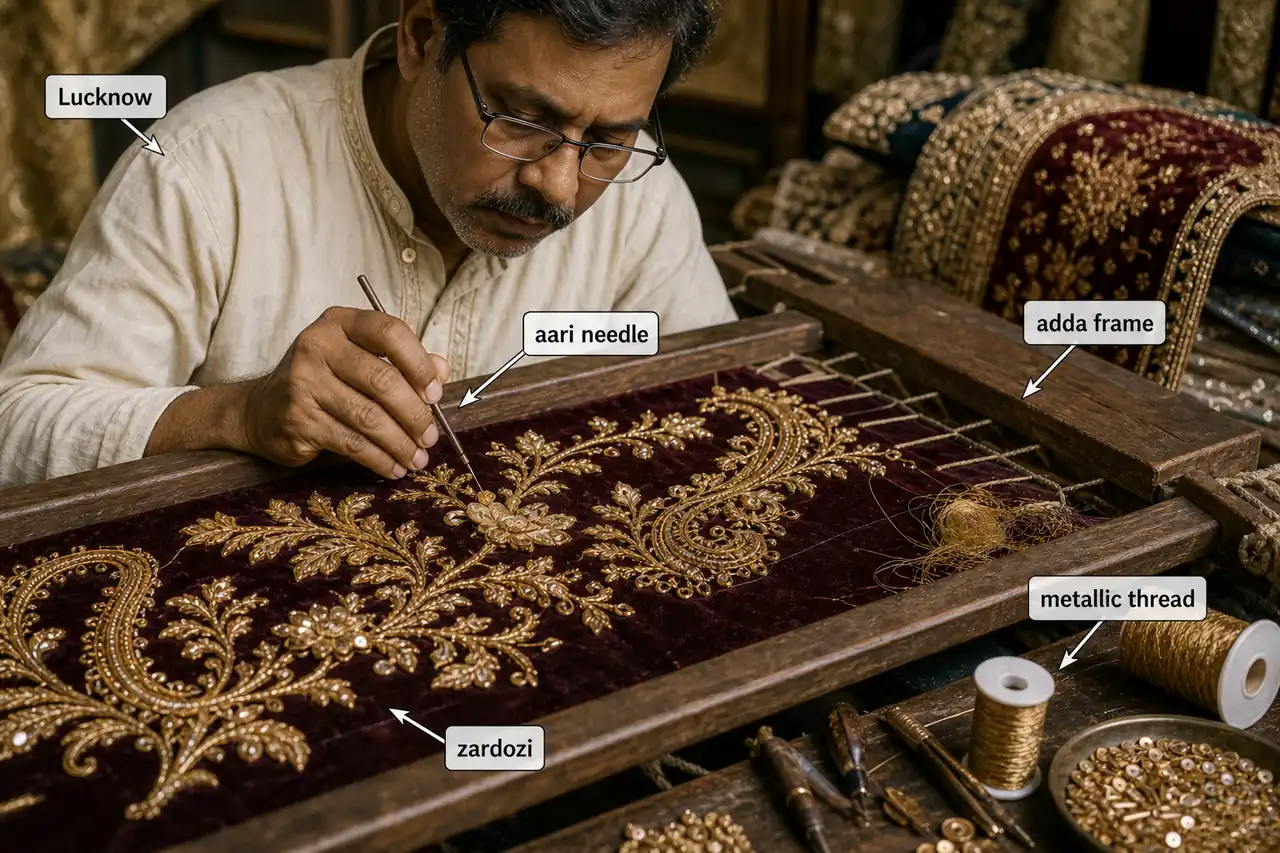
| Thread | Gold/silver wire (kalabattu) wound over silk core |
| Tools | Aari needle, wooden frame (adda) |
| Embellishments | Sequins (sitara), beads (moti), stones, gota |
The artisan stretches fabric on a wooden frame and uses a hooked aari needle to create elaborate patterns from the underside. Designs include Mughal floral motifs, paisleys, and geometric patterns.
Key Centres
- Lucknow — primary centre, especially the Chowk area
- Bareilly — second major hub, known for heavy bridal Zardozi
- Varanasi — Zardozi combined with Banarasi silk weaving
Modern Adaptations
- Lighter machine-made Zardozi for mass market
- Integration with contemporary fashion (lehengas, sherwanis, designer wear)
- Lucknow Zardozi received its GI tag separately, reinforcing its distinct identity
- It remains important in bridal wear, ceremonial clothing, costume design, and luxury fashion
Chikankari vs Zardozi — Quick Comparison
| Parameter | Chikankari | Zardozi |
|---|---|---|
| Thread | White cotton/silk | Gold/silver metallic wire |
| Fabric | Light cotton, muslin, georgette | Heavy velvet, silk, satin |
| Feel | Delicate, subtle | Heavy, opulent |
| Primary use | Everyday to festive wear | Bridal, ceremonial, royal |
| Artisan base | Large home-based artisan network, many women | Large artisan network, often workshop-based |
| GI tag | 2010 | Yes (separate registration) |
Challenges Facing Both Crafts
- Machine imitation — cheap machine embroidery sold as handmade
- Low wages — artisans often receive a small share of the final retail value despite the labour-intensive work
- Middleman exploitation — contractors capture most profit margins
- Skill erosion — younger generation reluctant to enter low-paying craft work
- Government schemes like One District One Product (ODOP) and Hunar Haat aim to support artisans directly
Summary Cheat Sheet
| Fact | Detail |
|---|---|
| Chikankari origin | Popularly linked with Nur Jahan; strongly associated with Lucknow and Awadh |
| Total stitches | Traditionally described as around 36 (tepchi, murri, phanda, jaali, etc.) |
| Chikankari GI tag | 2010 |
| Zardozi meaning | Zar (gold) + Dozi (embroidery) |
| Zardozi centres | Lucknow, Bareilly, Varanasi |
| Key tool (Zardozi) | Aari needle on adda (wooden frame) |
| Main contrast | Chikankari is delicate and light; Zardozi is rich and heavy |
| Key government scheme | ODOP, Hunar Haat |
Lesson Doubts
Ask questions, get expert answers