🏺 Pottery & Terracotta Traditions
Discover UP's diverse pottery heritage — Khurja glazed pottery, Nizamabad black pottery, Chunar red clay, Chinhat blue pottery, and Gorakhpur terracotta traditions.
Introduction
Uttar Pradesh possesses one of India's richest pottery traditions, stretching from ancient terracotta cultures of the Gangetic plains to modern glazed ceramics. Each district has developed distinctive techniques shaped by local clay, cultural demand, and historical patronage. The easiest way to study this lesson is to contrast glazed pottery, black smoke-fired pottery, red clay ware, and folk terracotta.
Khurja Pottery — The Ceramic City
Overview
Khurja in Bulandshahr district is widely known as the "Ceramic City" of India and is one of the country's best-known glazed pottery centres. The craft is generally linked with potters said to have come from the Multan region during the Sultanate-Mughal period.
Products & Technique
| Feature | Detail |
|---|---|
| Specialty | Glazed ceramic pottery with bright colours |
| Products | Tea sets, crockery, tiles, vases, decorative items |
| Clay type | Ball clay mixed with feldspar and quartz |
| Firing | High-temperature kiln firing (1200-1300°C) |
| Decoration | Relief work, hand painting, transfer printing |
| Units | 500+ pottery units in and around Khurja |
The distinctive feature of Khurja pottery is its hard, glossy glaze finish achieved through double firing — first bisque firing, then glaze firing. Floral and geometric patterns in bright blues, greens, and yellows are trademark designs.
Economic Significance
- It supports a large pottery and ceramic workforce in and around Khurja
- Exports to Middle East, Africa, and Southeast Asia
- Identified under ODOP for Bulandshahr district
Nizamabad Black Pottery — Smoke-Fired Art
Unique Technique
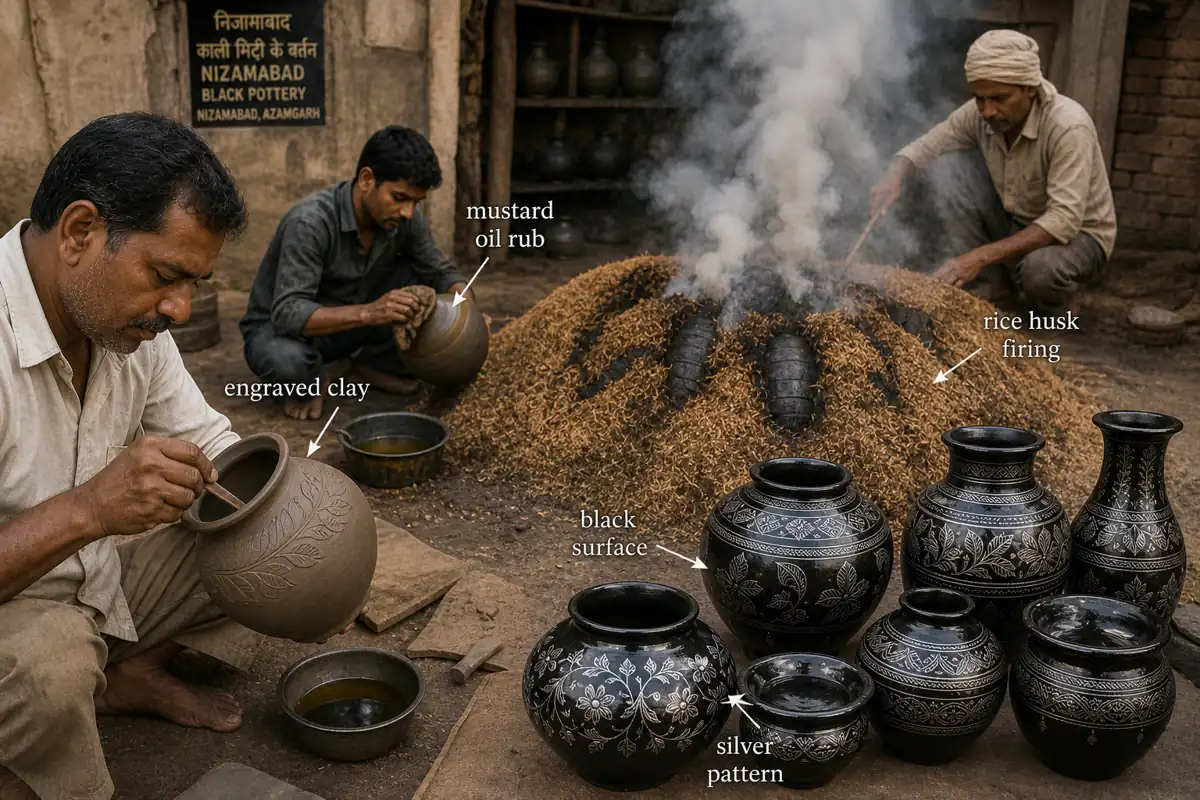
Nizamabad in Azamgarh district produces a highly distinctive black pottery created through a special smoke-firing technique using organic material such as rice husk. This is one of UP's most recognisable craft traditions.
The process:
- Shaping — clay thrown on potter's wheel or hand-moulded
- Drying — sun-dried for several days
- Engraving — patterns scratched into the surface using sharp tools
- Oil application — mustard oil rubbed into the engraved patterns
- Smoke firing — pieces buried in rice husks and slow-burned for hours
- Result — carbon penetration turns pottery jet black; oil-filled engravings shine silver
Nizamabad Black Pottery received a GI tag in 2015, recognising its distinctive regional technique and identity.
Products
- Decorative vases, bowls, plates, surahi (water vessels)
- Miniature ornamental items and jewellery
- Wall hangings and table lamps
Chunar Pottery — Red Clay Heritage
Chunar in Mirzapur district is famous for its red clay pottery, one of the oldest pottery traditions in UP. The fort town of Chunar sits on alluvial and laterite deposits that provide iron-rich red clay.
| Feature | Detail |
|---|---|
| Clay type | Iron-rich red clay (laterite) |
| Products | Water pots (matka, surahi), diyas, ritual items |
| History | Archaeological finds suggest pottery-making since ancient times |
| Specialty | Unglazed terracotta with natural red finish |
| Cultural role | Diyas from Chunar used across North India during Diwali |
Chunar pottery remains largely traditional and utilitarian, serving rural households and religious functions.
Chinhat Pottery — Blue Elegance
Chinhat near Lucknow has been associated with decorative pottery influenced by Persian-style blue-and-white design traditions. It is best remembered in UP GK as a smaller decorative pottery centre linked to the Lucknow cultural region.
Features
- Geometric and floral patterns in cobalt blue on white or cream background
- Products: plates, bowls, tiles, planters, decorative pieces
- Influenced by Nawabi aesthetic and Persian design
- Small-scale production, mainly for decorative and gifting use
- Growing popularity in urban interior design
Gorakhpur Terracotta — Living Folk Art
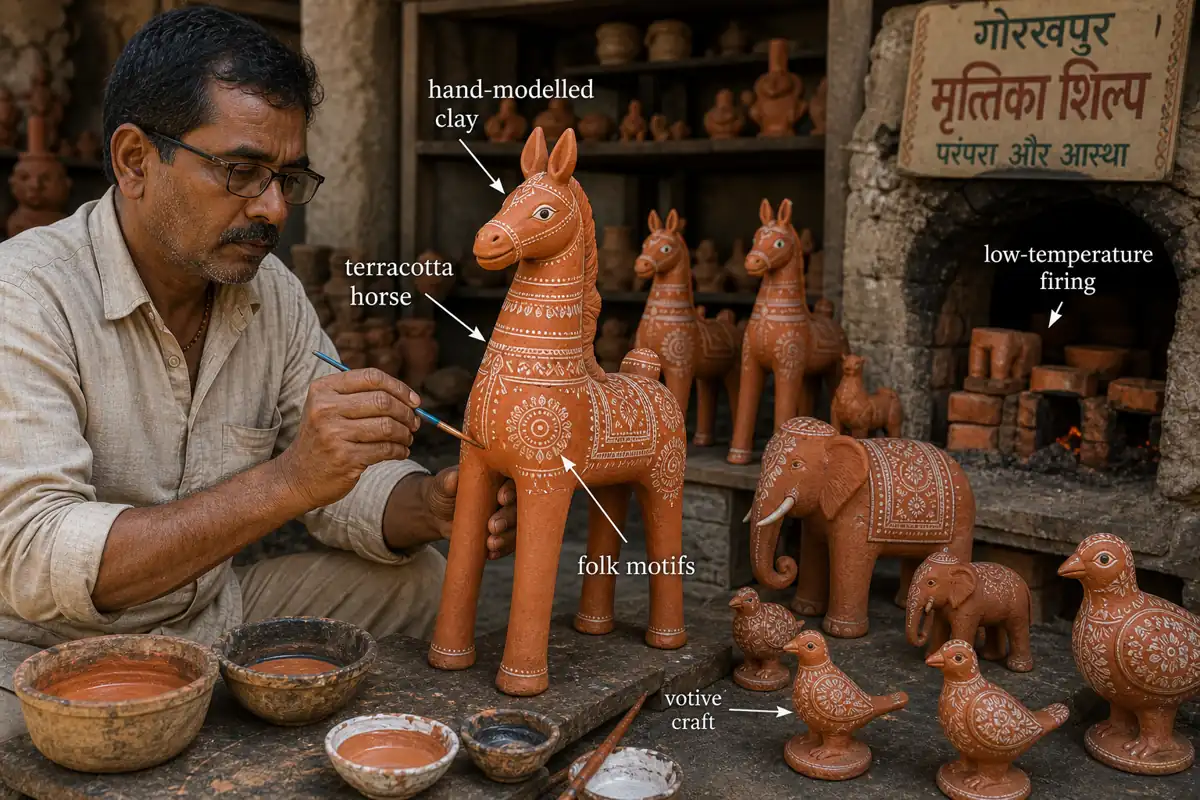
Gorakhpur terracotta is a centuries-old folk art tradition producing distinctive animal and bird figurines, especially the iconic horse (terracotta horse).
Key Features
| Feature | Detail |
|---|---|
| Signature items | Horses, elephants, riders, birds, mythological figures |
| Purpose | Votive offerings, decorative toys, folk art |
| Technique | Hand-modelled, sun-dried, low-temperature firing |
| Clay | Local alluvial clay mixed with rice husk ash |
| Cultural significance | Offered at village shrines, especially to local deities |
| GI status | GI-recognised craft identity associated with the region |
The Gorakhpur terracotta horse is the most iconic piece — a tall, elongated figure with stylised features that has become a symbol of UP's folk art heritage.
Other Pottery Centres
| Centre | District | Specialty |
|---|---|---|
| Rampur | Rampur | Decorative ceramic tiles and tableware |
| Mathura | Mathura | Religious figurines (Krishna idols) in terracotta |
| Ayodhya | Ayodhya | Decorative diyas and ritual pottery |
| Kannauj | Kannauj | Clay distillation vessels (deg) for perfume-making |
Ancient Roots — Archaeological Continuity
UP's pottery heritage is linked to a long archaeological record in the Gangetic plains. Archaeological sites at Hastinapura (Meerut region), Kaushambi, and Sravasti region have yielded:
- Painted Grey Ware (PGW) — associated with Vedic-era settlements
- Northern Black Polished Ware (NBPW) — characteristic of Mauryan period
- Ochre Coloured Pottery (OCP) — among the early pottery traditions of the upper Gangetic region
This archaeological continuity shows that pottery has deep roots in the region over many centuries.
Summary Cheat Sheet
| Centre | District | Specialty | GI Status |
|---|---|---|---|
| Khurja | Bulandshahr | Glazed ceramic ("Ceramic City") | Major pottery centre |
| Nizamabad | Azamgarh | Black pottery (rice husk firing) | Tagged (2015) |
| Chunar | Mirzapur | Red clay terracotta | Not yet |
| Chinhat | Lucknow | Blue geometric pottery | Not yet |
| Gorakhpur | Gorakhpur | Terracotta figurines (horses) | GI-recognised regional craft identity |
| Ancient wares | Multiple | PGW, NBPW, OCP | Archaeological continuity |
Lesson Doubts
Ask questions, get expert answers