🪷 Lakes, Wetlands & Ramsar Sites of UP
Ramsar wetland sites of Uttar Pradesh, major lakes, bird sanctuaries, ecological importance — comprehensive exam guide for Uttar Pradesh GK.
Lakes & Wetlands of Uttar Pradesh
Uttar Pradesh has a rich network of lakes and wetlands that serve as vital habitats for migratory birds, support local fisheries, and recharge groundwater. For UP GK, wetlands are important not only as geography facts but also as biodiversity, ecology, and current-affairs topics.
As of June 3, 2026, Uttar Pradesh has 12 Ramsar sites. That means old notes mentioning 10 Ramsar sites are now outdated.
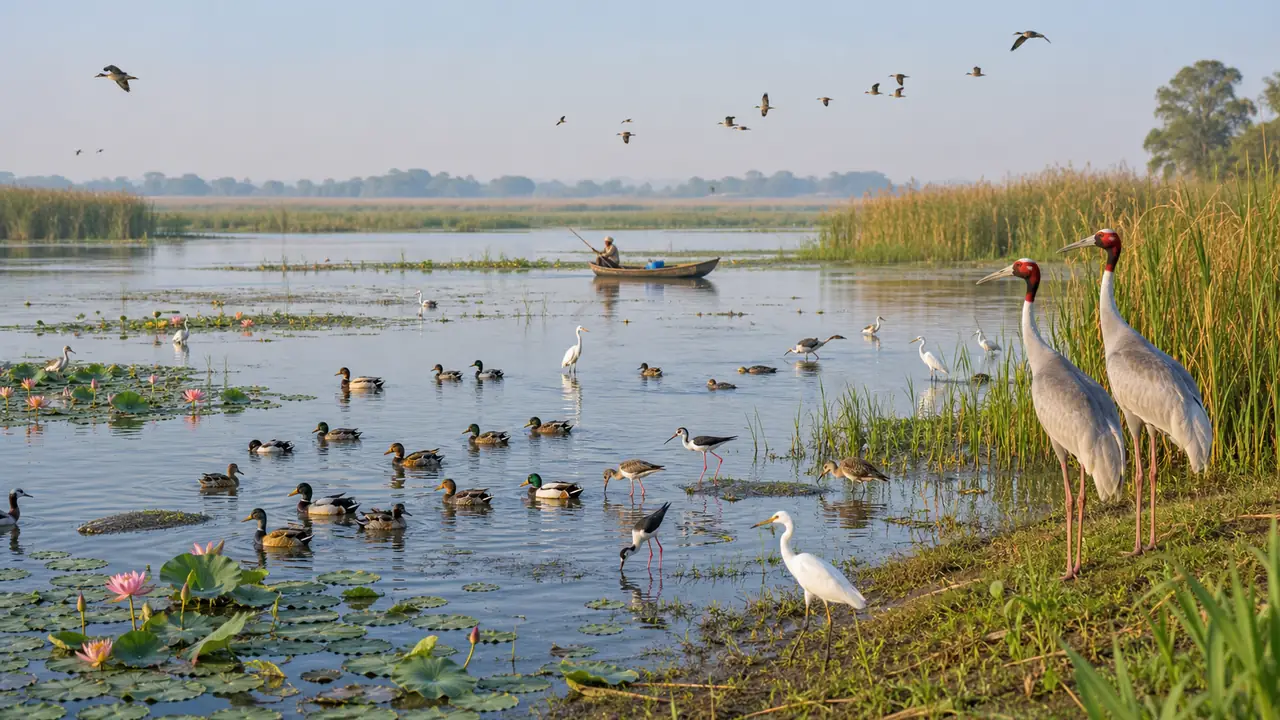
What is a Ramsar Site?
| Parameter | Detail |
|---|---|
| Definition | Wetland of international importance designated under the Ramsar Convention (1971) |
| Convention signed at | Ramsar, Iran |
| India joined | 1982 |
| Purpose | Conservation and wise use of wetlands |
| India's first Ramsar sites | Chilika Lake (Odisha) and Keoladeo (Rajasthan) — both in 1981 |
Ramsar Sites of Uttar Pradesh
UP has 12 Ramsar sites as of June 3, 2026. The table below keeps the older core sites together and also includes the two most recent additions relevant for current exam preparation.
| # | Ramsar Site | District | Area (ha) | Year Designated | Key Feature |
|---|---|---|---|---|---|
| 1 | Upper Ganga River | Upper Ganga stretch in UP | 26,590 | 2005 | Gharial, river dolphin habitat |
| 2 | Nawabganj Bird Sanctuary | Unnao | 225 | 2019 | Sarus crane, migratory birds |
| 3 | Saman Bird Sanctuary | Mainpuri | 526 | 2019 | Wintering ground for waterbirds |
| 4 | Samaspur Bird Sanctuary | Rae Bareli | 799 | 2019 | Over 250 bird species recorded |
| 5 | Sandi Bird Sanctuary | Hardoi | 309 | 2019 | Important for migratory waterfowl |
| 6 | Parvati Aranga Bird Sanctuary | Gonda | 722 | 2019 | Floodplain wetland of Ghaghra |
| 7 | Sarsai Nawar Jheel | Etawah | 161 | 2019 | Sarus crane breeding ground |
| 8 | Sur Sarovar (Keetham Lake) | Agra | 431 | 2020 | Near Agra, bears wildlife rescue centre |
| 9 | Bakhira Wildlife Sanctuary | Sant Kabir Nagar | 2,890 | 2021 | Largest natural floodplain wetland in eastern UP |
| 10 | Haiderpur Wetland | Muzaffarnagar-Bijnor | 6,908 | 2021 | On Ganga-Solani confluence, migratory birds |
| 11 | Patna Bird Sanctuary | Etah | — | 2026 | Freshwater marsh and bird habitat |
| 12 | Shekha Jheel Bird Sanctuary | Aligarh | — | 2026 | Important stopover for migratory birds |
Memory Trick for 2019 batch: "NaSaSaSaPaSa" — Nawabganj, Saman, Samaspur, Sandi, Parvati Aranga, Sarsai Nawar — all designated in 2019.
For current exams, add one more update line to memory:
2026 additions -> Patna Bird Sanctuary (Etah) + Shekha Jheel Bird Sanctuary (Aligarh).
Other Important Lakes of UP
| Lake | District | Key Detail |
|---|---|---|
| Ramgarh Tal | Gorakhpur | Largest natural lake of UP (~723 ha), being developed as tourist spot |
| Barua Sagar Lake | Jhansi | Historical, built by Bundela rulers |
| Motijheel | Kanpur | Urban lake and recreation area |
| Chittaura Jheel | Bahraich | Wetland, bird habitat |
| Lakh Bahosi | Farrukhabad | Bird sanctuary near lake |
| Surha Tal | Ballia | Large oxbow lake of Ganga |
| Keetham Lake | Agra | Also known as Sur Sarovar; wetland and bird habitat |
This section is best studied by type:
- natural plain lakes / wetlands like Ramgarh Tal and Surha Tal
- bird-linked wetlands like Lakh Bahosi and Chittaura
- historical / reservoir-like water bodies such as Barua Sagar
Bird Sanctuaries Associated with Wetlands
| Sanctuary | District | Key Species |
|---|---|---|
| Nawabganj | Unnao | Sarus crane, painted stork |
| Saman | Mainpuri | Bar-headed goose, pintail |
| Lakh Bahosi | Farrukhabad | Migratory ducks, herons |
| Patna (Etah) | Etah | Waterbirds |
| Okhla | Gautam Buddh Nagar | On the Yamuna, major NCR bird habitat |
| Bakhira | Sant Kabir Nagar | Siberian cranes (historically), migratory ducks |
Sarus Crane — UP's Connection
| Fact | Detail |
|---|---|
| Status | State bird of Uttar Pradesh |
| Scientific name | Antigone antigone |
| Height | Tallest flying bird (~6 feet) |
| Habitat in UP | Wetlands of Etawah, Mainpuri, Unnao, Hardoi |
| IUCN status | Vulnerable |
| Threat | Wetland drainage, pesticide use, habitat loss |
UP has the largest population of Sarus cranes in the world. The bird features in UP's cultural identity and tourism promotions.
For UP exams, the strongest Sarus-crane link is with wetland conservation in Etawah-Mainpuri-Unnao-Hardoi type districts, not with mountain or plateau geography.
Ecological Importance of UP Wetlands
| Function | Detail |
|---|---|
| Biodiversity | Habitat for migratory birds from Central Asia, Siberia |
| Fisheries | Freshwater fish production supports local livelihoods |
| Groundwater recharge | Wetlands act as natural sponges, recharging aquifers |
| Flood control | Absorb excess monsoon water, reduce downstream flooding |
| Carbon sink | Wetland vegetation stores atmospheric carbon |
| Livelihood | Fishing, agriculture on wetland margins, ecotourism |
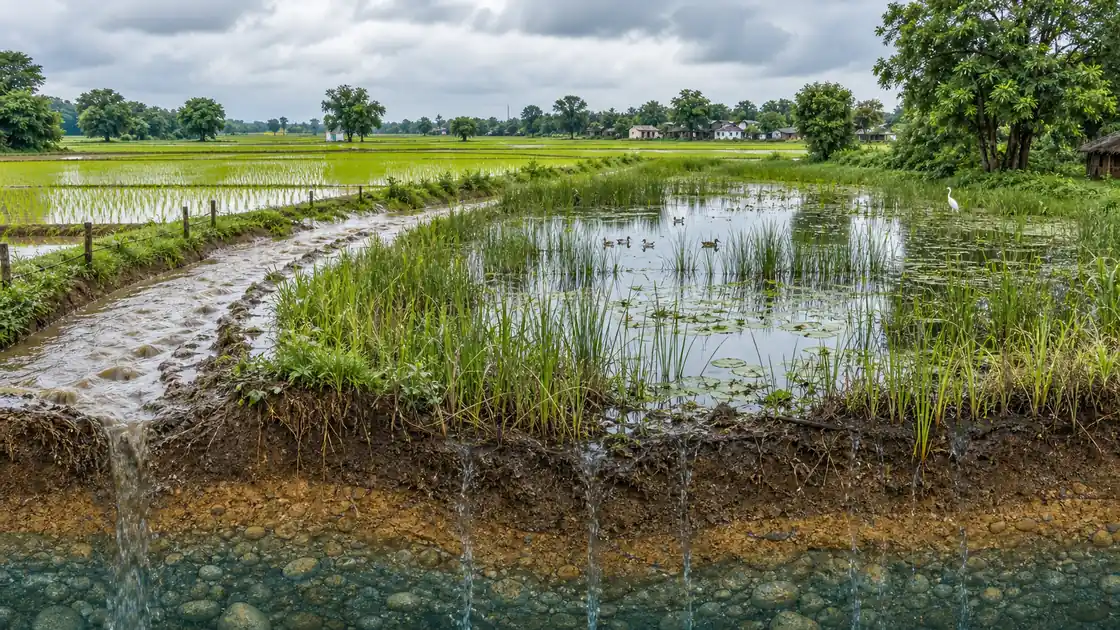
The easiest concept here is that a wetland works like a natural sponge: it stores water, slows runoff, supports birds and fish, and then helps recharge nearby groundwater.
Summary Cheat Sheet
| Fact | Answer |
|---|---|
| Total Ramsar sites in UP (as of June 3, 2026) | 12 |
| Largest natural lake in UP | Ramgarh Tal (Gorakhpur) |
| Largest natural floodplain wetland in eastern UP | Bakhira (Sant Kabir Nagar) |
| Sur Sarovar is in | Agra (also called Keetham Lake) |
| Upper Ganga Ramsar designated | 2005 |
| Haiderpur Wetland district | Muzaffarnagar-Bijnor |
| Sarus crane IUCN status | Vulnerable |
| Sarsai Nawar significance | Sarus crane breeding ground |
| Ramsar Convention year | 1971 |
| Six UP sites designated in | 2019 |
| New UP Ramsar sites in 2026 | Patna Bird Sanctuary, Shekha Jheel Bird Sanctuary |
Lesson Doubts
Ask questions, get expert answers