🐅 Dudhwa National Park — UP's Only National Park
Complete guide to Dudhwa National Park — location, history, Billy Arjan Singh, Barasingha conservation, tiger reserve status, flora and fauna for Uttar Pradesh GK.
Overview — UP's Crown Jewel of Wildlife
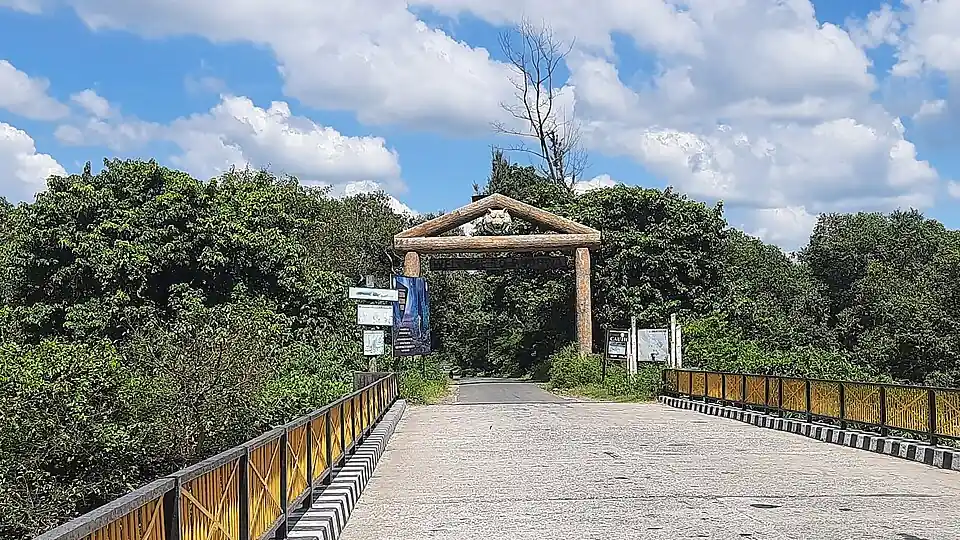
Dudhwa National Park is the only national park in Uttar Pradesh. Located in the Terai belt of Lakhimpur Kheri district, it is a treasure trove of biodiversity that preserves one of the last remaining stretches of the Terai ecosystem.
The easiest way to remember Dudhwa is through four linked ideas:
- Terai grassland + Sal forest ecosystem
- UP's only national park
- Barasingha and rhino conservation
- part of the wider Dudhwa Tiger Reserve / Terai Arc Landscape
| Parameter | Details |
|---|---|
| Location | Lakhimpur Kheri district, northern UP |
| Established | 1977 (upgraded from wildlife sanctuary) |
| Area | ~490 sq km (core zone) |
| Tiger Reserve | Late 1980s under Project Tiger |
| Dudhwa Tiger Reserve | Includes Dudhwa NP with Kishanpur and Katarniaghat protected areas |
| Border | India-Nepal international boundary |
| Nearest Town | Palia Kalan |
| Biogeographic Zone | Upper Gangetic Plain (Terai) |
Exam Tip: Dudhwa is UP's ONLY national park. All other protected areas in UP are wildlife sanctuaries. This is a guaranteed exam question.
History and Billy Arjan Singh
The story of Dudhwa is inseparable from the legendary conservationist Billy Arjan Singh (1917–2010). A hunter-turned-protector, Billy devoted his life to saving the Terai wildlife, particularly the Barasingha (swamp deer).
Key Milestones
| Year | Event |
|---|---|
| 1860s | Area declared as reserved forest by British |
| 1958 | Dudhwa declared a Wildlife Sanctuary |
| 1968 | Billy Arjan Singh begins Barasingha conservation campaign |
| 1977 | Upgraded to National Park |
| Late 1980s | Declared part of the Dudhwa Tiger Reserve under Project Tiger |
| 1970s | Billy Arjan Singh becomes nationally known for controversial big-cat rewilding efforts linked with Dudhwa |
| 2010 | Billy Arjan Singh passes away at his farm "Tiger Haven" |
Billy Arjan Singh received the Padma Shri and the World Wildlife Fund International Award for his conservation work. His farm "Tiger Haven" near the park boundary became a symbol of human-wildlife coexistence.
Exam Tip: Billy Arjan Singh is associated with Dudhwa the way Jim Corbett is associated with Corbett National Park. Remember: Billy = Dudhwa = Barasingha.
The Barasingha — Flagship Species
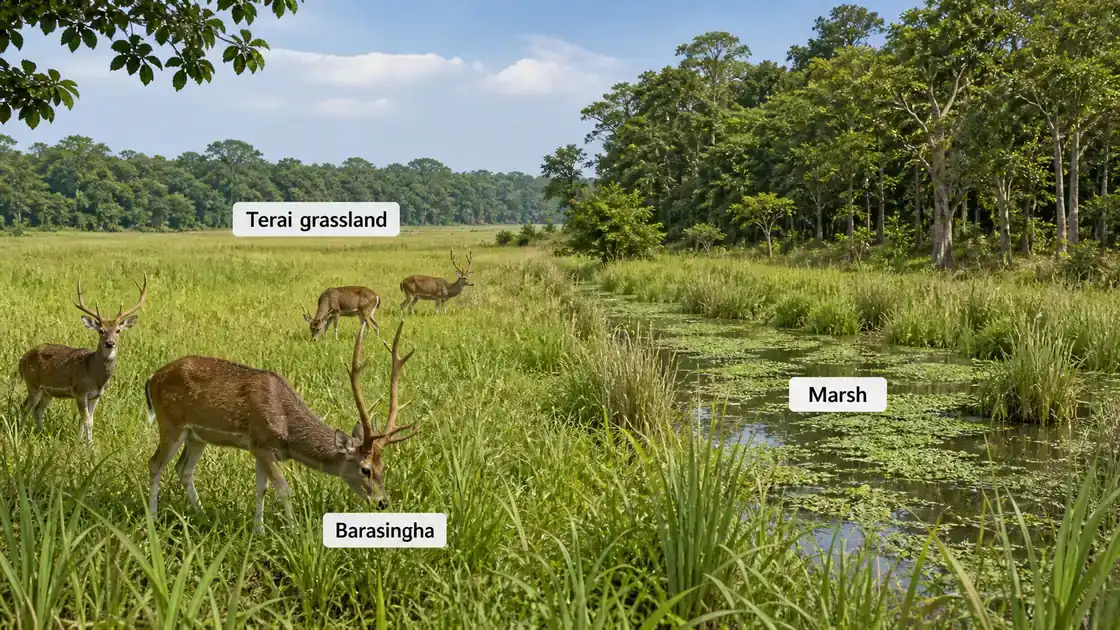
The Barasingha (Rucervus duvaucelii), also called the swamp deer, is the flagship species of Dudhwa and the state animal of Uttar Pradesh.
| Parameter | Details |
|---|---|
| Scientific Name | Rucervus duvaucelii |
| Common Names | Barasingha, Swamp Deer |
| IUCN Status | Vulnerable |
| Antlers | 10–14 tines (Bara = 12, singha = horn) |
| Habitat | Marshy grasslands, swampy meadows |
| Diet | Grasses, aquatic plants |
| Dudhwa Importance | One of the most important surviving populations of the northern swamp deer |
The Barasingha subspecies found in Dudhwa is Rucervus duvaucelii duvaucelii — the wetland/northern subspecies. Kanha National Park (MP) has a different subspecies (hard-ground Barasingha).
By the 1960s, Barasingha numbers in Dudhwa had dropped to fewer than 100. Billy Arjan Singh's campaigns led to strict protection, habitat management (controlled grassland burning), and eventually a remarkable recovery.
Tigers and Other Big Cats
As part of the Dudhwa Tiger Reserve, Dudhwa supports a significant population of Bengal tigers. The park is part of the Terai Arc Landscape (TAL) — a conservation corridor stretching across the India-Nepal Terai.
| Species | Status in Dudhwa | Notes |
|---|---|---|
| Bengal Tiger | Present in important numbers | Part of Terai Arc Landscape |
| Leopard | Present | Found in forest edges and mixed habitat |
| Fishing Cat | Present | Near wetlands and streams |
Other Notable Mammals
| Species | Conservation Status |
|---|---|
| Indian Rhinoceros (reintroduced) | Vulnerable — brought from Assam (1984) |
| Asian Elephant | Present — Terai population |
| Hispid Hare | Endangered — one of the rarest grassland mammals |
| Hog Deer | Vulnerable |
| Sloth Bear | Vulnerable |
| Indian Pangolin | Endangered |
Exam Tip: Indian Rhinos in Dudhwa were reintroduced from Kaziranga and Pobitora (Assam) in 1984. They are NOT native to UP — this was a deliberate translocation.
Kishanpur Wildlife Sanctuary
Kishanpur Wildlife Sanctuary lies adjacent to Dudhwa and forms part of the Dudhwa Tiger Reserve. It serves as a critical buffer zone and wildlife corridor.
| Parameter | Details |
|---|---|
| Location | Lakhimpur Kheri |
| Area | ~200+ sq km |
| Established | 1972 |
| Key Species | Tiger, rhino, swamp deer, fishing cat |
| Relation to Dudhwa | Part of Dudhwa Tiger Reserve buffer zone |
Together, Dudhwa NP and Kishanpur WLS form a contiguous protected area that enables wildlife movement and maintains genetic diversity.
Flora of Dudhwa
The Terai forests of Dudhwa are classified as Tropical Moist Deciduous with patches of grasslands and wetlands.
| Vegetation Type | Key Species |
|---|---|
| Dense Forest | Sal (Shorea robusta) — dominant species |
| Mixed Forest | Teak, Sheesham (Dalbergia sissoo), Jamun, Haldu |
| Grasslands | Tall elephant grass (Saccharum), Phragmites |
| Wetlands | Aquatic plants, lotus, water hyacinth |
| Plantation | Teak and Eucalyptus (in buffer zones) |
The tall grasslands of Dudhwa are ecologically critical — they provide habitat for Barasingha, hispid hare, Bengal florican, and hog deer. Controlled burning (prescribed fire) is used to maintain these grasslands.
Terai Arc Landscape
Dudhwa is a key component of the Terai Arc Landscape (TAL) — an international conservation initiative spanning the Terai belt of India and Nepal.
| Parameter | Details |
|---|---|
| Extent | Rajaji (Uttarakhand) to Parsa (Nepal) — ~49,000 sq km |
| Countries | India and Nepal |
| Goal | Maintain wildlife corridors between protected areas |
| Key Species | Tiger, elephant, rhino, Barasingha |
| UP Components | Dudhwa NP, Kishanpur WLS, Katarniaghat WLS, Pilibhit TR |
The TAL concept recognizes that isolated protected areas are insufficient — wildlife needs connected corridors to maintain viable populations and genetic exchange.
Visiting Dudhwa
| Parameter | Details |
|---|---|
| Best Time | November to May (closed during monsoon: June–October) |
| Entry Points | Dudhwa Gate (via Palia Kalan) |
| Nearest Railway | Dudhwa Railway Station (narrow gauge) |
| Nearest Airport | Lucknow (~230 km) |
| Activities | Jeep safari, elephant safari, bird watching |
| Eco-tourism | Forest rest houses, Tharu tribal village visits |
The Tharu tribe — an indigenous community of the Terai — lives in villages around Dudhwa. Their traditional knowledge of the forest has been integrated into eco-tourism programmes.
Summary Cheat Sheet
| Item | Quick Fact |
|---|---|
| Location | Lakhimpur Kheri |
| Established | 1977 (National Park), late 1980s tiger-reserve phase |
| Area | ~490 sq km core national park |
| Flagship Species | Barasingha (swamp deer) |
| Conservationist | Billy Arjan Singh |
| Rhino Status | Reintroduced from Assam (1984) |
| Rare Grassland Mammal | Hispid Hare (Endangered) |
| Dominant Tree | Sal (Shorea robusta) |
| Landscape | Terai Arc Landscape (TAL) |
| Best Visit Time | November to May |
Lesson Doubts
Ask questions, get expert answers