Major freedom fighters from Uttar Pradesh — Mangal Pandey, Rani Laxmibai, Chandrashekhar Azad, Ram Prasad Bismil, Nehru family, and others for Uttar Pradesh GK.
Mind Map: Freedom Fighters of Uttar Pradesh
UP — The Cradle of India's Freedom Struggle
Uttar Pradesh produced a very large number of prominent freedom fighters. From the uprising of 1857 to the final push for independence, UP's sons and daughters shaped the national movement at many stages. This lesson covers some of the most important fighters with their UP connections.
Mangal Pandey (1827-1857)
Detail
Fact
Birth
Nagwa village, Ballia district, UP
Regiment
34th Bengal Native Infantry
Incident
29 March 1857, Barrackpore (near Kolkata)
Action
Attacked British officers, refused to use greased cartridges
Execution
8 April 1857 (hanged 10 days before the scheduled date)
Though the incident occurred at Barrackpore, Mangal Pandey was a native of Ballia, UP
His act of defiance is often remembered as one of the earliest sparks associated with the 1857 uprising
The British began using "Pandey" as a derogatory term for Indian rebels
A postage stamp was issued in his honour in 1984
Rani Laxmibai (1828-1858)
Detail
Fact
Birth Name
Manikarnika Tambe
Born
Varanasi (grew up in Bithur near Kanpur)
Married
Raja Gangadhar Rao of Jhansi
Key Issue
Adopted son Damodar Rao denied succession under Doctrine of Lapse
Revolt
Led fierce resistance against Sir Hugh Rose
Death
18 June 1858, Gwalior (died fighting in battle)
Her famous declaration: "Meri Jhansi nahi doongi" (I shall not give up my Jhansi)
Trained women soldiers; her bodyguard unit included women warriors
After Jhansi fell, she rode with Tantia Tope to capture Gwalior
Hugh Rose himself praised her as "the bravest and best military leader of the rebels"
Chandrashekhar Azad (1906-1931)
Detail
Fact
Born
Bhavra, Alirajpur (present-day Madhya Pradesh)
UP Connection
Operated primarily from Uttar Pradesh
Organizations
HRA, later HSRA (Hindustan Socialist Republican Association)
Key Operations
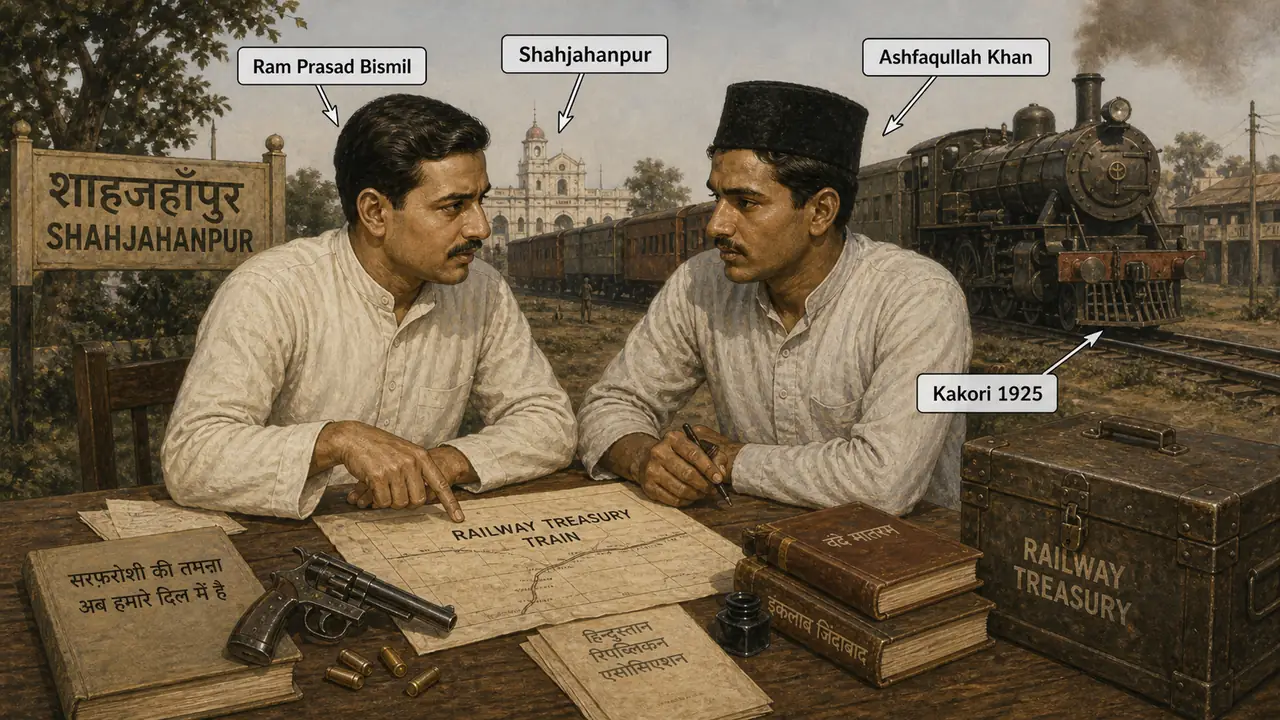
Kakori train robbery (1925), attempted to avenge Lala Lajpat Rai's death
Death
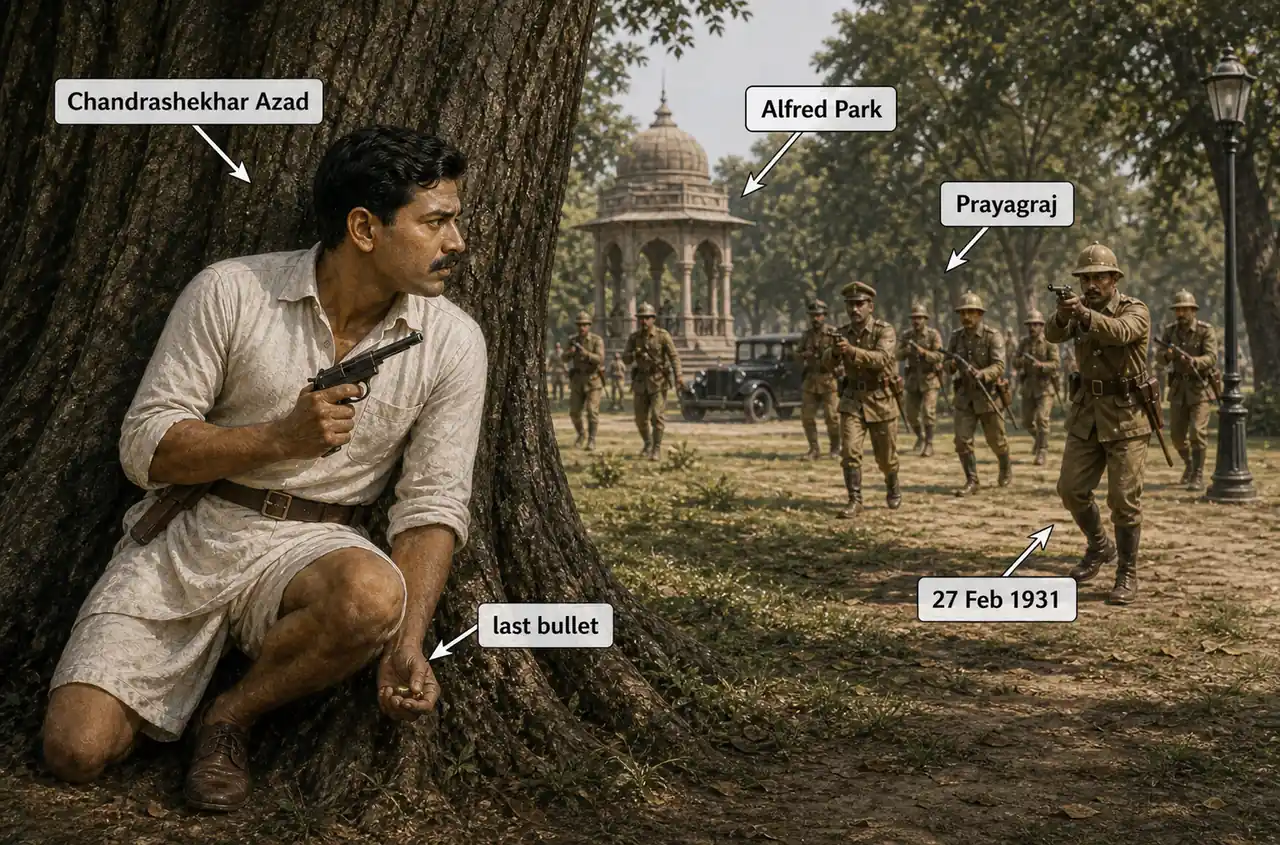
27 February 1931, Alfred Park, Prayagraj (Allahabad)
At age 15, when a magistrate asked his name, he replied "Azad" (Free), father's name "Swatantrata" (Independence), address "Jail"
He vowed never to be captured alive and shot himself with his last bullet at Alfred Park
Alfred Park was later renamed Chandrashekhar Azad Park in his honour
Prayagraj was his primary base of revolutionary operations
The Alfred Park scene gives students a direct visual anchor for Azad's vow never to be captured alive and his final moment in Prayagraj.