UNESCO World Heritage Sites in Uttar Pradesh — Taj Mahal, Agra Fort, Fatehpur Sikri, intangible heritage, and ASI monuments for Uttar Pradesh GK.
Mind Map: UNESCO World Heritage in UP
UNESCO Heritage — UP's Global Treasures
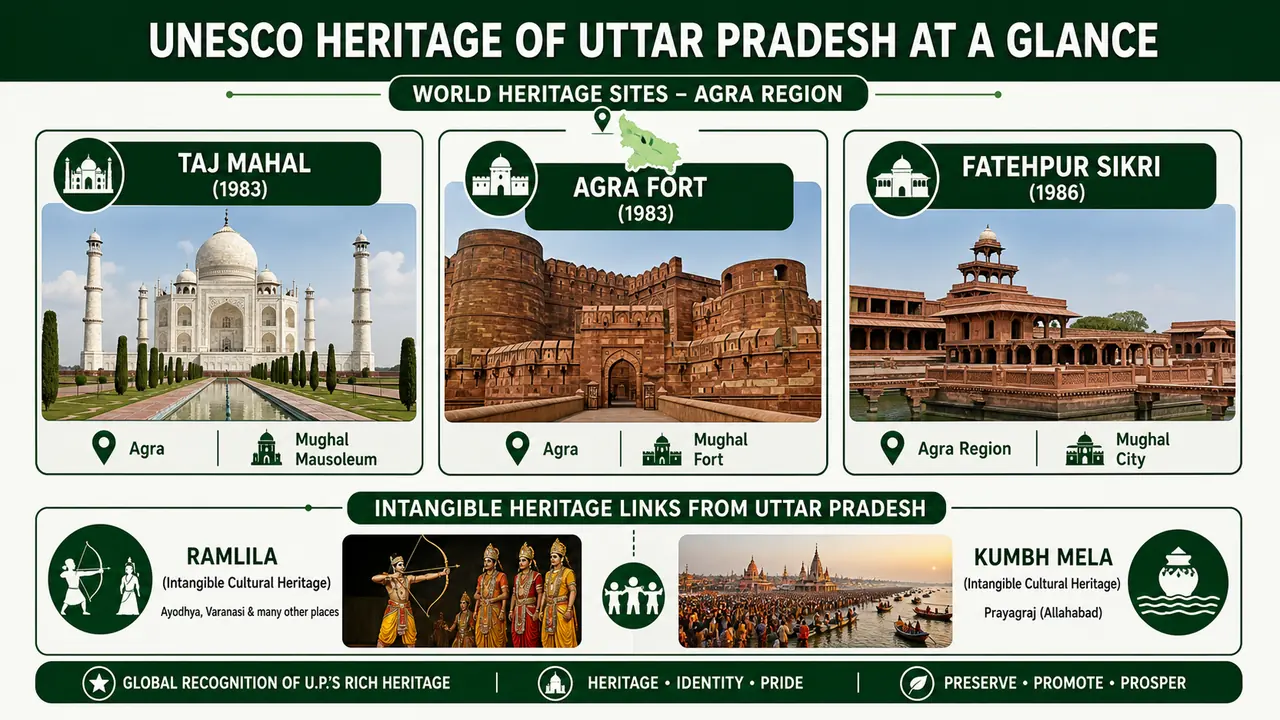
Uttar Pradesh is home to 3 UNESCO World Heritage Sites, and all three are linked with the wider Agra region. The state also contributes important traditions to UNESCO's Intangible Cultural Heritage list. For exam preparation, the strongest memory anchor is simple: Taj Mahal, Agra Fort, and Fatehpur Sikri are the three world-heritage sites, while Ramlila and Kumbh are the best-known UNESCO intangible associations connected with UP.
UP's UNESCO memory anchor is simple: the three World Heritage Sites cluster around Agra, while Ramlila and Kumbh Mela are the strongest intangible links.
The Three World Heritage Sites
1. Taj Mahal (Inscribed 1983)
Feature
Detail
Location
Agra, on the banks of River Yamuna
Built By
Emperor Shah Jahan
In Memory Of
Mumtaz Mahal (wife, died 1631)
Construction Period
1632-1653 (22 years)
Workers
20,000+ artisans and labourers
Material
White Makrana marble (from Rajasthan)
Architect
Ustad Ahmad Lahauri (chief architect)
Style
Persian-Mughal-Indian fusion architecture
UNESCO Status
World Heritage Site since 1983
Architectural Features of Taj Mahal
Central dome: 35 metres high, onion-shaped
Four minarets: 40 metres each, slightly tilted outward (so they fall away if they collapse)
Pietra dura: Semi-precious stone inlay work on marble
Charbagh garden: Persian-style garden divided into 4 quadrants
Symmetry: Perfect bilateral symmetry on all sides
Recognized as one of the New Seven Wonders of the World (2007 poll)
Famously described as "a teardrop on the cheek of time" by Rabindranath Tagore
2. Agra Fort (Inscribed 1983)
Feature
Detail
Location
Agra, 2.5 km from Taj Mahal
Built By
Emperor Akbar (1565)
Material
Red sandstone (Akbar); later marble additions by Shah Jahan
Area
94 acres, crescent-shaped
UNESCO Status
World Heritage Site since 1983
Key Structures Inside Agra Fort
Structure
Builder
Feature
Diwan-i-Am
Shah Jahan
Hall of Public Audience
Diwan-i-Khas
Shah Jahan
Hall of Private Audience
Sheesh Mahal
Shah Jahan
Mirror Palace, royal bath
Musamman Burj
Shah Jahan
Octagonal tower — Shah Jahan viewed Taj Mahal from here during imprisonment
Jahangir Mahal
Akbar
Palace for son Jahangir
Khas Mahal
Shah Jahan
Private palace
Moti Masjid
Shah Jahan
Pearl Mosque (white marble)
Nagina Masjid
Shah Jahan
Gem Mosque for court ladies
Three rulers primarily built structures here: Akbar, Jahangir, Shah Jahan
Shah Jahan was imprisoned here by Aurangzeb (1658-1666) until his death
3. Fatehpur Sikri (Inscribed 1986)
Feature
Detail
Location
37 km from Agra
Built By
Emperor Akbar (1571)
Served As Capital
1571-1585 (only 14 years)
Abandoned
Due to water scarcity
UNESCO Status
World Heritage Site since 1986
Key Structures at Fatehpur Sikri
Structure
Significance
Buland Darwaza
Monumental victory gateway, built to commemorate Gujarat victory
White marble tomb of Sufi saint, Akbar visited for blessing of son (Jahangir)
Diwan-i-Khas
Central pillar with 4 walkways — Akbar debated with scholars
Ibadat Khana
House of Worship — Akbar's interfaith dialogue hall
Hiran Minar
Tower studded with elephant tusks
Birbal's Palace
For Akbar's favourite minister
Akbar founded Fatehpur Sikri after Sufi saint Salim Chishti blessed him with a son
Named "Fatehpur" (City of Victory) after Akbar's Gujarat conquest
Intangible Cultural Heritage from UP
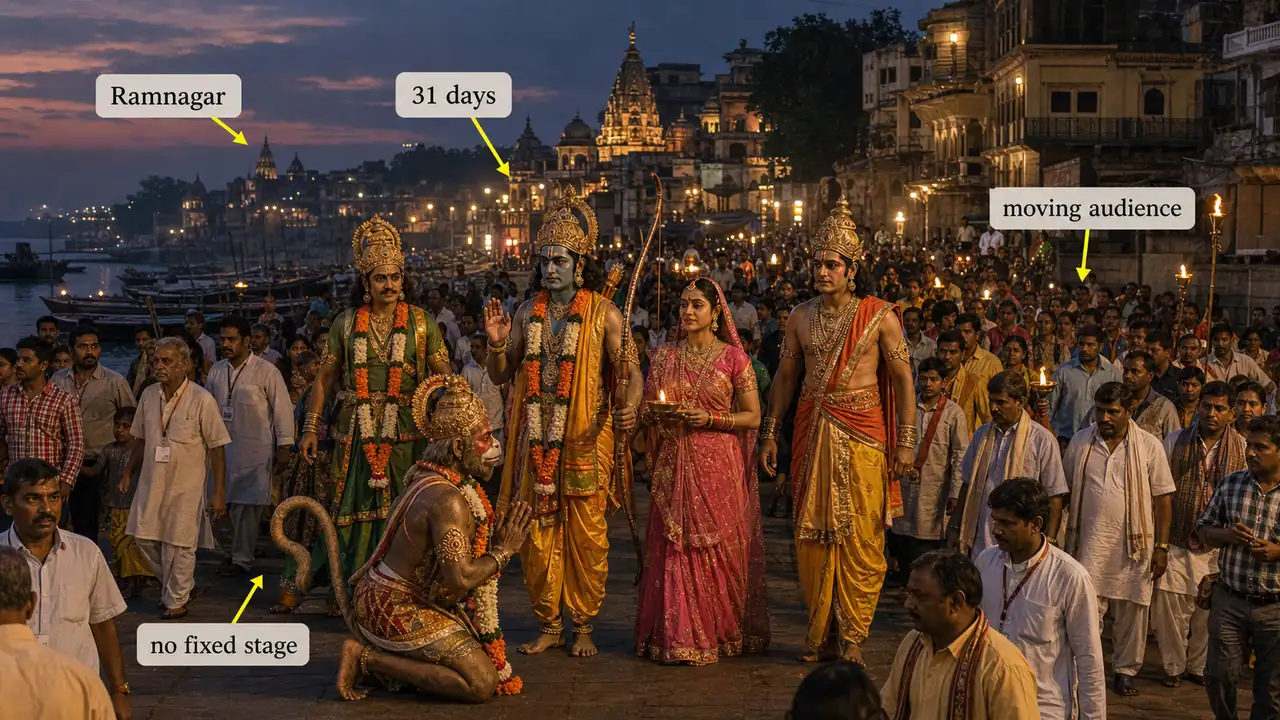
Ramnagar Ramlila is the clearest visual anchor for UNESCO's intangible heritage link with Uttar Pradesh.
UNESCO has recognized two intangible heritage traditions associated with UP:
Heritage
Year Inscribed
Detail
Ramlila
2008
Traditional performance of the Ramayana — Varanasi Ramlila is most famous
Kumbh Mela
2017
Largest peaceful gathering in the world — held at Prayagraj (Sangam)
Ramlila of Ramnagar (Varanasi) — performed for 31 days, oldest continuous Ramlila tradition
Kumbh Mela at Prayagraj (Triveni Sangam) occurs every 12 years; the shorter-cycle mela pattern is also important in exam questions
Tentative List Sites from UP
Sites from UP that are important in UNESCO discussion and India's Tentative List / nomination conversation:
Site
Location
Type
Sarnath
Varanasi
Buddhist archaeological site
Tomb of Akbar
Sikandra, Agra
Mughal architecture
Tomb of Itimad-ud-Daulah
Agra
"Baby Taj" — precursor to Taj Mahal
Kaushambi
Kaushambi
Ancient Buddhist/Jain city
Hastinapur
Meerut
Mahabharata-era archaeological site
Sarnath is especially important because it has long featured in UNESCO-level heritage discussion and nomination efforts.
ASI-Protected Monuments
UP has the highest number of ASI (Archaeological Survey of India) protected monuments in India. Current official state-wise ASI listings place the number at 743 monuments.
State
ASI Monuments
Uttar Pradesh
743 (1st in India)
Karnataka
500+ (2nd)
Madhya Pradesh
400+ (3rd)
ASI maintains these under the Ancient Monuments and Archaeological Sites and Remains Act, 1958
Major ASI sites in UP: Sarnath, Fatehpur Sikri, Agra Fort, Sravasti ruins, Kaushambi ruins
Summary Cheat Sheet
Heritage Site
Year
Builder/Origin
Key Fact
Taj Mahal
1983
Shah Jahan (1632-53)
White marble, New 7 Wonders
Agra Fort
1983
Akbar (1565)
Red sandstone, Shah Jahan imprisoned
Fatehpur Sikri
1986
Akbar (1571-85)
Akbar's short-lived capital
Ramlila
2008 (Intangible)
Traditional
Varanasi Ramnagar most famous
Kumbh Mela
2017 (Intangible)
Traditional
Prayagraj, largest gathering
UP has 3 UNESCO World Heritage Sites, all associated with the Agra region: Taj Mahal, Agra Fort, and Fatehpur Sikri.
Ramlila and Kumbh Mela are the two strongest UNESCO intangible-heritage associations for UP.
Sarnath is not yet one of UP's World Heritage Sites, but it is a major UNESCO-relevant heritage site through tentative-list and nomination discussion.
UP leads India in ASI-protected monuments, with the current official count at 743.