🥶 Rabi Pulses — Importance and Production Context
Importance, major species, production context, and agronomic role of cool-season Rabi pulses in Indian agriculture.
Rabi pulses are the cool-season legume crops of Indian agriculture. They are important not only for protein supply, but also for soil fertility, cropping-system sustainability, and low-input farm economics.
What Are Rabi Pulses?
Rabi pulses are food legumes mainly grown during the winter season after monsoon withdrawal.
Common examples:
- chickpea,
- lentil,
- field pea,
- French bean,
- other region-specific pulses.
These crops are concentrated in cool to moderately dry environments and play a major role in mixed farming systems.
Why Rabi Pulses Matter
Nutritional importance
- rich source of plant protein,
- important in vegetarian diets,
- contribute minerals and dietary balance.
Agronomic importance
- fix atmospheric nitrogen through root nodules,
- improve soil fertility for subsequent crops,
- fit well in crop rotation after cereals,
- often perform under lower external-input conditions.
Economic importance
- lower irrigation demand than many cereals,
- support diversification of Rabi systems,
- provide grain, fodder, and market value in dryland and irrigated regions.
Major Rabi Pulses
Chickpea (Cicer arietinum)
- the most important Rabi pulse in India,
- commonly called gram, Bengal gram, or chana,
- widely used in whole grain, dal, flour, roasted, sprouted, and processed forms.
Lentil (Lens culinaris)
- suited to cool-season, relatively low-input environments,
- important in eastern and central Indian systems,
- often grown after rice on residual moisture.
Field Pea (Pisum sativum)
- used both as grain pulse and vegetable type,
- important in cool Rabi belts,
- fits well in diversified pulse-based systems.
French Bean (Phaseolus vulgaris)
- cultivated as vegetable bean or dry pulse type,
- nutritionally valuable,
- grown in selected plains and hill ecosystems.
Global and Indian Production Context
Rabi pulses contribute a large share of cool-season pulse production globally. Their importance differs by region:
- chickpea and lentil are especially important in developing-country systems,
- peas occupy a stronger place in some temperate developed countries,
- India remains one of the most important pulse-producing countries.
How to read pulse statistics
Three indicators are commonly used:
- area: land under cultivation,
- production: total grain output,
- productivity: yield per unit area.
These help compare whether a crop is important because of wide spread, high output, or superior yield.
Practical Agronomic Role of Rabi Pulses
Rabi pulses are valuable because they fit into many farming situations:
- after Kharif rice or maize,
- under residual soil moisture,
- in cereal-legume rotations,
- in dryland and low-input environments.
They usually require careful attention to:
- timely sowing,
- Rhizobium inoculation,
- weed management in early growth,
- protection from pod borers and wilt/blight-type diseases,
- timely harvest to avoid shattering or weather damage.
Summary Cheat Sheet
| Topic | Key Point |
|---|---|
| Main crops | Chickpea, lentil, field pea, and French bean |
| Main value | Protein supply plus nitrogen fixation |
| System role | Fit well in cereal-legume rotations and low-input systems |
| Practical advantage | Often need less water than many cereals |
| Exam idea | Rabi pulses support nutrition, soil health, and diversification |
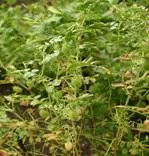
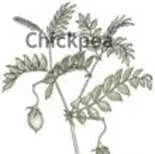
 1. _Cicer_ derived from ‘ _Cicero’_ well known Roman family and _‘arietinum’_ from _‘aries’_ meaning ram’s head shape
 2. Gram, Bengal gram, _chana_
 3. Mostly used pulse in many products
 4. Boiled, roasted, steamed, sprouted, flour made into many delicious food
World Scenario
| Country | Million ha | Million t | t/ha |
|---|---|---|---|
| Africa (Ethiopia, Malawi, Morocco, Tanzania, Tunisia) | 0.41 | 0.32 | 0.79 |
| Mexico | 0.11 | 0.16 | 1.44 |
| Asia (India, Pak, Turkey, Iran, Myanmar) | 9.82 | 7.37 | 0.75 |
| India | 6.93 | 5.60 | 0.81 |
| Europe | 0.05 | 0.04 | 0.93 |
| Australia | 0.09 | 0.11 | 1.09 |
| World | 10.67 | 8.24 | 0.77 |
(FAOSTAT, 2006)
Indian Scenario
State | c | Production
( '000 t) | Productivity (kg/ha)
---|---|---|--- MP | 2560.7 | 2371.2 | 926 Rajasthan | 1081.1 | 478.9 | 443 UP | 739.6 | 660.6 | 893 Maharastra | 1020 | 705 | 691 Haryana | 130 | 72 | 554 Karnataka | 418 | 229 | 548 AP | 394 | 627 | 1591
All India | 6896.2 | 5575.4 | 808
(Ministry of Agriculture, Govt. of India, 2005-06)
- Origin
Gram is cultivated in India from a longer period. It is originated from South West asia or eastern Mediterranean. It is cultivated in Iran, Turkey,Central and Southern Africa, Rumania and Egypt.
-
Varieties
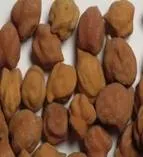
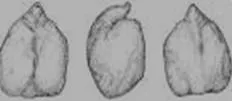
- Two types Desi & Kabuli
- Desi is small seeded
- Angular shaped edge
- Shape like chickens head
- 90% of the world’s cultivated
- Kabuli, large and round seeded with white pale cream seed coat
- Duration 90-180 days
- CO 2, CO 3, CO 4 are 90days
- All India – many varieties , Vijay, Pusa 391, DCP 91-3 (HYV, High input response, 150d, 170mg seeds size)
-
Climate
- Comes well under dry tracts with an annual rainfall of 600 – 1000mm.
-
Soil
- Sandy loam to clay loam soil.
-
Field preparation
- One deep ploughing followed by two harrowing
- Crop needs clodded and rough seed bed for aeration in root zone.
-
Sowing
- Second fortnight of October to first week of November
-
Seed rate
- 75 -100 kg/ha, depth of sowing – 8 to 10cm
- Spacing – 30 cm between rows for Desi types
4o to 45 cm for Kabuli types
- Nutrient management
| Crop | Ecosystem | Planting time | N | P2O5 | K2O | S |
|---|---|---|---|---|---|---|
| Chickpea | Rainfed | Normal | 20 | 40 | 0 | 20 |
| Irrigated | Normal | 20 | 60 | 20 | 20 | |
| Late | 40 | 40 | 20 | 20 |
- Weed management
- 2 hand weedings at 25 to 30 DAS and after 60 DAS
- Basalin @ 1 kg a.i/ ha as pre emergence + 1 hand weeding at 60 DAS
- Water management
- Light irrigation at flowering and grain development stage.
- Nipping
Plucking the apical buds of the crop at about 30 to 40 DAS is done to stop the apical growth. It promotes the lateral branching, plants to become more vigorous and produce more vigorous and produce more flowers and pods and yield per plant is increased.
- Harvesting
The matured plants are cut and dried under direct sun. The dried plants are threshed using sticks to separate the grains.
- Grain yield
Desi types – 1.5 to 2 t/ha Kabuli types – 2.5 to 3.5 t/ha
Multiple choice questions
- Centre of origin of chick pea is ___________ a. America b. S. Africa c. S.W.Asia
- The inflorescence of chick pea is ________ a. Axilary raceme b. Panicle c. Ear
- The recommended seed rate for chick pea is __________ a. 8-10 kg/ha b. 15-20 kg/ha c. 75-100 kg/ha
- Most critical stage of irrigation for chick pea is ________ a. Tillering b. CRIc. Pre flowering
- The leading producer of chick pea is ________ a. India b. Burma c. Bangladesh
- Photoperiodically, chick pea is a type of plant is ________ a. Short day b. Long day c. Day neutral
- Chick pea belongs to the family a. Tiliaceae b. Leguminoceae c. Linaceae
- Ideal temperature for sowing of chick pea is a. 15-200c b. 10-250c c. 10-150c
- The recommended seed rate for kabuli gram is _____kg/ha a. 20-25 b. 100-125 c. 8-10
- Nipping in chick pea is a process of a. To enlarge branching b. To reduce plant height c. To protect plants against lodging
---|---
Lesson Doubts
Ask questions, get expert answers