🫘 French Bean (*Phaseolus vulgaris*)
Importance, adaptation, and agronomic management of French bean as a pulse and vegetable-type legume in Indian systems.
French bean is an important legume crop known both for fresh pod use and dry pulse use. In Indian agriculture it appears in hill, vegetable, and selected Rabi pulse systems depending on region and market purpose.
French Bean at a Glance
Common names and uses:
- rajmash or kidney bean in pulse form,
- French bean in vegetable use,
- fresh pods for vegetables,
- dry seeds for pulse use.
Importance and Distribution
French bean is cultivated widely across the world. In India, it is less important than chickpea or lentil as a pulse, but it has clear value in:
- hill agriculture,
- vegetable systems,
- selected Rabi areas in northern plains,
- nutrition-oriented diversified farms.
Origin and Adaptation
French bean is associated with Central and South American origin zones and has long cultivation history.
In agronomic terms, the key point is that it adapts to multiple environments, but performs best where:
- temperature is moderate,
- drainage is good,
- salinity and alkalinity are low,
- sowing is matched to available soil moisture.
Agronomic Management
Soil and field preparation
French bean grows best in well-drained soils. Medium tillage and good seedbed preparation help uniform emergence.
Seed treatment and nodulation
Important practices include:
- seed treatment against seed-borne disease,
- Rhizobium inoculation for better nodulation.
Sowing
Sowing time depends on region. Delayed sowing may expose the crop to terminal drought or temperature stress.
Seed rate and spacing
Seed rate depends on seed size and spacing, but adequate plant population is essential because French bean yield is strongly influenced by crop stand.
Practical Role in Farming Systems
French bean is useful because it:
- adds dietary diversity,
- supports pulse and vegetable income,
- fits smaller diversified farms,
- contributes legume benefits to cropping systems.
Summary Cheat Sheet
| Topic | Key Point |
|---|---|
| Crop identity | French bean is used as both vegetable and pulse |
| Main condition | Well-drained soil is especially important |
| Biological support | Rhizobium inoculation helps nodulation |
| System role | Useful in diversified pulse-vegetable systems |
| Practical caution | Delayed sowing can increase terminal stress risk |

-
Depth of sowing
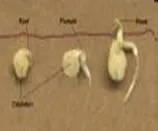
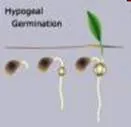
- Since all cool season pulses are hypogeal can be planted deep depending on the moisture
-
Nutrient Management
Ecosystem | N | P2O5 | K2O | S
---|---|---|---|--- Irrigated | 100 | 60 | 20 | 20
* One or two supplemental irrigation is needed
-
Weed management
- All methods to be employed
- Herbicides can also be as per kharif pulses
-
Cropping systems
- Cereal – legume is always good
- Cereals in Kharif
- They also under mixed community with winter cereals like wheat & barley
-
Harvest
- Over ripening leads to great loss of yield in French bean
- Staggered harvesting is one way
- Cut entire plant and carry with moisture & then dry, thrash and clean
- Store the seeds at 8 -10 % moisture
Multiple choice questions
- Common name of French bean in Hindi ___________ a. Navy bean b. Kidney bean c. Rajmash
- Protein content in dried French bean seeds ________ a. 18% b. 25% c. 23%
- French bean belongs to the family ________ a. Tiliaceae __b. Leguminoceae c. Papilionaceae
- Recommended seed rate for French bean is _____kg/ha a. 120 b. 150 c. 60
- Fertilizer recommendation for French bean is _____kg/ha NPK a. 100:60:20 b. 100:20:0 c. 150:50:50
---|---
Lesson Doubts
Ask questions, get expert answers