🪰 Order Diptera and Cecidomyiidae
Important characters of true flies with emphasis on gall midges under Cecidomyiidae.
Diptera is one of the most familiar and agriculturally important insect orders because it includes mosquitoes, gall midges, robber flies, hover flies, fruit flies, house flies, and many parasitoid or parasitic forms. The order is recognized immediately by its single functional pair of wings and wide diversity of larval habits.
Meaning and General Characters of Diptera
- Di means two
- ptera means wings
Common representatives are true flies, mosquitoes, gnats, and midges.
Important order characters:
- body usually small to medium sized and soft-bodied
- body regions distinct
- head often hemispherical and connected to thorax by a slender neck
- only one pair of functional forewings present
- hindwings modified into halteres
- mouthparts modified for sucking, piercing-sucking, sponging, or lapping according to family
- larva usually legless and known as a maggot
- metamorphosis complete
Major Groups within Diptera
Diptera is divided here into three major groups:
- Nematocera - thread-horned forms
- Brachycera - short-horned forms
- Cyclorrhapha - circular-crack forms
Nematocera
- antennae long and many-segmented
- larval head well developed
- larval mandibles act horizontally
Brachycera
- antennae short and few-segmented
- larval head retractile into thorax
- larval mandibles act vertically
Cyclorrhapha
- antennae usually aristate
- larval head vestigial with mouth hooks
- larval mouth hooks act vertically
Suborder Nematocera
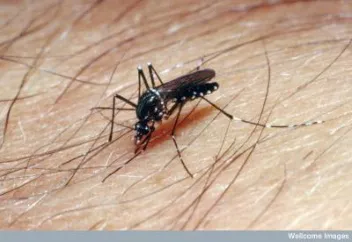
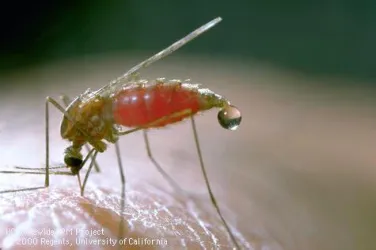
Culicidae
Mosquitoes are delicate, slender insects.
Important features:
- female mouthparts piercing-sucking, with six stylets
- antennae plumose in male and pilose in female
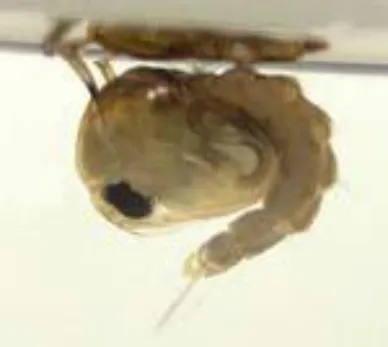
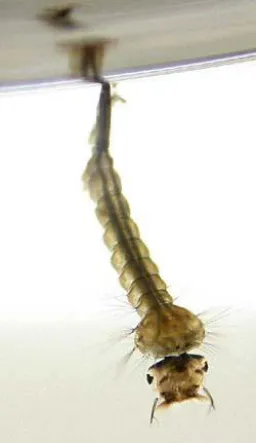
- larvae aquatic and commonly called wrigglers
- pupae aquatic and called tumblers
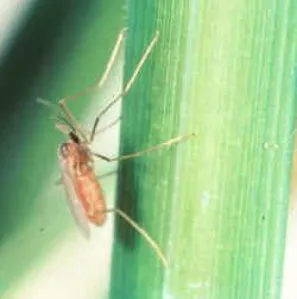
Cecidomyiidae
Gall midges are minute, delicate, mosquito-like flies.
Important characters:
- antennae and legs long
- wing venation reduced
- wings covered with long hairs
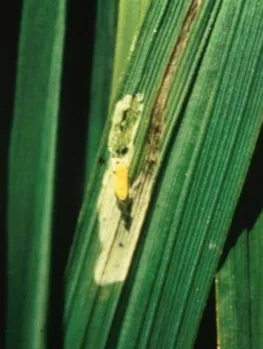
- larval stages often induce galls or damage delicate plant tissues
Suborder Brachycera
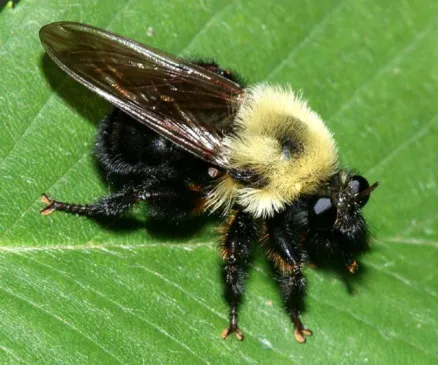
Asilidae
Robber flies are elongate and bristly predatory flies.
Important features:
- head broad and hollowed between compound eyes
- eyes protuberant
- mystax-like tuft of hairs on face
- adults are predatory on other insects
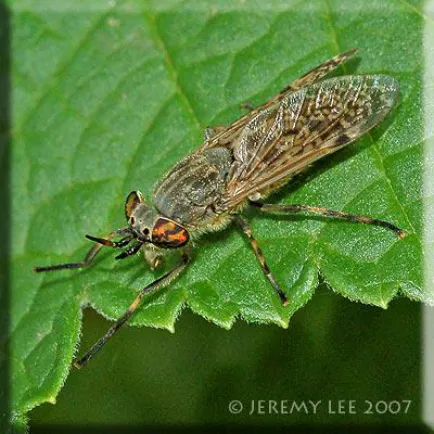
Tabanidae
Horse flies are stout flies with:
- large head and often brilliantly coloured eyes
- male eyes holoptic and female eyes dichoptic
- third antennal segment prominent
- many species are blood-feeding and troublesome to livestock
Suborder Cyclorrhapha
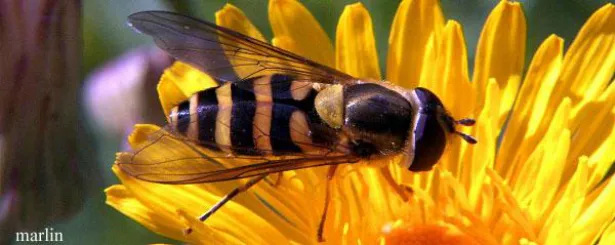
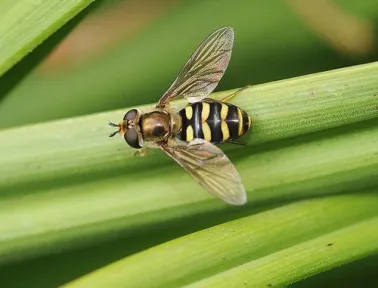
Syrphidae
Hover flies or flower flies are brightly coloured insects.
Important features:
- spurious vein present between radius and median in forewing
- abdomen often marked black and yellow
- adults visit flowers, feed on pollen and nectar, and help in pollination
- maggots prey on soft-bodied insects, especially aphids
Tephritidae
Fruit flies show:
- subcosta bending apically and fading out
- wings spotted or banded
- female with projecting ovipositor
- many species are serious fruit pests
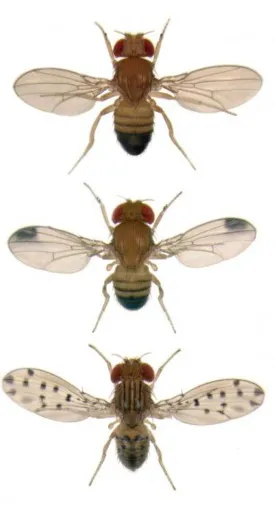
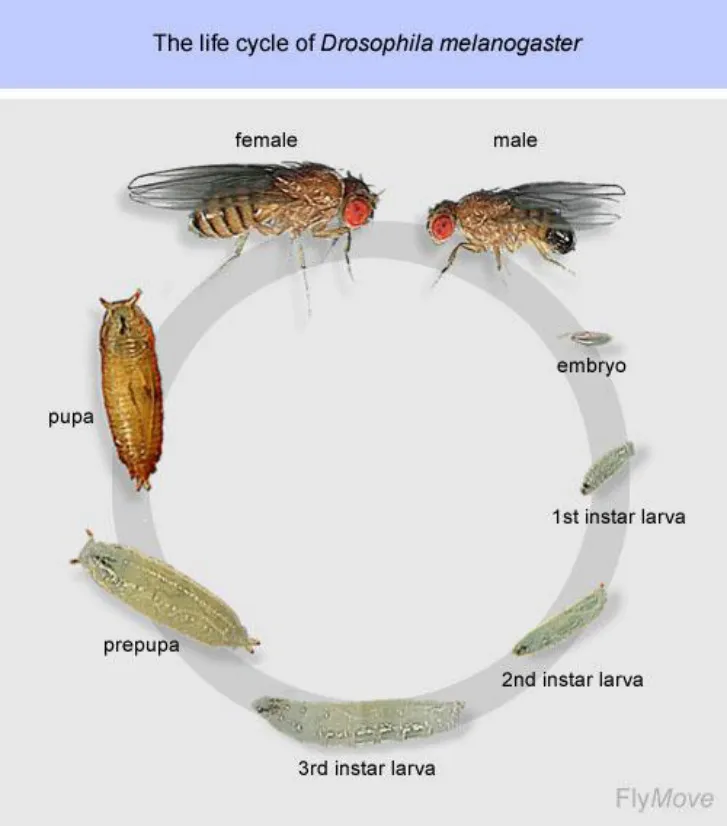
Drosophilidae
Vinegar gnats or pomace flies are known for:
- usually red eyes
- attraction to rotting fruits and vegetables
- larvae feeding on yeast and fermentation products
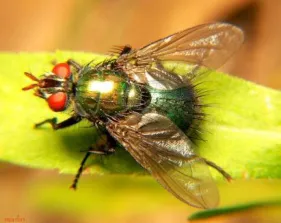
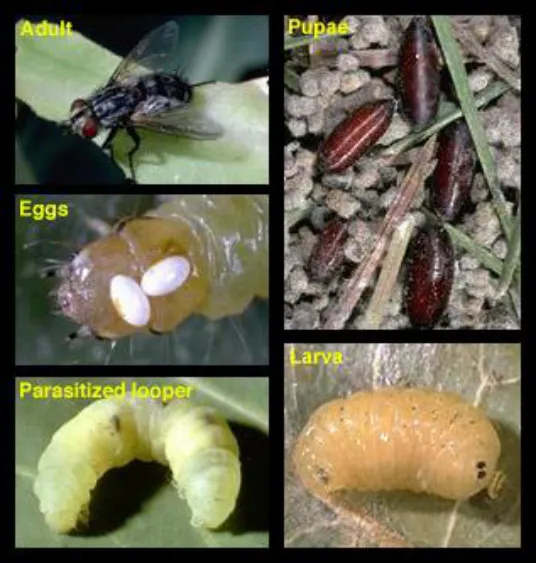
Tachinidae
Tachinid flies are:
- stout flies with noticeable abdominal bristles
- usually with bare arista
- important endoparasites of larvae and pupae of Orthoptera, Hemiptera, Lepidoptera, and Coleoptera
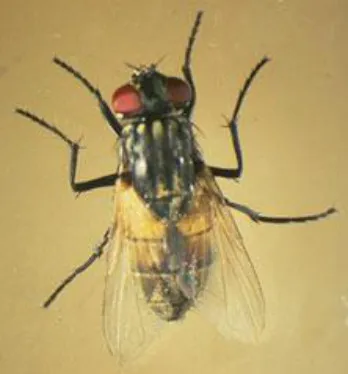
Muscidae
House flies have:
- plumose antennal arista
- sponging mouthparts
- labium ending in fleshy labella
Hippoboscidae
These are louse flies or keds.
Important features:
- body flat and leathery
- legs short and strong for clinging to host
- wings present or absent
- several species are parasitic on mammals and birds
Summary Cheat Sheet
- Diptera includes true flies, mosquitoes, gnats, and midges.
- Main order character: one functional pair of wings, with hindwings modified into halteres.
- Major divisions are Nematocera, Brachycera, and Cyclorrhapha.
- Culicidae includes mosquitoes with aquatic wriggler larvae and tumbler pupae.
- Cecidomyiidae includes gall midges with reduced wing venation and important plant-damaging species.
- Asilidae are predatory robber flies, while Tabanidae are horse flies often associated with blood-feeding.
- Syrphidae are beneficial because adults pollinate and larvae often prey on aphids.
- Tephritidae includes important fruit flies.
- Tachinidae are important parasitoid flies.
- Muscidae includes house flies with sponging mouthparts.
- Hippoboscidae includes parasitic louse flies or keds.
References
2 sources • [1] [2]
References
Fundamentals of Entomology
Insect Morphology and Systematics
Lesson Doubts
Ask questions, get expert answers