🍬 Sugarcane Breeding Basics
Botanical traits, crossing behavior, and breeding relevance of sugarcane.
This lesson covers core principles and exam-focused points from this topic in plant breeding.
Sugarcane ( _ Saccharum officinarum _ ) (2n = 80)
Cross pollination is the rule in sugarcane. Self male and female sterility, protogyny and
hanging down of anthers away from the stigma at the time of anthesis promote self pollination.
Usually anthesis will be in early morning between 5 am and 6 am. Maximum anthesis between 6
am and 8 am. Stigma protrudes out first and anthers dehisce afterwards. Flower opening will be
from top to downwards. It will take about 10 days for complete opening of spikelets. Flowering
in sugarcane is location specific and influenced by environment. Natural pollination is by wind
( Anemophily )
Selfing
Selfing is done by covering the arrow with a bamboo frame work or cage which is
covered with muslin cloth or polythene paper. Such a cover is commonly called lantern. It
prevents accidental cross pollination. The lantern has to be supported by bamboo poles. The
lantern has to be opened once in a day to reduce the temperature that my build up inside during
the day time. This is done preferably during the afternoon hours between 12am and 4pm. Usually
the cover has to be retained in position till the seeds are set. Within one week or 10 days we can
get selfed seeds. This selfing method is followed in Sugarcane Breeding Institute, Coimbatore.
Crossing
Hybridization is very difficult.
- It is mostly vegetatively propagated. Some varieties seldom flowers outside tropics.
Some varieties flowers once in 6 to 8 months. It is highly controlled by photoperiods.
-
Spikelets are minutes. So, hand emasculation is not possible.
-
Self sterility of both pollen and ovule predominates in almost in all the varieties.
-
Hot water treatment can not possible.
Hybridization methods
Coimbatore method
During flowering period, the sugarcane stem will be cut leaving one or two bud. The cut
stem can be transferred to a mud pot having moist mud. Within 10 days the buds will develop
into roots and there will be good root system. This can be transferred to the breeding block. In
the crossing block, the male and female plants are covered with common lantern . Free shedding
pollen over female plant will occur. We can harvest both selfed and crossed seeds from the
female parent. The selfed seeds can be identified by chromosome number by raising it in the
nursery. Selfed seeds thus removed retaining crossed seeds.
Marcotting method
During flowering, cut around the stem and tie a polythene bag with nutrients (growth
medium). The bud near cut end give rise to roots. This can be cut and used for hybridization
purposes. This method is called marcotting. Practiced in Sugarcane Breeding Institute,
Coimbatore.
Lantern method
Providing Lantern for a female plant before anthesis starts. From the desired male parent
cut the arrow. That arrow can be introduced into the Lantern and shaken up and thereby crossing
can be effected. This will be repeated for 2-3 days in order to have more seed set.
Hawaii method (Sulfurous acid Technique)
A sulfurous acid solution keeps the inflorescence alive for several weeks. Here, we cut
both mal and female flowering arrows along with small portion of stem. These cut end will be
immersed in a vessel containing 0.01% sulphuric acid and 0.01% phosphoric acid. The cut end
at the lab is brought nearer and effect cross pollination. They absorb the weak acids. We have to
add weak solution daily to replace the acid taken by stem. Once in a week we have to
completely change the solution. This is done for 20-30 days. During this time, the seed will
mature.
In modified method of this, the female plant alone is cut and kept in weak acid at the time of
flowering the male parent can be brought nearer and the pollen can be shed by shaking as done in
Lantern method.
Emasculation and Pollination Techniques in Cotton
Selfing
In the selfing of cross-pollinated species, it is essential that the flower are bagged or
otherwise protected to prevent natural cross-pollination. Selfing and crossing are essential in
crop breeding. It is important that the breeder, master these techniques in order to manipulate the
pollination according to his needs. The exact procedure that he
crop.
In the case of wheat, rice, barely, groundnut etc., the plant is permitted to have self
pollination and the seeds are harvested. It is necessary to know the mode of pollination. If the
extent of natural cross pollination is more, then the flowers should be protected by bagging. This
will prevent the foreign pollen to reach the stigma. Seed set is frequently reduced in ear heads
enclosed in bags because of excessive temperature and humidity inside the bags. In crops like
cotton which have larger flowers the petals may fold down the sexual organs and fasten, there by
pollen and pollen carrying insects may be excluded.
In certain legumes which are almost insect pollinated, the plants may be caged to prevent
the insect pollination. In maize, a paper bag is placed over the tassel to collect pollen and the
cob is bagged to protect from foreign pollen. The pollen collected from the tassel is transferred
to the cob.
Emasculation
Removal of stamens or anthers or killing the pollen of a flower without the female
reproductive organ is known as emasculation. In bisexual flowers, emasculation is essential to
prevent of self-pollination. In monoecious plants, male flowers are removed. (castor, coconut) or
male inflorescence is removed (maize). In species with large flowers e.g. (cotton, pulses) hand
emasculation is accurate and it is adequate.
Methods of Emasculation
Hand Emasculation
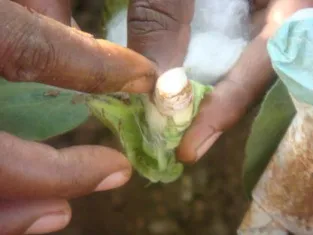
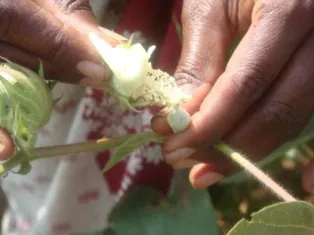
In species with large flowers, removal of anthers is possible with the help of forceps. It is
done before anther dehiscence. It is generally done between 4 and 6 PM one day before anthers
dehisce. It is always desirable to remove other young flowers located close to the emasculated
flower to avoid confusion. The corolla of the selected flower is opened with the help of forceps
and the anthers are carefully removed with the help of forceps. Sometimes corolla may be
totally removed along with epipetalous stamens e.g. gingelly.
In cereals, one third of the empty glumes will be clipped off with scissors to expose
anthers. In wheat and oats, the florets are retained after removing the anthers without damaging
the spikelets. In all cases, gynoecium should not be injured. An efficient emasculation
technique should prevent self pollination and produce high percentage of seed set on cross
pollination.
Suction Method
It is useful in species with small flowers. Emasculation is done in the morning
immediately after the flowers open. A thin rubber or a glass tube attached to a suction hose is
used to suck the anthers from the flowers. The amount of suction used is very important which
should be sufficient to suck the pollen and anthers but not gynoecium. In this method
considerable self-pollination, upto 10% is like to occur. Washing the stigma with a jet of water
may help in reducing self-pollination; however self pollination can not be eliminated in this
method.
Hot Water Treatment
Pollen grains are more sensitive than female reproductive organs to both genetic and
environmental factors. In case of hot water emasculation, the temperature of water and duration
of treatment vary from crop to crop. It is determined for every species. For sorghum 42-48˚C
for 10 minutes is found to be suitable. In the case of rice, 10 minutes treatments with 40-44˚C is
adequate. Treatment is given before the anthers dehiscence and prior to the opening of the
flower. Hot water is generally carried in thermos flask and whole inflorescence is immersed in
hot water.
Alcohol Treatment
It is not commonly used. The method consists of immersing the inflorescence in alcohol
of suitable concentration for a brief period followed by rinsing with water. In Lucerne the
inflorescence immersed in 57% alcohol for10 second was highly effective. It is better method of
emasculation than suction method.
Cold Treatment
Cold treatment like hot water treatment kills the pollen grains without damaging
gynoecium. In the case of rice, treatment with cold water 0.6OC kills the pollen grains without
affecting the gynoecium. This is less effective than hot water treatment.
Genetic Emasculation
Genetic/ cytoplasmic male sterility may be used to eliminate the process of
emasculation. This is useful in the commercial production of hybrids in maize, sorghum
pearlmillet, onion, cotton and rice etc.,
In many species of self-incompatible cases, also emasculation is not necessary, because
self-fertilization will not take place. Protogyny will also facilitate crossing without emasculation
(e.g.) Cumbu.
Use of Gametocide
Also known as chemical hybridizing agents (CHA) chemicals which selectively kills the
Maleic hydrazide for cotton and wheat.
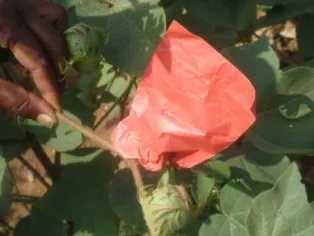
Bagging
to prevent random cross-pollination.
Pollination
The pollen grains collected from a desired male
parent should be transferred to the emasculated flower.
This is normally done in the morning hours during
anthesis. The flowers are bagged immediately after
artificial crossing.
Tagging
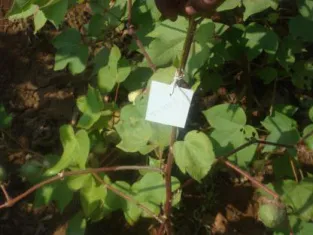 The flowers are tagged just after bagging. They are attached to the inflorescence or to the flower
with the help of a thread. The following may be recorded on the tag with pencil.
-
Date of emasculation
-
Date of pollination
-
Parentage
-
No. of flowers emasculate
Summary Cheat Sheet
Quick Recall Points
- This lesson focuses on key plant breeding concepts, terminology, and exam-relevant applications.
- Review major definitions, classifications, and method-wise distinctions from the sections above.
- Revise tables and examples from this lesson for fast pre-exam recall.
Exam Traps
- Do not confuse similarly named breeding methods without checking their core selection logic.
- Pay attention to crop-specific examples because the same principle can behave differently by species.
References
1 source • [1]
References
Standard Plant Breeding Class Notes (GPBR211)
BookLesson Doubts
Ask questions, get expert answers