🥔 Potato Breeding
Origin, ploidy, and breeding strategies followed in potato crop improvement.
This lesson covers core breeding concepts and exam-relevant points for quick understanding and revision.
Solanum tuberosum (2n = 48)
Tetraploid
Place of origin : South America. Ancestry : a) Natural doubling of diploid cultivar S. stenotomum (2n = 24) b) By a natural crossing of diploid wild species S.sparsipilum and S.vernerii
Classification : According Hawkes (1992) in addition to solanum tuberosum some six other cultivated species and over 230 wild species of potato are generally recognised.
Diploid (2n=24)
- S.ajanhuiri - Frost resistant
- S.phureja - Sort duration. 4 month no dormancy
- S.stenotomum - Longer in duration 6 months dormancy.
Triploid (2n = 36) 4. S.chauca 5. S.juseczuki
Tetraploid (2n = 48) Solanum tuberosum 6. subspecies S.t.ssp tuberosum S.t.ssp andigena - High altitude potato
Pentaploids
- S.curtilobium - Frost resistant.
Breeding objectives :
- Breeding for high yield
Yield of tubers decided by number of tubers, tuber size and distribution of tuber.
- Breeding for varieties having better morphology of tuber Better morphology of tuber is determined by a) Eye depth b) flesh colour c) Growth cracks d) Hollow heart e) Shape f) Skin colour
- Breeding for better quality: Depends on many factors a) After cooking blackening
b) Dry matter. c) Enzyme browning. d) Glycoalkaloid level e) reducing sugar content f) storage properties
-
Breeding for disease resistance Early blight, late blight, powdery scab., verticillium wilt, virus diseases. Resistant source : S.demissum, S.acaule ssp . andigena
-
Breeding for pest resistance Nematode is the major pest ssp. andigena - tolerant. S.verineii resistant to Aphids, Colorado beetle.
Breeding methods
-
Clonal propagation ; Useful in case of inter-specific crosses where low fertility is often seen in the progenies. Further fixing of heterosis is easy. The disadvantage is keeping the stocks free from disease. But by following invitro propagation this can be over come.
-
Controlled pollination : In potato it is some what easy because the anthers do not dehisce before or soon after flower opening. The pollen is not easily distributed by wind. If we raise crossing block in insect proof screen house use of selfing and crossing covers not needed. Only difficulty is crossing in percentage of seed set. Crossing is to be done at 22 [0] C. Pollen and ovule sterility occur.
-
Population breeding This is followed to improve the base population.
-
True potato seed (TPS) Propagation thro' use of seed - practiced in China. By this method virus diseases can be avoided.
-
Production of diploids and monohaploids Originally diploid was produced by crossing tuberosum with diploid s.phureja and allowing for parthenogenesis. But now by anther culture it is easily produced.
-
Mutation breeding To change the skin colour it is extensively used.
TAPIOCA (CASSAVA)
Manihot esculenta (2n = 36) Family: Euphorbiaceae Origin: Central America. There are no wild species seen in the cultivated Manihot esculenta . The cultivated cassava can be classified into two broad groups viz. a) Sweet cassava and b)Bitter cassava. a) Sweet cassava : Shorter in duration tubers maturing in 6-9 months. The cynogenic glucoside in confined mainly to the outer skin (periderm). b) Bitter cassava : Longer in duration 12-18 months to mature, the cynogenic glucoside is distributed throughout the tuber including core.The glucoside will be more in varieties having yellow flesh.
Structure of tuber :
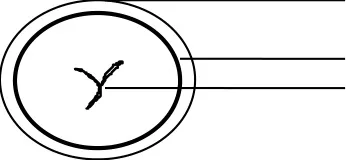
Outer skin (periderm) peel
Rind or cortex Core or pithy (edible)
i. Periderm : Composed of dead cells which seals the surface of the tuber. Normally brown in colour. ii. Cortex : 1- 2 mm thick, usually white in colour but may be some time pinkish or brown. The periderm and cortex are collectively known as peel. iii. Core or pith: It is the edible portion and consists mostly of parenchymatous cells containing large amount of stored starch. Latex in tuber occur in the flesh of the tuber and also on the cortex.
Root tuber development : The cassava tuber originates when secondary thickening occurs in a fibrous root that has previously been entered in the soil. As such, tuber growth consists essentially of increase in girth of a root. The increase in girth commences by the end of second month after planting and accumulation of large amount of starch taken place. Accumulation of starch occurs first at proximal end (towards attachment of root) and later at distal end (away from attachment). Physiologically the cassava tuber is inactive, since no eyes or buds present, as such cassava tuber cannot be used as a means of propagation.
 SWEET POTATO Ipomoea batatus
(Hexaploid - 2n = 90)
Family : Convolvulaceae
Origin : Central America
Progenitors : The probable ancestors are Ipomoea tiliacea - closely resembling I.batatus.
Weedy species - I.trifida
Sweet potato was derived by amphidiploidy by crossing a tetraploid (2n = 60) and a diploid (2n = 30) hybridization to produce a triploid (2n = 45), followed by subsequent doubling of chromosome to produce hexaploid (2n = 90)
Tetroploid x Diploid 2n = 60 2n = 30
Triploid 2n = 45 Doubling
Hexaploid (2n = 90)
Classification : This family includes about 45 genera and 1000 species. But only Ipomoea batatas is of economic importance as food. A large number of tuber structure after cooking the cultivars can be grouped in to three. a) those with firm, dry, mealy flesh after cooking b) those with soft, moist, gelatinous flesh after cooking c) those with very coarse tubers which are suitable only for animal feed or for industrial use.
Summary Cheat Sheet
| Focus Area | Key Takeaway |
|---|---|
| Core concept | Review the major breeding principles and crop-specific applications from this lesson. |
| Exam prep | Prioritize objectives, methods, and named varieties/species for recall. |
| Quick revision | Re-read headings and key lists to retain high-yield facts. |
References
1 source • [1]
References
Standard Plant Breeding Class Notes (GPBR212)
BookLesson Doubts
Ask questions, get expert answers