🧬 Vectors for gene transfer
Vectors for gene transfer.
This lesson explains the core ideas, methods, and exam-relevant applications for this topic in plant biotechnology. Focus on definitions, process steps, and practical uses for revision.
Vectors: The carriers of DNA molecules
DNA vectors and their properties
One of the most important elements in gene cloning is the vector, which in
conjunction with the passenger DNA forms the recombinant DNA which can be
propagated in suitable host cells. In order to perform its function, a vector must possess
the following properties:
-
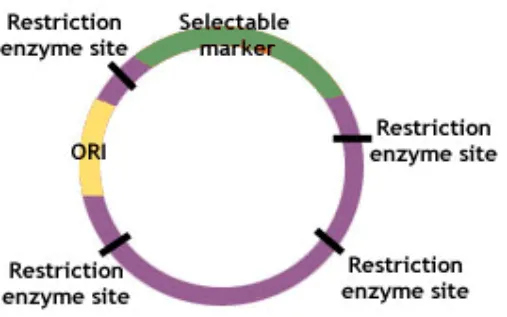
They should be capable of autonomous replication in at least one host organism.
-
They should be of small size, since this aids the preparation vector DNA and reduces
the complexity of analyzing recombinant molecules. They should be capable of
amplifying the cloned sequence by occurring in multiple copies. High copy number
facilitates in maximizing expression of cloned genes.
- There should be a unique cleavage site for a range of restriction endonucleases.
Occurrence of multiple cleavage sites reduces the likelihood of functional
recombinant DNA formation.
- They should possess one or more genetic markers enabling easy selection of cloned
molecules.
- They should permit detection by simple genetic tests, of the presence of passenger
DNA inserted at cloning site.
- They should have appropriate transcriptional and translational signals located
adjacent to cloning sites for better expression of cloned DNA sequences.
- They should have host specificity when there is biological containment for a vector.
A variety of different cloning vectors have been developed by using the items
mentioned above as guidelines. They are as follows: plasmids, phages, cosmids,
phasmids, shuttle vectors, expression vectors and single stranded DNA
Plasmids
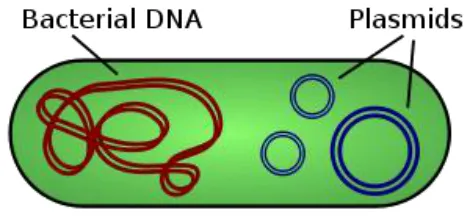
Plasmids are self replicating, double stranded, circular DNA molecules that are
maintained in bacteria as independent extra chromosomal entities. These are also found
in some yeast but not in higher eukayotes. Plasmids are widely distributed throughout
the prokaryotes, vary in size from less than 1 x 10⁶ to greater than 200 x 106 Da and are
generally dispensable.
Plasmids can be grouped into two major types: conjugative and non-
conjugative. In conjugative plasmids transfer genes (tra) and mobilizing genes (mob)
are present whereas in non-conjugative plasmids tra genes absent. The non-conjugative
plasmids can be mobilized by another conjugative plasmid present in the same cell, if
the mob gene is intact.
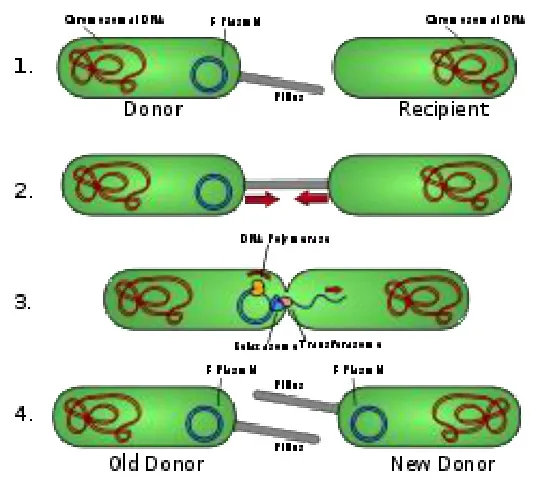
Non-conjugative differ from conjugative plasmids by the absence of tra gene Plasmids
can also be categorized on the basis of their being maintained as multiple copies per cell
(relaxed plasmids or high copy number plasmids) or as limited copies per cell
(stringent plasmids or low copy number plasmids). The replication of stringent
plasmids is coupled to chromosome replication, hence their low copy number. Generally
conjugative plasmids are of low molecular weight and present in multiple copies per cell.
An exception is the conjugative plasmids RBK which has a molecular weight of 25x10 [6]
daltons and is maintained as relaxed plasmid.
Plasmids that carry specific sets of genes for the utilization of unusual metabolites are
called as degradative plasmids. Some plasmids will not have any apparent functional
coding genes and are called cryptic plasmids. Some of the plasmids do not coexist in
the same host cell in the absence of selection pressure and are called incompatible
plasmids. Some plasmids are capable of promoting their own transfer to a wide range
of host. These plasmids are called as promiscuous plasmids. Plasmids can also be
grouped into narrow-host range plasmids and wide host range plasmids based on
their nature of infectivity. Based on the origin of plasmids, they can be grouped into
naturally occurring plasmids and synthetic plasmids.
A list of naturally occurring plasmids and their properties are furnished below .
Plasmid Size (kb) Conjugative Copy number Amplifiable Selectable
marker
ColE1 7.0 - 10 – 15 + E1 [imm ]
RSF1030 9.3 - 20 – 40 + Apr CloDF13 10.0 - 10 + DF13 imm pSC101 9.7 - 1 -2 - Tcr R6K 42 + 10 – 40 - Ap [r] Sm [r] F 103 + 1 – 2 - R1 108 + 1 – 2 - Ap [r] Cm [r] Sn RK2 56.4 + 3 – 5 - Ap [r] Km [r] Tc [r]
In general plasmid cloning vectors are designated by a lowercase ‘p’ which stands for
plasmid, and some abbreviations that may be descriptive.
pBR322 plasmid
Plasmid pBR322 is the one of the best studied and most often used ‘”general purpose”
plasmids. The BR of the pBR322 recognizes the work of the researchers F. Bolivar and
R. Rodriguez, who created the plasmid and 322 is a numerical designation that has
relevance to these workers. pBR322 is 4362 base pair long and completely sequenced.
pBR322 carries two antibiotic resistance genes. One confers resistance to ampicillin
(Amp [r] ) and the other confers resistance to tetracycline (Tet [r] ) There are eleven known
enzymes which cleave pBR 322 at unique sites. For three of the enzymes, Hind III,
Bam HI and Sal I, the target site lies within the Tet [r] genes and for another two, Pst I
and Pru I, they lie in Amp [r] genes. Thus cloning in pBR 322 with the aid of these enzymes
results in insertional inactivation where the inserted DNA disrupts the function of the
gene containing the cloning site. Where the cloning site is within in an antibiotic
resistance gene, such insertional inactivation results in transformants sensitive to the
appropriate antibiotic. Thus, insertional inactivation helps in the selection of
recombinants.
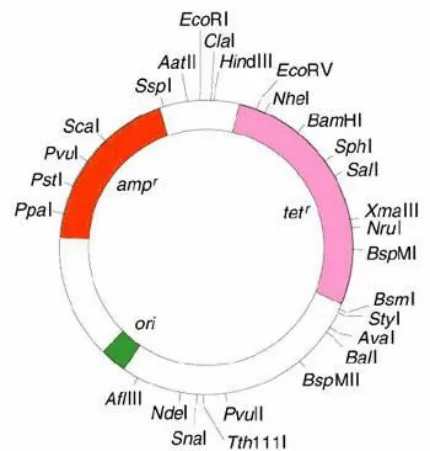
General structure of pBR322
pUC19 plasmid
Plasmid pUC19 is 2686 bp long and contains an ampicillin resistance (Amp [r] )
gene, a regulatable segment of â- galactosidase gene (lacZ) of the lactose operon of E.
coli, lac I gene that produces a repressor protein that regulates the expression of lacZ
gene, a short sequence with multiple cloning sites (Eco RI , Sac I , KpnI, Xma I , Sma I ,
Bam HI , Xba I , Sal I , Hinc II , Acc I , BspM I , Pst I, Sph I and Hin dIII) and the origin of
replication from pBR322. The presence of lac Z and lacI genes allows to select the
recombinants based on the â- galactosidase production in the presence of isopropyl- â
D-thiogalactopyranoside (IPTG), an inducer of the lac operon. (UC in pUC stands for
University of California).
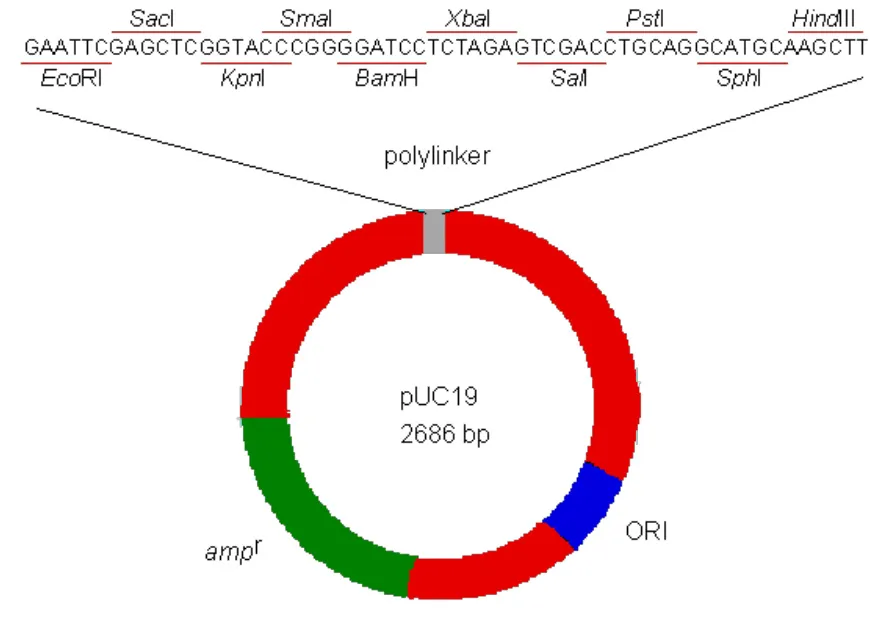
General structure of pUC19
Phages
Derivatives of phage have been developed as cloning vectors since the early
days of gene technology. The phage derivatives are considered to be the most suitable
cloning vehicles for cloning genomic eukaryotic DNA because of the following
advantages over the plasmids.
-
Thousands of phage plaques can be obtained in a single petridish.
-
Selection by DNA-DNA hybridisation is possible
-
In vitro packaging into empty phage head is possible thus increasing phage
infectivity
-
Size selection of the packaged DNA is possible
-
Millions of independently cloned virus particle can be constituted to form a gene
library.
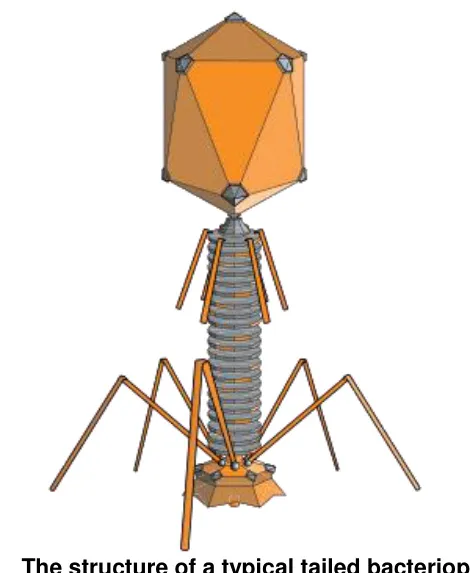
Bacteriophage is a genetically complex but very extensively studied virus of E.
coli. The DNA of phage, in the form in which it is isolated from the phage particle is a
linear duplex molecule of 48502 bp (~49kb) in length. The DNA isolated from virus
particles is a double stranded linear molecule with short complementary single stranded
projections of 12 nucleotides at its 5’ ends. These cohesive termini, also referred to as
cos sites, allow the DNA to be circularized after infection of the host cell.
The genetic map of phage ë comprises approximately 40 genes which are organized in
functional clusters. Genes coding for head and tail are proteins (genes A-J) are on the
left of the linear map. The central region contains genes, such as int, xis, exo etc.
which are responsible for lysogenisation i.e the process leading to the integration of viral
DNA and other recombination events. Much of this central region is not essential for lytic
growth. Genes to the right of the central region comprise six regulatory genes, two
genes (O and P) which are essential for DNA replication during lytic growth and two
more genes (S and R) which are required for the lysis of the cellular membranes.
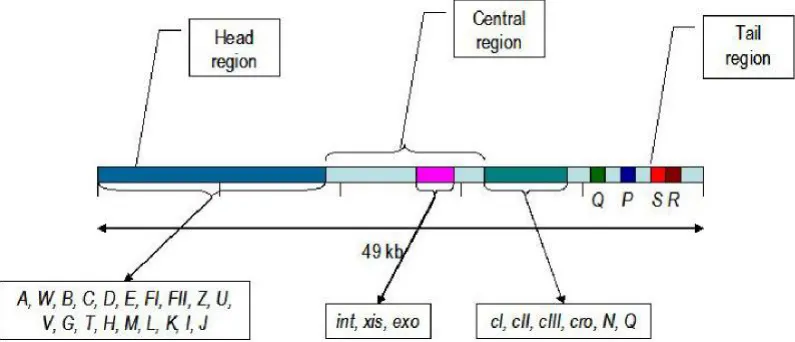
Genetic map of ë phage
In the phage DNA, larger central region is not essential for phage growth and
replication. This region of phage can be deleted or replaced without seriously impairing
the phage growth cycle. Using this non-essential region of phage ë, several phage
vector derivatives have been constructed for efficient gene cloning.
Types of phage vectors
Wild type phage DNA itself cannot be used as a vector since it contains too many
restriction sites. Further, these sites are often located within the essential regions for
phage's growth and development. From these wild phages, derivatives with single target
sites and two target sites have been synthesized. Phage vectors which contain single
site for the insertion of foreign DNA have been designated as insertional vectors;
vectors with two cleavage sites, which allow foreign DNA to be substituted for the DNA
sequences between those sites, are known as replacement vectors. Apparently if too
much non-essential DNA is deleted from the genome it cannot be packaged into phage
particles efficiently. For both types of vector, the final recombinant genome must be
between 39 and 52 kb of the wild type phage genome, if they are to be packaged into
infectious particles. Insertion vectors must therefore be at least 39 kb in length to maintain
their viability. This places an upper limit of about 12 kb for the size of foreign DNA
fragments which can be inserted. Replacement vectors have a larger capacity because
the entire non-essential region can be replaced, allowing the cloning of the fragments
upto 22 kb. Several types of vectors have been developed which allow direct screening
for recombinant phages and are useful for cloning specific DNA fragments. A list of
phage vectors with their characteristics is given below.
Phage vector Size (kb) Enzyme Size of insertion
(kb)
Charon 4A 45.3 Eco RI, Xba I 7-20 ë L47.1 40.6 Eco RI, Hin dIII, 8.6-21.6 ë Dam sr1ë3 38.3 Eco RI 13 ë1059 44.0 Bam HI 6.3-24.4
Cosmids
Plasmids containing phage cos sites are known as cosmids. Cosmids can be
used to clone large fragments of DNA by exploiting the phage in vitro packaging
system. Since cosmids have advantages of both plasmids and phage vectors they can
be delivered to the host by the more efficient infection procedures rather than by
transformation. Cloning with cosmid vectors has widened the scope of plasmid cloning in
the following ways.
- The infectivity of plasmid DNA packaged in phage head is at least three orders of
magnitude higher than that of pure plasmids DNA.
- The process almost exclusively yields hybrid clones so that a subsequent selection
for recombinant DNA becomes unnecessary.
- In contrast to normal plasmid transformations, the system strongly selects for clones
containing large DNA inserts. It is therefore, particularly well suited for generating
genomic libraries.
General structure of a cosmid vector
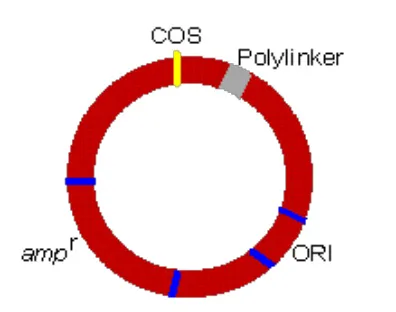 The following table provides a list cosmid vectors and their structural features.
Cosmid Size Cleavage sites Size of insertion (kb) MUA3 4.76 Eco RI/ Pst I/ Pvu II/ Pvu I 40 – 48 pJB8 5.40 Bam HI 32 – 45 Homer I 5.40 Eco RI/ Cla I 30 – 47 Homer II 6.38 Sst I 32 – 44 pJC79 6.40 Eco RI/ Cla I/ Bam H I 32 – 44
Phasmids
Phasmids, also called as phagemids, are hybrids formed between small multicopy
plasmids and bacteriophages. A phasmid can be propagated as a plasmid or lytically
as a phage. Lytic functions of phasmid can be switched off by propagation in the
appropriate lysogene where the plasmid origin of replication is used for maintenance.
The phasmid may replicate as phage if propagated in a non-lysogenic strain. In the
case of phasmids based on ë, such as ë1130, the temperature sensitive gene, cI 857
carried by the vector may be used to switch between replication modes, simply by
growing the host at the permissive (plasmid mode) or restrictive (phage mode)
temperature.
Phasmids are particularly useful in the generation and analysis of mutations exhibiting
non-selectable or lethal phenotypes, such as those affecting the replication of
plasmids. Phasmids may also be used as phage replacement vectors and for directing
the high level expression of protein from cloned sequences by replication in the phage
mode.
Bacterial Artificial Chromosomes (BAC)
BACs are based on bacterial mini-F plasmids, which are small pieces of episomal
bacterial DNA that give the bacteria the ability to initiate conjugation with adjacent
bacteria. They have a cloning limit of 75-300 kb.
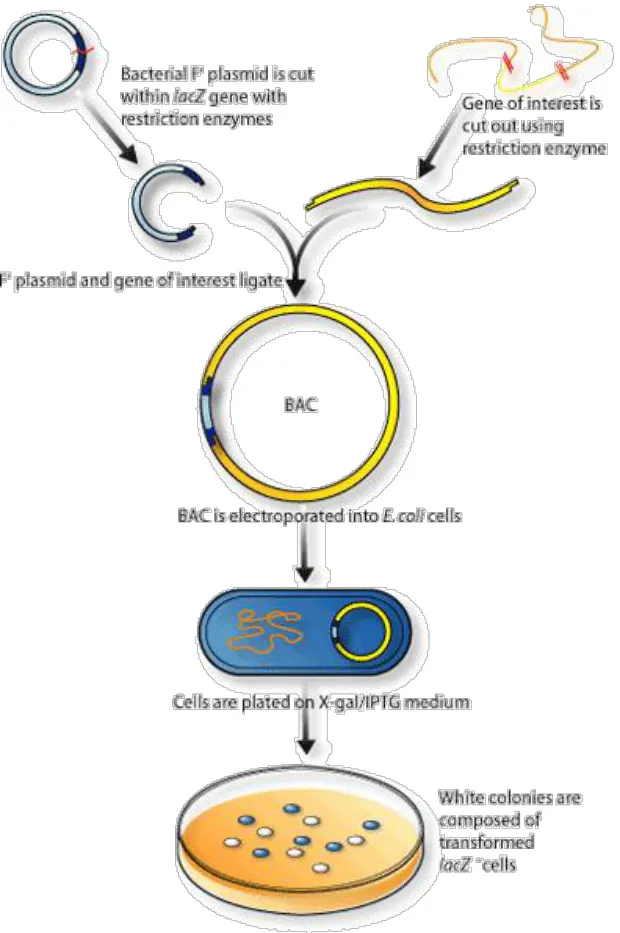
Transforming a bacterium using a BAC vector
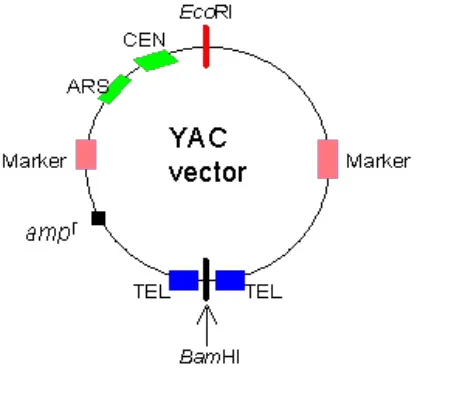
Yeast Artificial Chromosomes (YAC)
-
YACs are artificial chromosomes that replicate in yeast cells. They consist of:
-
Telomeres, which are ends of chromosomes involved in the replication and
stability of linear DNA.
-
Origin of replication sequences necessary for the replication in yeast cells.
-
A yeast centromere, which is a specialized chromosomal region where spindle
fibers attach during mitosis.
-
A selectable marker for identification in yeast cells.
-
Ampicillin resistance gene for selective amplification.
-
Recognition sites for restriction enzymes.
The procedure for making YAC vectors is as follows (see Appendix D):
- The target DNA is partially digested by a restriction endonuclease, and the
YAC vector is cleaved by restriction enzymes.
- The cleaved vector segments are ligated with a digested DNA fragment to
form an artificial chromosome.
- Yeast cells are transformed to make a large number of copies.
They are the largest of the cloning vectors, with a cloning limit of 100-1000 kb, however
they have very low efficiency.
Shuttle vectors
Shuttle vectors normally comprise an E. coli plasmid or part of such plasmid (e.g., pBR
322), ligated in vitro to a plasmid or virus replicon from another species. Shuttle vectors
can be made, for example, for E. coli / B. subtilis, E. coli /yeast or E. coli /mammalian
cells. The shuttle vector strategy permits the exploitation of the many manipulative
procedures, such as amplification, available in E. coli (or other genetically well
characterized species such as B. subtilis or S. cerevisiae) backgrounds. The ability to
transfer cloned genes across species boundaries is of potential value in the genetic
manipulations of industrially important species and this can be achieved by using
shuttle vectors.
Expression vectors
In DNA cloning experiments all the genes cloned are not expressed fully because of
 weak promoters in vector DNA. This can be dramatically improved by placing such
genes downstream of strong promoters. An additional problem in maximizing
expression of cloned genes in E. coli which is frequently encountered with genes from
a heterologous source is that the gene carries no translation start signal which can be
efficiently recognized by the E. coli translation system. This problem may arise for
heterologous genes cloned into any host. Thus, even though the gene can be
transcribed from a promoter within the vector, the resulting mRNA is poorly translated
and little or no protein product will be synthesized. In such cases alternative strategies
available are fusing the gene to amino terminal region of vector gene that is efficiently
translated in the host or coupling the gene to a DNA fragment carrying both strong
promoter and a ribosomal binding site. Vectors with this additional feature are called
expression vectors.
Host systems for cloned vectors E. coli system
Vectors and their hosts form integrated system for constructing and maintaining
recombinant DNA molecules. The choice of a particular host - vector system depends
on a variety of factors, including ease and safety of manipulations and the likelihood of
expression of cloned genes. Among the host system E. coli system remains well
exploited one. Several strains, such as x1776, have been disabled for use as safe host
in potentially hazardous cloning experiments. Most cloning experiments can, however,
be carried out with strains that are considerable less disabled and hence more easily
handled than other hosts.
Bacillus subtilis system
Bacillus subtilis is the best characterized of all Gram positive bacteria. It has a well
defined genetic map and efficient systems for transformation and transfection. In
addition, B subtilis is commercially important since procedures for the synthesis of
peptide antibiotic and extracellular enzymes, such as proteases are made available.
Further, the species is nonpathogenic which makes it a safe host for cloning potentially
hazardous genes. However, B. subtilis does sporulate readily, thus increasing the
probability that cloned genes would survive outside the laboratory or fermentor.
Asporogenous mutants with increased autolytic activity may however, be used as high
containment host strains. Several other cloning systems such as systems of
streptococci, staphylococci, streptomyces, etc. are developed for gene manipulation
experiments.
Yeast host system
Actinomycetes host system is interesting for a number of reasons. The antinomycetes
synthesize a wide range of metabolites which provide the majority of medically and
agriculturally important antibiotics. Actinomycetes genes may also be the primary source
of clinically important antibiotic resistance determinants. Finally they have a complex
morphological development cycle which involves a series of changes from vegetative
mycelial growth to spore formation. The real interest in gene cloning in actinomycetes is
that it would facilitate the development of industrial strains which give increased
antibiotic yields.
Questions
- Vectors used in rDNA technology should possess …….
a). Autonomous replication b). Small size c). Possess one or more genetic d). All the above markers
- Plasmids DNA is …….
a). Self replicating b). Double stranded c). Circular d). All the above
- Plasmids are grouped into ……. major types
a). 2 b). 3 c). 4 d). None of the above
- Conjugative plasmids have ……. genes
a). Only transfer genes (tra) b). Only mobilizing genes (mob) c). Both a and b d). Promiscuous plasmids
- Non - conjugative plasmids have ……. genes
a). Only transfer genes (tra) b). Only mobilizing genes (mob) c). Both a and b d). Promiscuous plasmids
- Relaxed plasmids are also called as ………….
a). High copy number plasmids b). Stringent plasmids c). Low copy number plasmids d). Promiscuous plasmids
- Stringent plasmids are also called as ………….
a). High copy number plasmids b). Relaxed plasmids c). Low copy number plasmids d). Promiscuous plasmids
- Plasmids that carry specific sets of genes for the utilization of unusual metabolites
are called as ………….
a). Degradative plasmids b). Relaxed plasmids c). Stringent plasmids d). Promiscuous plasmids
- Plasmids without any apparent functional coding genes are called as …….
………….
a). Degradative plasmids b). Cryptic plasmids c). Stringent plasmids d). Promiscuous plasmids
- Plasmids capable of promoting their own transfer to a wide range of host are
called as …………………….
a). Degradative plasmids b). Cryptic plasmids c). Stringent plasmids d). Promiscuous plasmids
- pBR322 plasmid was created by …………………….
a). F. Bolivar b). R. Rodriguez c). Both a and b d). None of the above
- The resistance gene(s) in the pBR322 plasmid is/are…………………….
a). Ampicillin (Amp [r] ) b). Tetracycline (Tet [r] ) c). Both a and b d). None of the above
- The resistance gene(s) in the pUC19plasmid is/are…………………….
a). Ampicillin (Amp [r] ) b). Tetracycline (Tet [r] ) c). Both a and b d). None of the above
- The phage vectors that contain single site for the insertion of foreign DNA are
designated as …………………….
a). Insertional vectors b). Replacement vectors c). Both a and b d). None of the above
- The phage vectors that contain two cleavage site and which allow foreign DNA to
be substituted for the DNA sequences between those sites are designated as
…………………….
a). Insertional vectors b). Replacement vectors c). Both a and b d). None of the above
- Plasmids containing phage cos sites are known as …………………….
a). Cosmids b). Phasmids c). Both a and b d). None of the above
- Phasmids are also called as …………………….
a). Cosmids b). Plasmids c). Phagemids d). None of the above
- Phasmids are hybrids formed between …………………….
a). Plasmids and bacteriophages b). Cosmids and bacteriophages c). BAC and bacteriophages d). None of the above
- Bacterial Artificial Chromosomes (BAC) are …………………….
a). Mini-F plasmids b). Have the ability to initiate conjugation with adjacent bacteria c). Have a cloning limit of 75-300 kb d). All the above
- Yeast Artificial Chromosomes (YAC) are …………………….
a). Artificial chromosomes that replicate in yeast cells
a). Artificial chromosomes that replicate b). Have recognition sites for restriction in yeast cells enzymes
c). Have ampicillin resistance gene for d). All the above selective amplification
d). All the above
- Yeast Artificial Chromosomes (YAC) are …………………….
a). The largest of the cloning vectors b). Cloning limit of 100-1000 kb c). Very low efficiency d). All the above
Summary Cheat Sheet
Quick Recall Points
- Define key terms in one line and revise their use in plant biotechnology.
- Memorize major steps, methods, and applications covered in this lesson.
- Practice exam-style distinctions between related concepts and techniques.
Exam Traps
- Do not confuse similar terms without checking context and biological level.
- Revise process order carefully; sequence-based questions are common.
- Link each method with its most likely application question.
References
1 source • [1]
References
Standard BSc Agriculture Plant Biotechnology notes
BookLesson Doubts
Ask questions, get expert answers