🐄 Cattle Housing Systems
Single-row, double-row, loose, and conventional cattle housing systems with their practical uses.
This lesson covers core livestock production and management concepts for practical farm application and exam-oriented preparation.
Systems of housing
Class 7:Systems of housing-Single row system-Double row system- head to head and tail to tail-merits and demerits.
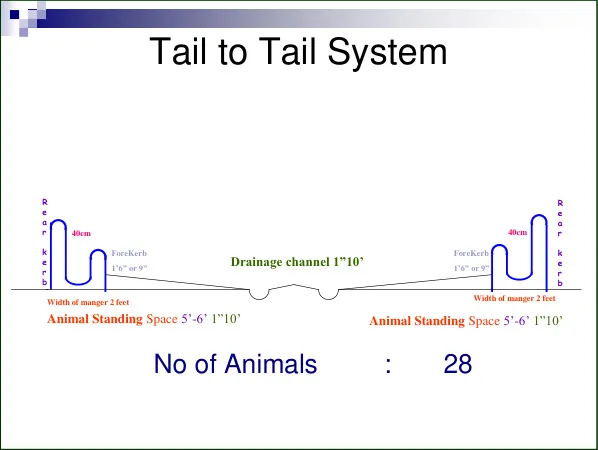
Types of Housing – 1. Single row – Less than 15 animals 2. Double row – More than 15 animals a. Tail to tail system b. Head to head system Advantages of tail to tail system
- All animals get fresh air.
- Spreading diseases through respiratory system is minimum 3.Supervision of animals are easy (60% of the time is being devoted on the hind quarters) 4.Cleaning is easy
Disadvantages of tail to tail system
- Spreading of diseases through digestive and reproductive system is
high 2. Drainage channel is not exposed to sunlight. 3. Feeding of animals is laborious Head to head system
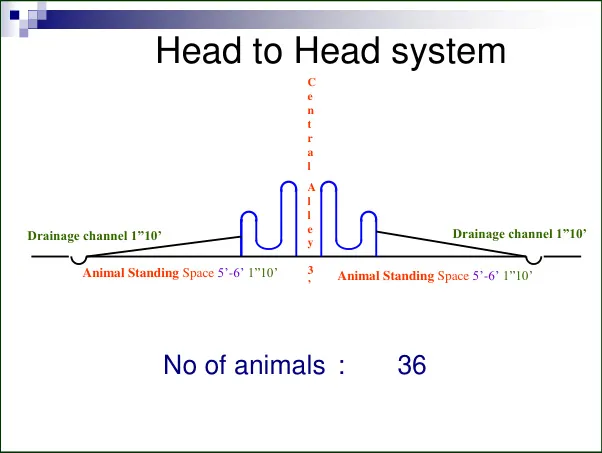
sadvantages – vice versa of tail to tail
Summary Cheat Sheet
| Topic | Key Point |
|---|---|
| Main systems | Loose housing and conventional/stall housing are common cattle housing systems |
| Loose housing | Animals stay in open paddock with shelter; lower cost and more exercise |
| Conventional housing | Animals are kept in stalls; supervision and individual care are easier |
| Choice basis | Depends on climate, land, herd size, labour, and production objective |
| Loose-house advantage | Lower construction cost and better animal freedom |
| Stall-house advantage | Easier feeding, milking, and disease observation |
| Housing requirement | Proper floor, drainage, manger, water supply, and waste disposal are essential |
| Climate link | Housing design must match local weather conditions |
| Welfare point | Animal comfort directly affects health and productivity |
| Exam trap | No single housing system is best for all farms; system selection depends on resources |
Lesson Doubts
Ask questions, get expert answers