🚫 Herbicide Classification and Mode of Action
Classification, characteristics, and mode of action of herbicides used for weed control.
This lesson explains key concepts in a structured way and connects them to practical agricultural applications and exam-oriented understanding.
HERBICIDES
HERBICIDES CHARACTERISTICS –
Introduction
A herbicide in the broadest sense is any compound that is capable of killing or
severely injuring plants and may be used for elimination of plant growth.
A weed is an plant, wild or cultivated that is undesired in that particular place. In
Agriculture and horticulture weeds are thus any ant other than the specific crop being
grown. On railway tracks, industrial sites, air port paths, open spaces and the like the
entire vegetation can be regarded as weeds.
Weeds are conveniently divided into dicotyledonous plants, termed broad leaf
weeds and monocotyledonous plants, termed grass weeds. Weeds completed with
plants for water, light, food and above and below the surface. The yield loss due to
weeds is estimated to be 9-10%. Also herbicide economies or helps in crop production
by reducing the cultural operations.
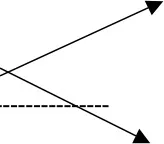
Herbicides may be classified based on one or more common characteristics such
as chemical composition or mode of action or time of application etc.
----------------------------- Organic
Chemical
Contact
Mode Of Action
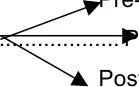
Pre-emergence or post-emergence is with respect to the
emergence of crop and not of the weed
Soil herbicides - root absorption systemic
 Manner of absorption
Range of application
Aromatic-Carboxylic
Foliage herbicide - contact
Total - unspecified vegetation
Selective
a) 2, 4-D : 2,4-Dichlorphenoxy acetic acid
LD50: 375
2, 4-D can be used for destruction of dictotyledonous plants and it is well tolerated
by many monocotyledonous crop plants.
2, 4-D is used as a selective herbicide particularly in cereals. The great advantages
are cheap manufacture and relatively low mammalian toxicity. It is a systemic herbicide.
b) 2,4,5, T : 2,4,5, Trichlorophenoxy acetic acid
LD50: 500
2,4,5, T has particularly high activity against woody plants and usually used in
combination with other herbicides for control of trees, shrubs and control of otherwise
intractable broad leaf weeds.
Structural analogues of IAA such as NAA or 2,4-0 promote growth in lower doses
but have a herbeidal effect at higher concentrations. 2,4,5, T is more persistent in soil
than 2,4-D or MCP A (2-methyl-4-chlorophenoxy acetic acid).
Mode of Action
-
Interference with nucleic acid metabolism
-
Disruption of translocation system
Anilides
The type of activity and the range of weed control vary greatly within
this group some being used post-emergence while others are active
through the soil.
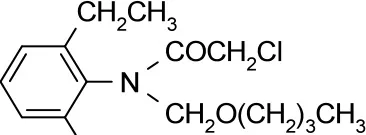
In 1965, 1966 and 1969 Monsanto introduced three anilides for pre
emergence control of annual weeds.
(1) (α-chloro-N-isopropyl acetanilide) as 'Ramrod' which shows a
high degree of specificity for annual grass weeds and certain
broad- leaved weeds in maize, soybeans, sugarcane, peanuts and
certain vegetables. (ii) Alachlor (α-chloro-2'6'-diethyl
Nimethoxy methyl acetamide) as 'Lasso’ for use in maize, cotton,
soybeans, sugarcane, peanuts and certain vegetable crops where it
shows very good activity against annual grasses, particularly
Echinochloa crus-galli, Setaria Spp. and Digitaria Spp. (iii)
Butachlor (N-[butoxymethyl]-chloro-2',6'-diethyl acetanilide) as
'Machete' for the control of most annual grasses, certain broad
leaved species in transplanted rice. In 1974, Ciba Geigy
introduced metolachlor (2-chloro-6'-ethyl-N- [2-methoxy-l
methylethyl] acet-o-toluidide) as 'Dual', a pre- emergence
germination inhibitor, active mainly on grasses for use in maize,
soybeans and groundnut.
Butachlor
oxyfluorfen
Thiocarbamates
EPTC (S-ethyl-N.N-dipropylthiocarbamate).'Eptam', was introduced
by Stauffer in 1954. It kills germinating seeds, a number of annuals and
inhibits bud development in the underground organs of perennial weeds
such as couch grass (Agropyron repens) and sedges ( Cyperus Sp.). It may
be used soil incorporated 3 weeks before planting potatoes, field beans,
sugar beet and others. Monsanto introduced di-allate as 'Avadex’ (S
2,3-dichloroallyl-N,N-di-isopropyl (thiocarbamate)), a volatile herbicide
for pre-plant control of Avena fatua and Alopecurus myosuroides in
brassica and beet crops in 1960; and tri-allate (S-[2,3,3’- trichloroallyl]-di
 isopropyl (thiocarbamate)) in for the control of these grasses and others in
cereals and peas.
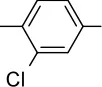
In 1970 thiobencarb (S-4-chlorobenzyl diethyl thiocarbamate) was
introduced It is an important herbicide for the control of weeds in rice
showing very high selectivity between rice and barnyard grass
( Echinochloa crus-galli). In addition it controls many other grass
cyperaceous and broadleaved weeds.
Thiobencarb
Substituted Ureas
Diuron (3-[3,4-dichlorophenyl]-1,1-dimethylurea) as 'Karmex’, was
introduced by Du Pont in 1954 and Fenuron (I,I-dimethyl-3- phenyl urea)
as 'Dybar' was introduced in 1957 and is used for the control of woody
plants by basal application.
Fluometuron (1, I –dimethyl-3-[α-trifluoro-m-tolyllurea) as 'Cotoran'. was
introduced by Ciba Geigy and is used for the control of weeds in cotton.
Another very important herbicide for the control of annual, grasses
including Alopecurus myosuroldes, Avena fatua and Poa annua and many
annual broadleaved weeds in cereals was isoproturon (3-[4-isopropyl
phenyl]- 1, I –dimethyl urea) marketed by three companies - Hoechst (as
'Arelon'), Ciba Geigy (as 'Graminon') and Rhone-Poulenc (as 'Tolkan') in
Diuron lsoproturon
Heterocyclic Nitrogen Compounds Triazines
In general triazines have little effect on germination and they are
taken up by the roots or leaves. Due to an inhibition of the Hill reaction of
photosynthesis, affected plants turn yellow and necrotic symptoms
develop. With a few exceptions, the symmetrical triazines have got
substituted amino groups at two of the carbon atoms while the third carbon
has a chloro, a thioether or a methoxy function. The chloro compounds
(CI) end in azine, the thioethers (-S-) end in tryne (e) and the methoxy
ones (CH30) in ton. In the list of herbicides which follows all were
introduced by Ciba Geigy unless stated otherwise. The first
commercial triazine, simazine (2 – chloro - 4, 6 - bis [ethyl -amino] - I,3,5
-triazine) was introduced as 'Gesatop' in 1956 for the selective residual
pre-emergence control of a great many annual grass and broadleaved
weeds in a variety of deep-rooted crops (including citrus fruits, coffee, tea
and cocoa), due to its low solubility in water (3.5 mg I [-1] at 20°C). It is also
used for the control of most annual and perennial weeds in non-crop areas.
It is remarkably selective for use on maize because of the ability of this
crop to degrade it non-enzymically to the non-active hydroxy derivative.
Simazine
The second introduction atrazine (2-chloro-4-ethylamino-6
isopropylamino-1,3,5-triazine), introduced as 'Gesaprin’ and 'Primatol in
1958, is both foliar and soil acting being taken up both by leaves of
emerged weeds and by the roots of weed seedlings emerging after
spraying. In maize, where it is also degraded in, a manner similar to
simazine, it is preferred to the latter especially in dry years. Being more
water soluble (30mg I [-1] at 20°C) it is more suitable for the dry soils on
which this crop is grown where it will effectively control couch grass
(Agropyron repens) and other perennial grasses. It is also used in roses,
for selective use in coniferous forests and for non- selective use on non
crop land and industrial sites.
Atrazine
Pyridines
In 1957 and 1958 I.C.I. introduced two very important bipyridillium
quaternary herbicides. Both are broad spectrum, rapidly acting causing
wilt and desiccation, and are translocated to a certain extent. Diquat (1,
I'-ethylene-2,2'-bipyridillium ion formulated as dibromide) under various
trade names 'Reglone', Weedol', 'Path clear' is used for potato haulm
desiccation, for seed crop desiccation and for aquatic weed control. The
Chapman Chemical markets it as 'Aquacide’. Paraquat (1,1'-dimethyl
4,4'-bipyridilium ion formulated as dichloride) as 'Gramoxone' destroys
photosynthetic tissues and Is used for a variety of purposes Including
stubble cleaning, inter-row weed control, desiccation of various crops and
killing out of old pastures which can then be resown without ploughing.
It is very fast acting, the first effects being noticeable after a few hours
and kill is usually completed in 3-4 days. It is quickly absorbed on to soil
(particularly clay) particles so that sowing can follow soon after
application.
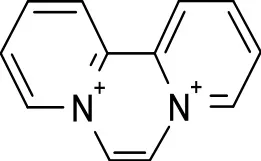
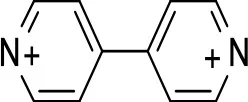
Diquat Paraquat
The Dow chemical has Introduced three foliar-applied, selective,
growth-regulatory herbicides which produce symptoms on susceptible
plants very similar to those produced by the auxin type herbicides, namely
tissue proliferation, epinasty, leaf curling and production of adventitious
roots.
Organophosphorus Compounds
The organophosphorus compounds include: (1) bensulide (0,0
diisopropyl-S-2-phenyl-sulphanylaminoethyl phosphorodithioate) which
was introduced by Stauffer in 1964 as 'Prefair' for pre-plant pre-emergence
use on cucurbits, brassicas, lettuce and cotton, and as 'Betasan' for pre
emergence control of annual grasses and broad-leaved weeds in lawns. (2)
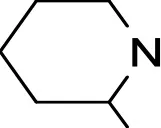
Piperophos (S-2-methylpiperidino-carbonyl methyl-0,0-dipropyl
phosphorodithioate) was introduced by Ciba Geigy in 1969. It can be used
pre-emergence in rice, maize, cotton, soybeans and groundnuts for the
control of many monocotyledonous weeds including Cyperus Sp.,
Echinochloa Sp., Trianthema portulacastrum and Monochoria
vaginallis. Glyphosate (N-[phosphonomethyl] glycine) a derivative of the
amino acid, glycine, was introduced by Monsanto as 'roundup' in 1971. It
is used post-emergence and is rapidly absorbed by the leaves and
translocated from vegetative parts to underground parts, rhizomes or
stolens of perennial grass and broad-leaved weed species giving good
control of both above-ground and underground organs Agropyron repens
is very sensitive. Glyphosate is inactivated on contact with the soil. It
provides excellent weed control in pre-tillage of post-harvest treatments of
annual crops or when applied as a direct spray in woody crops such as
vineyards, deciduous fruit, rubber, coffee, citrus, tea and oil palm.It can
also be used in non-agricultural areas and for bush control in forestry.
Piperophos Glyphosate
Summary Cheat Sheet
| Topic | Key exam point |
|---|---|
| Main class | Herbicides |
| Common classification bases | Pre- vs post-emergence; selective vs non-selective |
| Additional classification | Grouping by chemistry and mode of action |
| Chemical groups named | Anilides, thiocarbamates, substituted ureas, triazines, pyridines |
| Main use | Weed control in crop and non-crop situations |
| Mode-of-action focus | Herbicides are often classified by site of action in modern weed science |
| Agronomic importance | Correct herbicide selection depends on weed flora, crop tolerance, and application timing |
| Exam distinction | Application-timing classification and chemical-group classification are separate |
| Management caution | Dose and timing errors can injure crop or fail to control weeds |
| Trap | Do not treat all pre-emergence herbicides as selective or all post-emergence herbicides as non-selective |
References
3 sources • [1] [2] [3]
References
Principles of Soil Science and Agricultural Chemistry — Standard BSc Agriculture Textbook
BookLesson Doubts
Ask questions, get expert answers